Best Skincare Routine for Healthy & Glowing Skin in 2026
Published: May 25, 2026 Last Updated: June 12, 2026 Effective skin care doesn‘t have to be complicated: cleanse, moisturise
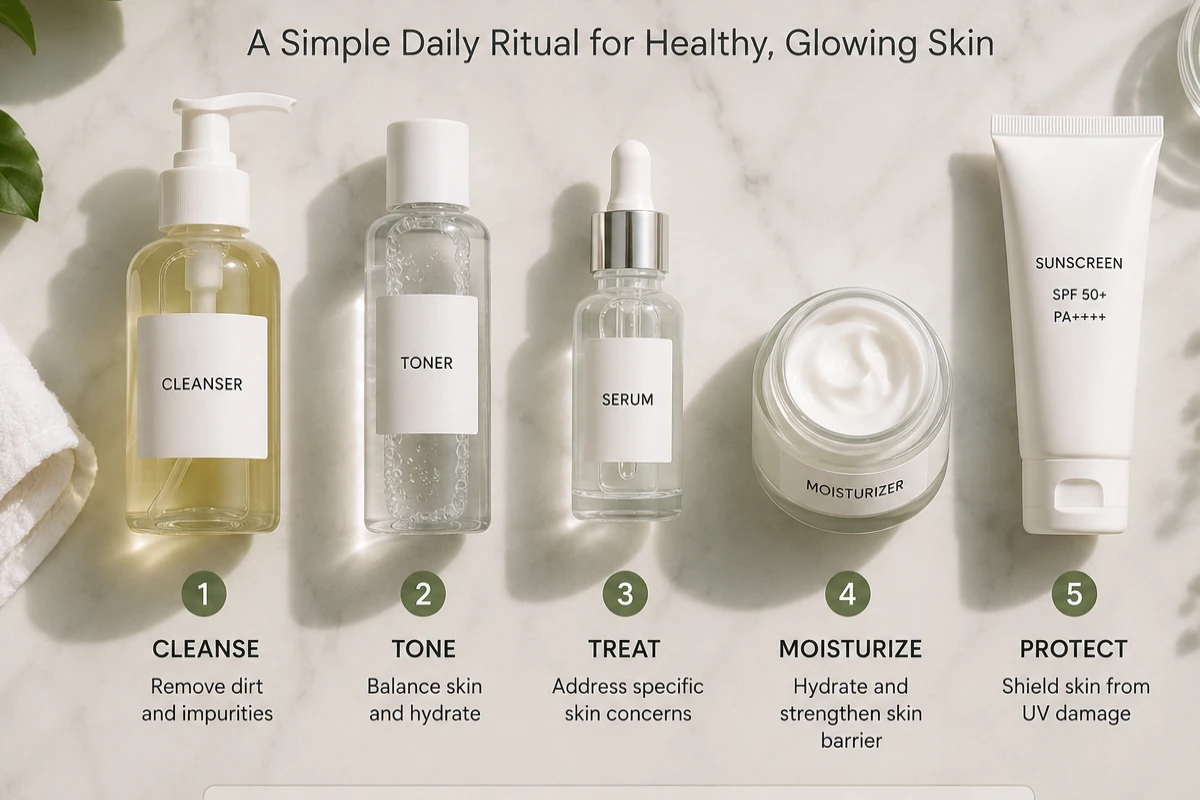
Effective skin care doesn‘t have to be complicated: cleanse, moisturise and SPF each morning, repair in the evening using actives such as retinol or niacinamide. Use products suitable for your own skin type, whether that is oily, dry, combination or sensitive and stick with it. All good things take time and skin care is no different.
If there is one thing that really makes a difference on your skin each and every day, it‘s a consistent skincare routine. Once you are beginning from scratch with only three steps or are ready to get a bit more layered, this guide should have you covered:
From SPF in the morning to overnight repairs, from greasy to dry, from K-beauty trends to science-based ingredients, here is your ultimate 2026 skincare.
Let’s get into it.
What Is a Skincare Routine?
A skincare routine is a consistent protocol of items and methods you put to your face (and, sometimes, your neck) in an ordered way which helps cleanse, defend, and enhance your skin gradually.
Think of it not as a one-time treatment but as you would your teeth on a day-to-day basis and the how often you brush them. You wouldn‘t expect to brush twice and have an entire mouthful of pearly whites, its the same with the skin.
A basic skincare routine has three non-negotiable steps:
- Cleanse remove dirt, oil, pollution, smog, and makeup.
- Moisturise bring back hydration, create a barrier on the skin
- Protect (AM only) Use SPF to prevent UV damage.
Everything else beyond that serums, toners, exfoliants, eye creams is just fleshing out that base. It‘s not about adding steps, it‘s about adding the right ones.
Why Daily Skincare Actually Matters
Here‘s one most of us ignore: our skin is an organ. It‘s one of the body‘s organs, but by far the largest and most dynamic of them. It aids in temperature regulation, cell protection from bacterial invasion, UV protection and replaces itself every 28-40 days.
In the absence of the right support, the skin barrier is compromised. This results in tightness, dryness, breakout-prone or flaky skin, pigmentation, redness and visible signs of ageing all of which can occur simultaneously.
Why a routine matters:
- Cleansing regularly prevents blockages in the pore and bacteria build up
- SPF on a daily basis is the life long single most proven anti age ing step (more about this below)
- Moisturising helps to keep the lipid barrier in the skin that keeps the water inside it moist.
- Targeted actives such as vitamin C or retinol work on individual concerns with the passing of time.
British Association of Dermatologists (BAD)states, One of the key factors in reduction of long-term damage to the skin; comprising premature wrinkles and a greater risk of skin cancer is the continuous use of sun protection from an early age.
The key word is consistent. A three-step routine you do every day beats a ten-step routine you do once a week.
Morning vs Night Skincare Routine
Your skin has two different roles at different times of the day and you need to adapt your routine accordingly.
In the morning, your skin‘s number one task is to protect. You‘re on your way out into pollution, UV rays and stresses of everyday life. Establishing an effective AM routine is essential to prep and defend from the get-go.
During the night, your skin enters into a whole other repair mode. While you are sleeping, cell turnover doubles and your skin is much more accepting to powerful products such as retinol, exfoliating acids and luxurious moisturisers.
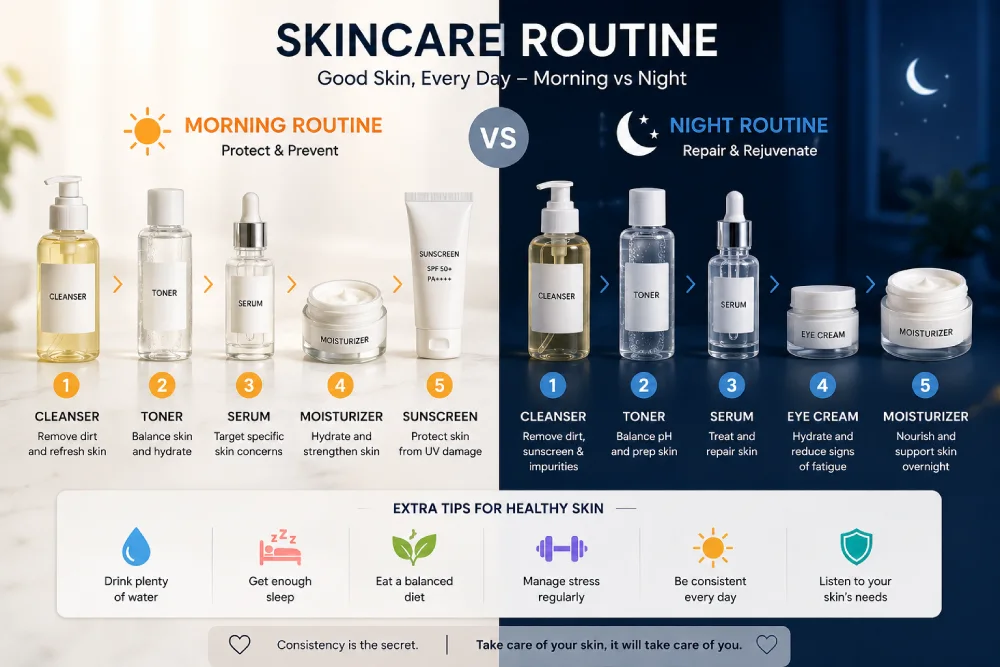
Morning Routine Quick Overview
| Step | Product Type | Purpose |
|---|---|---|
| 1 | Gentle cleanser or water rinse | Remove overnight sebum |
| 2 | Toner (optional) | Rebalance pH, prep skin |
| 3 | Vitamin C serum | Antioxidant protection |
| 4 | Moisturiser | Hydrate and protect barrier |
| 5 | SPF 30–50 | UV protection (non-negotiable) |
Night Routine Quick Overview
| Step | Product Type | Purpose |
|---|---|---|
| 1 | Oil cleanser/ bottle water | Remove SPF, makeup |
| 2 | Foaming or gel cleanser | Deep clean |
| 3 | Toner or essence | Prep and hydrate |
| 4 | Active serum (retinol, niacinamide, AHA) | Targeted treatment |
| 5 | Night moisturiser or sleeping mask | Seal and repair |
Go deeper: Morning Skincare Routine — Best AM Steps for Glowing Skin | Perfect Night Skincare Routine for Healthy Skin
Important point: Use actives in the PM, protection in the AM. The effect of retinol is significantly enhanced at night, and can cause immune photo-sensitivity when the skin is exposed to light.
Skincare for Different Skin Types
Another mistake many people make is to imitate another person‘s routine without adapted to their skin type: what may be amazing on an oily skin can be terrible on a dry one, and inversely.
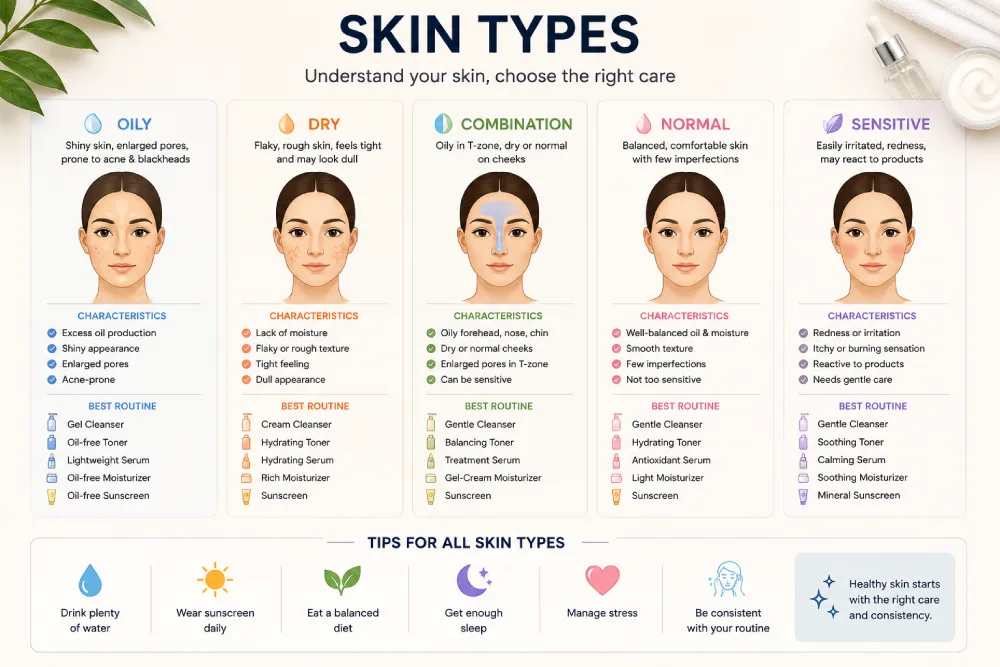
The five main skin types:
- Normal is normally balanced, little concern, flexible with most product lines.
- Oily – too much sebaceous secretion, greasy T zone, easy enlarged pores and pimple.
- Dry — flaky, tight, reactive, eczema and sensitive prone
- Combination–oily T zone with normal or dry cheeks.
- Sensitive – responsive to numerous substances, easily irritated or flushed.
Oily Skin
Choose gel or foam cleansers, light water-based moisturizers with SPF and non-comedogenic (non pore blocking) protection. Always have niacinamide (to settle out the sebum). Look for salicylic acid (BHA) (to clear your pores). Ditch the heaviness of oils and thick creams.
Go deeper: Best Skincare Routine for Acne-Prone Skin
Dry Skin
Hydrate throughout. Cream or oil cleansers, hyaluronic acid serums, ceramide rich moisturisers and SPF containing a hyaluronic base. No exfoliants containing hard abrasives and no toners with a high alcohol content.
Go deeper: Hydrating Skincare Routine for Dry Skin
Combination Skin
Multi-zone your routine if necessary if you find certain areas are more greasy and others a little dry. Sometimes gel-cream moisturizers are very effective for combination skin.
Sensitive Skin
Less ingredients the better. Best is fragrance free, alcohol free, hypoallergenic products. Always add one product at a time, always do patch test on the inner forearm first.
A note for Indian skin tones hyperpigmentation, dark spots, PIH, melasma etc are common issues. Many of the ingredients such as niacinamide, tranexamic acid, kojic acid, vitamin C have been shown to treat uneven tone effectively without bleaching or skin lightening agents. Stay away from skin-lightening products with HC or mercury content these are really bad for health and are banned for sale in many countries.
The Correct Order to Layer Skincare Products
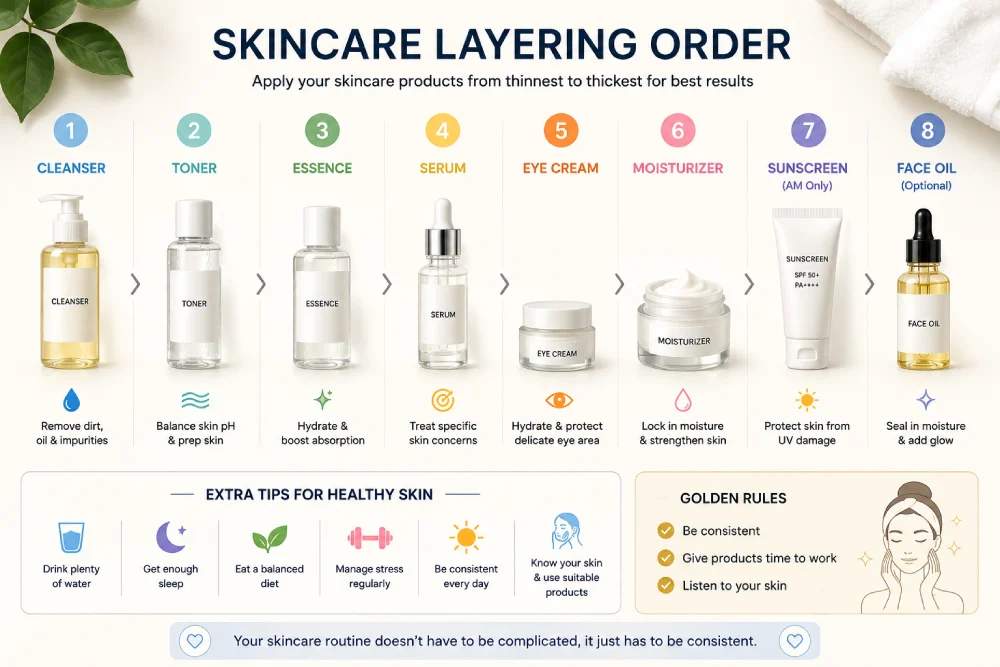
Layering order is important–not out of some skincare dogma, but because the texture, pH, and chemistry of products determine how deeply each one penetrates and works.
The basic rule: Use from the lightest texture to the heaviest.
1. Cleanser
2. Toner / Essence
3. Serum (actives)
4. Eye Cream
5. Spot Treatment
6. Moisturizer
7. Face Oil (optional, seals everything in)
8. SPF (AM only — always last)
Common layering mistakes:
- Applying SPF above moisturizer SPF should always be the final AM step
- Incorrectly combining vitamin C and niacinamide for example, they don‘t react at stable formulations, but can in highly concentrated combinations.
- Applying retinol with AHAs the same night if your skin is sensitive,:sandwich” retinol between layers of moisturizer or alternate AHAs (one night) with retinol (next evening).
- Without SPF just because its clouds UV-A rays (the ageing rays) go through clouds and glass.
Korean Skincare & Global Trends in 2026
If you‘v heard of glass skin, you‘ve been introduced to K-beauty. The Korean approach to skin care has redefined the world‘s perspective, moving the emphasis away from fixing issues and toward proactive and preventative measures deep moisturizing and barrier protection.
The old Korean routine could be anywhere from 4 to 10 steps, but the true brilliance of it is in the philosophy: hydration first, everything else second. Essences, ampoules, and sheet masks aren‘t an indulgent luxury they‘re essentials.
What K-beauty gets right:
-
Treating sunscreen as a daily essential, not a beach product
- Putting skin barrier health ahead of everything else
- Employing light weight layering in place of the heavy single moisturizers
- Early begins use of skin care prevent rather than corrective.
K-beauty‘s impact on routines worldwide is evident in 2026 from the temptations of skin cycling (rotating actives on a four day schedule), glass skin layering and the steep climb of fermented products such as galactomyces and bifida ferment lysate.
Go deeper: Complete Korean Skincare Routine for Glass Skin
Natural & Organic Skincare: What‘s Worth It
Clean beauty has been in the works for a long time, and is now a full part of the mainstream. However, “natural” on a label is not necessarily safer, better, or more efficacious, and “chemical” is not necessarily bad or harmful.
All ingredients, natural or man-made, are chemicals. It‘s all about levels, formulations and if an ingredient is tested.
That said, some natural ingredients have excellent evidence behind them:
- Rosehip oil – in vitamin A derivatives, facilitates the maintenance of healthy cell function.
- Niacinamide (from vitamin B3) – controls sebum excess, minimizes hyper pigmentation
- Green tea extract – antioxidant, anti-inflammatory
- Aloe Vera – soothing, anti-inflammatory, helpful in barrier repair
- Bakuchiol – a plant derived alternative to retinol, suitable for delicate and sensitive skin
What to approach with caution:
- Homemade lemon juice toners which are very acidic and again, can provoke burns and post inflammatory hyper pigmentation (PIH).
- Undiluted (but pure) essential oils on the skin many are sensitising.
- ‘All-natural’ stuff with no preservatives is more susceptible to microbial contamination
Go deeper: Natural Skincare Routine for Healthy and Clear Skin
Anti-Aging Skincare: Starting Early Makes All the Difference
You don’t need to be in your 40s to think about anti-aging skincare. The research is unambiguous: the best time to start protecting your skin is before you see the first signs of ageing.
The most effective anti-aging ingredients (evidence-backed):
| Ingredient | What It Does | Best Used |
|---|---|---|
| Retinol / Retinoids | Boosts collagen, accelerates cell turnover, reduces wrinkles | Night, start low (0.025%) |
| Vitamin C | Antioxidant, brightens, supports collagen synthesis | Morning |
| SPF 30–50 | Prevents UV-driven collagen breakdown | Morning, every day |
| Peptides | Signal skin to produce collagen, firm skin | AM or PM |
| Niacinamide | Minimises pore appearance, evens tone | AM or PM |
| Hyaluronic Acid | Plumps skin by attracting water | AM and PM |
Research published by the American Academy of Dermatology consistently ranks daily broad-spectrum SPF use as the most impactful single step in any anti-ageing routine — more than any serum or cream.
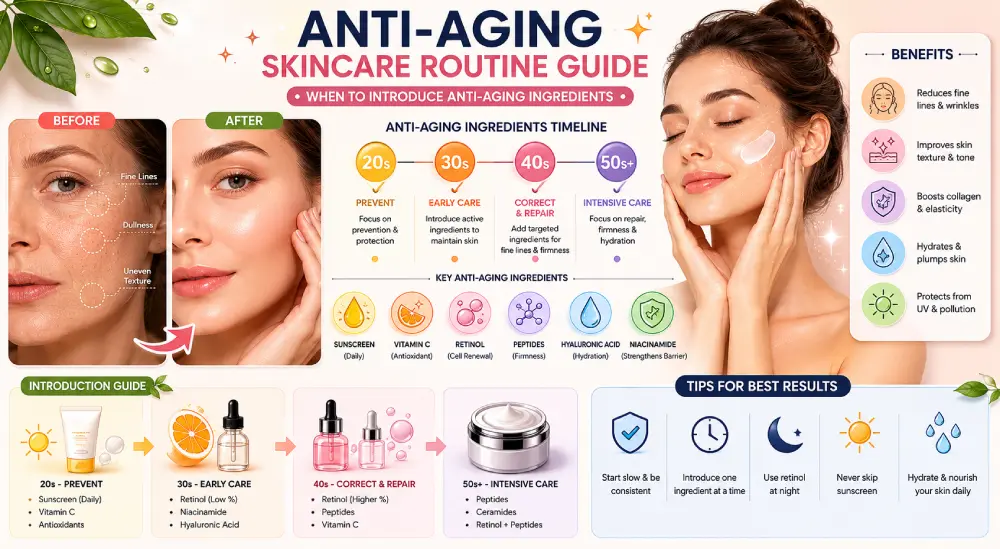
The most important anti-aging advice: Start with SPF in your 20s. Add vitamin C. Introduce retinol gradually when you’re ready. Be consistent. That’s genuinely it.
Go deeper: Best Anti-Aging Skincare Routine for Youthful Skin
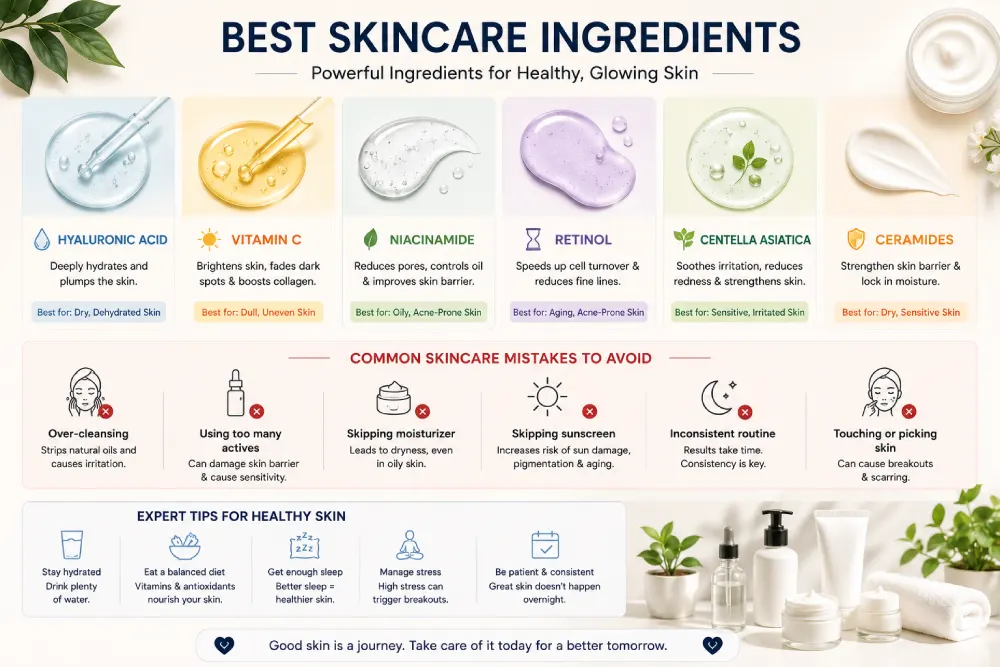
Best Ingredients for Healthy, Glowing Skin
Knowing exactly what you‘re putting in your body is far more powerful than following a temporary fad. The following ingredients are always effective:
For Hydration
- Hyaluronic Acid pulls moisture into the skinand holds it up to 1000 times it‘s weight.
- Glycerin cheap, well effective one found in just about any decent moisturiser
- Ceramides: replenish and restore the skin barrier
For Brightening & Even Tone
- Vitamin C (L-ascorbic acid) – brightens/hypopigmentation, antioxidant
- Niacinamide – helps diminish dark spots and sebum and enhances texture
- Tranexamic acid -Excellent post-inflammatory hyperpigmentation (Personal favorite for Indian skin issues)
Acne & Oiliness
- Salicylic acid (BHA) penetrates the pores and dissolves the skin debris.
- Benzoyl peroxide kills bacteria of acne (be careful to use it because it can bleed fabrics)
- Azelaic Acid (%50) anti-inflammatory, may be good for rosacea and acne together
For Anti-Ageing
- Retinol / Tretinoin considered the “gold standard” for fine lines and cellular renewal
- Peptides assist in collagen and elastin production
- Resveratrol This is an antioxidant that can be taken as a component of red grape extract.
For Sensitive & Reactive Skin
- Centella asiatica (Cica) soothing, healing, favored in Korean and Indian Skincare
- Allantoin soothing, promotes skin healing
- Oat extract reduces itching and inflammation
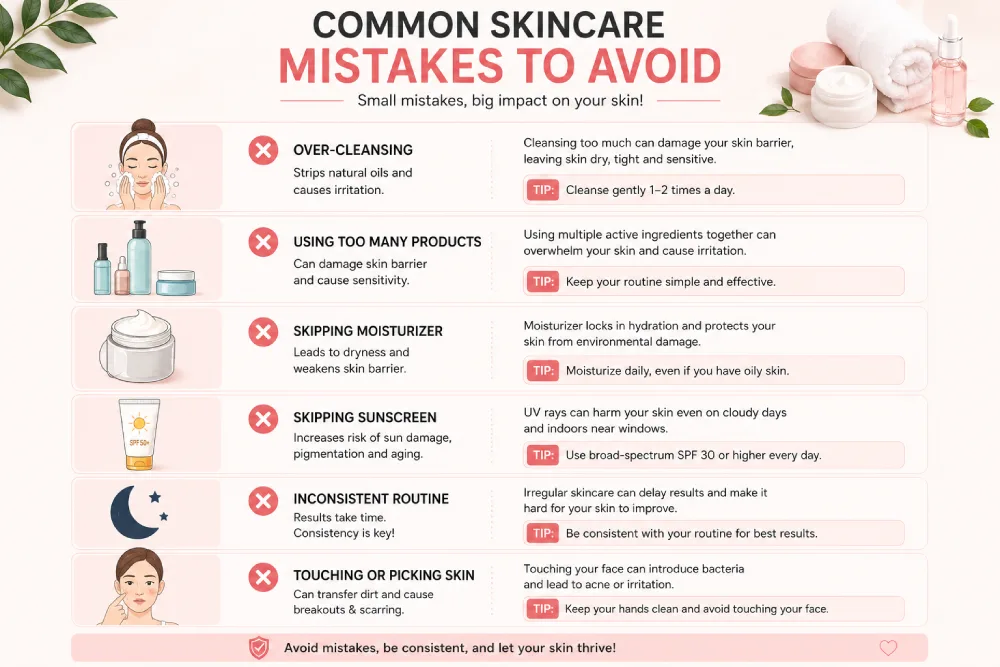
Common Skincare Mistakes to Avoid
Even with the best of intentions such slips happen and negate the good we are doing. Here are the commonest:
Reason 1: Washing Too Often Washing your face excess will cause your skin to produce even more oil because it is so dry, a cycle that never ends. If your skin is extremely tight and squeaky clean when you finish washing, then your cleanser is too strong.
Reason 2: Drop SPF If you do one thing differently because of this article, let it be this: slap on some SPF before you leave the house each morning. Whatever the weather. Whatever the time of day. UV-As which cause early-development wrinkles and other bits of ageing skin penetrate glass and cloud.
Reason 3: Launching too many new products at one time If you add three new products in one week and your skin suddenly breaks out, you‘ve no way of telling which one is the culprit! For every new product, wait a minimum of two weeks before moving onto the next one.
Reason 4: Expect to see results overnight As a general rule of thumb, most skincare actives will require 8, 10 or 12 weeks (or longer) of continuous application in order to see results. (10) vitamin C– 4 to 6 weeks; (3)Retinoids 3 to 6 months!
Mistake 5: Not patch testing Always apply a new product on a small area of skin (inner wrist or behind the ears) 24 hours before trying it on your entire face – particularly if you have sensitive or easily disrupted skin.
Mistake 6: Neglect your neck The neck is aged more rapidly than the face because of constant exposure and neglect. A mirror should be used for all applications, by should be brought down onto neck and décolleté.
Skincare Routines for Men
Women‘s skin is different anatomically thicker, oilier, and subjected to more frequent physical trauma due to shaving. No, it doesn‘t mean the rules change, but it does mean that simplicity counts more.
For most men a simple routine works better than a complex one and the adherence rate is a lot higher.
Core men’s routine:
- Cleanser gel/foam for oilier skin, cream for drier skin.
- Moisturiser with SPF (one product, completed).
- Optional: vitamin C serum in the morning, niacinamide serum at night
Go deeper: Simple and Effective Skincare Routine for Men
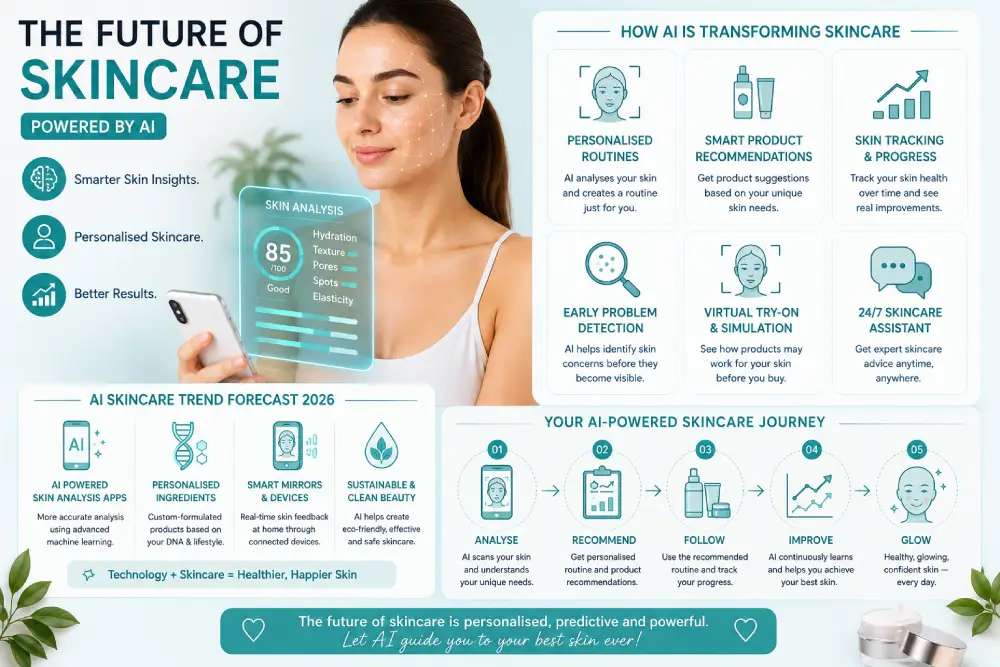
The Future of Skincare: AI, Personalisation & Smart Skincare in 2026
In 2026, there is no make-up-one-suits-all anymore and technology is fueling this change at an unprecedented rate.
What’s changing:
- AI skin analysis technology is now capable of analyzing your skin from a photograph taken on your phone and research is confirming it is getting better at recognizing issues such as roughness, pigmentation and dehydration.
- Personalised formulation brands are now also using biometric and lifestyle data to produce bespoke serums and moisturisers tailored to your precise skin profile
- The latest skincare trend being hyped is microbiome friendly skincare products that don‘t strip but support the healthy bacteria on your skin.
- Wearable UV sensors (I can be the size of the back of your hand) are allowing easy tracking of real-time UV exposure and the potential for SPF redosing
TheInternational Journal of Dermatologyhas published research discussing the way AI aided diagnosis is starting to bring down the discrepancy of what dermatologists can identify vis a vis the consumers own ability to assess.
Likewise, expect ingredient transparency to become more prominent. Both UK and Indian consumers are showing a penchant for reading labels and asking about proprietary blends brands that lead with integrity and proof will flourish this decade.
Myth vs Fact: Skincare Edition
| Myth | Fact |
|---|---|
| “Natural = safe” | Natural ingredients can cause reactions as well!!Which that apply to:- Patch testing |
| .Oily skin does not require moisturizer | Both skin types require moisture. Forget to apply your moisturiser. This only worsens your oily skin! |
| “Expensive skincare works better” | Price is a reflection of marketing and packaging, not necessarily) efficacy. |
| Only bring sunscreen when it‘s clear weather | UV-A radiation is present all year round and under the clouds |
| “Pores open and close with temperature” | Pores don‘t open and close; they may seem bigger if filled with congestion |
| “Having a drink of water will give you glowing skin” | Hydration does matter but topical moisturising is a more direct action. |
| “Retinol thins your skin” | Retinol actually thickens the dermis by increasing collagen. |
Your Starter Skincare Routine: A Simple Framework
If you are new to all of this and feeling overwhelmed, this is where you should begin. No 10 steps programme, no costly serums… just the basics.
Morning (5 minutes):
- Rinse with warm water Or wash with a mild cleanser
- Apply a lightweight moisturiser
- Apply SPF 30–50 (this can be combined into a moisturiser with SPF if you prefer)
Evening (5–8 minutes):
- Cleanse well (double cleanse if there‘s SPF or makeup)
- Feel free to use a serum, if you have it (safe innescream is a good all-rounder starter).
- Apply your night moisturiser
Repeat daily for 8 weeks. Revisit skin. Add in a new step (or product) if necessary. Go slow, be deliberate.
Summary: Building Your Ideal Skincare Routine
Skincare is a personal journey your skin type, your concerns and your climate and lifestyle will all influence what regime you choose to adopt. However the basics are the same:
- Cleanse to start clean
- Treat with targeted actives to suit your concerns
- Moisturise to lock in to safeguard the barrier
- Use SPF protection every day in the morning
- Be consistent results take time, not raw power!
If you are new to building a morning skincare routine, looking for a Korean skincare routine for glass skin, or if you are looking for a natural skincare routine that is gentle and free from harsh chemicals, principles for all are the same:
FAQs
Q: What is the correct order for a skincare routine?
In order of lightest texture to heaviest, the sequence is: cleanser, toner, serum, eye cream, moisturiser and sunscreen (am only). If the heavier consistency is applied first it will prevent the lighter textures from reaching the skin.
Q: How many steps should a daily skincare routine have?
At least three, these being a cleanser, moisturiser and sunscreen in the morning. Anything else would be extra, and dependant on one‘s own individual needs. More steps does not equal better or healthier skin.
Q: Should I use the same skincare routine morning and night?
No. In the morning you should be concentrating on protecting (SPF, antioxidants such as vitamin C) and at night on repairing and treating (retinol, exfoliants, and richer moisturisers).
Q: Can I use retinol every day?
Not right away. Use it two to three nights a week at first and gradually increase the frequency as your skin tolerates. Use SPF in the morning after using retinol at night.
Q: Is sunscreen necessary if I’m indoors all day?
Yes. UV-A rays responsible for skin ageing and Pigmentation will penetrate windows. SPF is needed if you are by a window or step out briefly.
Q: What skincare routine is best for beginners?
Three pieces to start off with-a cleanser, a moisturizer and sunscreen. After 4-6 weeks when your barrier is still stable, then start introducing actives such as vitamin C or niacinamide.
Q: How long does it take to see results from a skincare routine?
The majority of skin care actives take 8–12 weeks of regular application before improvement can be seen. Retinol and chemical exfoliants can take longer.
Q: What is the best skincare routine for Indian skin?
Indian skin tones often require SPF that does not leave a white cast (look for chemical SPF or tinted formulations), ingredients that work on hyperpigmentation (niacinamide, tranexamic acid and vitamin C), and lighter textured formulations suited to humid climates.
Q: Does diet affect skin health?
Yes (although not huge). High-GI foods such as sugar and refined carbohydrates are associated with more acne. Omega-3 fish oils are good for skin barrier vitality. However moisturisers will have a more direct affect for most people.
Q: When should I start an anti-aging skincare routine?
SPF should be initiated at a young age teens and sooner rather than later. Vitamin C (L-ascorbic acid) in your 20s and retinol in your late 20s or early 30s. But there is no problem with starting earlier, using a small dosage.