Best Skincare Routine for Acne-Prone Skin in 2026: A Dermatologist-Backed Guide
Published: June 2, 2026 Last Updated: June 16, 2026 Still suffering from recurrent breakouts? Acne is a condition that
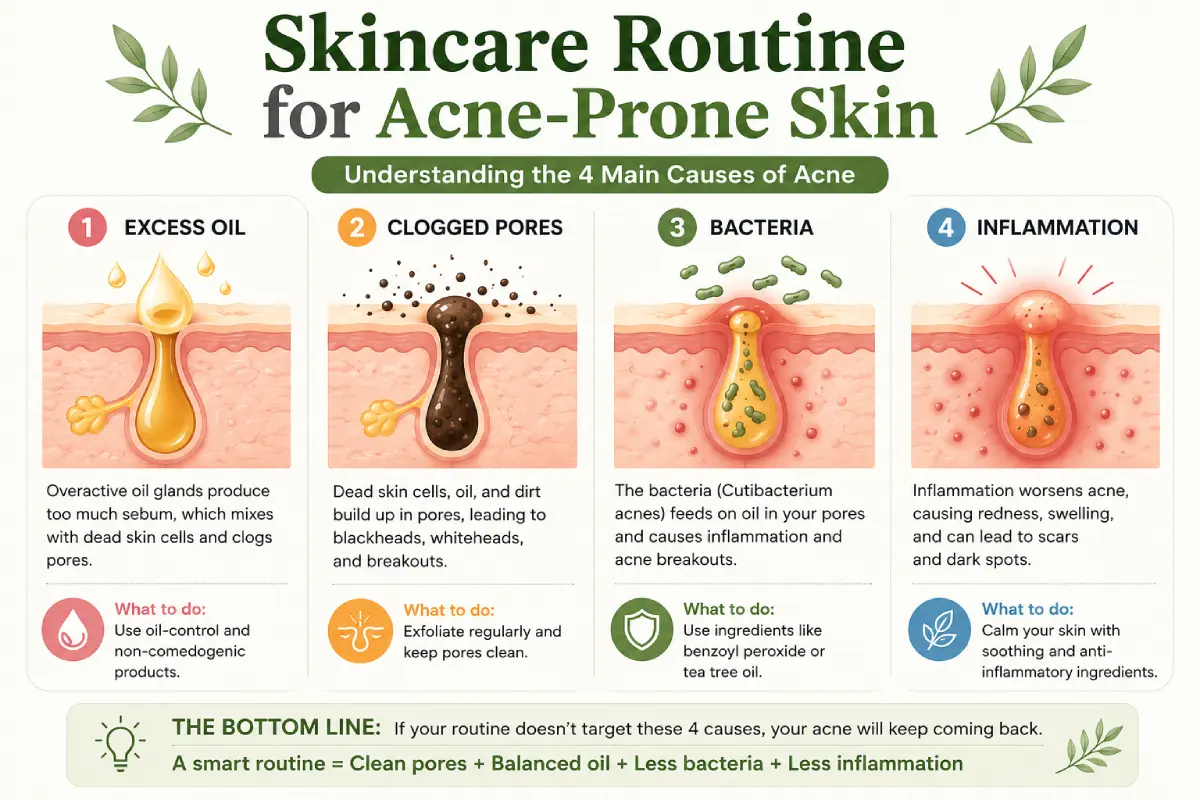
Still suffering from recurrent breakouts? Acne is a condition that affects thousands of people of all ages, and finding the right skincare routine for acne-prone skin can feel overwhelming. The fact remains though that clear skin is achievable.
Many try to jump the program by going from one two step quick remedies, then trying mismatched product protocols, expecting overnight miracles, all while skipping critical steps. In this guide, we‘ll look at a tried and true routine, supported by evidence (no, not ads) that really works. No crazy 10 step routines for me. No doubling up on random unnecessary products. Just steps to get you clearer, healthier skin.
Why Your Current Routine Isn‘t Working
And here is the truth: acne is not about dirt on the surface of the skin. Acne is caused by excess production of oil, blocked follicles, bacteria (Cutibacterium acnes) and inflammation. Your current routine probably only tackles one or two of these.
An added common mistake that many individuals tend to make is to overdo it and apply multiple active ingredients on their skin, which causes the weakening of the skin barrier and worsens the pimples. Clear skin demands a calm barrier.
Common Acne Myths vs. Reality
| Myth | Reality |
|---|---|
| Acne: is caused by dirty skin | Acne occurs by blocked pores, too much oil and bacteria NOT lack of hygiene. |
| Harsher products = better results | Irritation impairs your barrier which causes more breakouts. |
| You should skip moisturizer | Dehydrated skin produce more sebum! Moisturizer is a must |
| Clears up in a week | Clear skin takes 4-8 weeks of intensive regulay |
| All acne products are the same | Various types of acne require different approaches |
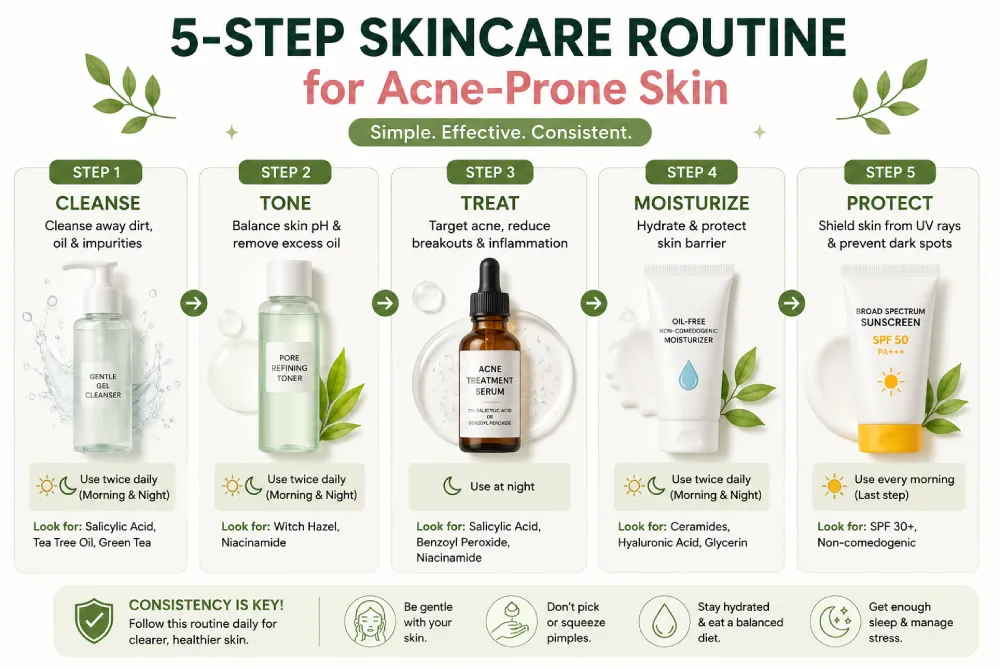
The 5-Step Skincare Routine for Clear Skin
Step 1: Gentle Cleansing (Morning & Evening)
Cleansing is the base. But here‘s the trick soft works better than rough.
Use a sulfate-free, salicylic acid (2%) cleanser to rid the skin of excess oils and dead skin cells without removing all of the moisture. (If you wear sunscreen and/or make-up, wash the face twice, once with an oil cleanser and once with a salicylic-acid-based one.)
Pro tip: Rub your cleanser into the skin with circular movements, for about 60 seconds, paying extra attention to your T-zone, where many of us suffer from excess sebum.
Step 2: Targeted Treatment
Here is where you treat the breakouts that are currently active, and try to prevent future breakouts. Select ONE natural ingredien to treat your acne:
- Benzoyl peroxide (2-5%) – the most effective form of treatment for inflammatory acne (red, painful bumps)
- Salicylic acid (2%) – Great for blackheads/whiteheads/blocked pores
- Niacinamide (4-5%) A more soothing choice for sensitive, acne-prone skin.
Spread a thin layer over skin that is moist and dry. Not spot-treat, apply to all areas of your face to reduce future break outs.
Step 3: Lightweight Moisturizing
Non-negotiable!! A calm skin barrier is the bed-rock of best skin care regiment. Choose a gel or light formulation of moisturizer with:
- Ceramides (repair skin barrier)
- Niacinamide (reduce oil, calm inflammation)
- Hyaluronic acid (lightweight hydration)
Select oil-free, non-comedogenic formulas that are helping avoid blocking your pores.
Step 4: Daily SPF Protection (Mornings Only)
Sunscreen isn‘t just for the summer. Clouds don‘t block out UV rays which can cause aging, sun spots and Skin cancer in winter, at work, even while wearing SPF makeup. Plus, all the anti-acne ingredients have your skin ultra-sensitive to the sun.
Select a broad-spectrum SPF 30+ that‘s non-comedogenic. If your skin is prone to acne, opt for mineral sunscreens or lightweight formulas catered to your skin‘s needs.
Step 5: Weekly Exfoliation (Optional)
When your breakouts are under control, include a light chemical exfoliant 1-2 times a week with AHA (glycolic acid) or BHA (salicylic acid). It will help prevent enlarged pores and refines the skin.
Skip this step if your skin feels irritated or raw.
Best Ingredients for Acne-Prone Skin
Salicylic Acid (BHA)
(1) Salicylic acid is a BHA which is a keratolytic that causes peeling of skin to shed dead skin cells that can block pores and cause pimples. It is oil soluble so sinks deep into the pores.
Best for: Blackheads, whiteheads, non-inflammatory acne
Concentration: 2%
Use: daily in cleansers or treatment
Benzoyl Peroxide (BPO)
Treat current pimples by killing bacteria (it is one of the best anti-bacterial agents), dry out the pimple by reducing oil secretion and to unblock the clogged pore.
Best for: Red, sore pimples or cystic acne
Concentration: 2-5%
Use: Full face application (not just spot treatment) for prevention
Niacinamide & Ceramides
Acne-prone skin responds well to gentle care over time, rather than high maintenance or aggressive scrub-downs. Think gentle, balanced hydration with anti-inflammatory ingredients and protective sunscreen in your regimen. Your skin will thank you for it.
These will strengthen your skin barrier and weaken irritants.
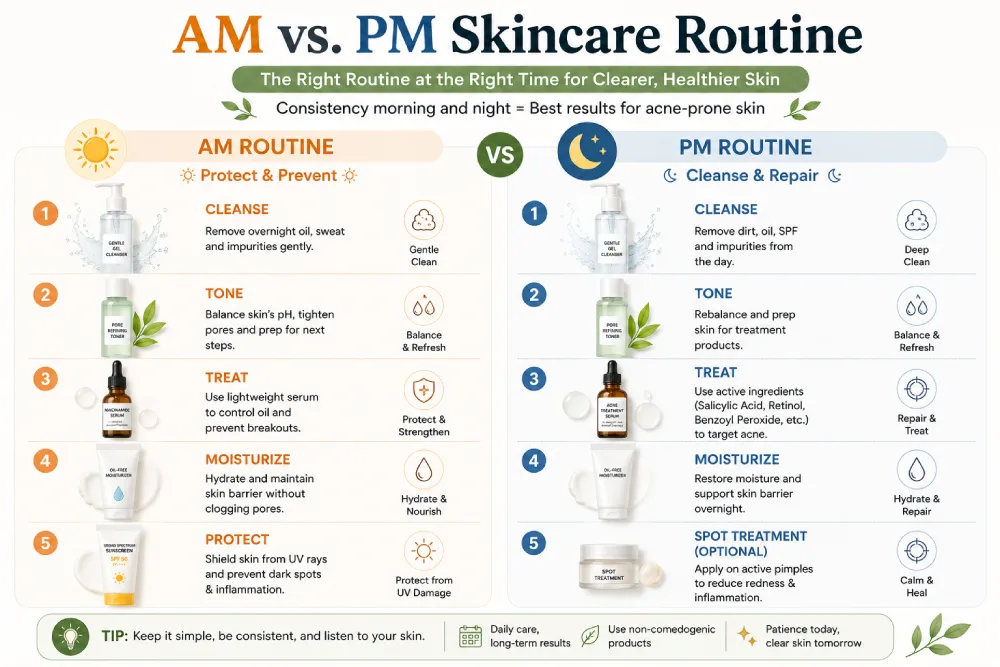
AM vs. PM Routine Breakdown
Morning Routine (3-5 minutes)
- Gentle with a salicylic acid (heals from within; not scalding hot water)
- Treat with benzoyl peroxide or niacinamide (let dry 1-2 minutes)
- Gentle, lighter weight gel moisturizer
- Follow a consistent morning skincare routine and use sunscreen with SPF 30+.
Evening Routine (5-7 minutes)
A proper night skincare routine helps active ingredients work while you sleep:
- Cleanse (if makeup/sunscreen worn do a double cleanse)
- Treats with the active compound you selected.
- Hydrate with your barrier-restoring moisturizer
- Optional: Instead of step 2, weekly exfoliation 1-2 times.
Common Mistakes That Make Acne Worse
Using too many actives at once – Causes irritation and barrier damage
Skipping moisturizer – Dehydration leads to more oil production
Changing products too often – Your skin needs 4-6 weeks to adapt
Using scalding hot water – Heat enlarges blood vessels and encourages inflammation
Picking or squeezing pimples – Creates scars and spreads bacteria
Not wearing SPF – Acne treatments make skin more sensitive to heat
When to Expect Results & How to Stay Consistent
Week 1-2: small increase in flaking and dryness (normal adjustment)
Week 3-4: beginning to see improvement, number of breakouts decrease
Next 6-8: large difference in texture and clarity
Week 12+: most of the breakouts gone if you stick to the regime14.3
The Key? Don‘t give up if you haven‘t shown up for a week. A simple routine done consistently beats a complicated routine done for three days. Consistency over perfection always wins.