Natural Skin Care Guide: Best Routines, Ingredients & Products for 2026
Published: July 6, 2026 Last Updated: July 6, 2026 If you have ever found yourself in the skin care
If you have ever found yourself in the skin care aisle of your local grocery store completely lost as to what the ingredient names mean you are not alone. That same confusion is exactly why natural skin care is one of the most researched beauty topics in the world whether they be the skatfarian obsessed with instagram in the US or the aging Ayurvedistami in India.
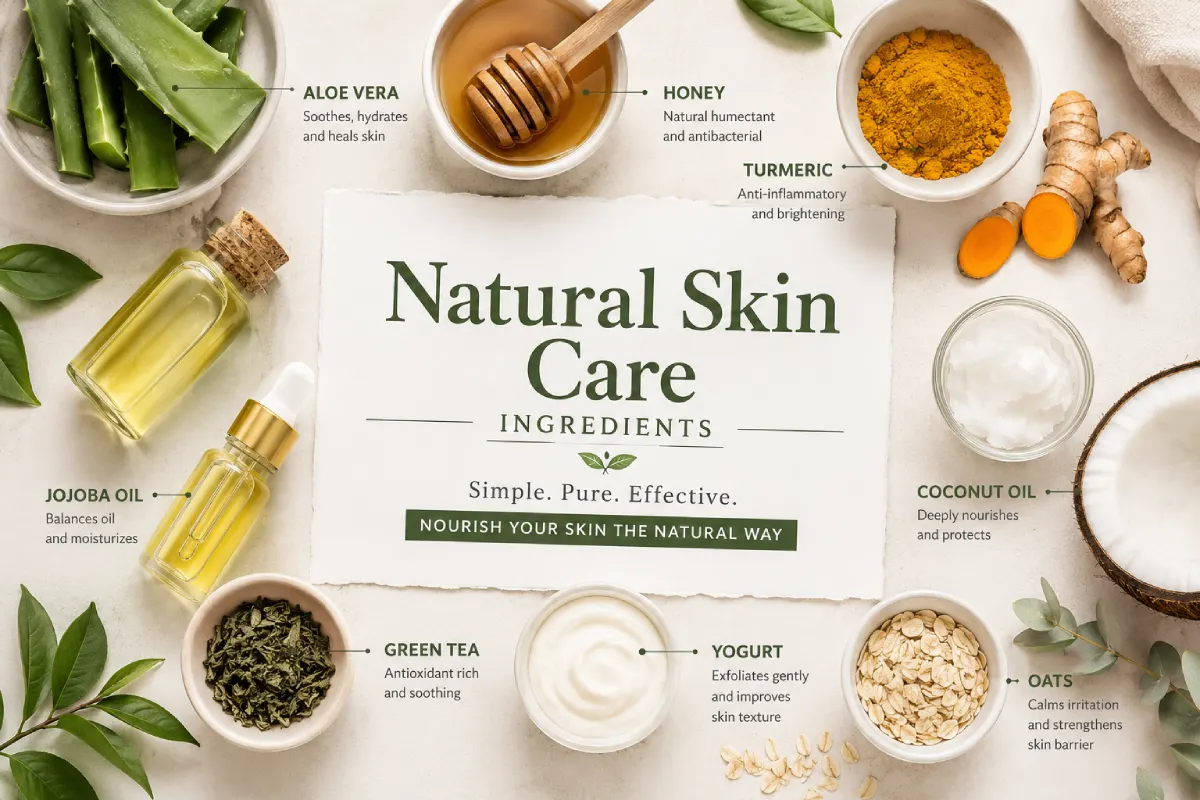
Natural skin care Your skin is made of places that are well-supplied with blood and those areas tend to look redder. So having minimal redness or inflammation. If you care about the environment, look for ingredients like Aloe vera, turmeric, rosehip seed oil, honey, and so on. Applying those to your skin ensures that it gets what it needs without the fifteen-step chemical application.
Your navigation route: our promise to you. We won‘t shove every little tip into one article (we‘ve all read the shallow, forgettable articles like that). Instead, we‘ll be giving the overview here: the meaning of natural skin care, to determine your skin type, to create a skin care routine, the ingredients worth knowing (all the new ones that matter, find out more here), and tips to avoid the most common mistakes. And the for each big section, we‘ll link you to a big one you can go as deep into as you wish.
What Is Natural Skin Care, Really?
Basically, natural skin care means stripping out all the synthetic crap (parabens, sulfates, chemical fragrances) and relying on what Mother Nature gave us, ingredients we‘ve been working in conjunction with for the last 4,000 years. Before the 10-syllable ingredients in your moisturizer even existed, people were using oils, plant extracts and kitchen cupboard staples to protect their faces and bodies from the sun and the wind.
Key takeaways:
- Natural doesn‘t equate to “safe” poison ivy is natural, too. It‘s all about the sourcing, concentration and formulation.
- When correctly formulated natural skin care works in harmony with your skin barrier rather than stripping it.
- It‘s a spectrum, not an either or many people effectively mix natural and conventional products into a single routine.
- Note that “natural” is not regulated like “organic” in many countries so its good to still read ingredients:
Practical tip: always do a patch-test on your inner wrist or behind your ear for 24 hours before applying new natural ingredients on your face. Essential oils especially can react even thought have “natural” label.
Mini summary: Natural is about a conscious conscious deliberate choice of minimally processed elements but it is the same old caution, reading labels and testing as usual.
Why Natural Skin Care Is Trending in 2026
This movement to all natural skin care is more than just a second to the craze it‘s a culmination of a shift in mindset towards what products are being put on the skin. There are numerous factors fueling this:
- Demand for ingredient transparency: Consumers are demanding that they understand what is actually in the product, rather than trusting the branding.
- Other concerns regarding sustainability, ie plant-based formulas, biodegradable formulas are naturally COW currently deemed superior environmentally to more synthetic, heavily formulated though.
- Increasing sensitivity and allergy awareness: Increasing numbers of people becoming sensitive to preservatives and fragrances are shifting to more simple formulations.
- Revisting the culture: In India, Ayurvedic beauty rituals were considered outdated by many women decades ago but are now returning to as “clean beauty” among millennials.
- Social media training: on Instagram and YouTube, skinfluencers and dermatologists have taken the science of ingredients to everyday consumers.
Mini summary: In 2026 natural skin care stands as a confluence of wellness, sustainability and a genuine craving for a simpler, more transparent routine.
Understanding Your Skin Type First
One of the most important things that you should know before you purchase even a single natural product is the characteristics of your skin. This one step avoids more skin care mistakes than almost anything else.
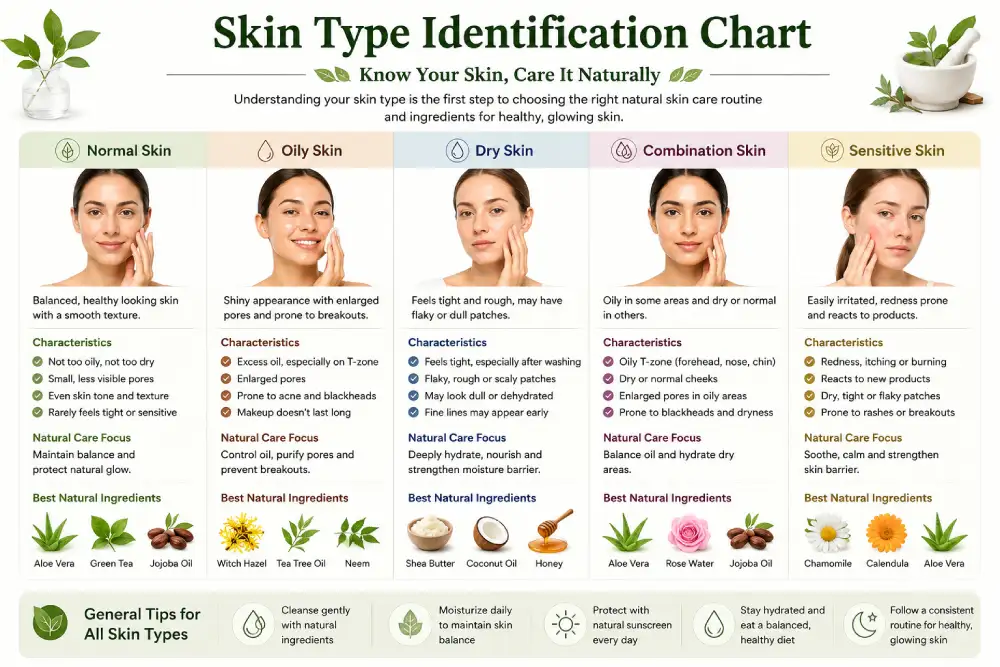
The five general skin types:
| Skin Type | How to Identify It | Natural Ingredient Priorities |
|---|---|---|
| Oily | Shiny by midday (if not earlier) p. T-zone, larger pores. | Jojoba Oil (Nature‘s Way), Tea Tree Oil (The Body Shop, The Nature‘s Co.), Clay |
| Dry | Lack of shine, feels tight and flaky, occasionally flaky. | Products Shea butter, avocado oil, honey |
| Combination | O oily T zone, dry/normal cheeks | Lightweight gels and targeted spot treatments |
| Sensitive | Will react quite readily. Redness, pruritus, stinging with new products. | Aloe vera, oatmeal, calendula, unscented |
| Normal | Balanced, few concerns, never responds | Most natural ingredints are pre, well. |
Practical tip: Do a simple test at home clean your face, don‘t put anything on it and wait for an hour. If your face is shiny all over, it is probably oily. If it is tight, so is likely to be dry. And only shines on the T-zone, it may be combination skin.
Mini summary: The natural ingredients that are good for you and the ones to avoid are determined by your skin type do this step and you are just playing the odds blindly.
Building a Natural Skin Care Routine
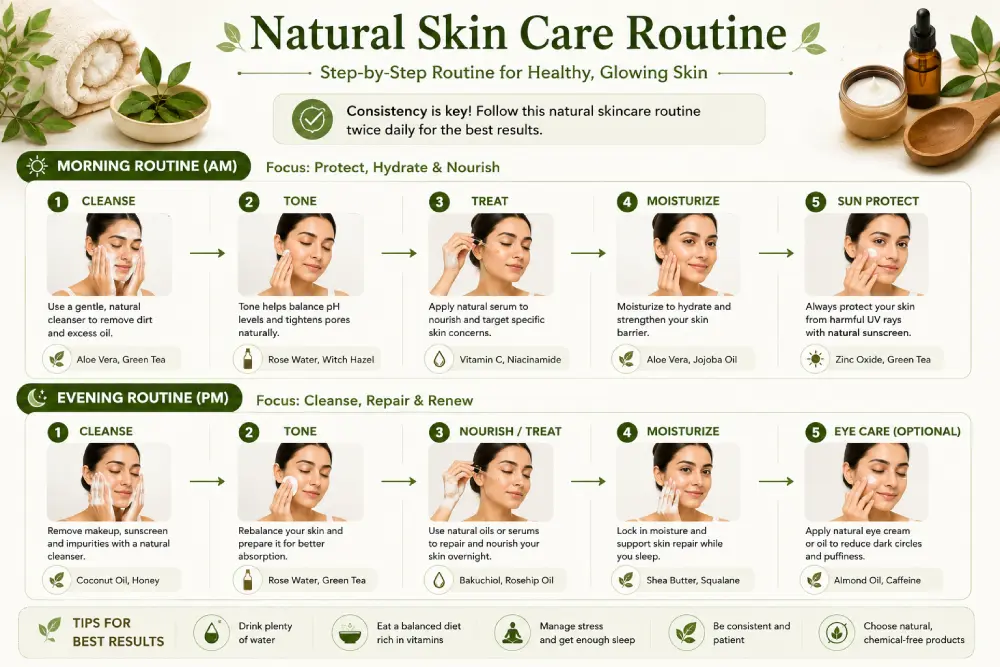
Having a good routine is the basis of everything. A natural routine in its basic form- cleanse, tone, treat and moisturise- with an added SPF during the day.
Key takeaways:
- Morning routine would mainly consist of protection: antioxidants + SPF.
- Evening routines (meant for repairing): oilier, more emollient, gentle exfoliation, reparative ingredients in the skin.
- Climate matters a lot the same routine that keeps your skin from cracking in humid Chennai might cause you to have a gooey layer of cream in dry Denver, and vice versa.
- Consistency is better than complexity a simple routine of four steps done every day outperforms elaborate of ten steps every now and then.
Example of a practical programme: A basic routine for AM may consist of a mild cleanser, vitamin C serum (or amla extract, a natural alternative which is much used in India), a light face moisturiser and a mineral suncream. A night time routine may replace the sun cream with a richer natural oil such as rosehip or jojoba.
Step-by-step starter routine for beginners:
- Use a mild, sulfate free natural cleanser.
- Use a hydrating toner or a floral water. (Rose water works well as a natural product).
- Use a treatment designed for your specific concerns (vitamin C for brightening, niacinamide in one of its multiple alternative formulations for oil-control).
- Use a hydrating formula that is appropriate for your skin.
- With SPF in the a.m, finish with a nourishing facial oil if necessary. In the p.m, finish with a nourishing facial oil if necessary.
Mini summary: Your natural routine needs to be flexible, flexible, flexible. Adapt it around your skin type, your weather and the time of day and never stick to a rigid, one-size-fits-all routine.
Read More: Complete Natural Skin Care Routine Guide
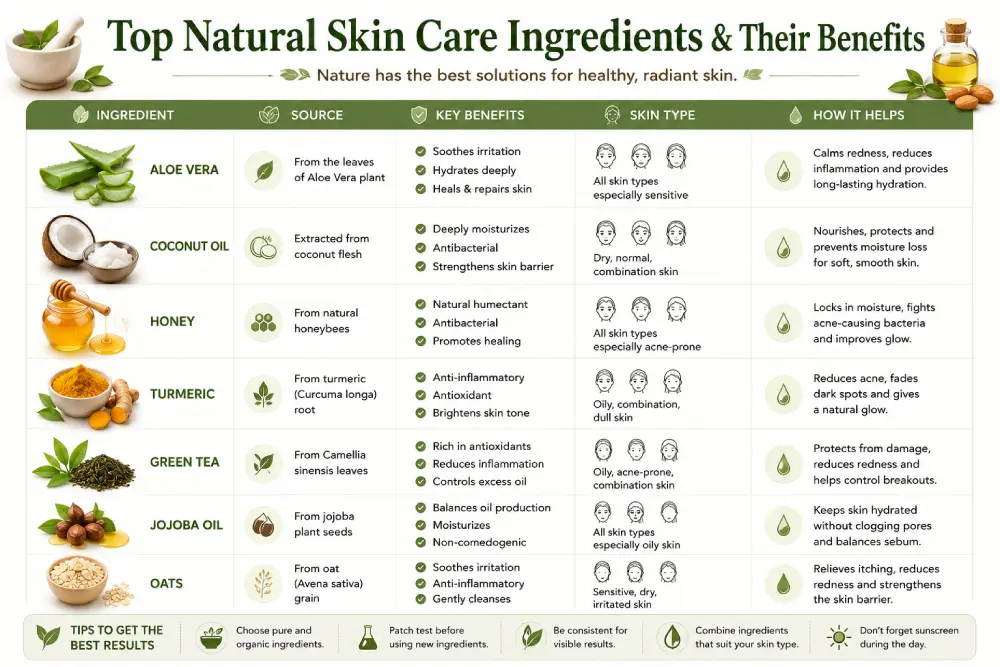
Key Natural Skin Care Ingredients to Know
Not all “natural” ingredients are equal. Some have been used for decades with real benefits for the skin others are the latest worldwide trend that have very little or no proven benefit.
Key takeaways:
- Aloe vera soothing, moisturising, perfect for sunburn and overall irritation.
- Rosehip oil– contains vitamin a and C, good for fine lines and pigmentation
- Turmeric anti-inflammatory, common in Indian skin care products, for brightening, calming.
- Jojoba oil (almost identical to natural sebum perfect for all skin types especially oily).
- Tea tree oil antibacterial, good for occasional blemishes but must be diluted.
- Shea butter–very emollient, recommend for normal or dry skin types.
- Honey (raw/manuka especially) humectant and slightly antibacterial, helpful for hydration and soft blemish treatment;
- Green tea extract rich in antioxidants, helps to soothe inflammation and can aid in repairing sun damage.
Practical tip: start introduced one new ingredient at a time giving at least a week in between so you can really tell what is working…and what might be irritating.
Mini summary: The right natural ingredients is going to vary for everyone‘s skin type and concern no one super ingredient is “best” for all.
Read More: Full Guide to Natural Skin Care Ingredients
DIY Face Masks You Can Make at Home
One of the most satisfying aspects of natural skin care is DIY masks cheap, personal and usually using items you already have in the kitchen.
Key takeaways:
- The antibacterial properties in honey and cinnamon masks can calm down small breakouts.
- Besan (gram flour) and turmeric face packs are Ayurvedic for brightening and light exfoliation.
- 2. Mild lactic acid exfoliation through oats and yogurt masks and gentler treating. Oatmeal and yogurt mask also make the skin feel gently calm for sensitive or irritated skin.
- Avocado and honey masks are suitable for very dry skin that requires deep nourishment.
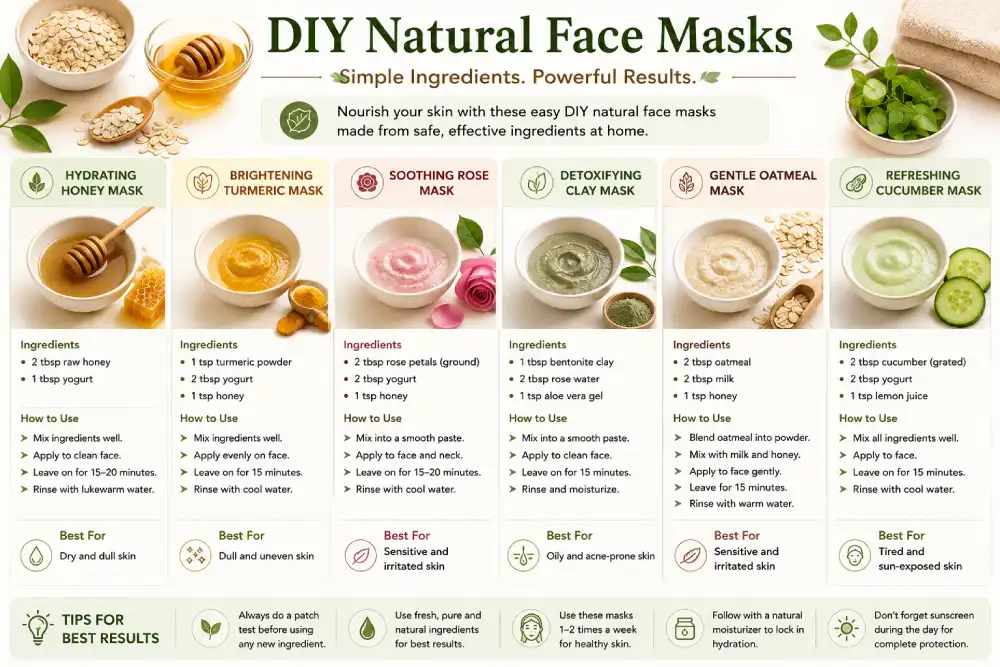
Practical tip: DIY masks are most effective 1-2X/week. Doing too many even on gentle ingredients can eventually break down your skin barrier.
Mini summary: DIY masks are fun but should be used as a replacement for your regular routine. Can‘t replace your daily wash, moisturizer, or sunscreen.
Read More: Step-by-Step DIY Face Mask Recipes
Natural Remedies for Acne
Acne is one of the top reasons people are looking for natural skin care in the first place so it‘s not surprising that acne is also one of the easiest areas to mess up with home remedies.
Key takeaways:
- Diluted tea tree oil is among the more well-researched natural remedies for acne.
- Applying straight raw honey directly to active blemishes has a soothing effect. This can be left on overnight.
- Over-washing or applying strong natural acids, such as un-diluted lemon juice can make areas worse through easy damage of the skin barrier and increased susceptibility to sun damage.
- Most often, diet and hormonal issues are more the king of persistent acne than topical formulations.
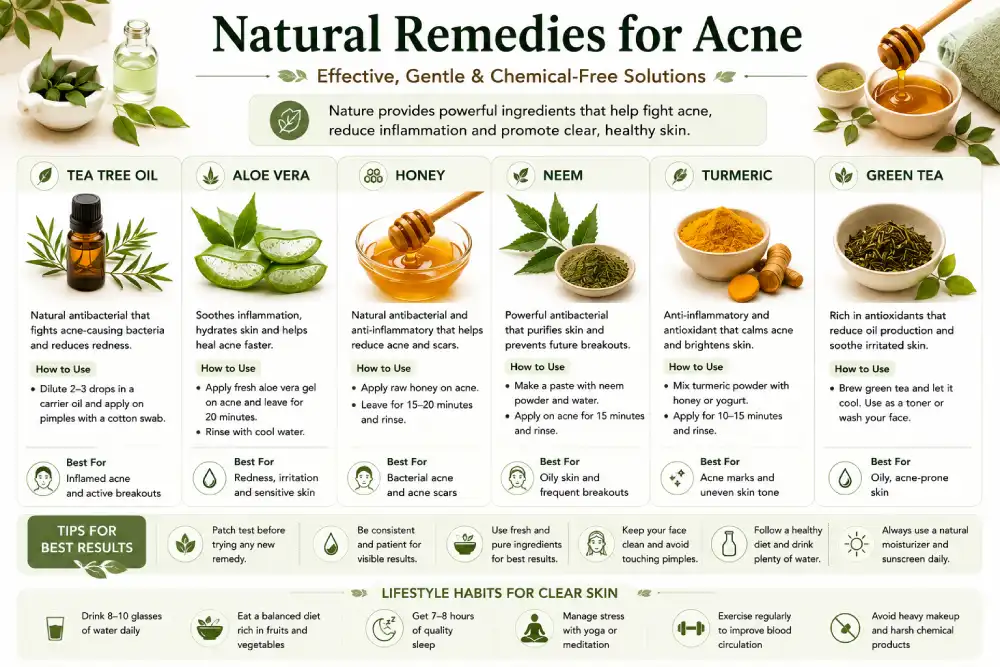
Practical tip: If long-term or cystic acne didn‘t benefit from an herbal or other home remedy within 6–8 weeks, instead of escalating a home regime, it‘s time to see a dermatologist.
Mini summary: In moderate and sporadic acne it is often worth trying the natural approach but there are definite boundaries know when to tell your person that it‘s time to go to the doctor.
Read More: Natural Acne Treatment Guide
Anti-Aging with Natural Skin Care
Not to mention that anti-aging doesn‘t need to sit inconspicuously behind the shelf. There are various effective natural elements and ingredients in favour of the proven ability to support collagen production and minimizing signs of aging.
Key takeaways:
- Bakuchiol is sometimes referred to as a “natural retinol alternative” which has similar results but has a less severe side effect on sensitive skin.
- Brightening ingredients such as amla and rosehip are sources of vitamin C. Vitamin C is important for a more radiant, evenly toned appearance and helps collagen production.
- The most effective anti-aging measure, which is simple and natural, still continues to be SPF application.
- A facial massage along the natural oils may stimulate the circulation and overtime can enhance product penetration.
Tip: For the antioxidant natural serums, use in the morning alongside your SPF as antioxidants benefit skin but can not stand in for sun protection.
Mini summary: Natural Anti-Aging should be adopted as habitual and long-term rather than a temporary fad you try for a week and give up.
Read More: Natural Anti-Aging Skin Care Guide
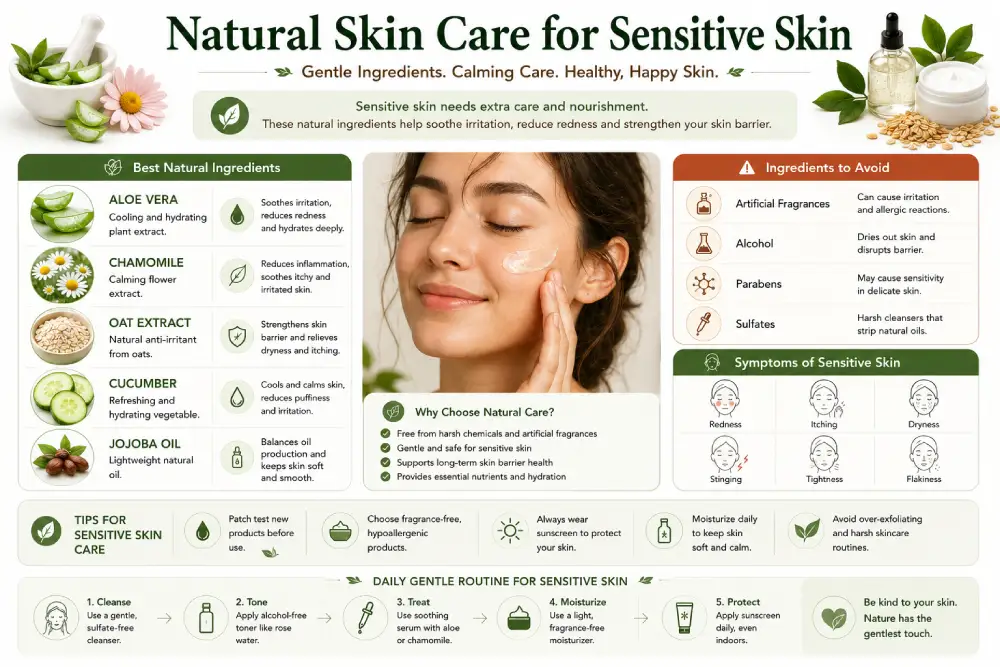
Natural Skin Care for Sensitive Skin
Sensitive skin needs some special treatment even within natural skin care – certain botanical ingredients and essential oils are all the common irritants, despite the “natural” claim.
Key takeaways:
- For sensitive or eczema-prone skin, fragrance free is more important than ‘natural’.
- Common smoothing ingredients that should comfortably be tolerated by the vast majority of sensitive skin types include; oatmeal, aloe vera and calendula.
- Common skin sensitizers such as lavender, tea tree and citrus oils must be used carefully, if at all, on inflamed skin.
- Often, taking away from the routine rather than adding to it a dozen “gentle” new products works better.
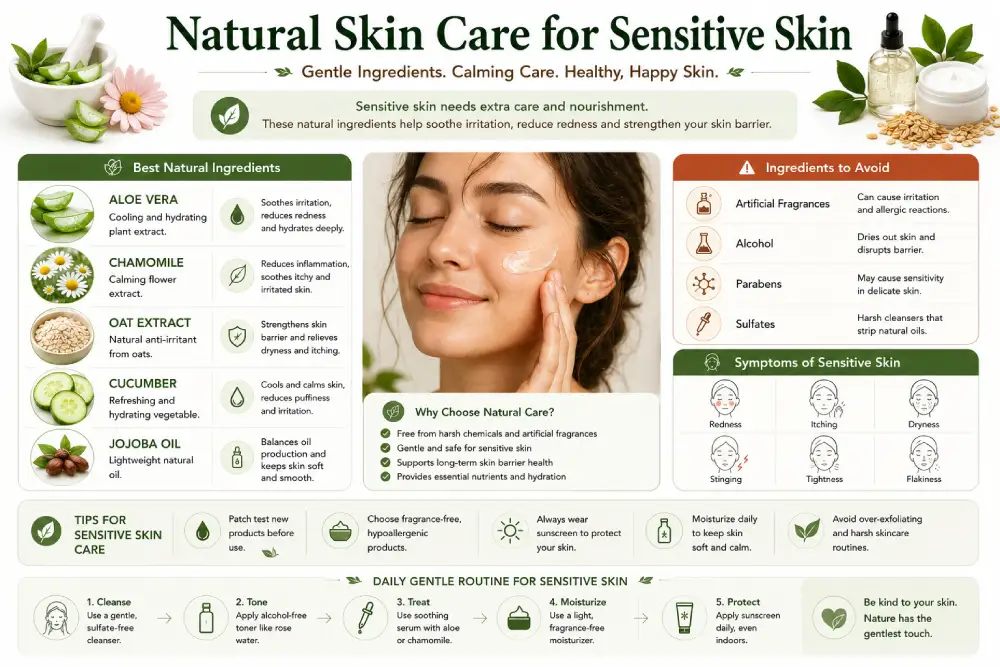
Practical tip: To determine the cause of irritation, cut your routine down to five items or less and gradually add items back into your routine one by one.
Mini summary: When it comes to sensitive skin, “fewer, gentler ingredients” always wins over “more natural ingredients.”
Read More: Sensitive Skin Natural Care Guide
Organic Skin Care Benefits: What You Actually Gain
“Organic” and “natural” are sometimes used synonymously but in fact organic applies to ingredients grown without synthetically applied pesticides or fertilizers. Going organic-certified natural skin care means open to a few unique benefits.
- Lower levels of pesticides remaining in Plant-based ingredients that you use on your skin everyday.
- Sometimes more sustainable sourcing practices, which are important if you care about the environment:
- In general easier ingredient lists as the use of synthetic additives is restricted by the organic certification.
- Support for small-scale farms and producers who tend to be family enterprises, especially important in parts of the world where there are many ingredients eg India.
Practical tip: In order to read the packaging and label, be sure to see accepted organic certification marks, instead of marketing language alone, as “organic-inspired” or “made with organic ingredients” does not signal the same certifications.
Mini summary: Organic skin care isn‘t inherently more effective, but it does provide genuine, tangible benefits to do with sourcing, environmental sustainability and simplicity of ingredients.
Natural vs. Chemical Skin Care: Myths vs. Facts
| Myth | Fact |
|---|---|
| Natural This means it can‘t cause a reaction. | A lot of natural ingredients like the citrus fruits and some essential oils are known to be irritants and allergen-producing. |
| “Chemicals are a hazard period, always.” | A lot of our synthetic ingredients (hyaluronic acid, niacinamide) are quite well studied and are pretty kind. |
| “DIY is always cheaper and better.” | No preservatives or stability testing no matter how small the quantity, shelf life and consistency may be irregular. |
| More natural ingredients in a product indicates a better-working. | The effectiveness is dependant on formulation concentration and not number of ingredients. |
| Ten step program for results. | A simple four-step routine is usually better than an elaborate one that is used irregularly. |
| “All skin care products used naturally will work in the same way for every-one.” | The variation in skin type, environment and sensitivity will alter the way any ingredient reacts. |
Common Mistakes in Natural Skin Care
- Skipping SPF because a routine is “already natural” sun protection has nothing to do with how natural the rest of your routine is.
- An over abundance of active ingredients (combining turmeric, lemon, tea tree etc together) increases the chance of irritation.
- Assuming DIY masks can be a substitute to a daily cleanser and moisturizer, (may be used instead of additive supplements).
- Think not changing practices by seasons and regions humid rather than dry climates.
- Overlooking patch testing new botanical ingredients, more so essential oils.
- Shelving DIY goods too much time without preservatives, homemade salads can add bacteria within days.
- Anticipate results after a couple of days– natural ingredients tend to take longer than intense synthetic actives.
Troubleshooting: What to Do When Natural Skin Care Isn’t Working
Even a well-designed natural routine can stall. Here are some of the most common problems, and ways to help you get through them:
Problem: Breakouts after starting a new natural product. The breakouts could be a real reaction (days into using the product)orac simply a “purging” stage for some “active” components (such as natural exfoliants), which will usually disappear in two to four weeks. If breakouts get worse or symptoms like swelling then stop.
Problem: No results seems to show up after several weeks using. Ensure you are applying an active that is really designed for your skin type and skin problem. For example, a moisturizer will not combat the problem of acne, and an anti-dryness ingredient will not combat oiliness.
Issue: Dry or taut skin after doing a home-made mask. This is likely due to the excessive use of acid-forming ingredients (lemon, non-watered-down vinegar) or exceeding time limits. Use less often and don‘t forget to non-comedogenic hydrate afterwards.
Problem: Product appears to “stop working” after a period. As skin gets used to a routine, changes in seasons, humidity and temperature may require you to change your routine rather than your product.
Mini summary: Nearly all of the natural skin care setbacks are due to the wrong ingredient combination, usage too much or not enough, or not giving it enough time not inherent deficiencies of natural skin care.
Natural Skin Care in the USA vs. India: Regional Insights
Climate and cultural context make “natural skin care” different in different contexts.
In USA:As clean beauty proponents put increasing pressure on brands to list ingredients more openly, many natural actives have filtered into products that are more widely available, such as jojoba oil, squalane and centella asiatica. Fiery hot states like Arizona or Colorado tend to prefer more occlusive, oil-based moisturizers while Florida consumers like lighter, gel-type textures.
In India: Natural skin care families have relied on traditional Ayurvedic ingredients such as turmeric, besan, sandalwood and neem for generations. Practice differs from family to family depending on frequency of exposure to humidity and urban pollution. Family rituals also change according to the seasons and winter or monsoon months.
Tip: In humid places, use lighter natural moisturizers and oil free sunscreens that are gel-based. In very dry environments, it is better to go for the heavier oils (e.g. jojoba or shea butter based products).
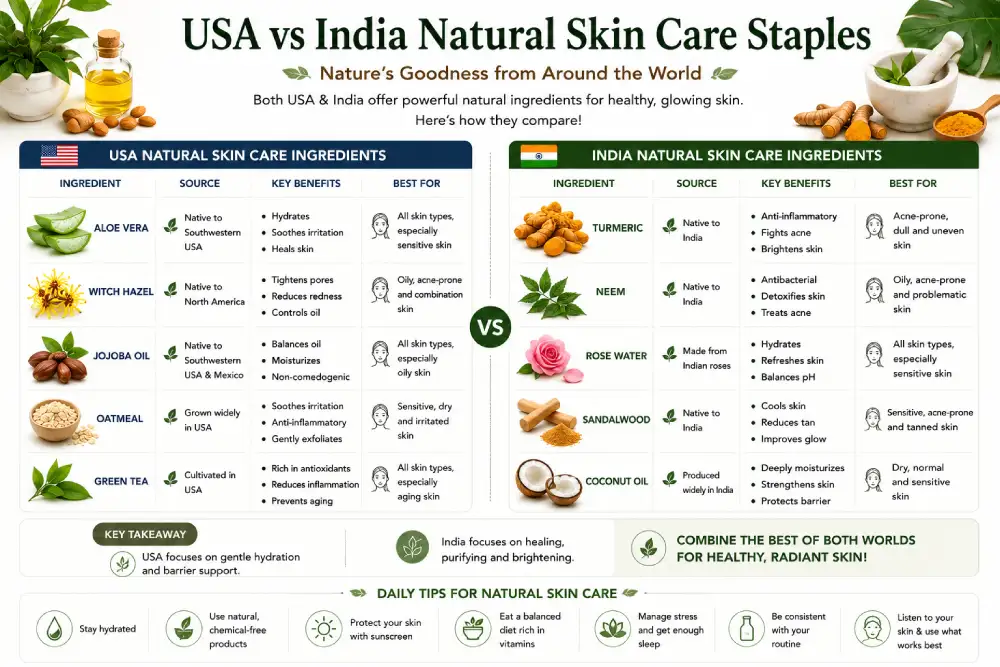
Mini summary: No one ‘correct’ natural skin care routine; the climate, and the cultural context should realistically influence your choice of ingredients and products.
Budget-Friendly Natural Skin Care Tips
Natural skin care can be pricey, but it doesn‘t have to be.
Key takeaways:
- A lot of great natural ingredients (honey, oats, yogurt, turmeric, etc) are all cheap ingredients you usually find in your kitchen.
- Multi use items(such as a facial oil that can be used as both a moisturiser and or makeup remover) cuts down on the number of items you need to purchase.
- The cost of purchasing raw ingredients for the occasional DIY mask is often less than a pre-made natural mask.
- Prioritize money into a few ‘core’ products that match your hair type rather than many niche products.
Practical tip: Keep it simple initially by beginning with a 3-product natural routine (cleanser, moisturizer and SPF) and then gradually building to include serums, masks and specialty treatment products.
Mini summary: With a focus on multi-purpose products and good proven ingredients, one can effectively create a budget friendly natural skin care routine.
Future Trends in Natural Skin Care (2026 and Beyond)
- Waterless beauty natural and intense formulas aim to reformulate to use less preservatives.
- Biotech-derived naturals plant actives made in the lab that carry a reduced greenhouse-gas impact and still have a “natural story” to tell.
- Personalized natural routines match AI-driven skin analysis with personalized natural ingredient recommendations.
- Ayurveda-meets-science formulations time-honored Indian botanicals now being proven in contemporary clinical studies.
- Refillable and low wastes natural packaging – triggered by the change of consumption trend of sustainability-conscious consumers in US and Indian markets.
Real Experience: What to Expect in Your First 30 Days
Adopting a natural skin care routine is not going to happen in one night and having realistic expectations will help you give it enough time to work.
The first week: Your skin is adapting some people go through a mild“purging” period as the skin get use to new ingredients, especially if you were previously on a heavy synthetic routine.
Week 2: The first improvements you‘ll probably notice are hydration and texture, especially if you‘ve use ingredient such as jojoba oil or aloe vera.
3–4 Weeks: if you have been using the right products for your skin type (see above), your more targeted problems (mild acne, dullness, sensitivity, etc.) will be beginning to be visibly reduced.
Other issues that takes at least 30 days to see beneficial results include hyperpigmentation, fine lines or acne which sticks around.
Mini summary: To truly be natural skincare, patience is truly an essential, on the whole much of the disappointment is because we are expecting synthetic-speed results from gentler, natural ingredients.
Final Thoughts
The point is not to be so dogmatic so as to dump every product you own, packed with a hundred lines of ingredients and 2.99 in the light blue bottle. It is instead to learn more about your skin and your habits so you can make better decisions. Begin simply. Discover your skin type and foundation. Stick to a regular routine, use ingredients that are appropriate for your region of the world and give it time. Then follow the rest of the recipes-say if you want to go for it! guides in the links below.
FAQs
Q1: Is natural skin care better than chemical skin care?
Not always you need to consider the individual ingredient and your skin condition. Certain naturally sourced ingredients work well, and certain synthetic ingredients are well-studied and not harmful. The most effective routines often mix natural and synthetic ingredients intelligently.
Q2. Which are the most effective natural products for oily skin?
For oily skin, people use jojoba oil (balances sebum), diluted tea tree oil (as a occasionally spot treatment) and aloe vera (for a lightweight hydration).
Q3: Can I replace my store bought skin care with DIY face masks?
No DIY masks are a nice supplement, but can‘t be a substitute for a daily cleanser, moisturizer & SPF, as they‘re not as stable or consistently formulated.
Q4. Is it safe for sensitive or eczema prone skin?
It can be, ‘natural’ doesn‘t necessarily mean gentle. Simple fragrance free formulas using ingredients such as oatmeal and calendula is best.
Q5: How soon can I see results?
Depending on a person‘s skin condition and age the result varies. Within 2-4 weeks you would see the change in hydration, glow and feeling. Deeper skin problems such as Acne scaring or fine lines it can take from 8 to 12 weeks of continued use.
Q6. Do natural skin care products go off quicker than chemical ones. Frequently yes, particularly if you make up your own products as they will not contain preservatives, so should be used within days or a week or two, and kept in the fridge if possible.
Q7. Is natural skin care costly?
Not at all! A good number of natural ingredients such as honey, oatmeal or turmeric are readily available, affordable and have many use so you don‘t need to spend a fortune.
Q8– Is it suitable for acne?
Yes, for mild to moderate acne, a lot of natural ingredients such as diluted tea tree oil, honey may be beneficial. For stubborn or cystic acne, advice and medication from dermatologist are often necessary.
Q9. What‘s the difference between ayurvedic skin care and natural skin care?
Ayurveda is a traditional system developed in India over many centuries and is based on compositions such as turmeric, sandalwood and neem according to traditional individual “dosha” or body-type concepts and is a definition of nature-based skin care.
Q10: Should I alter my regular skin care with the seasons?
Yes most find lighter, gel-type products easier to use in warm, humid weather, and richer, oil-based products more comfortable during dry, cold weather.