Skin Rash Prevention Tips for Healthy and Irritation-Free Skin
Published: July 3, 2026 Last Updated: July 3, 2026 People rarely prevent before they break out. Most will treat

People rarely prevent before they break out. Most will treat their rashes when it happens. But for millions of Indians who face recurrent heat rashes, allergic breakouts, fungal rashes during monsoon and then contact reactions to products they use routinely how it all begins is the real problem.
These skin rash prevention tips are created just for India‘s climate, its typical skin triggers and the daily practices that results in the largest number of recurring rashes. Stick with them and the majority of recurring rashes are unconditionally avoidable.
It is a common tendency among Indians to reach for a remedy only after the rash has appeared, almost neglecting the element of prevention. For the countless for Indians who suffer heat rashes, allergic flare ups, fungal rashes during the rainy season or contact reactions to their common use products prevention is definitely the only cure.
Some important tips to prevent these skin rashes have been tailored for Indian weather, Indian skin aggroers and the habits which are most likely to lead towards skin inflammation. They help a lot if used consistently.
Common Causes of Recurring Skin Rashes
The first step to preventing outbreaks is understanding what triggers them. Chronic rashes are nearly always linked to a known factor and in India, that factor rarely varies.
Heat and humidity India‘s sizzling summer and rainy season mainly cause the country‘s guvissing rash haya ( prickly heat ghamori). Blockage of sweat outlets by the sun, damp heat, skin pressure and a nylon skin-fit continuing mode gives a repeat pattern.
Synthetic fabrics Polyester and nylon and blends hold heat and moisture next to skin. In India‘s hotter climate (monthly temperatures are above 30°C for six or more months of the year for most cities) synthetic clothing is one of the most persistent and potentially avoidable causes of recurrent rashes.
Hard water Mineral-rich water used by millions of Indians in urban homes. It is high in calcium, magnesium and other minerals. Has a neutral to high pH that increases the skin pH, upsets the acid mantle and leaves deposits of mineral upset on the skin barrier. Often the cause of the developing rash on those who move cities. Delhi and Bengaluru are familiar for the prevailing hard water.
Strong soap and detergent formulations Detergents loaded with Sulphates and al large dose of perfume in the soap tend to strip the natural lipid barrier of skin over and over again, often predisposing an already stressed skin in hot humid conditions to develop a rash. Perfume in Indian washing powder is known to be a frequent contact allergen.
Allergy triggers local to India Dust mites which exist all year round in the coastal cities, pollen which may be seasonal and vary from region, rubber sandals and gloves that contain latex, Nickle in sub-standard jewellery and chemical dyes in inexpensive cloths. Several individuals can experience recurrent rashes for many months without establishing the cause or relation.
Monsoon fungal triggers July to September brings the right environment for fungi warm and humid throughout, shoes filled with water, moist skin folds. To have fungal rash (ringworm, jock itch, athlete‘s foot) appear every monsoon, and keep recurring during the season is almost always reversible by following some simple habits during this season.
Pollution Delhi, Mumbai, Kolkata and Bengaluru are some of the world‘s most polluted cities. PM 2.5 deposits on skin cause oxidative stress and inflammation, in particular exacerbating eczema, contact dermatitis and sensitive skin reactions. Urban skin is frequently plagued by a pollution element that is nothing short of neglected.
💡 For a complete guide to treating each of these rash types once they appear — including OTC cream recommendations and when to see a doctor — read our main guide on skin rash treatments.
Daily Habits That Help Prevent Skin Irritation
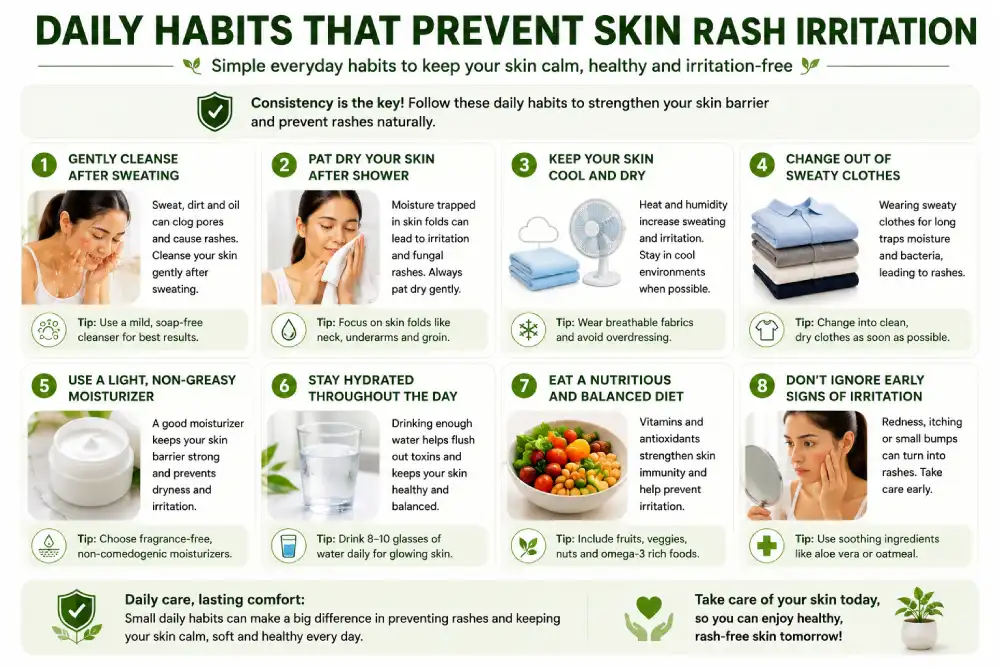
It‘s integrated into your daily routine not a one-time product or fix. These are the habits across the board that have the greatest quantifiable effect on how often you get a rash on Indian skin.
Shower with luke warm, not hot. Hot (or even very warm) showers can strip the skin‘s natural oils, disturb the acid mantle, and cause the barrier to be broken down — meaning you‘re now reactive to each and every subsequent trigger. In the case of India‘s notoriously blisteringly hot summers, this further aggravates heat-related irritation. But lukewarm water cleans seamlessly without damaging the barrier. It makes a huge difference for most people‘s eczema flares and contact eruptions.
Dry skin folds out completely after the bath. These skin folds like under the breasts, between the thighs, groin, between toes and in the arm pits are areas where fungal rashes arise all the time in the humid weather in India. Pat (do not rub even a bit) these areas out completely dry. Use antifungal powder (clotrimazole or miconazole based) over these areas in the monsoon months after drying out more so if you have had fungal rashes before.
Using a natural flame resistant fabric such as cotton or linen, not synthetic ones. Ordinary times and Indian summers and Monsoons are the ones where you can wear only cotton or linen on rash-prone skin. They are breathable, wick, moisture away and do not hold back heat tight against the skin. Use synthetic blends only for specific exercise or adverse weather conditions, where performance fabrics are essential.
Change out of wet or sweaty clothes, no exceptions. Wet clothes inside after exercise, getting caught in the rain, or even sun and heat are one of the most reliable triggers for fungus and heat rash. The longer the moist fabric stays in contact with the skin the more the risk. Change within 30 minutes non-negotiable: July–September in India‘s humid cities.
Wash new clothes prior to wearing. First time contact rashes from new clothing are generally caused by residual fabric dye, chemical finishes, and formaldehyde- based crease-resistant treatments. Prior to wearing, wash all new clothing, particularly items in direct contact with the skin, using a fragrance-free, low-irritant detergent.
Use a fragrance-free, low-suds detergent for clothing and bedding. The fragrant ingredients in most of the Indian commercially available detergents (Surf Excel, Ariel regular) are some of the most common contact allergens. Try sensitive or fragrance free formula for sensitive skin prone to rashes. If your rashes are mainly on the chest or the areas closest to the clothes, then most likely detergent is to blame.
Keep nails clean and short. Scratching small itchy spots (mosquito bite, mild heat rash) with long nails may cause breaks in the skin surface and bacteria may be introduced. The majority of infected Indian rashes are caused in this way. Short clean nails greatly reduces the damage caused by scratching and potential for infection.
Choosing Skin-Friendly Products
Are you applying it to your skin? Is it coming into contact with your skin? These are the visible, tangible, and measurable effects on how often you get rashes. Those are the products you should be making choices about.
How to Read an Indian Skincare or Household Product Label
Ingredients to actively avoid for rash-prone skin:
- Fragrance / Parfum this is the most frequent allergen in skin and household items. Sometimes just stated as “parfum”, “fragrance”, “aroma”, but can often be an individual chemical (identified by the ending -ol or -al) which should be listed on theINCI.
- Sulphates (SLS, SLES) these are foaming agents that remove and compromise the skin barrier. All Indian shampoos, body washes and hand washes will have these. Opt for sulphate free products.
- Alcohol denat / SD Alcohol drying and barrier-disrupting at high concentrations. Found in many toners, astringents and some Indian aftershaves.
- Methylisothiazolinone (MI) / Methylchloroisothiazolinone (MCI), (preservatives) which account for the highest number of cases of contact allergic dermatitis. Present in some wet wipes, shampoos and cleaning products.
- Formaldehyde-releasing preservatives DMDM hydantoin, imidazolidinyl urea, diazolidinyl urea. Present in some low-cost Indian cosmetics and hair care products.
- Chemical=dyes (CI numbers) Mainly Indian talcum powders, body sprays, hair products. Causes contact reactions on sensitive skin.
What to look for instead:
- “Fragrance free” (not “unscented” unscented items often still have covering scent).
- “Hypoallergenic” and “dermatologist-tested” — not official, regulated terms, but “designed to convey a lower-irritant formulation”
- P H-balanced cleansers (gentle cleaners with a noted p H of 5.0-5.5 like your normal acid mantle)
- Simple ingredients with familiar actives.
Moisturiser Is Prevention, Not Just Treatment
Our best possible rash prevention tool is healthy skin barrier. Those who have healthy intact barrier function are far less reactive to heat, friction, allergens and irritants than those who do not. Appearing on Indian skin which is exposed to these triggers daily.
The most powerful preventative behaviour for chronic rash sufferers is to use every time you wash, a fragrance free, ceramide-based moisturizer (between 0-3 minutes, on the damp skin). This is true regardless of cost. With India options include CeraVe, Cetaphil, Vaseline Intensive Care, and Physiogel.
Preventing Rashes Caused by Allergies and Heat
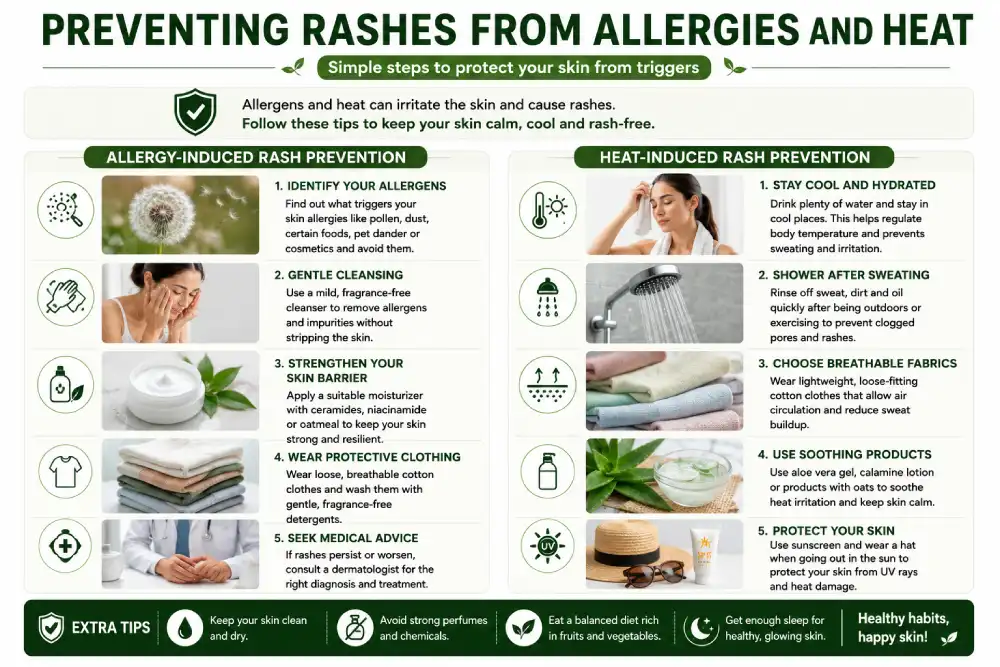
Allergy-Related Rash Prevention
Pinpoint your triggers –don‘t guess. Contact and allergic rashes follow predictable patterns. If you develop a rash every time you wear a certain bracelet, it‘s the nickel. If rashes pop up after eating various foods, you need to chronicle those foods. Use a basic notes app software to record: your rash‘s appearance, where it was located, and how you were different 72 hours prior. You‘ll notice patterns after 2–3 episodes.
Common India-specific contact allergens to test for:
- Nickel (artificial jewellery-silver bangles, earrings, strap on watches, etc.) extremely common in Indian women in general
- Hair dye (PPD paraphenylenediamine) peak reactions occur 24–48 hours after dyeing, not immediately.
- Bindi/kumkum Sticky similar to other haptens may cause contact dermatitis to the forehead. Broader use in Indian women Bindi/kumkum adhesive forehead contact dermatitis is disproportionately common in Indian women
- Henna (mehendi) chemical additives black henna contains PPD and a large minority of people sensitised through hair dye will have severe allergic reaction to this
- The synthetic dyed fillings found in cheap clothing and the synthetic dupatta/sarees
- Rubber/latex contained in chappals, gloves and elasticated waistbands
If you‘ve ever experienced an anaphylactic response to any allergen: Always keep prescribed antihistamines on hand. Visit a dermatologist or allergist for formal allergy patch testing this reveals exactly what you should never come into contact with.
Heat Rash Prevention (India‘s Most Common Preventable Rash)
- Wear layers of light cotton clothing in the summer
- 7. Do not stay in direct sunlight from 11 am to 4pm. this is the time when sebaceous and sweat glands are at maximum production.
- A prickly heat powder (zinc oxide based) is to be applied in skin folds during the summer months, especially the neck, underarms, under breasts, and inner thighs.
- Remain in well-ventilated or air-conditioned venues as much as you can between 11am to 3pm.
- Shower with cool water right after heavy sweating ; do not allow sweat to remain on the skin
- Avoid thick creams, petroleum jellies or coconut oil during the season of heat rash particularly in damp humid environments. Not only do they occlude the sweat ducts but they are sensually aggravating.
Monsoon Fungal Rash Prevention (July–September Priority)
- Dry skin crumples up fully after each shower both morning and evening
- Use anti-fungal powder (Candid powder, Abzorb powder, or Cothrimazone-based powder) all over skin folds, between the toes and in your groins during the rainy season if you have had fungal rashes before.
- Never walk barefoot in places that are often public and wet gym showers, public toilets, swimming pool decks
- Don‘t Share Towels, Clothing, or Shoes
- Make sure you change shoes if they become wet, wet shoes and sandals are a very easy supply of athlete‘s foot.
- Allow no longer than 30 minutes in wet clothes.
Building a Skin Care Routine for Sensitive Skin
For the very reactive skin, a simple, gentle and daily maintenance routine, consisting in small amounts of products used every day, is more advantageous than all the preventive weapons. It‘s not about piling products but we want to reinforce the barrier and to reduce the triggers.
Morning Routine for Rash-Prone or Sensitive Indian Skin
Step 1 Gentle cleanse (or wash with no cleanser if no sweat overnight) Fragrance free, sulphate free cleanser with pH 5.0–5.5. Indian products: Cetaphil Gentle Skin Cleanser (₹350–₹700), Minimalist Gentle Daily Face Cleanser (₹299), or unrefined water in the morning for very sensitive skin.
Step 2–Niacinamide serum (optional but recommended) Niacinamide 5–10% improves the skin’s barrier, helps with inflamation and reduces reactivity to external factors. Apply to newly cleansed still damp skin, wait 60 seconds for absorption.
Step 3 Fragrance free moisturiser Apply immediately after serum on damp skin. Use ceramide-containing formula (CeraVe Moisturising Cream ₹800–₹1,200, Cetaphil Moisturising Cream ₹500–₹900, Physiogel Daily Moisture Therapy ₹600–₹900).
Step 4 SPF 30–50 PA+++ (non-negotiable anywhere in India). UV exacerbates post rash hyperpigmentation, causes photoallergy rashes & diminishes barrier repair that your moisturiser is doing. Choose a mineral (zinc oxide or titanium dioxide) SPF for reactive skin less likelihood of causing contact reactions than chemical UV filters. Minimalist Mineral SPF 50 (₹379), Dot & Key Mineral Sunscreen (₹575).
Evening Routine
Step 1 Double cleanse if SPF or makeup. Oil cleanser first (solvent for sunscreen), then with mild foaming cleanser. Employ single cleanse with mild cleanser if no SPF or makeup.
Step 2 Targeted treatment if indicated Niacinamide serum to support the barrier. Hydrocortisone 1% cream (short course) if there is a mild rash. Antifungal ointment if there is an active fungal rash.
Step 3 Smear Apply same ceramide-based moisturiser as morning usage. More application to very dry days 5 North India winter or after airconditioning.
What to Avoid in a Sensitive Skin Routine
- The presence of more than 3–4 products (2 additional products means more and more chance trigger).
- Exfoliating acids (AHAs, BHAs) activated on sensitive or rash-prone skin exfoliation on impaired barrier will dramatically increase severity of rashes
- Essential oils diluted, lavender, eucalyptus and tea tree oil are frequent contact allergens for sensatise skin
- Select several new products to try at once which can be too much at one time. However, introducing a new product each 2-4 weeks can help you choose the best one to stick to.
Prevention is invariably more successful than cure. Armed with the correct skin rash prevention tips knowing your specific triggers, developing a mild barrier-friendly skin-care routine, selecting appropriate skin-happy textiles and products, changing your behavior according to the season you can keep the majority of repeat rashes in India truly preventable rather than spasmodic phenomena to be managed month after month. Begin with the big three: cotton is king, change the washing powder, moisturise straightaway after every shower & identify your specific allergen: together these four steps address the vast majority of preventable rashes for most Indian skin types.