Footwear Guide: Shoe Types, Sizing, Styling and Care
Published: September 25, 2026 Last Updated: September 25, 2026 Quick Summary: A good pair of shoes has to do
Quick Summary:
A good pair of shoes has to do three jobs at once: fit your feet correctly, suit the occasion, and hold up over time. This guide walks through the main footwear categories, how to match shoes to your activities and outfits, how to measure your feet properly instead of guessing your size, what to check for fit and construction quality, and how to keep different materials looking new. It also flags what’s trending in footwear for 2026 and points to deeper guides on sizing, shoe types, sneakers, cleaning, and fit for anyone who wants to go further into a specific topic.
Shoes are the last thing anyone considers until they experience some kind of disaster a seemingly perfect new online purchase turns out to be slim across the instep, a pair of shoes for a black-tie event cause instantaneous foot pain, or a spotless pair of white sneakers acquired a stubborn stain. Shoes are one of the few categories of apparel where fit, function and fabric all need to be right all at the same time. When they are, no one even notices; when they aren‘t, they are all you notice.
This is designed to be a good introduction a real-world summary of how we should approach footwear prior to purchasing, wearing it, or maintaining it. It addresses the hardware categories, matching footwear to what we‘re actually doing, selecting the correct fit, issues when fitting, fit, quality, and caring for the various materials. Where a subject is explored more than is feasible within one section, the subject is referenced to an independent, more comprehensive article.
Suppose you already know precisely what you‘re seeking a size chart, a fit test, a cleaning method for suede — the linked guides throughout will get you there faster. If you’re still getting your bearings, start here.
Why Getting Footwear Right Actually Matters
Every other garment you own is doing almost nothing when it comes to physical work. Shoes do more than: with every step, plow force into the ground; ball, arch, and heel with stand the entire weight of your body; endure one bizarre range of conditions after another a daily work commute, a monsoon breeze, a wedding that runs into the wee hours. Only unsuitable shoes size-wise, shape-wise, material-wise, make things worse for your foot, for as long as you‘re wearing them.
There is a practical regional variation to consider here as well: width-fit sizing schemes utilized for numerous models across Indian footwear brands have generally been calibrated based on European, UK, or US centroids. Indian industry and consumer research literature has evidenced wide feet among various Indian populations: some of this research (as cited by the Bureau of Indian Standards and the Central Leather Research Institute) has revealed that a significant minority of Indians’ feet tend to be wider than models built on these shoe-like shapes can accommodate, which is a factor in the variance between brands in terms of “true to size,” but again should not disprove the efficacy of another. For the time being, the specific size guide below goes into this in more depth.
Getting the basics right once — knowing your categories, your size, your fit signals, and your care routine — pays off every time you shop afterward. That’s the real goal of this guide: not to make you an expert in one sitting, but to give you a repeatable way to think about footwear so future decisions get easier.
Understand the Main Types of Footwear
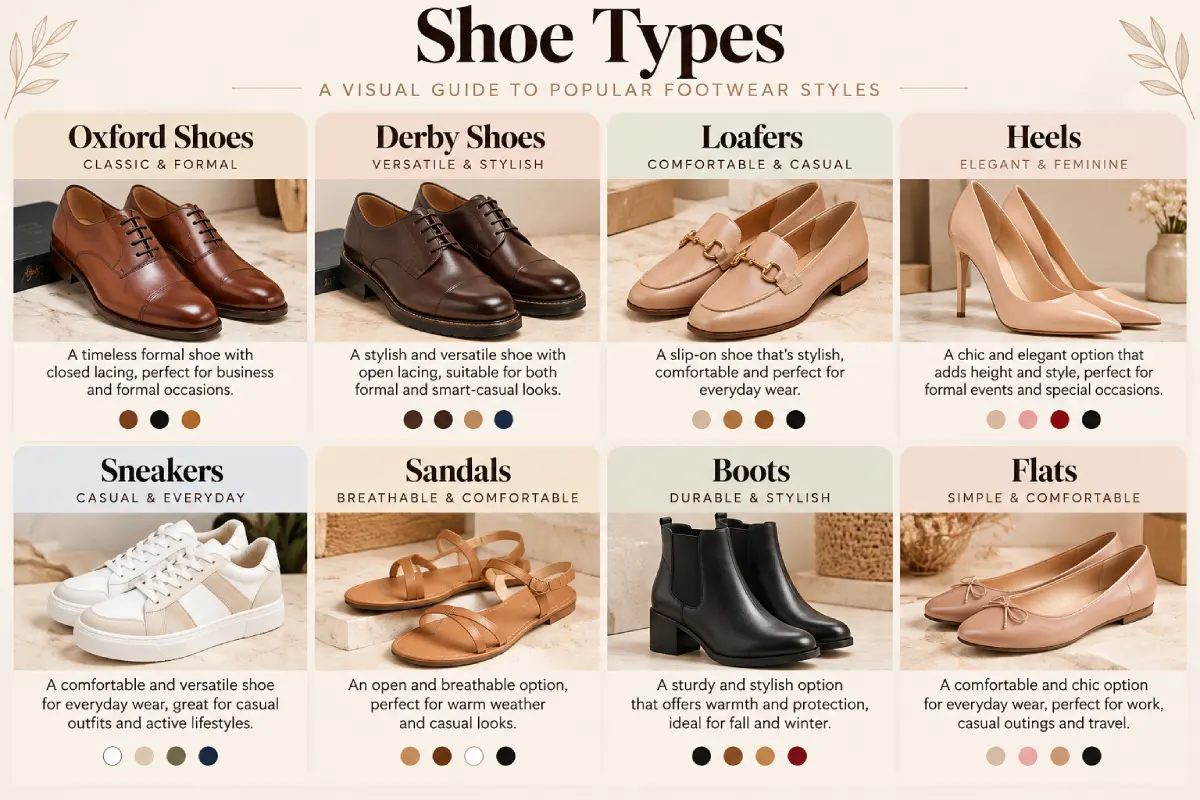
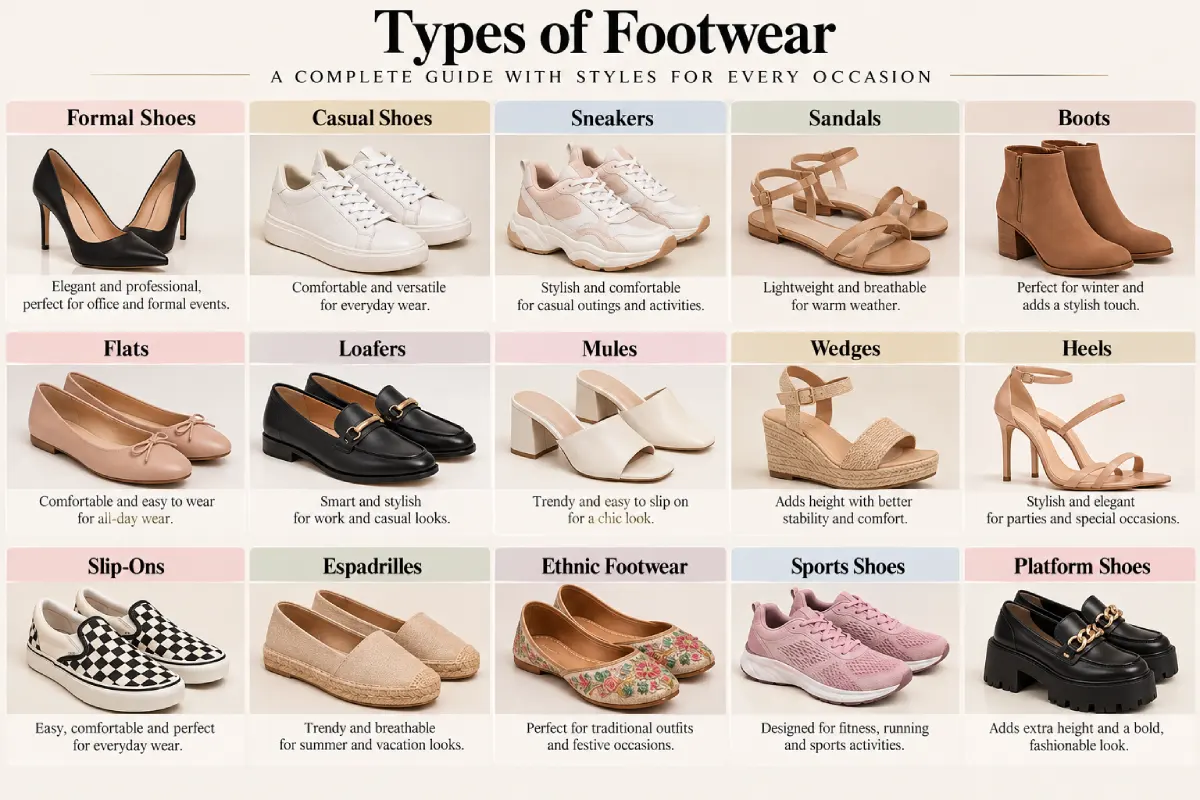
It‘s useful to understand what you are actually selecting between before exploring how to make good selections. Footwear can be classified into a few major types, each based on a separate task.
Formal and dress shoes:
Are meant to be structured and polished often closed, sometimes leather, meant to coordinate with suiting, formal Indian dress, or office environments where a variety of movement is less crucial than appearance. Oxfords, brogues, and formal patent pumps are included in this category.
Casual everyday shoes:
Our must-have footwear should be a case of function over fashion, favoring comfort and convenience rather than class loafers, earthy leather shoes, ballet slippers, and unstated slip-ons that are suitable for everyday using without hinting sporty or too smart.
Sneakers and athletic shoes:
Revolve around motion cushioning, flexibility and support for walking, running or just moving. This one category has become so broad and diverse that it warrants a separate deep dive, as the term “sneaker” now encompasses technical running shoes and lifestyle kicks designed solely for their appearance. [See the comprehensive sneaker styles and styling guide →]
Sandals and open footwear:
trade coverage for breathability — useful for hot, humid stretches of the year and casual or beach-adjacent settings, ranging from simple flip-flops to structured strappy sandals.
Boots:
add ankle or calf coverage and tend to be sturdier by construction — useful for monsoon weather, travel, or a more deliberate style statement, from ankle boots to taller styles.
Ethnic and occasion footwear:
covers styles built specifically for Indian festive and ceremonial wear — juttis, mojaris, kolhapuris, and embellished heels or flats designed to pair with ethnic outfits rather than Western silhouettes.
Heels and elevated footwear:
pumps, block heels, wedges, stilettos — are built around height and formality rather than comfort-first design, and vary enormously in how wearable they are for extended periods depending on heel shape and height.
Most functional shoe wardrobes end up drawing from four or five of these categories rather than one. The next section covers how to figure out which categories actually deserve space in your own collection. [For the full breakdown of sub-styles within each category, when to wear what, and how they differ construction-wise, see the complete shoe types guide.
Choose Shoes for Your Activities and Outfits
The greatest footwear indulgence isn‘t in buying the wrong shoe, but in choosing a good shoe for the wrong occasion. A horrid stiff formal oxford won‘t cut it for walking around all day. A lightweight sneaker isn‘t up to a monsoon commute. A lovely, delicate, embellished heel isn‘t made for a long reception on the feet.
Matching Footwear to Daily Activities
Be honest with yourself about how you really use your time, rather than how you think you should. An easy way to do this:
- Desk-based work with some commuting — a comfortable loafer, closed flat, or low block heel that can handle walking to transport without sacrificing a put-together look
- On-your-feet work or long commutes — prioritize cushioning and a secure, adjustable fit (laces or straps) over pure style; this is where athletic or athletic-adjacent footwear earns its place even in non-sporty wardrobes
- Active or workout time — purpose-built athletic shoes matched to the specific activity (running shoes flex and cushion differently than court or gym shoes)
- Travel — shoes that are comfortable for hours of walking, versatile enough to work across two or three different settings, and not so delicate that they can’t handle uneven pavement or airport floors
Building a Shoe Wardrobe Around Occasions
Except for everyday activity, Indian wardrobes are normally required to cater to: North American shoes guides usually ignore these very common occasions: Work/office; Conven events (weddings, festivals, poojas); Smart-casual outings; Daily casual; Travelling; Evening/party}
You don‘t have to have a shoe for every micro-occasion. A handful of carefully selected shoes that each fit one of these situations well will beat a large collection with gaps and overlaps-one good pair for work, one for ethnic/formal events, one nice ‘everyday’ smart-casual shoe, one casual pair for running around in and one or two performance shoes that should constitute 90-95% of a working adults’ daily requirements. Only increase these exceptions if and when a serious, ongoing gap appears.

Footwear Trends to Know Before You Shop
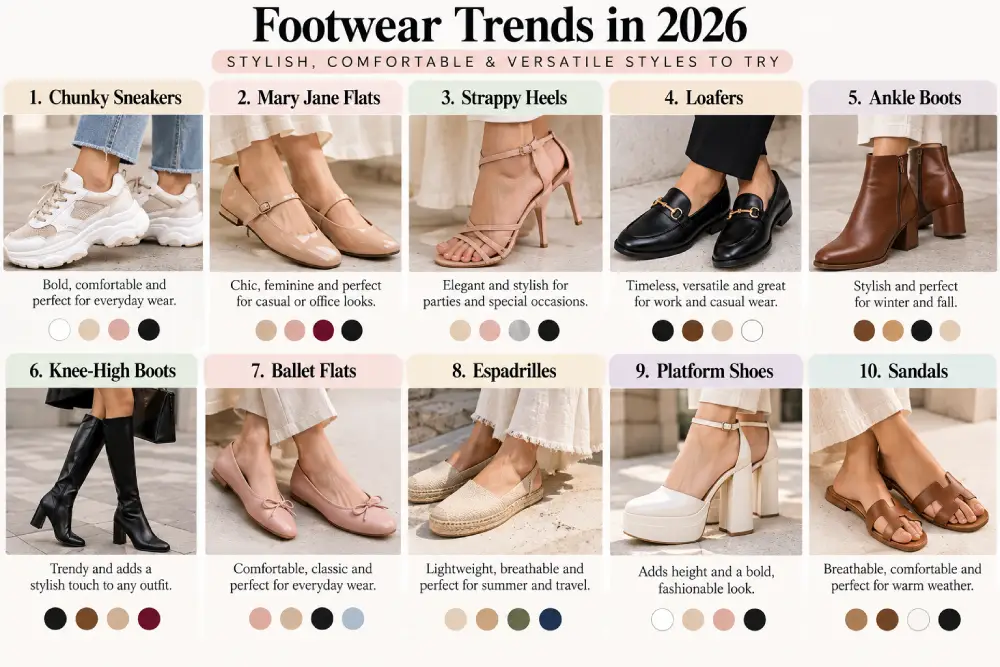
Shoes follow fashion trends on the same seasonal cycle as clothing but tend to stay fashionable for a little longer because shoes are investment pieces and get worn with more things. Several trends that you should be aware of before setting out on a shopping trip: hip bit chunkier, sculpted soles are still on the rise across sneakers and more casual shoes; back to softer, more rounded shapes in dress shoes after the last half-decade of pointed, sharper lines; comfort-first sneakers are entering the classic dress shoe world brands that used to build relatively rigid shoes are now adding more padding and flex to their styles; and finally, neutral shades (as opposed to bold, statement hues) are gaining popularity since many are a breeze to match to an outfit.
Trends can be useful to inspire or just to keep informed about what‘s at the store, but shouldn‘t swamp what‘s covered in other sections of this guide If a shoe is trending but doesn‘t feel right in your hand or work in your daily life, it‘s never really a bargain. Get the full seasonal best of 2026 footwear trends and how to wear them overview in the dedicated trends guide
Measure Your Feet and Check Brand Size Charts
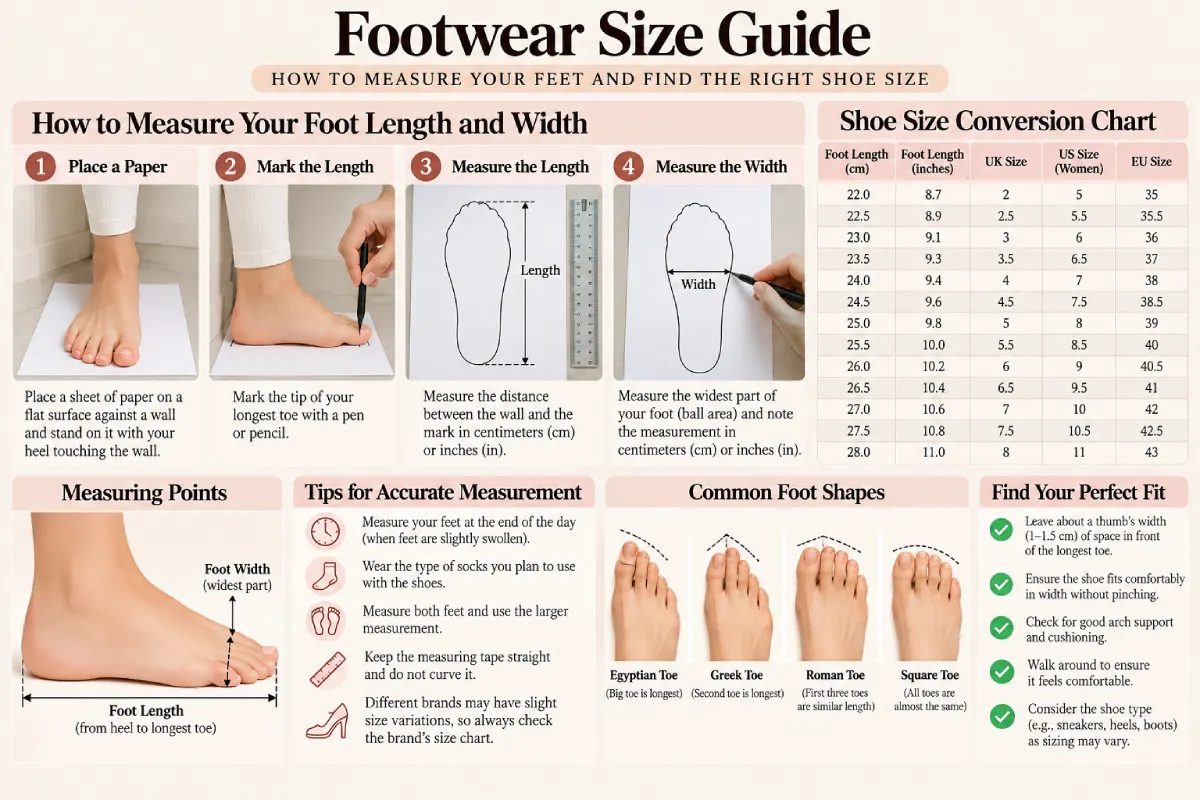
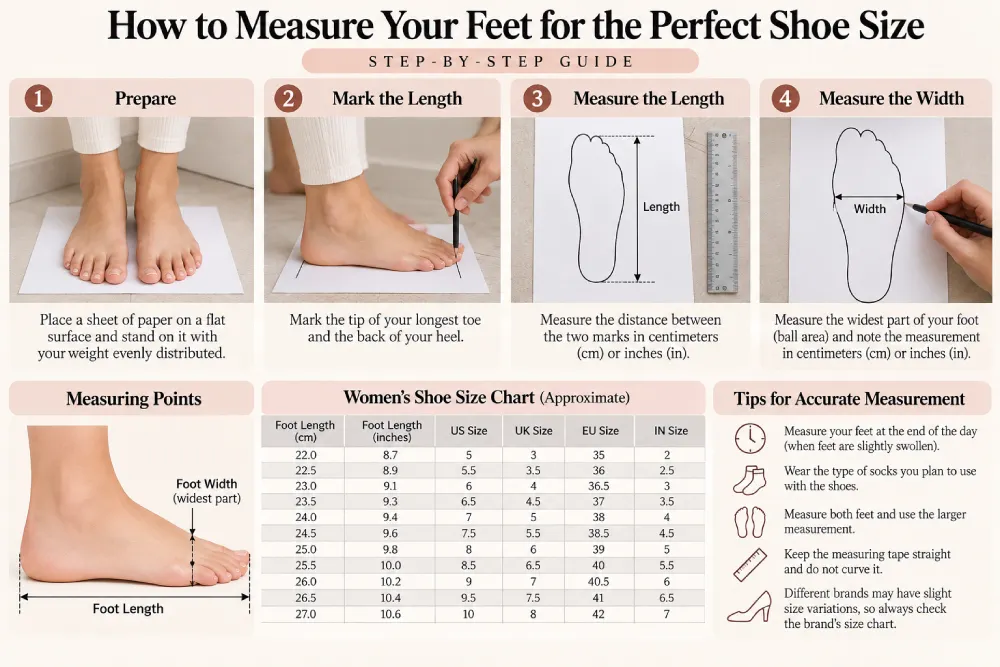
One of the biggest reasons for returns and pain is something everyone is doing all too frequently, which is assuming we know what shoe size we were 2-3-4 years ago. Our feet will change. They swell slightly throughout the day, and they are often two each ‘actually different sizes from each other.
The right way is to measure your feet properly: length and width, on both feet (preferably latter in the day when feet are at their normal expansion), and compare it not with a ‘size’ you wear in other shoes, but with the brand‘s own measuring chart. Since shoes sold in India have the UK, EU, US or brand-specific system, the same number can mean different real lengths depending on which system a particular brand uses. That‘s the regional size discrepancy mentioned earlier: a size chart is brand-specific data, not a universal constant, so check it each time you buy new brand!
This subject is quite complicated enough taking measurements the correct way, understanding and translating between UK/EU/US/India sizing charts, and considering width as well as length so that it deserves its own complete walkthrough rather than a summary here. See the full footwear size guide for step-by-step measuring instructions and size chart comparisons
Explore Sneaker Styles Before You Buy
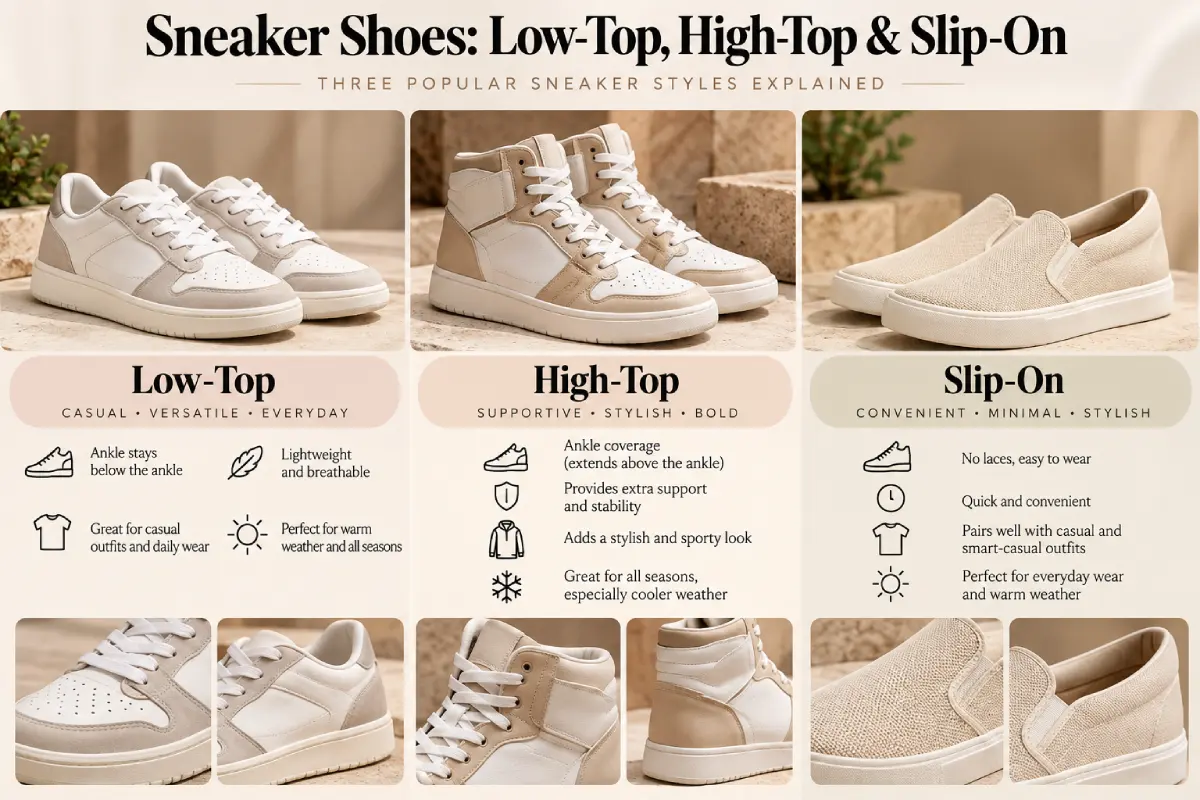
Since the sneaker market has grown so far beyond their initial athletic use, the shoes have now been broken out into their own category here, rather than grouped under the shoe-types section above. The sneaker market now consists of performance running shoes, basketball and gym shoes, skate influences, and a huge “lifestyle sneaker” market.
The biggest easily learned practical difference: a sneaker designed for a specific sport (running, training, court sport) is designed around that movement pattern and shouldn‘t be used as a general use casual shoe if you‘re actually going to be using it for that sport. A lifestyle shoe is more about looks and comfort and isn‘t really designed for high performance, and works better as an outside of work/occasional use/personal style-oriented shoe than it does as a work out shoe. Buying the wrong one for your actual use lifestyle shoe to serious running, or a serious running shoe as your only casual shoe is a mistake that most people do at some point.
Styling: Sneakers are now also versatile and can be worn beyond sportswear, several of the lifestyle sneakers can be styled well with smart-casual outfits (particularly in much cleaner minimal colors). Down to you: The complete sneaker guide explores sneaker sub-types in-depth, how to tell them apart, and practical outfit pairings.

Assess Fit, Materials and Construction
Once you’ve narrowed down type, occasion, and size, the actual quality of fit and build determines whether a shoe earns its place in daily rotation or ends up unworn in the back of a shelf.
What Good Fit Actually Feels Like
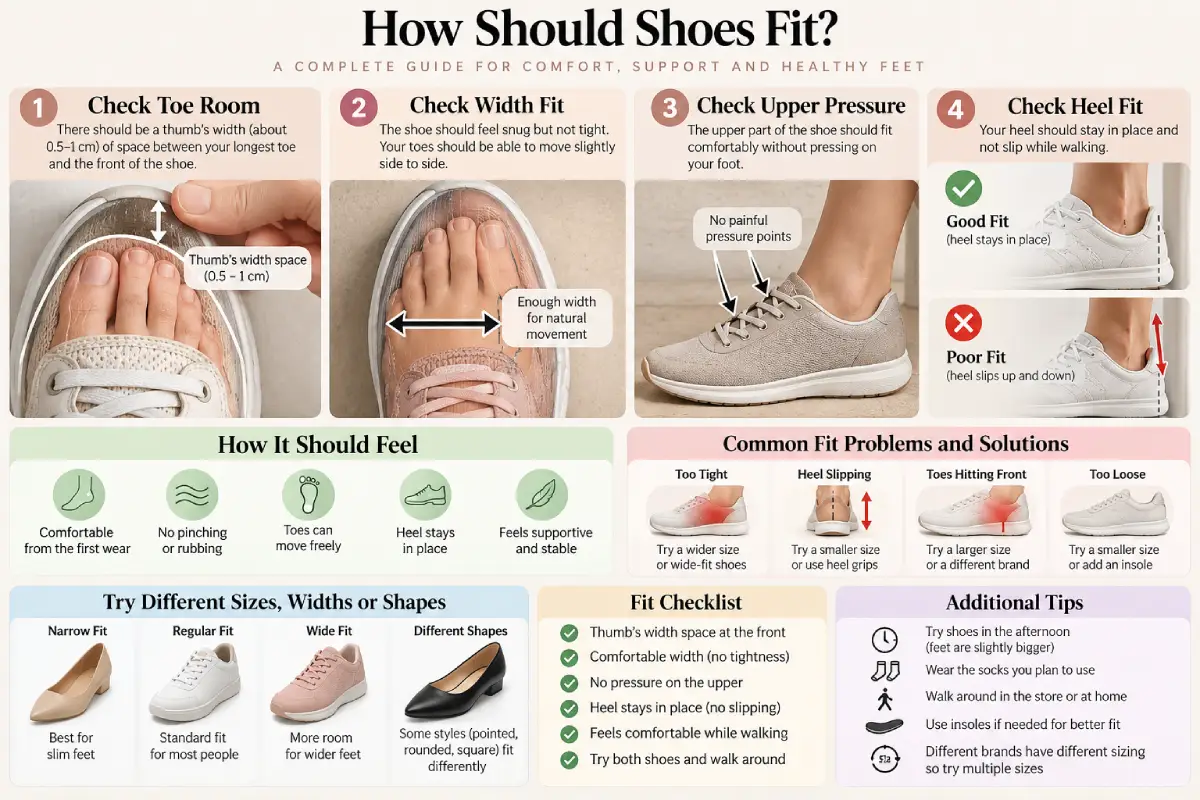
A correctly fitting shoe should feel secure without pressure anywhere specific. There should be room for your toes to sit naturally without curling or being pushed against the front of the shoe, the widest part of your foot shouldn’t spill over the edge of the sole, and your heel should stay reasonably in place as you walk rather than slipping in and out with every step. A shoe that needs a long, uncomfortable “break-in” period before it stops hurting usually isn’t the right fit — genuine break-in is about a stiff material softening slightly with wear, not about pain resolving over time.
Because fit is where the most expensive mistakes happen — a shoe that looks and measures correctly on paper but doesn’t actually sit right on your foot — this deserves a dedicated, detailed walkthrough of exactly what to check and how. See the complete guide on how shoes should fit, including toe room, width and heel checks.
Reading Materials and Construction Quality
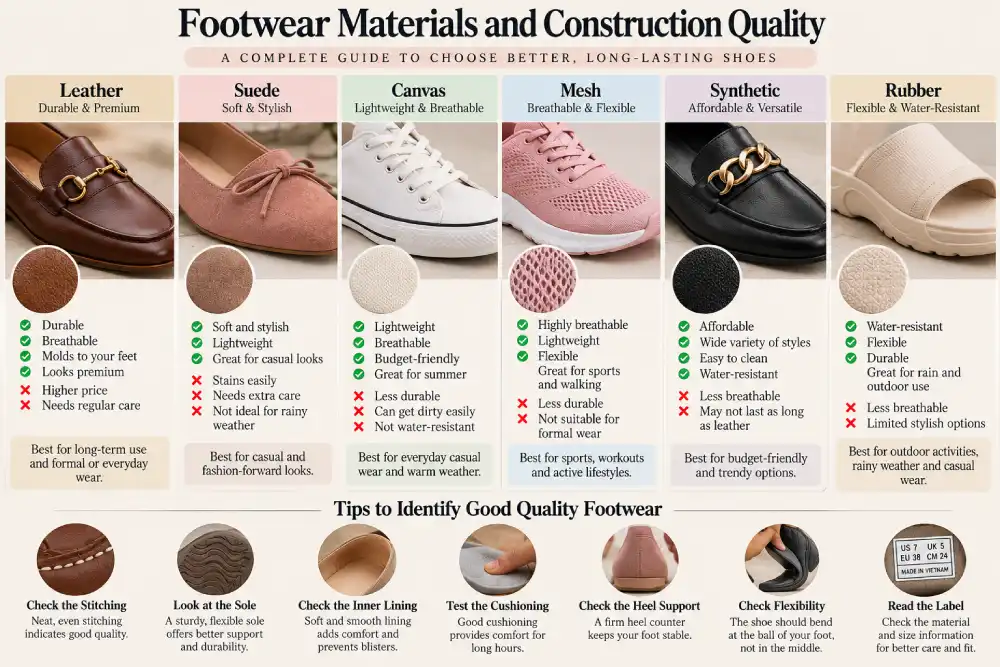
Material affects comfort, durability, and how much care a shoe will need over time:
-
Genuine leather conforms to your feet in the long run, breathe fairly well and can be extremely durable if you look after it. It does require protecting from various environment factors.
- Suede appears sophisticated but unlike smooth leather it is more prone to water marks and can be treated in a more gentle manner.
- Canvas; it is breathable, casual and will generally be the easiest in terms of washing and caring for, but has the least amount of structure and support.
- Mesh: Known as sneaker and lifestyle shoes, is a very lightweight, and well dissipates all heat and moisture. Is not so resistant to stabbing when brushing against rough surfaces, and more difficult to restore in the dirt.
- Synthetic/PU uppers are cheaper and often water resistant, however tend to breathe less and may crack or peel over time faster than the original leather.
Other than the actual materials, since some quick construction indicators can be checked before making a purchase: the stitching should be secure and evenly spaced, not glued only at high-stress areas; the sole should bend at the point of the natural bend in the foot, not stiffness at the natural bend or bending in the wrong place; the insole should sit flush and secure, not loose inside of shoe.
Keep Shoes Clean and Looking New
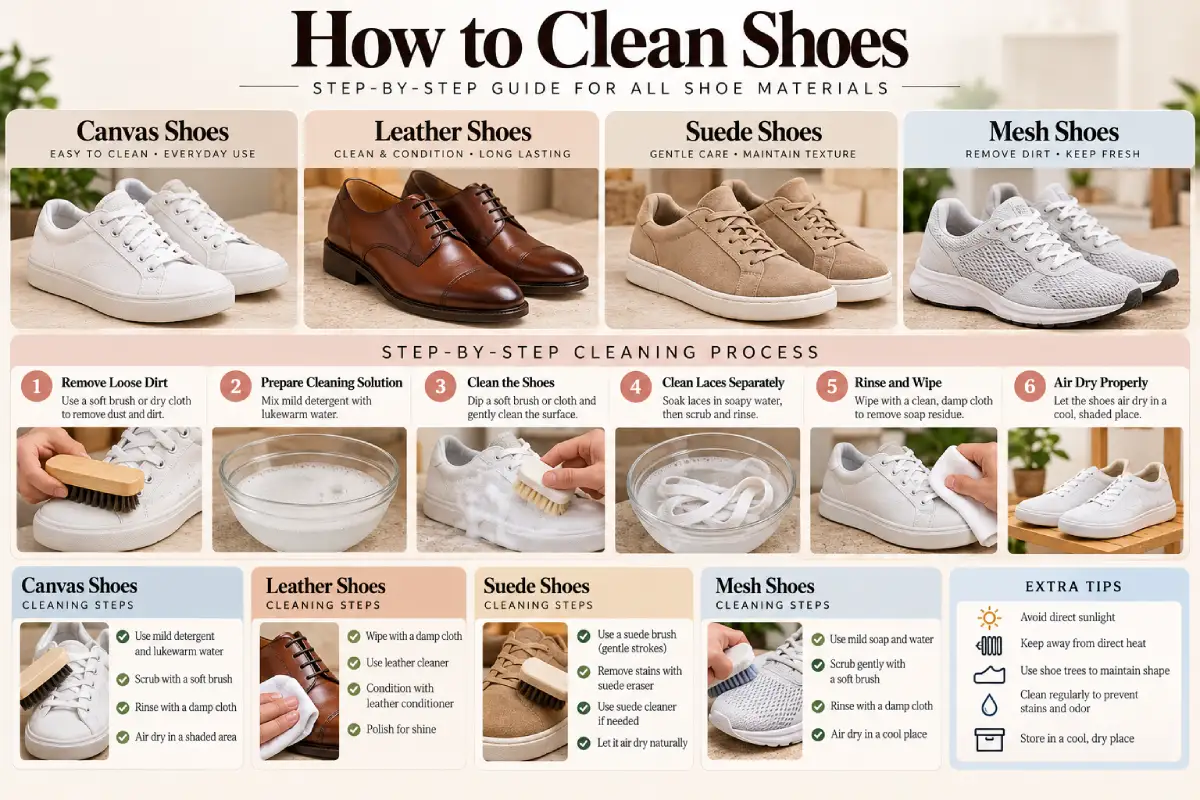
No matter how carefully you select and break in your shoes, they‘ll only remain in a good condition if you look after them properly after purchase, and the proper treatment depends greatly on the material that your shoes are made from. Leathers, suedes, canvases and mesh all require different care when it comes to water, grime and cleaning agents, and the wrong treatment for the wrong material can cause the quickest damage to an otherwise well-chosen pair.
The main recommendations we have by way of an overall guide are: avoid keeping boots and shoes in moisture for an extended period where it‘s avoidable (such as the monsoonal July to September months); remove surface dirt in a timely manner rather than allowing it to become ingrained; keep boots and shoes in an approximately ventilated environment, rather than bagging them in while they remain reasonably damp; and alternate between footwear rather than the same pair day on day, allowing the materials to fully dry out and regain their form in the interim.
And, because the right approach here really does depend heavily on the material something correct on canvas may be wrong for suede, and something safe to use on leather is inappropriate on mesh this is an issue that really does warrant a detailed material-wise walkthrough rather than having a general guideline. Check out the comprehensive cleaning tutorial for shoes covering leather, suede, canvas and mesh.
Building Your Footwear Routine: A Practical Summary
Selecting footwear is about doing the same few simple checks repeatedly: think precisely of the category and type of footwear you really want before shopping, get your own feet accurately measured before attempting to buy shoes, determine fit individually and accurately rather than relying solely on the shoe label, look out for the fabric and manufacturing quality of what you buy and look after it once you‘ve got it so it lasts. None of these are hard in their own right, the hard part is often missing one of them during the shopping rush.
And if there‘s one thing you walk away from this guide with, it‘s this: A shoe that fits well and works for how you‘ll really wear it will always be more satisfying than one that only looks nice on a monitor. Use the links to the more in-depth guides on sizing, fit, shoe types, sneakers, cleaning, and so on whenever you need to go deeper into a particular choice, and you‘ll create a wardrobe-winning collection of shoes.
FAQs
What are the main types of footwear I should know about?
The main categories are formal/dress shoes, casual (everyday), trainers (sports), sandals, boots, ethnic/formal occasion wear and heels. Most people have four or five of these categories in their wardrobe, according to their actual lifestyle and type of occasions used for instead of having really deep categories in all of them.
How do I find my correct shoe size when shopping online in India?
Take the length and width of both feet correctly preferably late afternoon and check it against the individual brand‘s size chart. Do not go by a size that you wear in another brand. Since footwear sold in India carries an array of sizes in UK, EU, US, and the particular brand, the same size could refer to a different actual length.
Why do my shoes fit differently across brands even when I buy the same size?
Different brands also have different sizing standards and different shoe lasts (the form of the foot a shoe is built on). So a size 8 in one brand isn‘t necessarily a size 8 in another. This is a common issue for imported shoes in the Indian market, where the sizing system imported has no correlation with the average Indian foot shape. However, checking each brand‘s size chart, and width as well as length can help circumvent this.
How can I tell if a shoe fits correctly before I’ve worn it all day?
Make sure you can fit your toes comfortably without bending them and that the widest part of your foot isn‘t outside the edge of the sole. and that your heel stays reasonably in place when you walk rather than slipping. Genuine discomfort that you’re hoping will “break in” is usually a sign of the wrong size or width, not a temporary adjustment period.
What’s the easiest way to keep different shoe materials clean?
Leather, suede, canvas, and mesh each need different care — a method safe for one can damage another. As a general rule, clean surface dirt promptly, avoid soaking any material in water, and let shoes fully air-dry away from direct heat before wearing them again.