Types of Sneakers and How to Style Them
Published: September 25, 2026 Last Updated: September 25, 2026 Sneaker shoes split into two useful distinctions: low-top vs. high-top
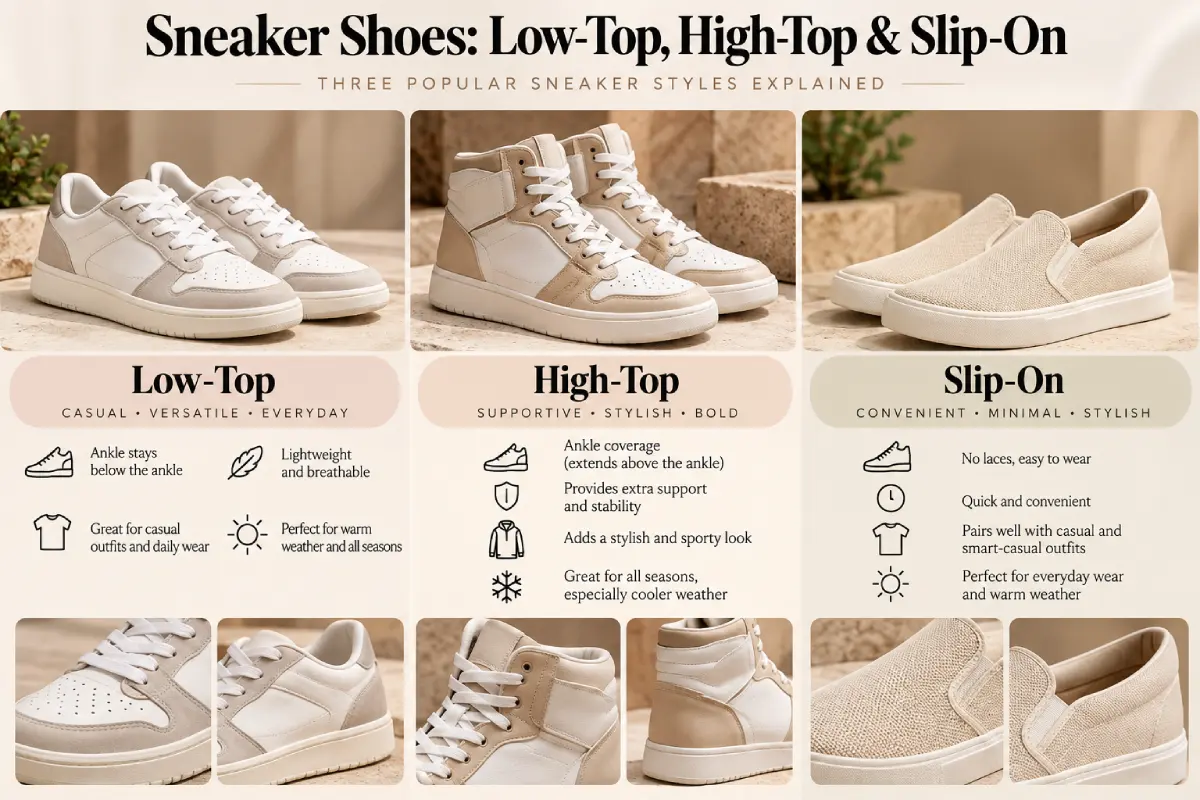
Sneaker shoes split into two useful distinctions: low-top vs. high-top (how much ankle coverage they give) and lifestyle vs. sport-specific (whether they’re built for looks or for performance). Knowing which type you’re buying — and matching the upper material and silhouette to your outfit — is what makes sneakers work as smart-casual pieces rather than purely athletic wear.
Sneakers used to mean one thing — a gym shoe, worn for sport and little else. That’s not true anymore. Sneaker shoes today range from performance running shoes engineered around a specific movement pattern to lifestyle sneakers designed almost entirely around how they look with an outfit. Knowing which kind you’re buying, and how to style it, makes the difference between a sneaker that upgrades your look and one that just sits in the closet.
Low-Top, High-Top and Slip-On Sneakers Explained
The most basic way to sort sneaker shoes is by how much of the ankle they cover.
Low-top sneakers sit below the ankle bone and are the most versatile, everyday option — easy to wear, easy to pair with almost anything, and generally the most comfortable for all-day wear since they don’t restrict ankle movement.
High-top sneakers extend up and over the ankle, originally designed for extra support during basketball and other lateral-movement sports. Today they’re worn just as much for the look as the support, and they add a bolder, chunkier silhouette to an outfit than a low-top does.
Slip-on sneakers skip laces entirely, relying on an elastic panel or stretch construction to stay secure. They trade a small amount of adjustability for convenience, and they work particularly well as a low-effort, put-together option for errands or travel days.
There’s no universally “better” option between these — it comes down to the look and function you actually want. A low-top suits someone who wants a sneaker that disappears into most outfits; a high-top suits someone who wants the shoe itself to make a statement.
Lifestyle Sneakers Versus Sport-Specific Designs
This is the distinction most sneaker-buying guides skip, and it matters more than the low-top/high-top choice for anyone shopping with a specific use in mind.
Sport-specific sneakers — running shoes, training shoes, court shoes — are engineered around a particular movement pattern. A running shoe is built with cushioning and flex points positioned for a forward heel-to-toe stride; a training shoe is built for lateral stability during gym work. Using one for the other’s purpose, or wearing either purely for daily style, generally works fine occasionally but isn’t what the shoe was actually optimized for.
Lifestyle sneakers are built primarily around comfort and appearance rather than a specific sport. They’re the category that’s expanded the most in recent years, and they’re generally the better choice if your main goal is everyday styling rather than serious athletic performance.
The practical takeaway: if you’re training seriously for running or a specific sport, buy a sport-specific shoe for that activity, and treat a separate lifestyle sneaker as your everyday, non-athletic pair. Trying to make one shoe do both jobs usually means it does neither particularly well.
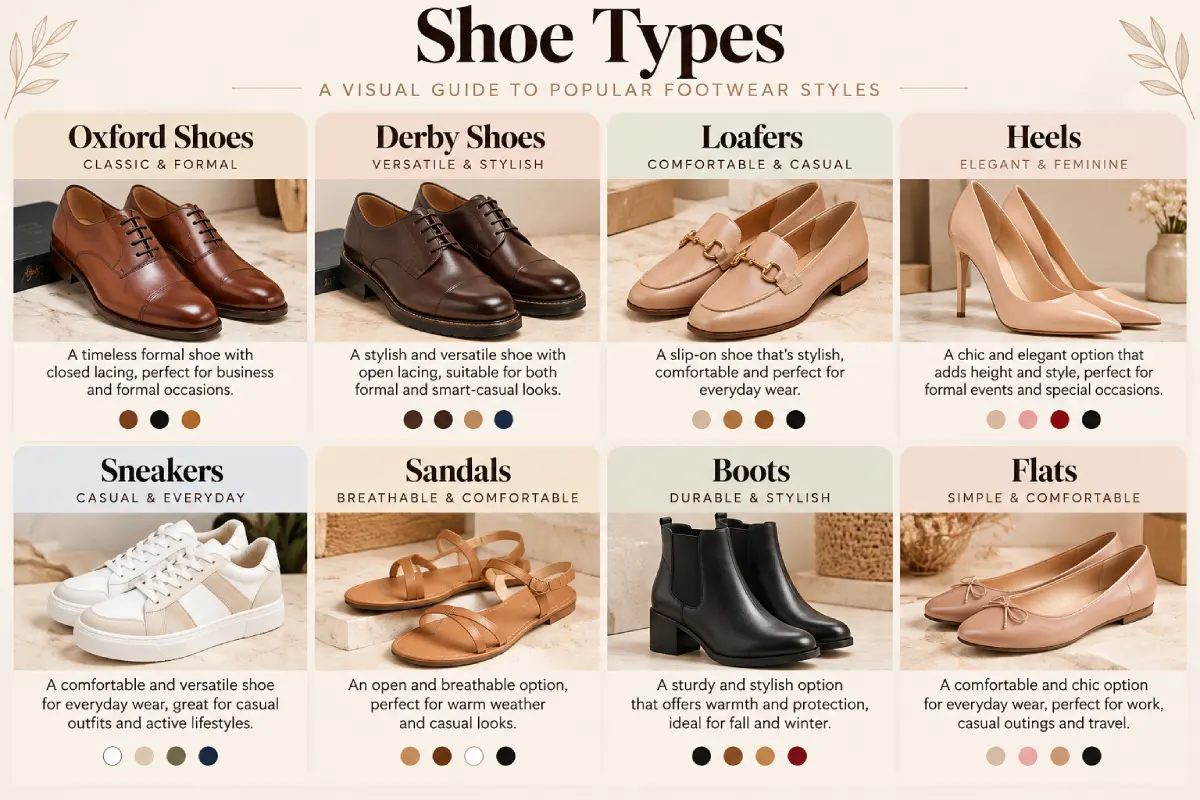
For the full range of shoe categories beyond sneakers — formal shoes, boots, sandals, and more — see the complete shoe types guide.
Compare Canvas, Leather, Mesh and Suede Uppers
The upper material changes both how a sneaker looks and how it performs, and it’s worth choosing deliberately rather than by appearance alone.
| Material | Look | Best for | Trade-off |
|---|---|---|---|
| Canvas | Casual, relaxed | Everyday wear, warm climates | Least structured, shows dirt easily |
| Leather | Polished, refined | Dressing up an outfit, longer wear | Needs conditioning, less breathable |
| Mesh | Sporty, technical | Athletic use, hot weather | Less durable, harder to fully clean |
| Suede | Textured, premium-casual | Statement styling | Vulnerable to water and stains |
As a general rule, leather and cleaner suede sneakers dress up more easily, while canvas and mesh read more casual and sporty. In hot, humid climates, canvas and mesh breathe better over long wear than leather, which is a genuine practical consideration for daily wear in much of India.
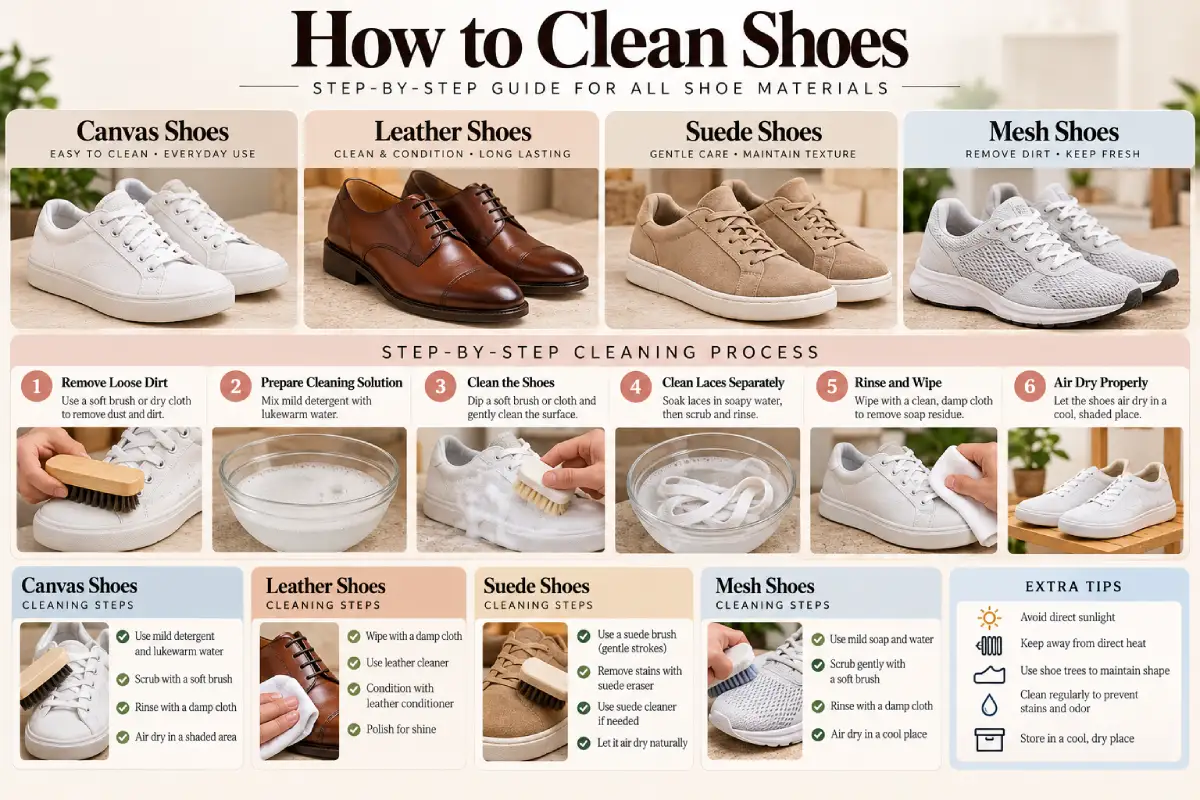
(For material-specific cleaning instructions once you’ve chosen an upper, see the full guide on how to clean shoes.)
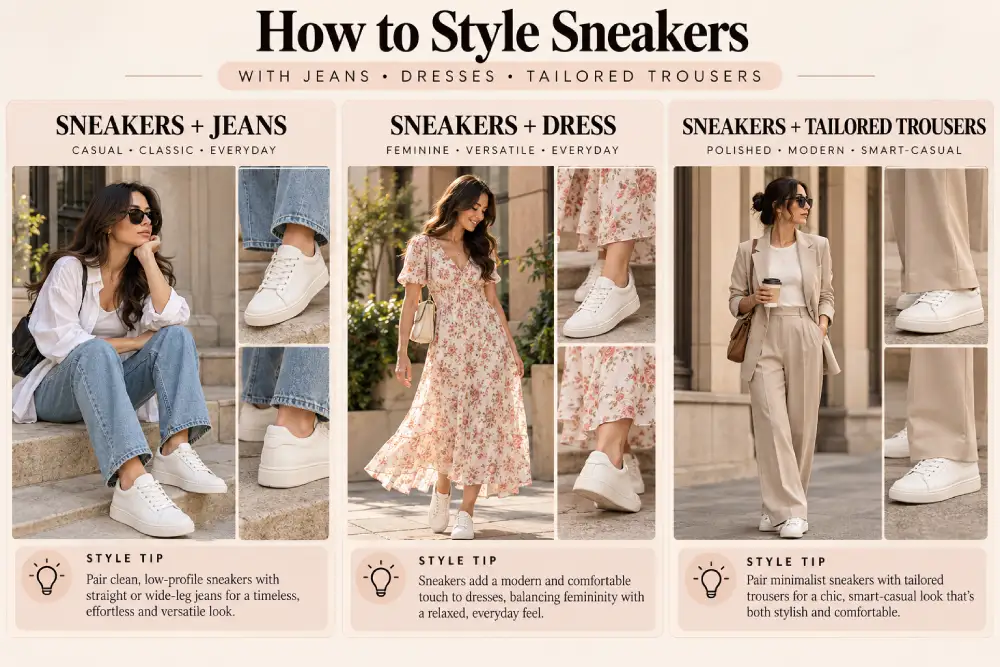
How to Style Sneakers with Jeans, Dresses and Trousers
With jeans: a low-top sneaker in leather or a clean canvas works with almost any denim cut, though the proportion matters — a slimmer jean generally pairs better with a low-top, while a wider or straight-leg jean has enough room to carry a chunkier high-top without looking bottom-heavy.
With dresses: sneakers with a dress read as an intentional, smart-casual styling choice rather than a mismatch, provided the sneaker is clean and relatively minimal — a low-top in white, black, or a neutral tone works best. A midi or knee-length dress pairs especially well, since it keeps the overall silhouette balanced rather than competing with a bulkier shoe.
With trousers: tailored or wide-leg trousers pair best with a low-profile, minimal sneaker — a chunky or heavily branded design tends to clash with a more structured trouser silhouette. Cropped or ankle-length trousers work well with either low-tops or high-tops, since the visible ankle gives a high-top room to show without overwhelming the leg line.
A general styling principle that holds across all three: match the sneaker’s boldness to the rest of the outfit. A simple outfit can carry a statement sneaker; a busy or detailed outfit generally looks more put-together with a plainer sneaker.
Choose a Pair for Your Wardrobe and Daily Routine
Rather than buying sneakers by trend alone, it helps to think through how they’ll actually fit into your week. A single reliable low-top in a neutral color — white, black, or tan — earns its place fastest, since it pairs with the widest range of outfits and occasions. From there, a second pair can lean into a specific need: a sport-specific shoe if you’re training regularly, or a bolder high-top or statement material if you want a sneaker that stands out rather than blends in.
Climate matters here too. In hot, humid regions, breathable canvas or mesh sneakers are more practical for daily wear than leather, which performs better in cooler, drier conditions or for occasional dressier use.
Sneaker shoes have earned a permanent place well beyond the gym, and choosing the right type — low-top or high-top, lifestyle or sport-specific, in a material suited to your climate — is what makes that versatility actually work for your wardrobe rather than just adding another pair to the shelf. If you’re still working out where sneakers fit into your broader shoe collection, the complete footwear guide is a useful starting point.
FAQs
What’s the difference between low-top and high-top sneakers? Low-top sneakers sit below the ankle bone and are the more versatile, everyday option. High-top sneakers extend over the ankle, originally for extra support in sports like basketball, and now worn just as often for their bolder look.
Can I wear the same sneakers for running and everyday outfits? You can, but it’s not ideal. Running shoes are built around a specific stride and cushioning pattern, while lifestyle sneakers are built mainly for comfort and appearance. If you train seriously, a dedicated sport-specific shoe performs better than a lifestyle sneaker used for the same activity.
Do sneakers work with dresses, or is that too casual? Sneakers with a dress are a common and accepted smart-casual pairing, not too casual, as long as the sneaker is clean and relatively minimal — a low-top in a neutral color generally works best with a midi or knee-length dress.
Which sneaker material is best for hot, humid weather? Canvas and mesh uppers breathe better than leather in hot, humid conditions, making them more practical for daily wear in warmer climates. Leather sneakers tend to perform better in cooler or drier weather.
How many pairs of sneakers do I actually need? For most people, one reliable neutral low-top (white, black, or tan) covers the majority of everyday outfits. A second pair — either sport-specific or a bolder style — can be added based on genuine need, such as regular training or wanting a statement piece.
Final Conclusion
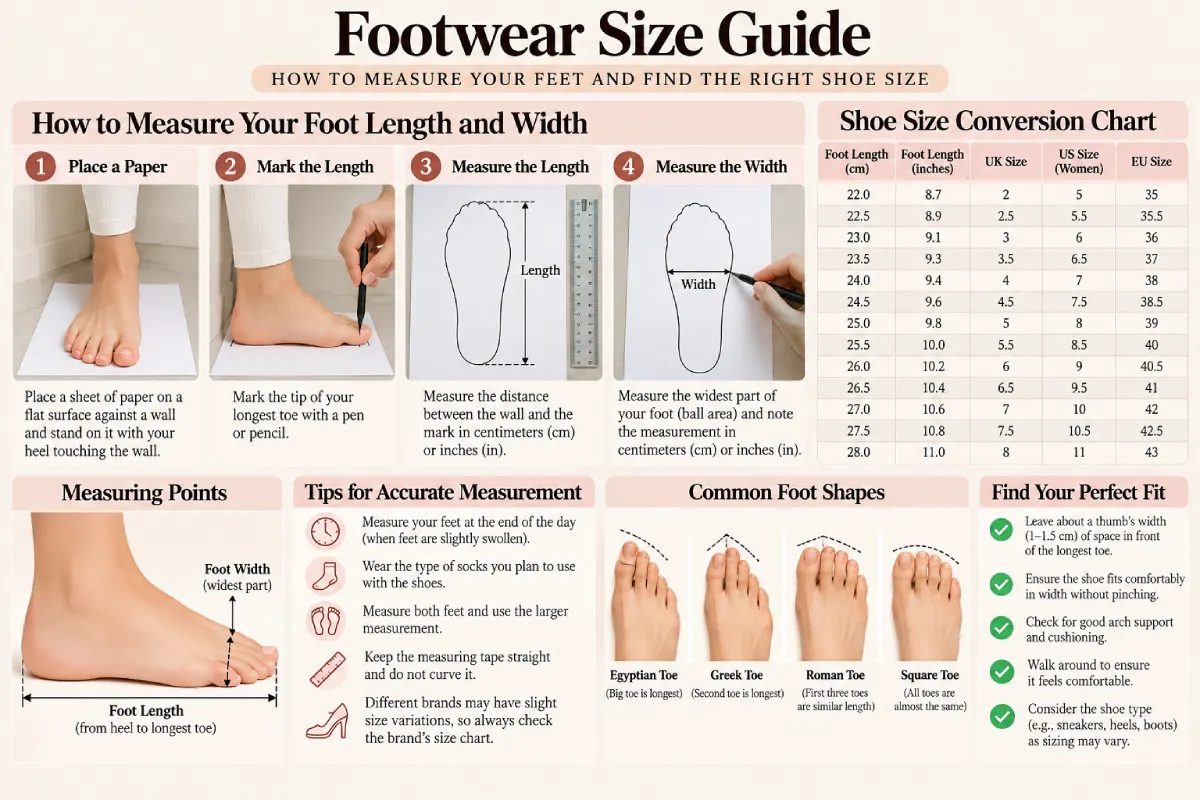
Sneaker shoes stopped being just gym footwear a long time ago, but getting real value from them still comes down to a few deliberate choices: low-top or high-top, lifestyle or sport-specific, and a material suited to your climate and how you’ll actually wear them. Get those three right, and sneakers become one of the most versatile pieces in a wardrobe rather than a single-purpose pair. For sizing, fit and the rest of your footwear collection, the complete footwear guide picks up from here.