Types of Shoes Explained: Styles and When to Wear Them
Published: September 25, 2026 Last Updated: September 25, 2026 Shoe types generally split into four practical groups: formal dress
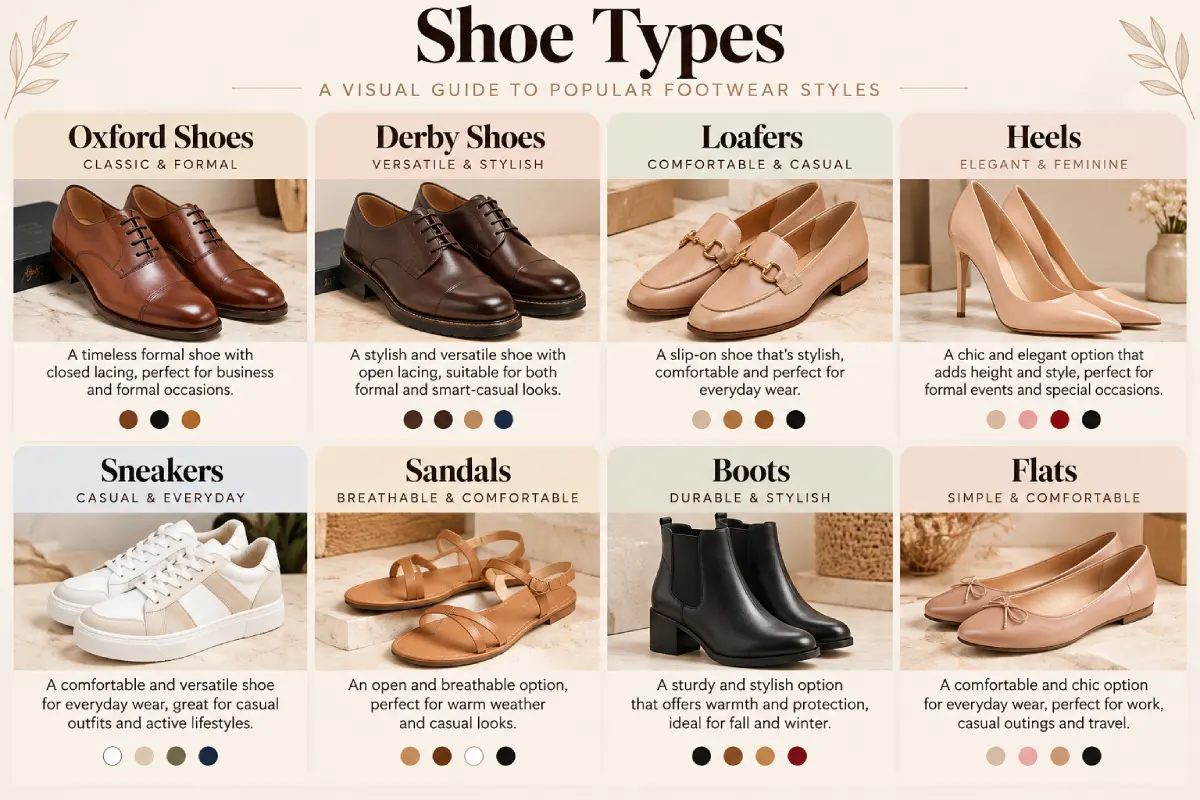
Shoe types generally split into four practical groups: formal dress shoes (Oxfords, Derbies, monk straps), everyday casual shoes (loafers, flats, trainers), boots, and sandals. The style names matter less than knowing the formality level each one carries — an Oxford reads more formal than a Derby, a loafer sits between formal and casual, and matching that formality level to your outfit and occasion is the real skill worth learning.
Walk into any shoe section and you’ll see dozens of names thrown around — Oxford, Derby, loafer, Chelsea boot — without much explanation of what actually separates them. Understanding shoe types isn’t about memorizing a glossary. It’s about recognizing one thing: every shoe sits somewhere on a scale from formal to casual, and knowing where a style sits tells you almost everything about when to wear it.
This guide breaks shoe types into four practical groups — formal shoes, everyday casual shoes, boots, and sandals — and explains what separates the styles within each group.
Shoe Types at a Glance: Names and Key Features
Before getting into formality and occasion, it helps to know what defines each major style at a glance.
| Shoe type | Key feature | General formality |
|---|---|---|
| Oxford | Closed lacing (laces stitched under the front panel) | Most formal |
| Derby | Open lacing (laces stitched on top of the front panel) | Formal to smart casual |
| Monk strap | Buckle closure instead of laces | Formal to smart casual |
| Loafer | Slip-on, no laces or buckle | Smart casual |
| Ballet flat / flat | Low, laceless, minimal structure | Casual to smart casual |
| Trainer / sneaker | Rubber sole, sporty construction | Casual |
| Chelsea boot | Ankle-height, elastic side panel, no laces | Smart casual |
| Ankle/combat boot | Ankle-height, laced or zipped | Casual |
| Heel/pump | Elevated heel, closed or open toe | Formal to evening |
| Sandal | Open construction, minimal upper | Casual |
The rest of this guide goes deeper into each category — what actually distinguishes the styles within it, and when each one earns its place in an outfit.
Everyday Shoes: Trainers, Loafers and Flats
This is the category most people wear most often, and it covers the widest formality range of any group here.
Loafers are slip-on shoes with no laces or buckle, and they sit right at the boundary between formal and casual — dressy enough for a business-casual office, relaxed enough for a weekend outfit. A clean leather loafer in a dark color reads more formal; a suede or lighter-colored loafer reads more casual.
Flats — ballet flats, pointed flats, simple slip-ons — are the everyday equivalent for a more feminine silhouette. Like loafers, formality shifts with material and detail: a plain leather flat is smart-casual appropriate, while a canvas or embellished flat leans fully casual.
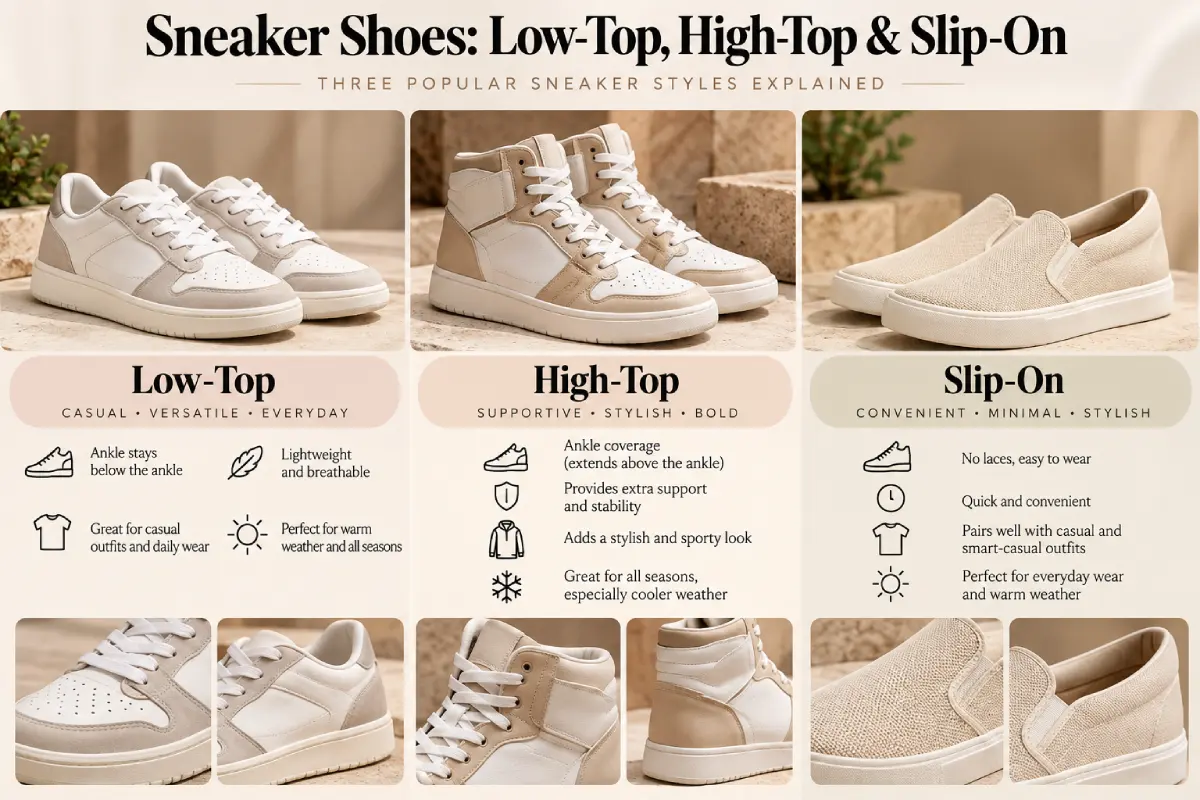
Trainers and sneakers are built around comfort and motion rather than formality, and they’ve become acceptable in far more settings than they used to be — many offices now allow a clean, minimal sneaker with smart-casual clothing. Because sneakers now span such a wide range of sub-styles — running, lifestyle, skate-influenced, and more — they deserve their own detailed breakdown rather than a summary here. (See the full sneaker types and styling guide for that depth.)
Formal Shoes: Oxfords, Derbies and Heels
Formal footwear is where the small construction details matter most, because they’re what actually determine how dressy a shoe reads.
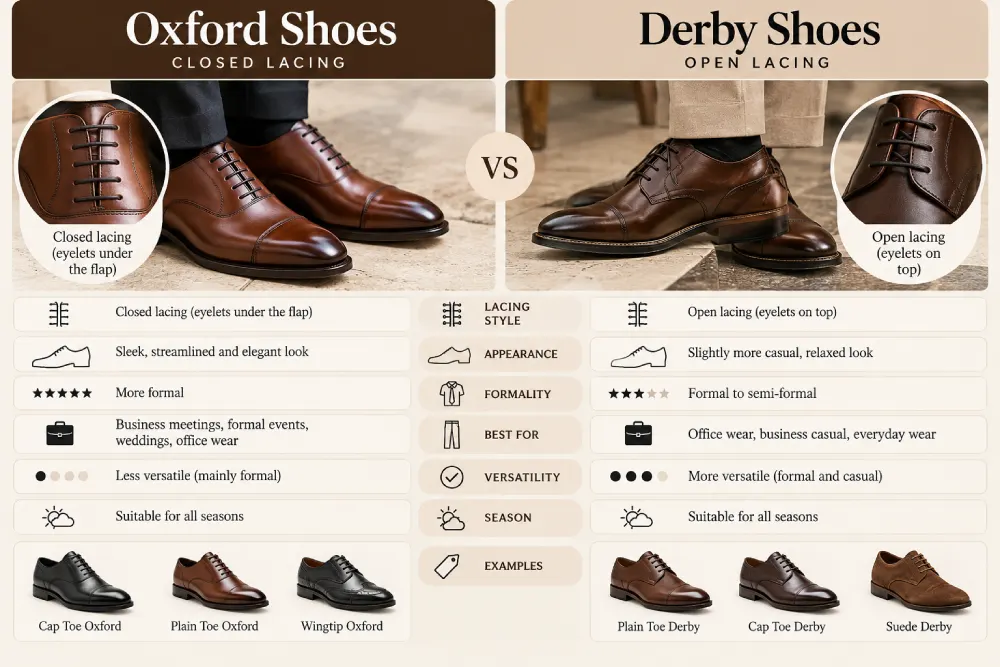
Oxfords use a closed lacing system: the eyelet panels are stitched underneath the front of the shoe, creating a smooth, continuous line across the top of the foot. That clean silhouette is what makes the Oxford the most formal lace-up shoe — it’s the standard choice for black-tie events, formal weddings, and situations where a sharp, minimal look matters.
Derbies look similar at a glance but use open lacing instead — the eyelet panels sit on top of the front of the shoe rather than underneath it. That single difference makes the Derby noticeably more flexible: it accommodates a wider range of foot shapes comfortably and works across business, smart-casual, and many occasion settings, without demanding the strict formality an Oxford calls for.
Monk straps replace laces entirely with one or two buckled straps. They sit in roughly the same formality range as a Derby — sharp enough for business wear, adaptable enough for smart-casual outfits — and offer a distinctive look for anyone who wants a formal shoe that isn’t a straight Oxford or Derby.
Heels and pumps are the primary formal option in women’s footwear, ranging from a low kitten heel appropriate for office wear to a higher stiletto or block heel suited to formal or evening occasions. As a general rule, the lower and more closed the shoe, the more it can flex between office and semi-formal use; the higher and more open the design, the more it’s suited specifically to evening or occasion wear.
Boots, Sandals and Other Seasonal Styles
Boots cover a wide range, from the Chelsea boot — ankle-height, no laces, with an elastic side panel that makes it easy to slip on and off — to laced or zipped ankle boots, and taller styles suited to colder weather. Chelsea boots in particular sit at the more polished end of the category, working with both tailored trousers and casual denim; laced combat-style boots read more casual and pair naturally with jeans or utility-style outfits. In India, boots tend to see the most use in cooler northern regions or during winter evenings elsewhere, rather than as year-round footwear.
Sandals trade coverage for breathability and range from simple flip-flops to structured strappy sandals and block-heeled sandals suited to warmer, dressier occasions. In hot, humid climates, sandals are often the most practical daily option for a large part of the year, though most workplaces still expect a more closed shoe for daily office wear.
Ethnic and occasion footwear — juttis, mojaris, kolhapuris, embellished flats or heels — deserves a mention here too, since it doesn’t fit neatly into Western formal/casual categories. These styles are typically chosen to match a specific ethnic outfit and occasion rather than slotted into a general formality scale, and they’re worth treating as their own category when planning festive or ceremonial footwear.
Choose a Shoe Type for Your Outfit and Occasion
Once you know roughly where a shoe type sits on the formal-to-casual scale, matching it to an outfit becomes far simpler. A useful rule: keep your shoe’s formality level within one step of your outfit’s formality level. An Oxford with jeans reads mismatched in the other direction — too formal for the outfit — the same way sneakers with a formal suit read too casual.
For office and business settings, Derbies, monk straps, loafers, or low block heels generally cover the range from formal to smart-casual dress codes.
For formal events and weddings, Oxfords, heels, or polished dress-appropriate ethnic footwear match the occasion’s formality.
For everyday and weekend wear, loafers, flats, trainers, and Chelsea boots offer comfort without looking underdressed for casual settings.
For hot-weather or casual outdoor settings, sandals and breathable flats are the most practical choice, provided the setting doesn’t call for closed-toe footwear.
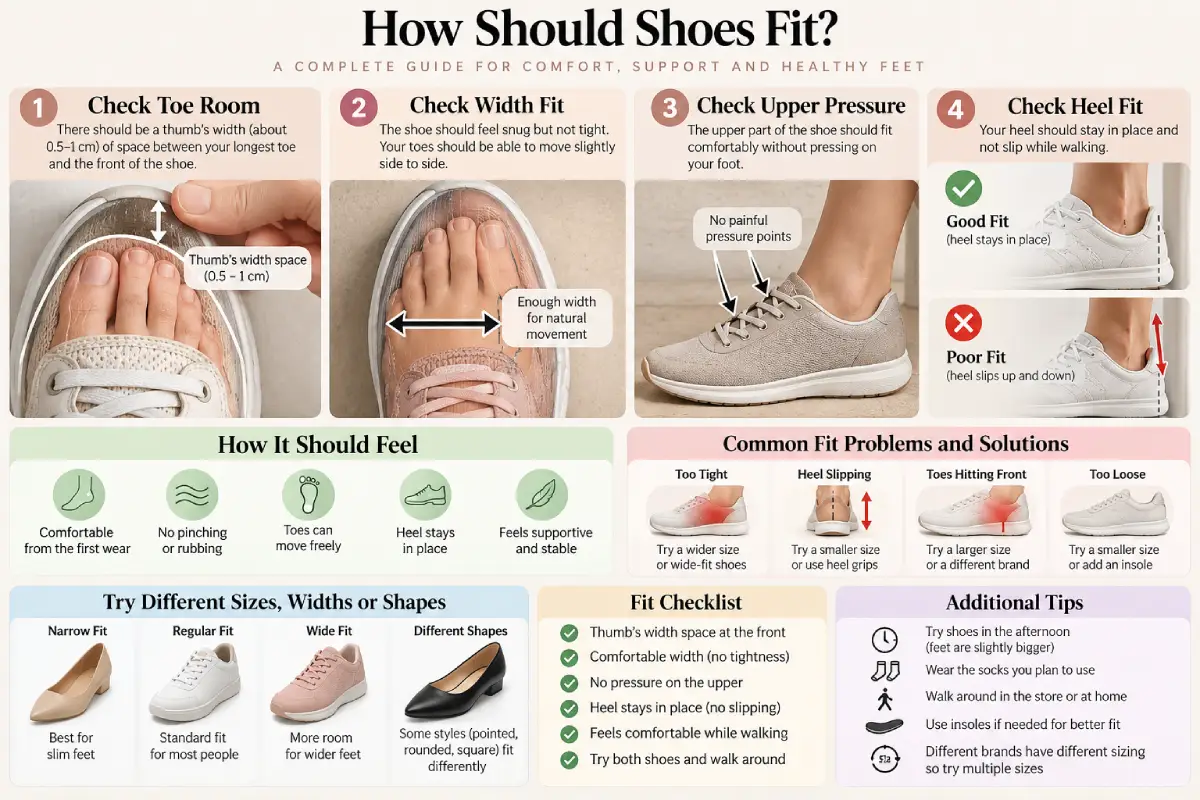
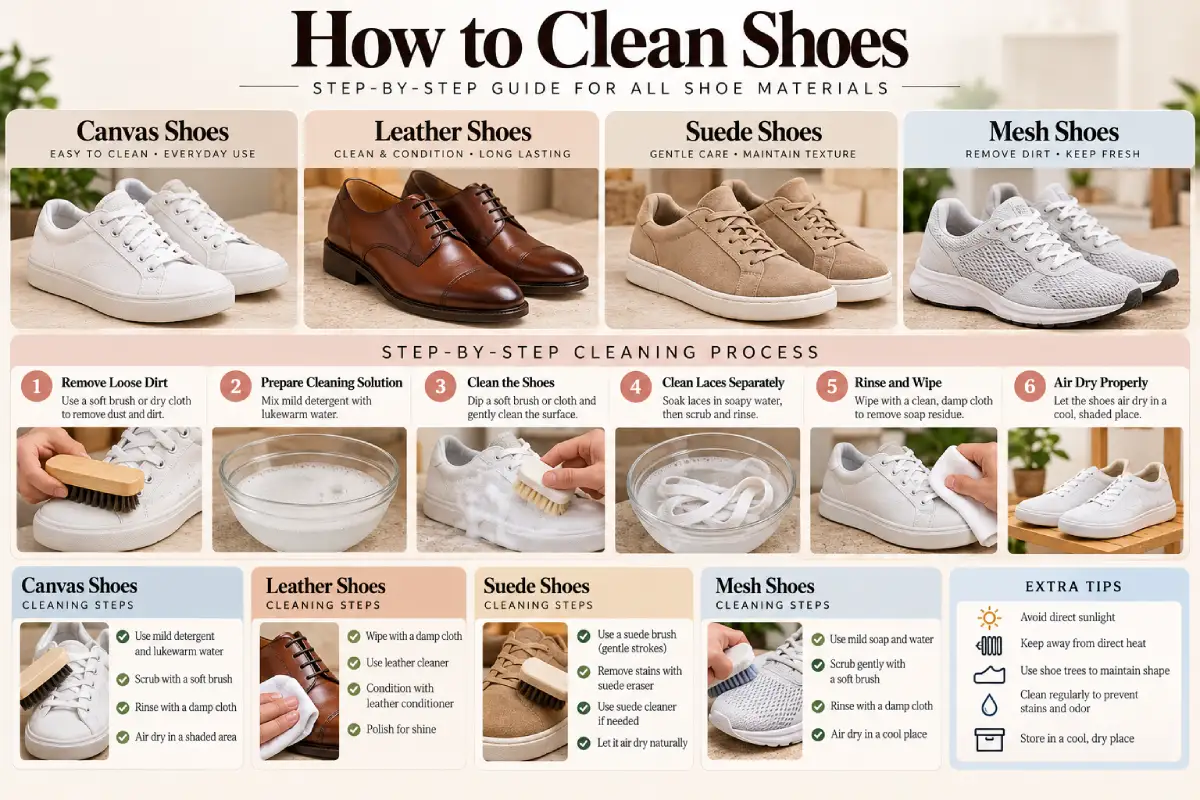
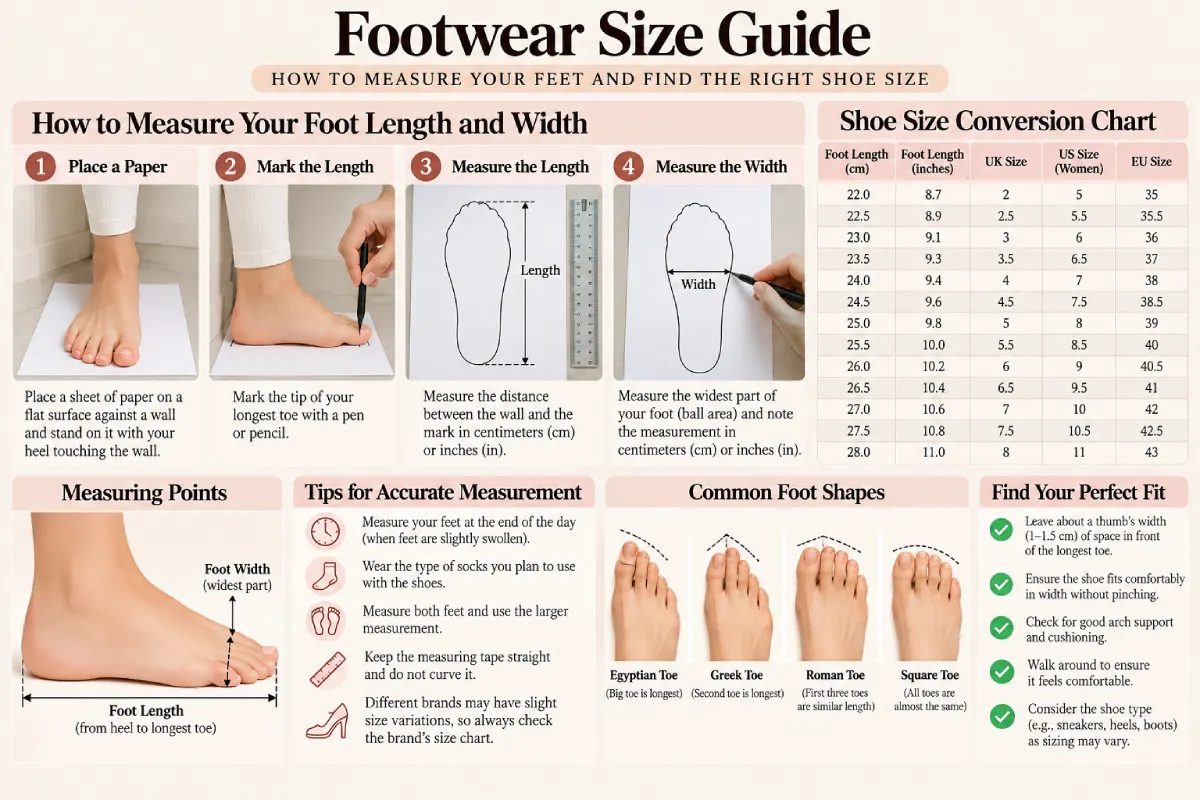
Knowing the names is useful, but matching formality to occasion is what actually makes a shoe type “correct” for a given outfit — and that instinct gets easier with a little practice. For the full range of footwear categories this guide builds on, along with sizing, fit, and care guidance, the complete footwear guide is a useful starting point.
FAQs
What’s the difference between an Oxford and a Derby shoe? The difference is in the lacing construction. An Oxford has closed lacing, where the eyelet panels are stitched underneath the front of the shoe for a smooth, formal line. A Derby has open lacing, with the panels stitched on top, which makes it slightly more casual and better suited to a wider range of foot shapes.
Are loafers considered formal or casual shoes? Loafers sit in between — they’re generally classified as smart-casual. A clean leather loafer can work in a business-casual office, while a suede or more casual-styled loafer leans toward weekend wear.
Can sneakers be worn in a formal or office setting? Increasingly, yes, though it depends on the sneaker and the office’s specific dress code. A clean, minimal sneaker in a neutral color can work for smart-casual offices, but sneakers still generally read as too casual for formal or black-tie settings.
What shoe types work best for hot, humid weather? Sandals, breathable flats, and loafers in lighter materials tend to work best in hot, humid climates, since closed, heavier constructions trap more heat. Most workplaces, however, still expect a closed shoe for daily office wear regardless of climate.
Do boots make sense for Indian weather? Full boots are most practical in cooler regions or during winter evenings rather than as year-round footwear across most of India. A lighter ankle boot is a reasonable middle ground for cooler seasons in warmer regions.
Final Conclusion
Knowing your shoe types isn’t about memorizing every name in a shoe store — it’s about recognizing where each style sits between formal and casual, so you can match it to your outfit without overthinking it. Oxfords and heels for formal occasions, Derbies and loafers for the office, sandals and trainers for everyday comfort: once that scale clicks, choosing the right shoe type gets a lot easier. For sizing, fit and care guidance to go with it, head back to the complete footwear guide.