How Should Shoes Fit? Toe Room, Width and Heel Checks
Published: September 25, 2026 Last Updated: September 25, 2026 A correctly fitting shoe leaves about a thumb’s width of
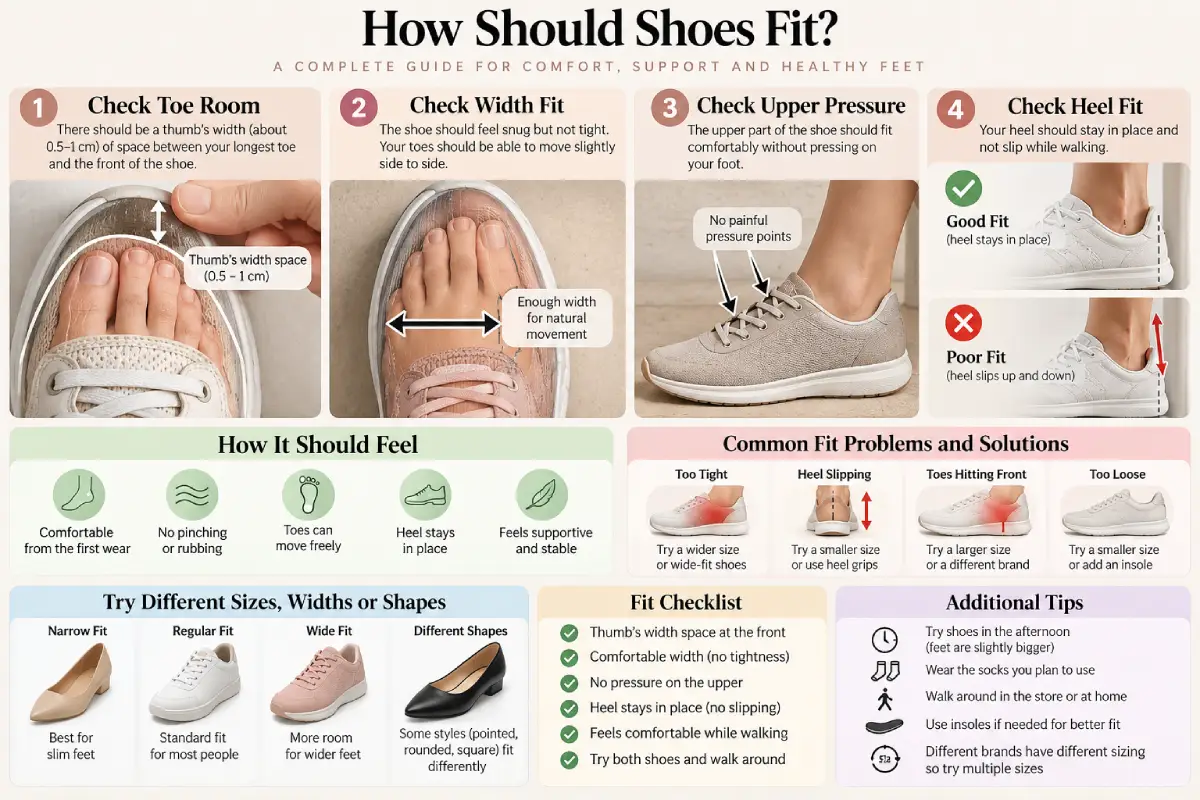
A correctly fitting shoe leaves about a thumb’s width of space between your longest toe and the front of the shoe, sits snug but not tight across the widest part of your foot, and keeps your heel from slipping noticeably when you walk. Genuine, ongoing discomfort isn’t something to “break in” through — it’s usually a sign the size, width, or shape is wrong.
A shoe can be technically the “right size” on paper and still not fit correctly. That’s because fit isn’t just about length — it’s about toe room, width, and how securely the shoe holds your heel while you walk. Knowing how shoes should fit means being able to run through these checks quickly, on any pair, and recognize the difference between a shoe that needs a short adjustment period and one that’s genuinely the wrong size or shape for your foot.
What a Comfortable Shoe Fit Should Feel Like
A well-fitting shoe should feel secure without pressing anywhere specific. You shouldn’t feel your toes cramped at the front, pinching along the sides, or rubbing at the heel. There shouldn’t be any single point where the shoe feels tight, loose, or like it’s actively working against your foot as you move.
It’s easy to confuse “will loosen up eventually” with “fits correctly,” but these aren’t the same thing. A shoe that needs genuine force to get on, or that causes sharp discomfort in the first few minutes of wear, is telling you something useful — and it’s usually not “give it time.”
Check Toe Room, Width and Upper Pressure
Toe room: With your weight forward, as it would be while standing or walking, there should be roughly a thumb’s width of space between your longest toe and the front of the shoe. This isn’t always your big toe — for some people, the second toe extends slightly further, so check whichever toe reaches furthest forward. Too little room here causes pressure and, over time, can lead to blisters or discomfort with the toenail. Too much room can cause your foot to slide forward inside the shoe, which creates its own friction problems.
Width: The widest part of your foot — typically across the ball, just behind the toes — should sit securely within the shoe without pinching on the sides or bulging over the edge of the sole. If the length feels right but the sides feel tight or your toes feel squeezed together, that’s usually a width problem, not a length problem, and sizing up in length won’t fix it. Look for a wider-width option from the same brand, or a brand whose shoes are cut more generously, rather than compensating with a longer size.
Upper pressure: Run a hand — or your attention — across the top of your foot once the shoe is laced or fastened normally. There shouldn’t be any single spot where the material presses down hard or leaves a deep mark once you take the shoe off. Light, even contact across the top of the foot is normal; a sharp pressure point in one specific spot usually means the shoe’s shape doesn’t match your foot’s shape in that area.
Assess Heel Hold and Fastenings While Walking
Fit isn’t only about how a shoe feels standing still — walking a few steps tells you things a static check won’t.
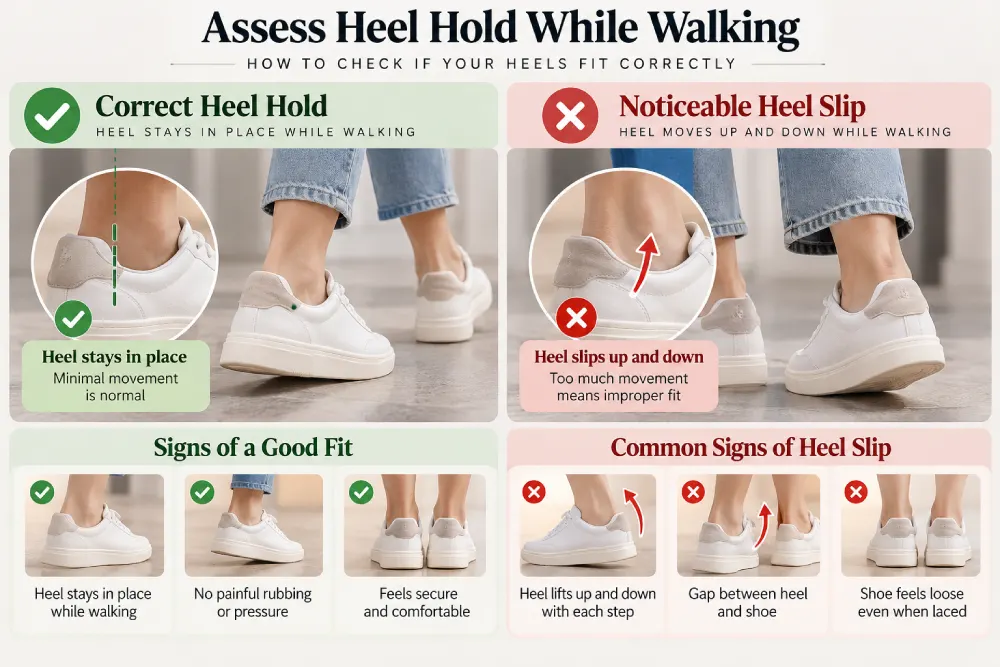
Walk several steps and pay attention to your heel. A small amount of initial movement is normal, especially in a brand-new shoe. A heel that lifts noticeably out of the shoe with every step, though, is too loose — this is a common and often overlooked fit issue, since the front of the shoe can feel perfectly fine while the heel is doing all the wrong things.
Check that laces, straps, or buckles are doing real adjustment work rather than compensating for a shoe that’s fundamentally the wrong size. If you find yourself lacing a shoe unusually tight just to keep your heel from slipping, or loosening straps to their maximum just to relieve toe pressure, that’s a sign the base size or width is off — not something the fastening should have to fix on its own.
Try Shoes with Your Usual Socks and Insoles
Fit-checking in different conditions than you’ll actually wear the shoe in is one of the most common reasons people end up with a poor fit after buying. Try shoes on with the same thickness of socks you’ll typically wear with them — a shoe that fits well with thin dress socks can feel noticeably tight with thicker athletic or winter socks, and the reverse is true as well.
If you use orthotic inserts or plan to swap the included insole for a different one, bring that insert along when trying shoes on, since it changes the internal volume and can shift how snug the shoe feels, particularly in the toe box and instep.
It’s also worth trying shoes on, or at least doing a final check, later in the day rather than first thing in the morning. Feet naturally swell slightly over the course of a day, so a shoe that fits in the morning can feel tighter by evening — checking fit when your feet are at their largest gives a more realistic picture of all-day comfort.
When to Try Another Size, Width or Shoe Shape
If a shoe fails one of the checks above, the fix depends on which specific check failed — and getting this right matters more than defaulting to “just size up.”
- Toe room too tight, everything else fine: try a half size longer.
- Sides pinch or toes feel squeezed, length feels correct: try a wider width rather than a longer size — length and width are different problems with different fixes.
- Heel slips noticeably, front of the shoe fits well: this often points to the wrong shoe shape for your foot rather than the wrong size — some shoe lasts are simply cut narrower through the heel relative to the forefoot, and a different brand or style may solve this better than a different size within the same one.
- One specific pressure point on the upper: this usually means the shoe’s overall shape doesn’t match your foot’s shape in that area, and sizing up or down generally won’t resolve a shape mismatch — a different style is often the better fix.
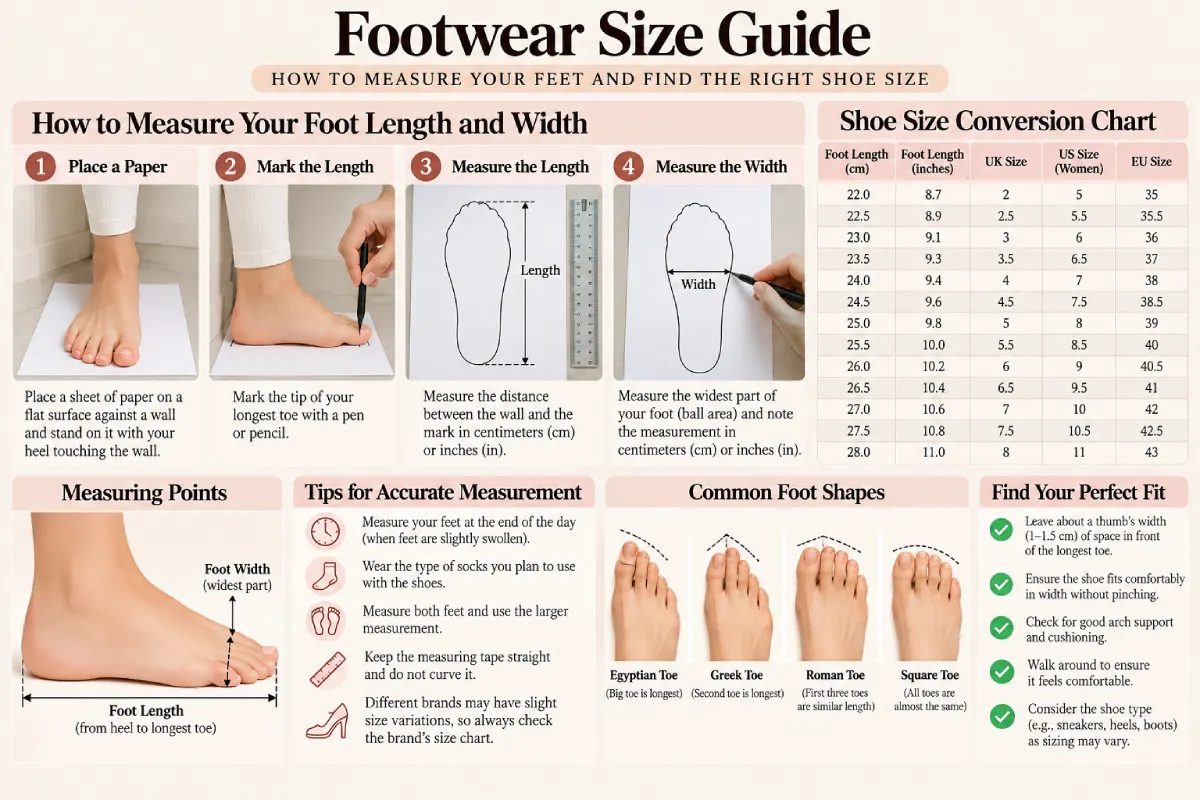
If you haven’t yet confirmed your actual foot measurements, it’s worth starting there before troubleshooting fit further — the footwear size guide covers how to measure your feet and convert between UK, US, and EU sizing, which is the foundation this fit check builds on.
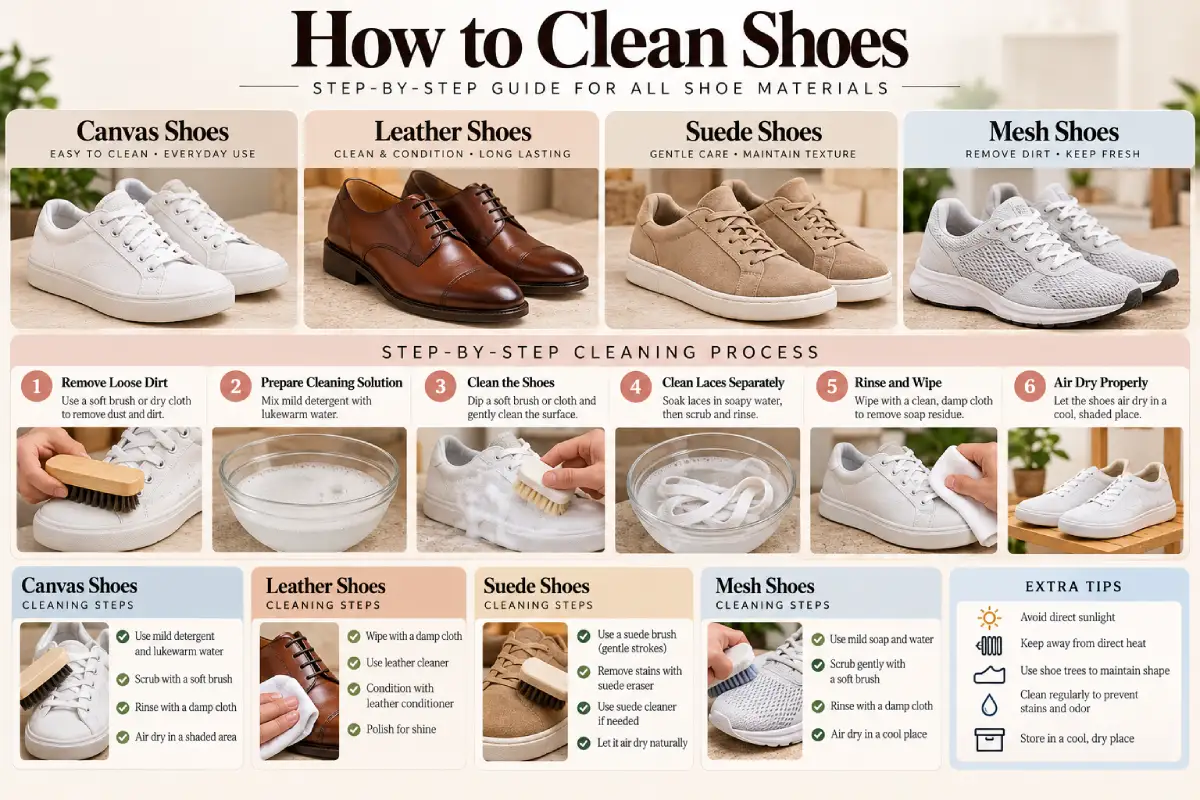
Getting fit right takes a few extra minutes per pair, but it’s the difference between shoes you forget you’re wearing and shoes you’re constantly adjusting. Once a shoe passes these checks, proper care will help it keep fitting well for longer — see the full guide on how to clean shoes for material-specific maintenance that helps a well-fitted shoe keep its shape.
FAQs
How much toe room should a shoe have?
Roughly a thumb’s width of space between your longest toe and the front of the shoe, checked with your weight forward. This applies to most everyday and athletic shoes; more structured formal shoes may sit slightly closer at the toe.
How do I know if shoes are too narrow instead of too short?
If the length feels correct — your toes aren’t hitting the front — but the sides pinch or your toes feel squeezed together, that’s a width issue rather than a length issue. Sizing up in length won’t fix a width problem; look for a wider-width option instead.
Is it normal for new shoes to feel tight at first?
Some materials, particularly leather, soften slightly with wear, so mild snugness that eases within the first few wears can be normal. Sharp pain, pinching, or discomfort that doesn’t improve isn’t a break-in period — it’s usually a sign the size or shape is wrong.
Why does my heel slip even though the rest of the shoe fits?
This often points to the shoe’s shape rather than its size — some shoe lasts are cut narrower through the heel relative to the front of the shoe. If tightening laces or straps doesn’t resolve it, a different brand or style is often a better fix than trying another size in the same shoe.
Should I try shoes on in the morning or evening?
Later in the day is more reliable, since feet naturally swell slightly over the course of a day. A shoe that feels fine in the morning can feel tighter by evening, so checking fit when your feet are at their largest gives a more accurate result.
Final Conclusion
Knowing how shoes should fit comes down to a short, repeatable check: room at the toe, a secure but not tight width, and a heel that stays put when you walk. Run through it on every pair before you commit to wearing it regularly, and you’ll catch fit problems before they turn into blisters, discomfort, or a shoe that never gets worn. If a fit issue traces back to your base size, the footwear size guide is the place to double-check — and once a shoe passes, the complete footwear guide has everything else you need to keep your collection working for you.