How to Store Clothes: Folding, Hanging and Seasonal Care
Published: September 27, 2026 Last Updated: September 27, 2026 Clothing storage comes down to three habits: only store clothes
Clothing storage comes down to three habits: only store clothes that are completely clean and fully dry, fold delicate and knitted items instead of hanging them (hanging stretches knits out of shape over time), and protect stored clothes from moisture, sunlight, and pests using breathable containers rather than sealed plastic. Seasonal storage — packing away winter sweaters or monsoon-unsuitable fabrics — needs the same three habits, plus a mid-season check to catch any moisture or pest problems before they spread.
Good clothing storage isn’t about matching containers or a perfectly organized closet — it’s about three habits that protect fabric while it’s not being worn: store clothes clean and fully dry, choose fold or hang based on the fabric rather than convenience, and keep stored clothes away from moisture, direct sunlight, and pests. Skip any of these and clothes come out of storage stretched, faded, musty, or damaged by moths, even if they went in looking perfect.
Prepare Clean, Fully Dry Clothes for Storage
Never store a worn-but-not-dirty item on the assumption that it’s fine. Body oils, sweat, and food residue are invisible to the eye but attract moths and other fabric pests, and they can also set into fabric over months of storage, becoming much harder to remove later. Washing or dry-cleaning everything before it goes into storage — following the care label’s instructions — removes this risk entirely and gives you a natural moment to catch stains before they’ve had months to set in.
Drying matters just as much as cleaning. Clothes must be completely dry, not just dry to the touch, before they’re folded or bagged away. Even slight residual dampness, sealed into a container or a garment bag for weeks or months, is one of the most common causes of mildew and musty odor in stored clothing — and once mildew takes hold, the smell and staining are often difficult to fully reverse.
This is also the right moment to inspect each garment for small damage — a loose button, a small seam opening, pilling on a sweater — since it’s far easier to fix before storage than to discover after pulling a garment back out for the season.
Which Clothes to Fold and Which to Hang
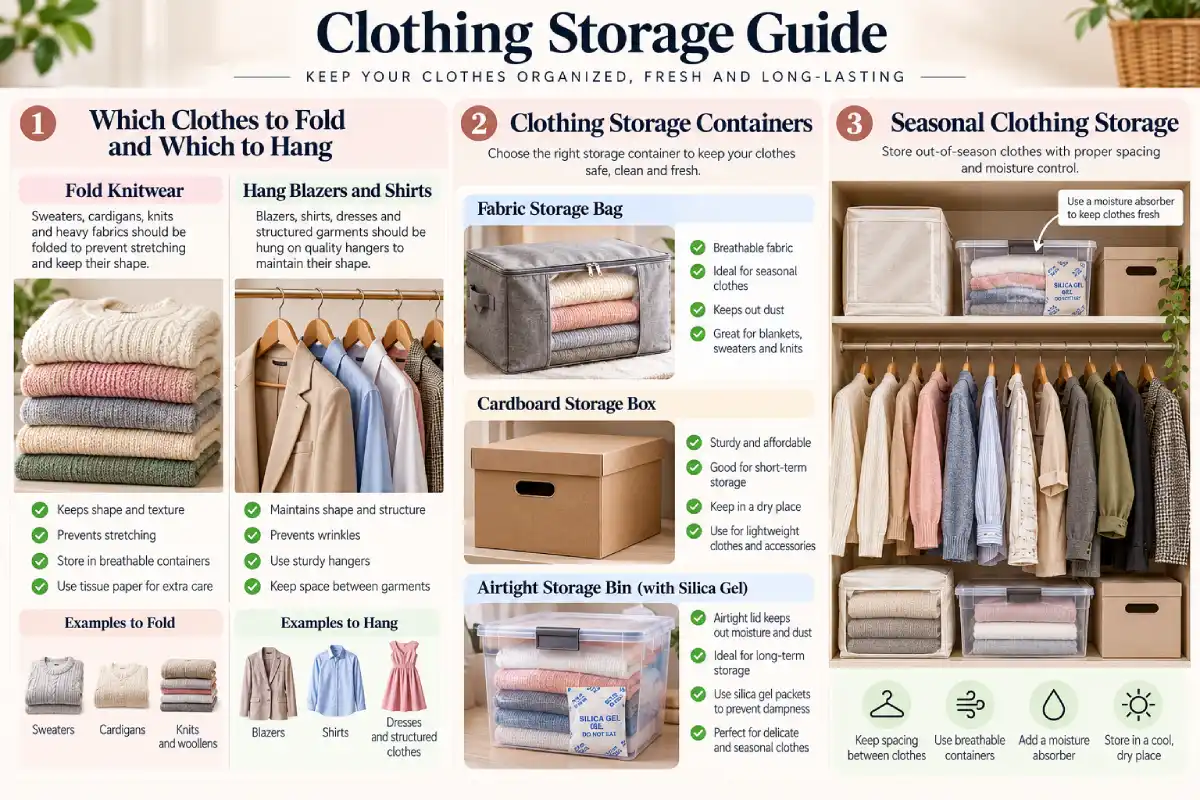
The fold-or-hang decision should follow the fabric, not habit. Getting it backwards is one of the most common ways clothes lose their shape in storage.
Fold these:
- Knitwear, sweaters, and cardigans
- Silk and other delicate, stretch-prone fabrics
- T-shirts and casual knit tops
Hang these:
- Structured garments — blazers, coats, jackets
- Dress shirts and anything with a defined collar
- Dresses with structured bodices
The reasoning comes down to weight and gravity. A knitted garment relies on the way its fibers are looped together for its shape, and hanging it — especially for weeks or months — lets its own weight pull the fabric downward, stretching the shoulders and lengthening the body of the garment in a way that doesn’t bounce back once it’s off the hanger. Structured garments, by contrast, are built with seams and often interfacing that resist this kind of stretching, which is why hanging keeps them looking sharp rather than damaging them.
For delicate knitwear specifically, placing acid-free tissue paper between folded layers helps prevent pieces from pressing creases into each other over long storage periods, and it’s a small step that protects fine or textured knits.
Choose Hangers, Containers and Garment Covers
Not all storage materials protect clothes equally, and the biggest mistake here is treating “sealed” and “protected” as the same thing.
| Container type | Best for | Why |
|---|---|---|
| Breathable fabric garment bags or cloth bins | Most seasonal storage, wool, everyday items | Allows some airflow, reducing moisture buildup and musty odor |
| Acid-free cardboard boxes | Delicate fabrics, structured items | Doesn’t trap moisture, protects from dust and light |
| Airtight plastic containers | Fully dry garments in humid or pest-prone environments, ideally with a desiccant added | Blocks moisture and pests effectively, but only if the fabric is genuinely, completely dry going in |
| Plastic dry-cleaner bags | Not recommended for long-term storage | Traps moisture against the fabric and doesn’t let it breathe |
For hanging storage, padded or wide-shouldered hangers prevent the small “bumps” that thin wire hangers leave at the shoulder seam over time — a detail that matters more the longer a garment stays on the same hanger.

Store Seasonal Clothes with Space and Moisture in Mind
Seasonal storage — packing away winter sweaters for summer, or setting aside monsoon-unsuitable fabrics in India — puts clothes in a container for months at a time, which makes the earlier habits even more important, since there’s no regular wear to reveal a developing problem early.
A few adjustments matter specifically for longer seasonal storage:
- Don’t pack containers or closets too tightly. Clothes need some breathing room; overly compressed storage flattens knitwear’s loft permanently and prevents the air circulation that keeps moisture from building up.
- Choose a cool, dry, dark storage location where possible — a closet or spare room rather than a damp basement or an attic exposed to temperature swings and direct light, both of which accelerate fading and fiber breakdown.
- Use moisture control appropriate to your climate. In consistently humid conditions — including monsoon-season storage common across much of India — a desiccant like silica gel packets inside an airtight container actively manages ambient moisture rather than just relying on airflow.
- Address pests with prevention, not just repellents. Moths are drawn to soiled fabric and dark, undisturbed storage more than to any specific fabric type, which is why the cleaning step earlier matters so much. Natural deterrents like cedar blocks or lavender sachets are a reasonable supplement, but they work best alongside — not instead of — clean, well-sealed storage.
Inspect Stored Clothes and Avoid Common Storage Mistakes
Seasonal clothes shouldn’t go untouched for months without a check-in. A mid-season inspection — opening containers, checking for any musty smell, dampness, or small holes — catches a moisture or pest problem while it’s still contained to one or two garments, rather than after it’s spread through an entire storage box.
The most common storage mistakes are avoidable once you know what to look for:
- Storing anything slightly damp, assuming a few hours of drying was enough — this is the single most common cause of mildew in stored clothing.
- Using sealed plastic for genuinely damp or lightly-worn items, which traps moisture rather than blocking it.
- Hanging knitwear for extended storage, leading to stretched shoulders and lengthened hems that don’t recover.
- Packing storage so tightly that air can’t circulate, which encourages both moisture buildup and permanent creasing.
Getting clothing storage right isn’t about a perfect system — it’s about giving fabric the conditions it needs to sit undisturbed for weeks or months without damage. Clean, completely dry, correctly folded or hung, and protected from moisture and pests covers nearly every situation a home wardrobe runs into.
FAQs
Should I store clothes in plastic bins or fabric bags? It depends on how dry the garment is and how humid your storage space is. Breathable fabric bags or cloth bins are the safer general default, since they allow some airflow and reduce the risk of trapped moisture. Airtight plastic containers work well specifically for completely dry garments in humid or pest-prone conditions, ideally with a desiccant like silica gel added — but sealing anything with even slight residual dampness into plastic is one of the most common causes of mildew in storage.
Why did my sweater stretch out after hanging in the closet? Knitted fabric relies on looped fibers for its shape, and hanging lets the garment’s own weight pull those fibers downward over time — especially over weeks or months of storage. This stretches the shoulders and lengthens the body in a way that usually doesn’t bounce back. Folding knitwear instead of hanging it prevents this.
How do I keep moths out of stored clothes without mothballs? The most effective prevention is cleaning garments thoroughly before storage, since moths are drawn to body oils and residue rather than to fabric type specifically. Natural deterrents like cedar blocks or lavender sachets, combined with a well-sealed storage container, reduce risk further without the strong odor associated with mothballs.
Is it safe to store clothes in a basement or attic? It can be, with precautions. Basements often carry moisture risk, and attics can have wide temperature swings and light exposure — both of which damage fabric over time. If you have to use either space, keep containers off the floor, use breathable or airtight-with-desiccant storage as appropriate, and check on stored items partway through the season.
How often should I check on seasonal clothes in storage? A check partway through the storage period — roughly once each season — is enough to catch a developing moisture or pest issue before it spreads to other stored garments, without requiring constant monitoring.
FINAL CONCLUSION
Clothing storage protects the work you’ve already put into washing, drying, and caring for your clothes — and it only takes three consistent habits to get right: store everything clean and completely dry, fold delicate knits while hanging structured pieces, and keep stored clothes away from moisture, sunlight, and pests with the right container for your climate. A quick mid-season check catches anything that slips through before it spreads. For the rest of the routine — washing, drying, ironing, and repairs — the full Clothing Care Guide ties everything together.