Jewelry Guide: Types, Materials, Styling and Care
Published: September 23, 2026 Last Updated: September 23, 2026 TL;DR Jewelry falls into a few core categories — rings,
TL;DR
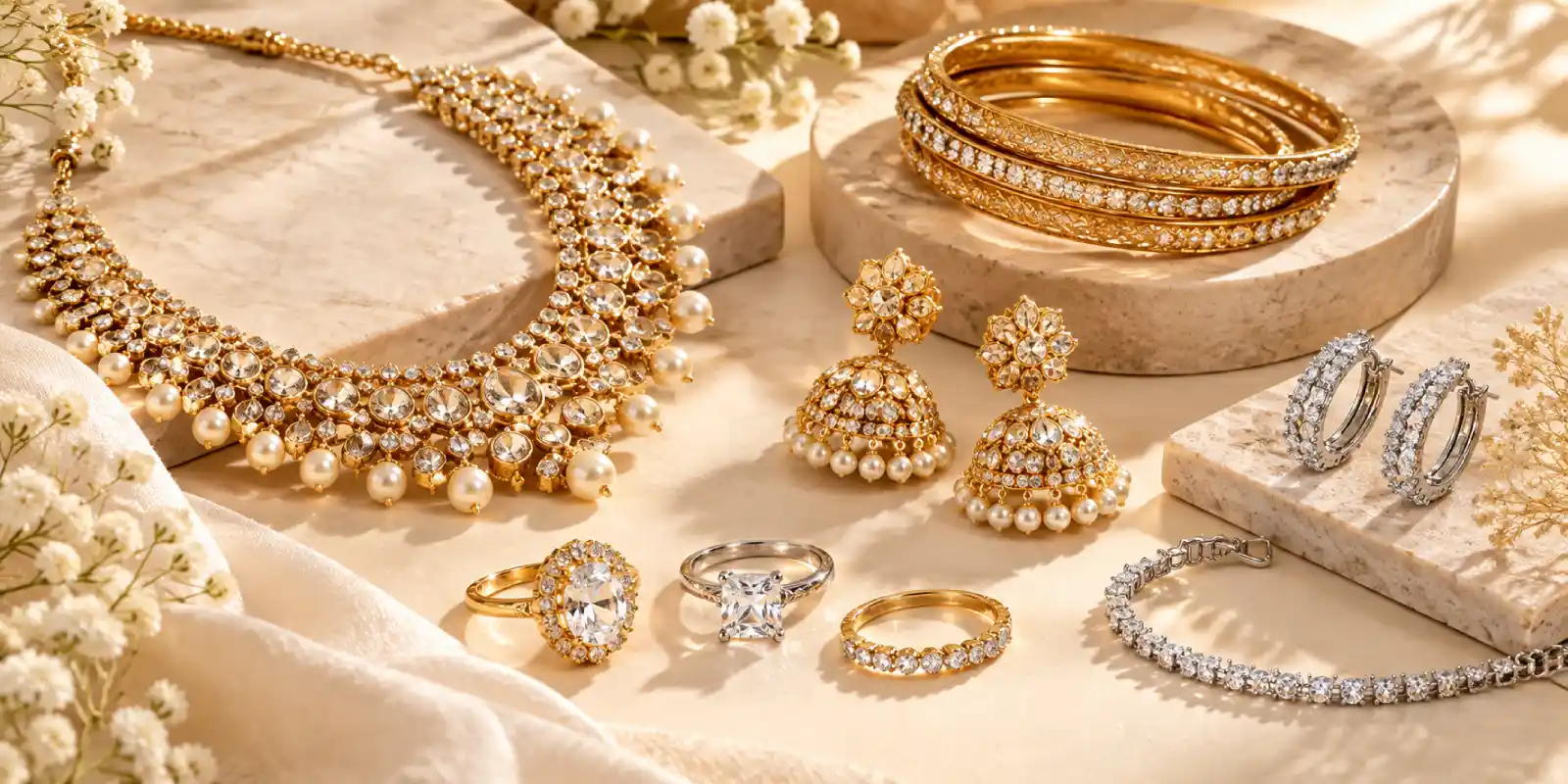
Jewelry falls into a few core categories — rings, necklaces, earrings, bracelets and bangles, anklets, and body jewelry — made from precious metals (gold, silver, platinum), alternative metals, and gemstones or simulants. The right choice depends on three things: what it’s made of, how it fits your lifestyle and skin, and whether you want fine jewelry (an investment piece, hallmark-certified, built to last) or fashion jewelry (trend-led, affordable, replaceable). This guide covers all of it at a practical, decision-ready level, then points you to deeper guides on cleaning silver, spotting fakes, stacking, everyday care, men’s trends, and choosing a necklace for your neckline.
Jewelry is one of those categories everyone shops in but few people feel fully confident about. A quick scroll through any jewelry store, online or offline, throws up terms like 22K, hallmark, vermeil, cubic zirconia, and fine vs fashion — and it’s easy to nod along without really knowing what any of it means for you.
This jewelry guide is built to fix that. It walks through the types of jewelry you’ll actually encounter, the materials they’re made from, how fine jewelry differs from fashion jewelry, and how to choose and style pieces that suit your life — not just the display window. Where a topic goes deeper than a hub page should (cleaning silver step by step, spotting a fake, stacking technique, and more), you’ll find a dedicated section that gives you the essentials and points you to a full, focused guide.
By the end, you should be able to walk into a jewelry store — or shop online — and know exactly what questions to ask.
Types of Jewelry: A Complete Overview
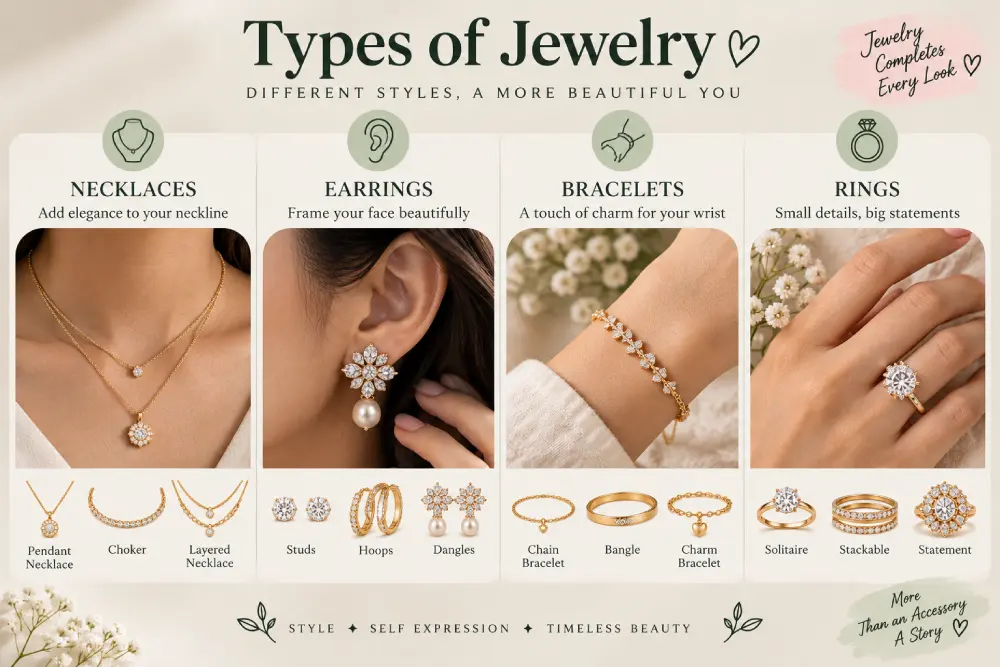
Almost every piece of jewelry fits into one of four broad wearing categories. Understanding these categories first makes everything else in this guide — materials, styling, buying decisions — much easier to apply.
Jewelry for the neck and chest. This includes necklaces, pendants, chokers, chains, and lockets. Necklaces vary enormously in length, from close-fitting chokers to long opera-length chains, and that length is one of the biggest factors in how a piece looks with different necklines (more on that in the dedicated section below). In India, this category also includes culturally specific pieces like the mangalsutra, worn as a symbol of marriage, and layered temple-style necklaces often worn for weddings and festive occasions.
Jewelry for the ears. Studs, hoops, danglers, and jhumkas (traditional bell-shaped earrings) all fall here. Ear jewelry is usually the first category people build up, because it’s relatively affordable, low-maintenance, and works across both everyday and occasion wear.
Jewelry for hands and wrists. Rings and bracelets sit in this group, along with bangles — a category with particular cultural weight in India, worn daily by many women and central to bridal and festive dressing. Rings range from simple bands to statement cocktail pieces, and bracelets range from delicate chains to chunky cuffs.
Jewelry for the feet and body. Anklets (payal) and toe rings are traditional in India and remain popular for both daily wear and occasion dressing. Body chains and brooches are less common day-to-day but appear regularly in bridal and fashion-forward styling.
A useful way to think about your own collection is not “how many pieces do I own” but “do I have at least one reliable option in each category for both everyday wear and a special occasion?” That framing does more for your day-to-day styling than chasing trend pieces.
Jewelry Materials Explained: Metals, Gemstones and Simulants
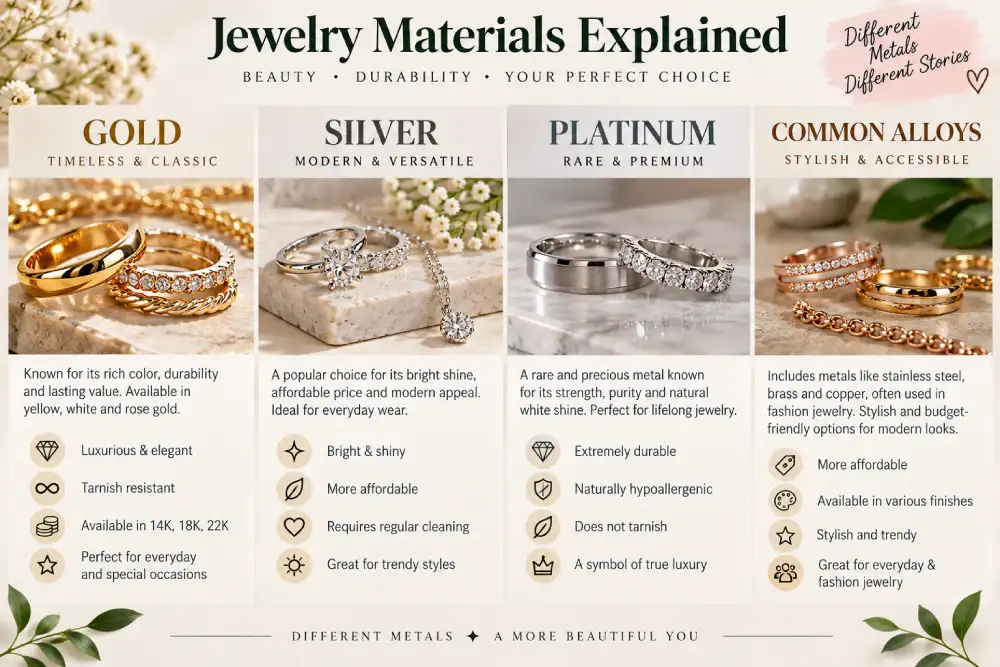
The material a piece is made from affects its price, how it wears over time, how it feels against your skin, and how it should be cared for. Broadly, jewelry materials split into three groups: precious metals, alternative/everyday metals, and gemstones or simulants.
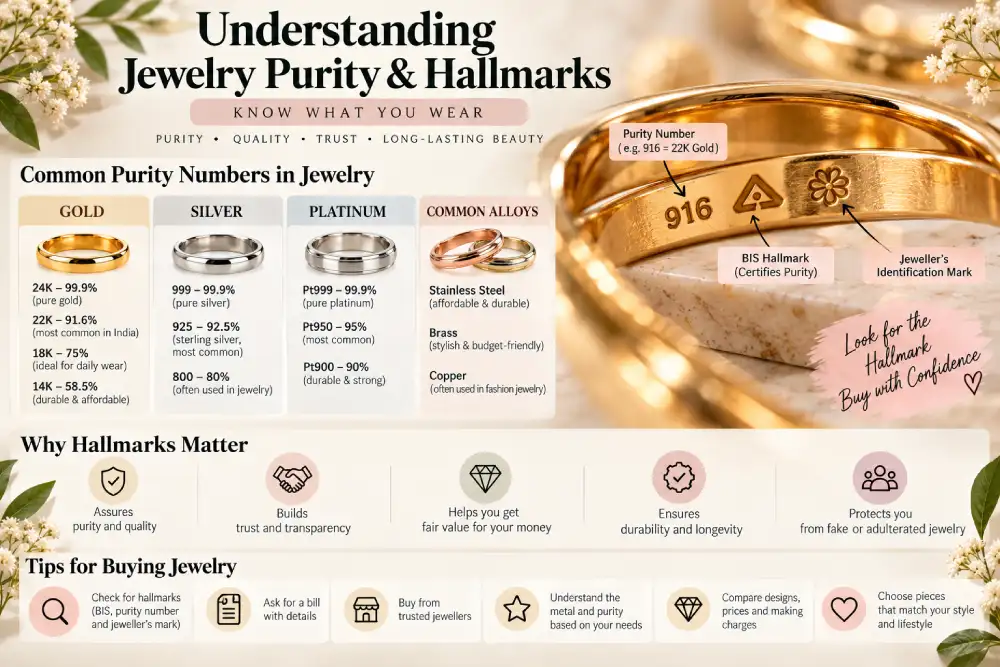
Precious metals: gold, silver and platinum. Gold is the most common metal in Indian fine jewelry, prized for its warmth, workability, and cultural significance. Its purity is measured in karats — pure gold is 24K, while jewelry is typically made from a gold alloy for added strength. Traditional Indian gold jewelry is commonly made in 22K (91.6% gold), while Western-style fine jewelry often uses 18K (75% gold) or 14K (58.5% gold), which is harder-wearing but less richly coloured. Sterling silver (marked 925, meaning 92.5% pure silver alloyed with other metals for strength) is the standard for silver jewelry — pure silver is too soft to hold its shape well. Platinum is denser, more hypoallergenic, and more expensive than gold, and it’s a common choice for those with sensitive skin or for pieces meant to be worn daily for decades, such as wedding bands.
Alternative and everyday metals. Stainless steel and titanium are durable, affordable, and largely hypoallergenic, which makes them popular for daily-wear pieces and men’s jewelry. Brass and copper are common in fashion and artisanal jewelry — they’re affordable and can be beautifully finished, but they tarnish faster and may cause skin reactions for some wearers, especially with prolonged contact or in humid climates. Gold-plated, gold-vermeil (a thicker gold layer over sterling silver), and gold-filled pieces all use a base metal with a gold layer of varying thickness — the thicker and higher-karat the layer, the longer it tends to last before wearing thin.
Gemstones, diamonds and simulants. Precious gemstones — diamonds, rubies, sapphires, emeralds — are valued by cut, clarity, colour, and carat weight, and are the hallmark of fine jewelry. Semi-precious stones (amethyst, garnet, turquoise, and many others) offer colour and character at a lower price point. Simulants like cubic zirconia and high-quality crystal are designed to mimic the sparkle of precious stones without the cost, and are standard in fashion jewelry — there’s nothing “fake” about choosing them deliberately for a trend piece; the key is knowing which category you’re buying so the price makes sense.
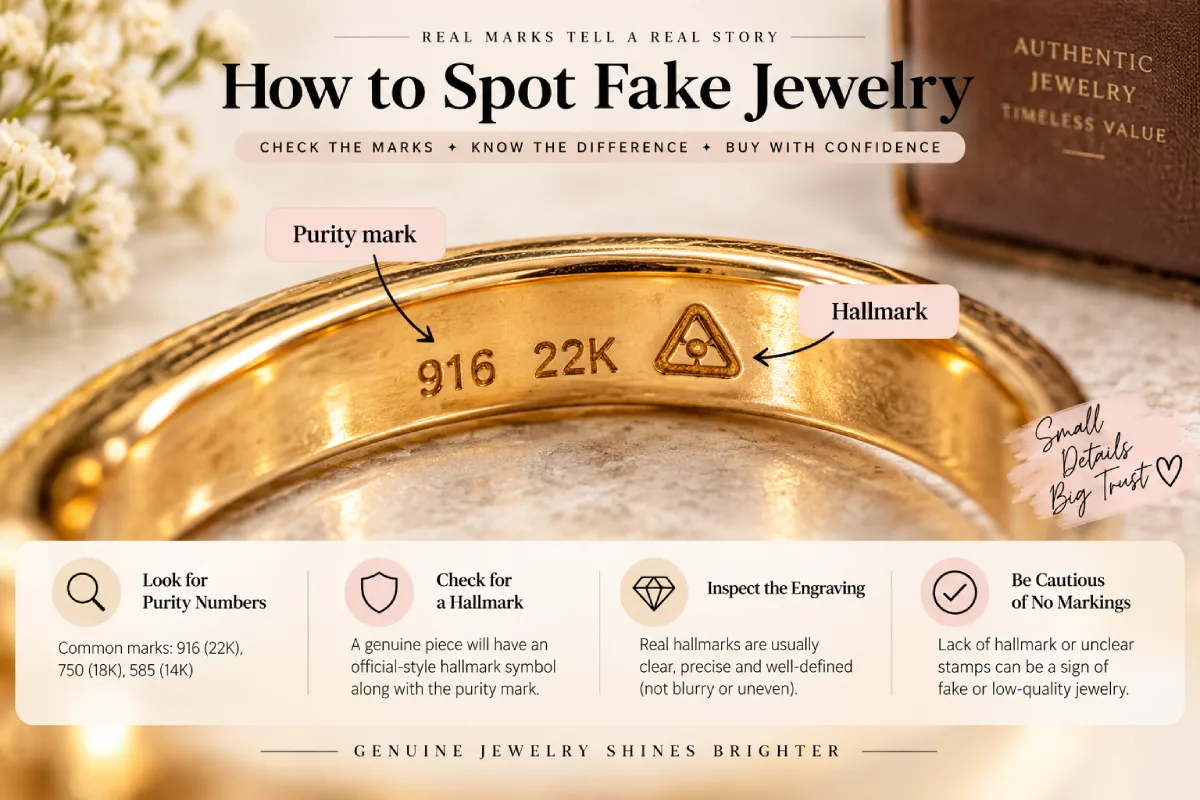
Understanding purity and hallmarking in India. In India, gold jewelry sold through organised retail is generally required to carry BIS (Bureau of Indian Standards) hallmarking, which certifies purity. Look for the BIS hallmark logo along with a purity grade — commonly stamped as 916 (22K), 750 (18K), or 585 (14K), representing the percentage of gold by weight. This single check is one of the most useful things you can do before buying gold jewelry in India, and it’s expanded on in the “Buying Jewelry in India” section below.
Fine Jewelry vs Fashion Jewelry: What’s the Real Difference?
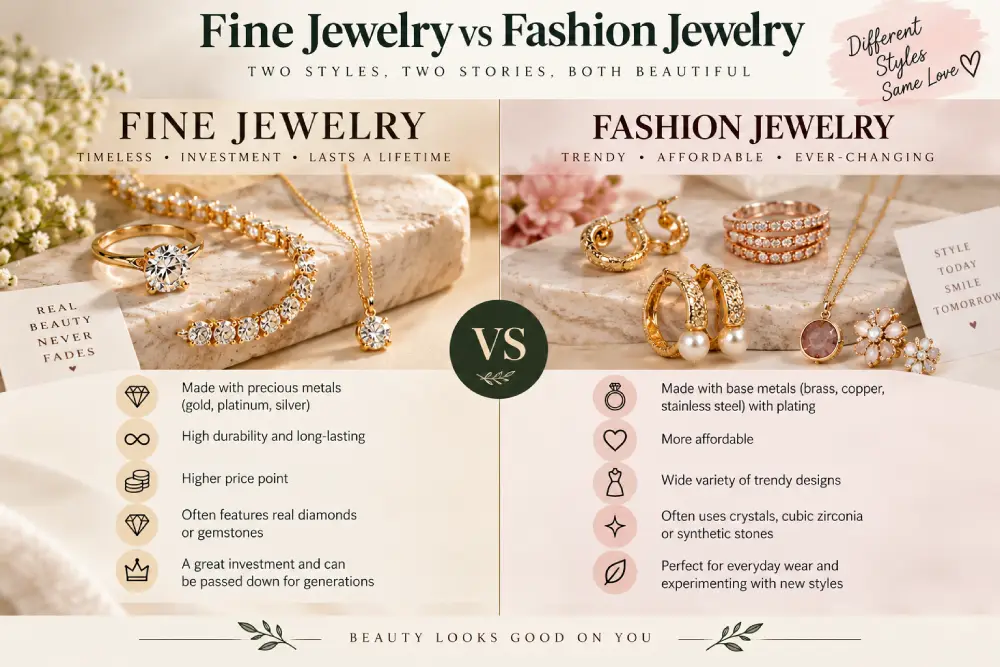
This is one of the most common points of confusion for jewelry buyers, and it matters because it changes how much you should expect to pay, how long a piece should last, and how you should care for it.
| Fine Jewelry | Fashion Jewelry | |
|---|---|---|
| Materials | Precious metals (gold, silver, platinum) with genuine gemstones | Base metals, often plated, with simulants like cubic zirconia or crystal |
| Typical price range | Higher — reflects material and craftsmanship cost | Lower — accessible, trend-driven pricing |
| Lifespan | Built to last decades, often passed down | Designed for a shorter style cycle; plating and finish wear over time |
| Maintenance | Occasional professional cleaning; generally low day-to-day upkeep | Needs more careful handling — avoid water, perfume, and friction to protect plating |
| Certification | Typically hallmarked/certified for purity | Generally uncertified — value is in design, not material |
| Best suited for | Investment pieces, milestone gifts, daily-wear staples meant to last | Experimenting with trends, occasion-specific statement pieces, budget-friendly variety |
Neither category is objectively “better” — they serve different purposes. A well-built jewelry collection usually includes both: a small set of fine jewelry staples worn regularly for years, and a rotating set of fashion jewelry that lets you experiment without a long-term commitment.
How to Choose Jewelry for Your Lifestyle and Budget
Match jewelry to how you actually live. If you work with your hands, wear jewelry to the gym, or simply forget you’re wearing it, prioritise durability — stainless steel, titanium, or well-made 18K gold pieces with secure settings will hold up better than delicate fine chains or soft-metal statement rings. If your jewelry is mostly for occasion wear, you have more flexibility to prioritise look over daily durability.
Set a realistic budget by category, not by piece. Rather than deciding “I’ll spend ₹X on jewelry,” it helps to allocate by category: a small budget for a few daily-wear staples in durable materials, and a separate, flexible budget for trend/occasion fashion pieces. This avoids the common mistake of overspending on a fashion piece that won’t last, or underspending on a daily-wear item that needs to hold up to years of use.
Consider skin sensitivity and metal allergies. Nickel is a common trigger for skin reactions and is sometimes present in cheaper alloys and plated jewelry. If you’ve had itching, redness, or discoloration from jewelry before, look for pieces explicitly marketed as nickel-free, hypoallergenic, or made from surgical steel, titanium, or higher-karat gold, which contains less base-metal alloy to react with skin.
Jewelry Styling Basics: Building a Look That Works
Good jewelry styling usually comes down to three simple principles rather than strict rules: balance, a clear focal point, and appropriateness to the occasion.
Balance means not overloading every category at once — if your earrings are a statement piece, let your necklace and rings stay simple, and vice versa. A clear focal point means choosing one piece to be the “main event” of your look (a statement necklace, a bold ring, a set of layered bangles) and letting everything else support it rather than compete with it. Appropriateness to occasion is straightforward but often overlooked: daily wear generally favours smaller, lower-maintenance pieces, while festive and bridal occasions in India traditionally embrace more elaborate, layered jewelry.
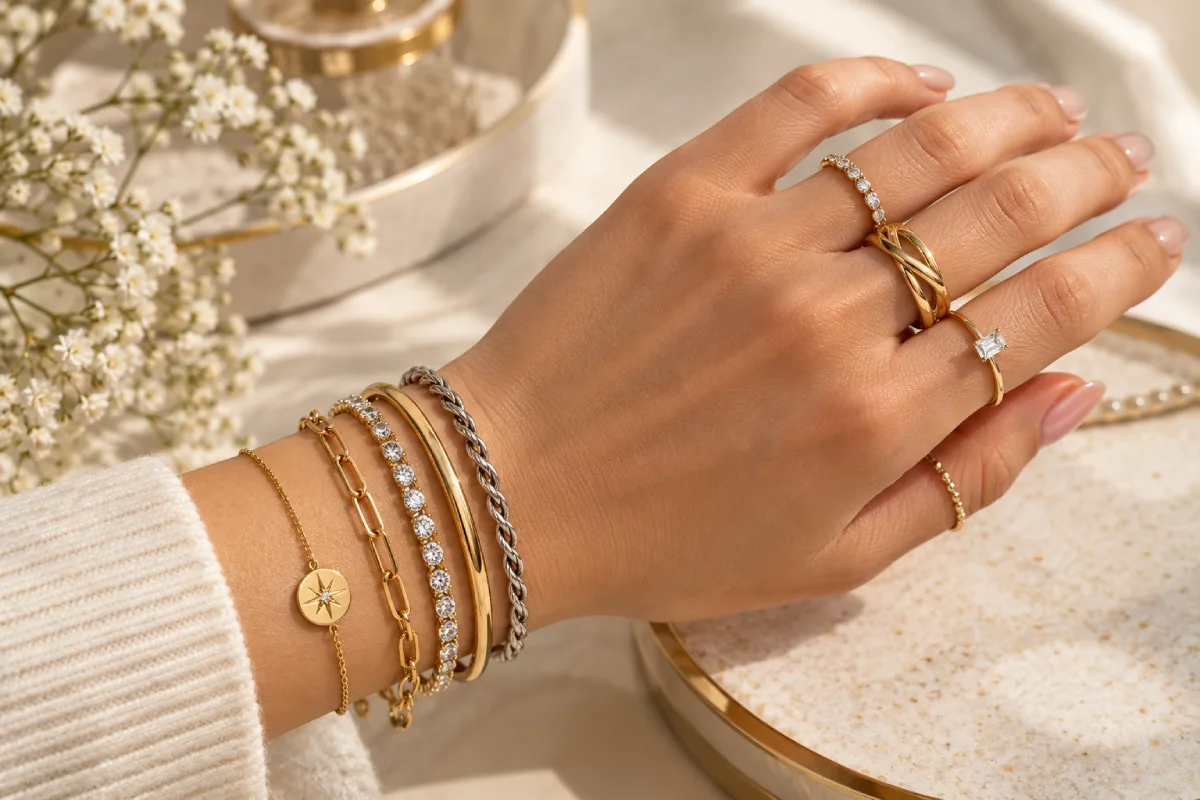
One increasingly popular technique worth knowing about is layering and stacking — combining multiple necklaces, rings, or bangles of varying lengths, widths, and textures for a curated, intentional look rather than a cluttered one. Because stacking has its own set of specific techniques and common mistakes, it has a full guide of its own below.
How to Clean Silver Jewelry at Home (Quick Overview)
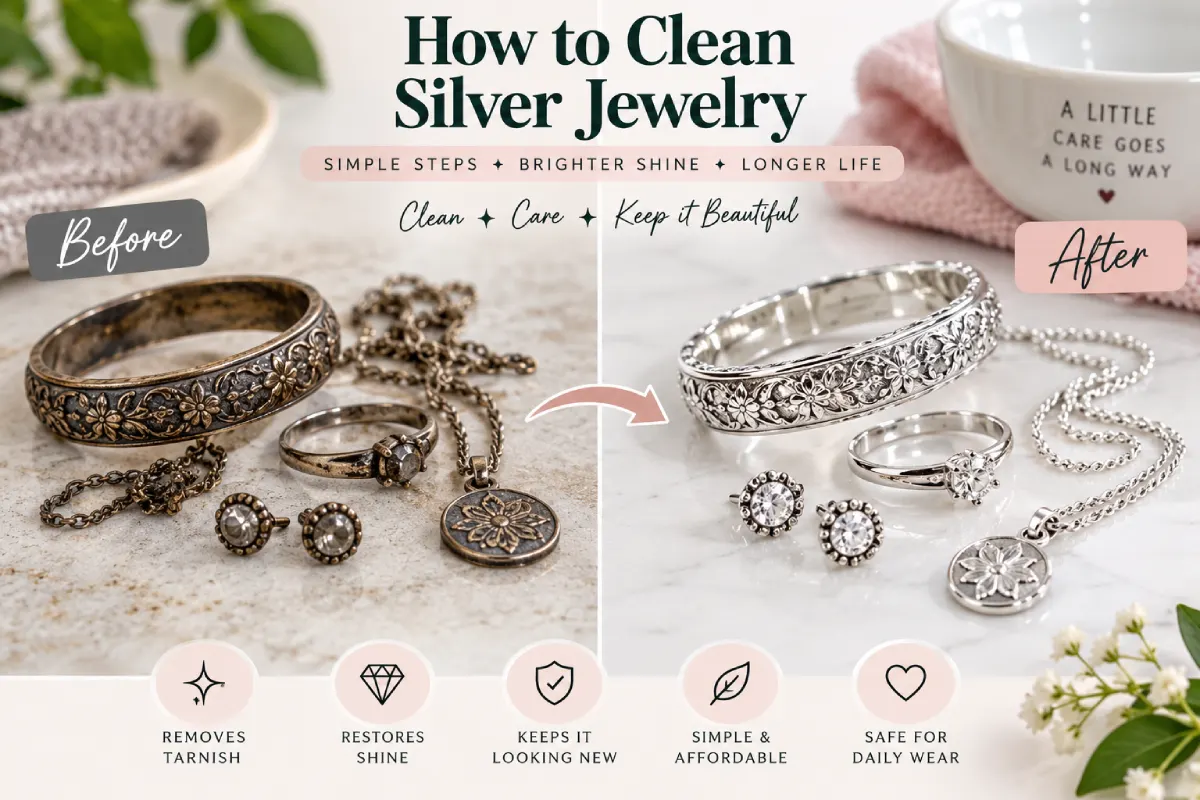
Silver jewelry tarnishes over time — this is a normal chemical reaction with air and moisture, not a sign of poor quality, and it’s one of the most common jewelry-care questions people search for. At a high level, most tarnish can be treated at home using mild soap and warm water for light tarnish, or a dedicated silver polishing cloth for more noticeable dullness, followed by thorough drying before storage. Harsh household chemicals and abrasive materials should generally be avoided, as they can scratch the metal’s surface or strip any protective plating.
That covers the basics, but silver cleaning has enough nuance — different techniques for gemstone-set pieces, oxidised/antique-finish silver, and heavily tarnished items — that it deserves its own dedicated walkthrough. Read the full guide: How to Clean Silver Jewelry (internal link to be activated once the cluster page is published).
How to Spot Fake Jewelry: Key Warning Signs
Whether you’re buying secondhand, from a new seller, or simply verifying a gift, knowing how to spot fake or misrepresented jewelry protects both your money and your safety (some counterfeit materials can irritate skin more than genuine ones). At the pillar level, the essentials to know are that genuine precious-metal jewelry in India should carry a hallmark and purity stamp, that colour or plating that flakes, discolours quickly, or leaves marks on skin is a warning sign, and that unusually heavy discounting on “branded” or “certified” pieces relative to typical market pricing is worth treating with caution.
Verifying jewelry properly involves specific checks — magnet tests, acid tests, hallmark verification, and more — that go well beyond what belongs on a hub page. Read the full guide: How to Spot Fake Jewelry (internal link to be activated once the cluster page is published).
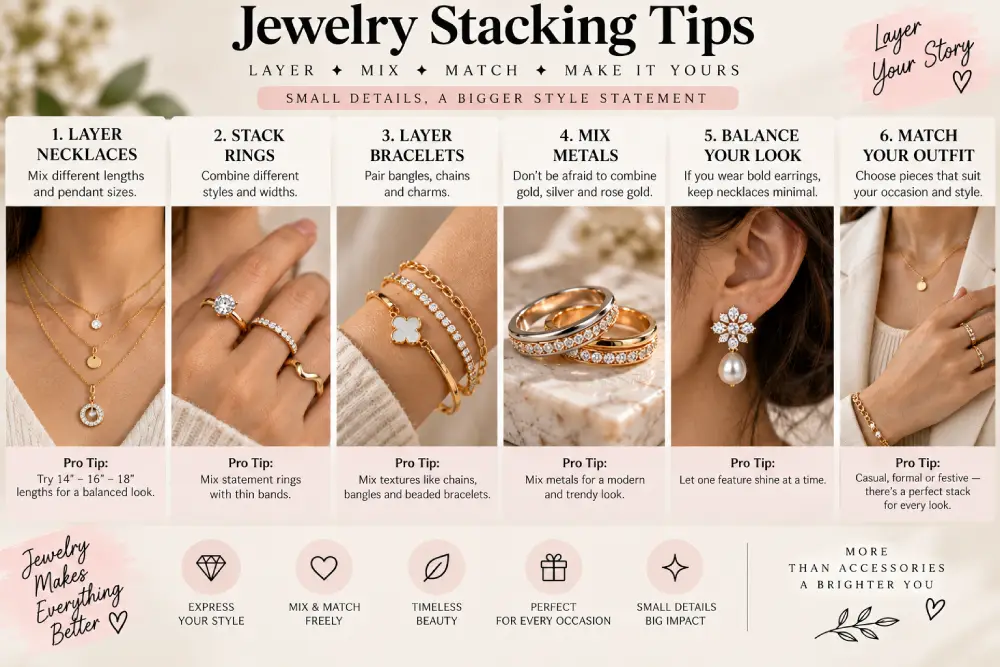
Jewelry Stacking Tips: Layering Necklaces, Rings and Bangles
Stacking is one of the most requested styling techniques right now, and it’s a natural extension of the “focal point and balance” principles covered earlier in this guide. Done well, it turns a handful of simple pieces into a look that feels curated rather than accidental; done without a plan, it can look cluttered. The core idea is straightforward — vary length, width, and texture rather than repeating the same size and finish — but applying it well across necklaces, rings, and bangles involves specific sequencing and pairing techniques.
Read the full guide: Jewelry Stacking Tips (internal link to be activated once the cluster page is published) for step-by-step layering formulas, metal-mixing guidance, and common stacking mistakes to avoid.
Jewelry Care Tips: Keeping Every Piece in Good Condition
Beyond material-specific cleaning, a few general habits protect any jewelry collection: storing pieces separately so they don’t scratch each other, taking jewelry off before swimming, showering, or applying perfume and lotion (chemicals and moisture are common causes of premature tarnish and plating wear), and rotating pieces rather than wearing the same item every single day, which reduces wear on clasps, prongs, and finishes.
These are general-purpose habits that apply across gold, silver, fashion jewelry, and gemstone pieces alike — the deeper, day-to-day maintenance routine, including storage solutions and how often to have pieces professionally checked, is covered in full separately. Read the full guide: Jewelry Care Tips (internal link to be activated once the cluster page is published).
Jewelry Trends for Men: What’s Changing
Men’s jewelry has moved well beyond the wedding band and the occasional cufflink. Chains, bracelets, signet rings, and even single stud earrings have become mainstream, and the materials leaning into that shift — stainless steel, titanium, oxidised silver — suit both the aesthetic and the practical demands of daily wear. For men building a jewelry collection for the first time, the same “durability and lifestyle fit” logic covered earlier in this guide applies directly.
What’s actually trending, how to start a collection from zero, and how to wear men’s jewelry without it looking like an afterthought is covered in full detail elsewhere. Read the full guide: Jewelry Trends for Men (internal link to be activated once the cluster page is published).
How to Choose a Necklace for Your Neckline
Necklace length and style interact directly with neckline in a way that can make or break an outfit — a choker can look crowded over a high collar, while a long pendant can get lost under a deep V-neck. As a starting principle: necklines with more coverage generally pair well with slightly longer necklaces that sit below the collar, while open necklines (V-neck, sweetheart, off-shoulder) tend to work with shorter-to-medium lengths that follow the neckline’s natural line rather than competing with it.
That’s the underlying logic — matching each specific neckline type (boat neck, halter, strapless, collared, and more) to the necklace lengths and styles that flatter it is covered thoroughly, with visual references, in its own guide. Read the full guide: How to Choose a Necklace for Your Neckline (internal link to be activated once the cluster page is published).
Common Jewelry Buying Mistakes to Avoid
A few mistakes come up repeatedly, across both fine and fashion jewelry purchases:
- Buying by look alone, without checking material. A piece can look identical in a photo whether it’s solid gold or gold-plated brass — always confirm the material and purity before paying a fine-jewelry price.
- Ignoring hallmark or certification for precious-metal pieces. Skipping this check is the single most common way buyers overpay for jewelry that isn’t what it claims to be.
- Underestimating fashion jewelry upkeep. Fashion pieces need more careful handling than fine jewelry, not less — plating wears thin with water, friction, and perfume exposure.
- Buying based on trend alone, with no fit to lifestyle. A delicate statement ring that needs to be removed for every task isn’t a good daily-wear choice, however photogenic it is.
- Not asking about return or exchange policy. Especially for online jewelry purchases in India, a clear, written return and exchange policy is essential protection.
Buying Jewelry in India: What to Check Before You Pay
India has one of the world’s largest jewelry markets, with gold jewelry in particular carrying deep cultural and financial significance — which makes buying safely especially important.
BIS hallmarking and purity marks. Look for the BIS hallmark on gold jewelry, along with a purity grade stamped as 916 (22K), 750 (18K), or 585 (14K). Reputable jewellers will readily show you this mark and explain the purity of the specific piece you’re buying — hesitation or vague answers here is a reasonable signal to shop elsewhere.
Bills, certification and return policies. Always ask for a proper bill that itemises the weight, purity, and making charges separately, since making charges can vary significantly between sellers for otherwise similar pieces. For gemstone jewelry, ask whether stones are natural or lab-grown/synthetic, and whether any certification is provided. Finally, confirm the return, exchange, and buy-back policy in writing before you pay — established Indian jewellers typically offer some form of buy-back or exchange, and the terms are worth comparing across sellers.
Frequently Asked Questions
What is the difference between fine jewelry and fashion jewelry? Fine jewelry is made from precious metals (gold, silver, platinum) and genuine gemstones, is typically hallmarked or certified, and is built to last for years or decades. Fashion jewelry uses base metals, plating, and simulants like cubic zirconia, is more affordable, and is designed for shorter-term, trend-driven wear.
How can I tell if gold jewelry is real in India? Check for a BIS hallmark along with a purity stamp (916 for 22K, 750 for 18K, or 585 for 14K gold). Genuine jewellers will explain the hallmark and provide a bill that separates the metal value from making charges.
Is fashion jewelry bad for sensitive skin? Not inherently, but cheaper alloys used in some fashion jewelry can contain nickel or other metals that trigger reactions in sensitive skin. Look for pieces labelled nickel-free or hypoallergenic, or choose surgical steel or titanium for daily wear.
How often should I clean my jewelry? It depends on the material and how often you wear a piece, but a light clean every few weeks for frequently worn items, and a proper clean before storing anything long-term, is a reasonable general routine. Silver in particular benefits from more frequent attention, since it tarnishes faster than gold or platinum.
What jewelry should I buy first if I’m starting a collection? A few versatile, durable, daily-wear basics — simple stud earrings, a fine chain necklace, and a hardy everyday ring — in a durable material suited to your lifestyle, before investing in statement or occasion-only pieces.
Can I mix gold and silver jewelry together? Yes — mixed-metal styling is widely accepted and, done intentionally (repeating each metal at least once across your look, rather than using just a single accent), tends to look more curated than a strict single-metal approach.
Conclusion
Jewelry doesn’t have to be confusing once you understand the handful of decisions that actually matter: what type suits how you’ll wear it, what it’s made from, whether fine or fashion jewelry fits your goal for that piece, and how to check it’s genuinely what it claims to be, especially with India’s hallmarking system. This jewelry guide is meant to be the page you come back to as a starting point — and from here, the focused guides on cleaning silver, spotting fakes, stacking, everyday care, men’s trends, and matching a necklace to your neckline will take you deeper into whichever decision you’re facing next.