How to Choose a Necklace for Your Neckline
Published: September 23, 2026 Last Updated: September 23, 2026 TL;DR Open, plunging necklines (V-neck, scoop, sweetheart) pair best with
TL;DR
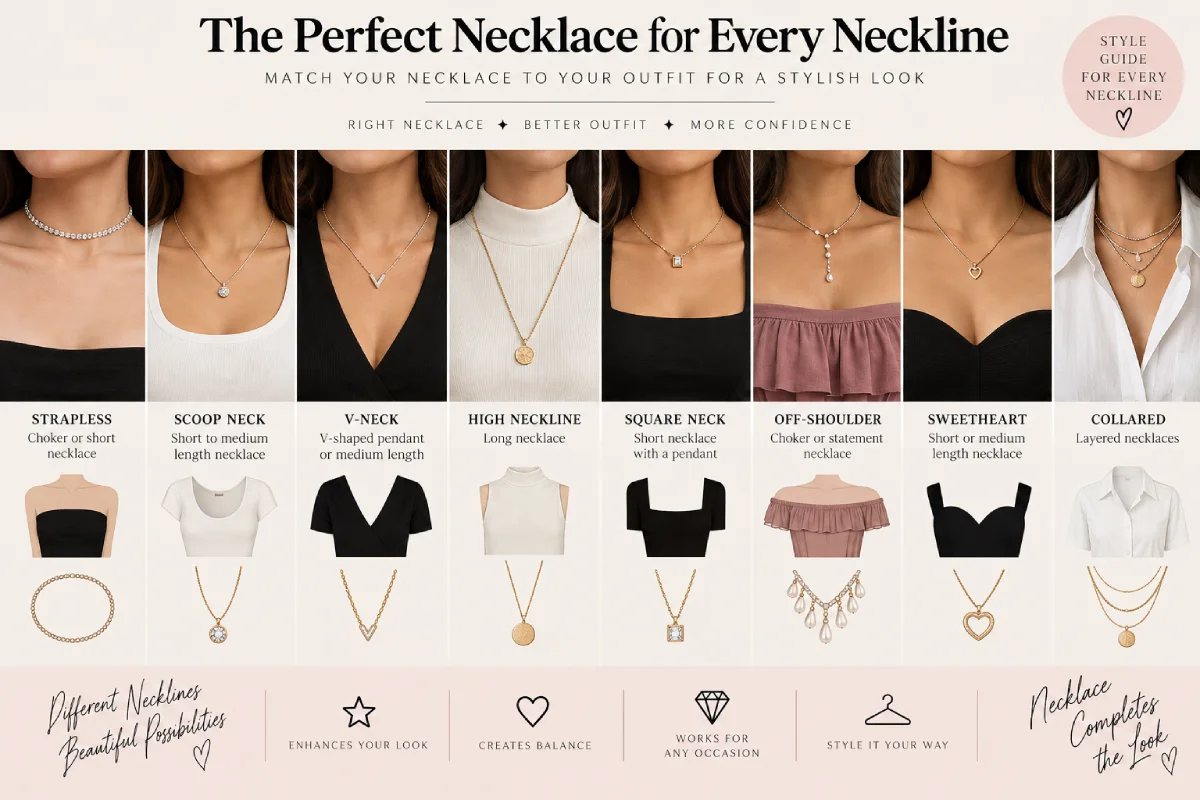
Open, plunging necklines (V-neck, scoop, sweetheart) pair best with a pendant that follows the neckline’s own shape. Closed, structured necklines (square, off-shoulder, strapless) work best with a choker or short necklace that sits above the fabric line. High necklines (crew, collared, turtleneck) usually need either a longer necklace worn over the fabric or no necklace at all, letting earrings take the lead instead. The most common mistake is choosing a length that lands exactly at the edge of the neckline, where it visually competes with the fabric instead of complementing it.
Choosing the right necklace for your neckline comes down to one core idea: an open neckline generally wants a necklace that follows its shape, while a closed or high neckline wants a necklace that sits clearly above or below the fabric line instead of getting lost in it. Here’s how that plays out across the necklines you’ll actually run into, plus the length terms and layering adjustments that make the difference between a necklace that works and one that just sits there.
1. Necklace and Neckline Pairings at a Glance
Before the details, it helps to know how necklace lengths are typically defined, since the terms below are used throughout this guide:
| Length name | Approximate length | Where it sits |
|---|---|---|
| Collar/Choker | 12–16 inches | Close against the base of the neck |
| Princess | 17–19 inches | Just below the collarbone — the most versatile everyday length |
| Matinee | 20–24 inches | Between the collarbone and bust |
| Opera | 28–36 inches | At or below the bust line |
And a quick-reference summary of what’s covered in detail below:
| Neckline | Works well | Generally avoid |
|---|---|---|
| V-neck, scoop, sweetheart | A pendant that follows the neckline’s own shape | Chokers that sit disconnected above the V |
| Square, strapless, off-shoulder | Choker or short necklace above the fabric line | Necklaces that land at the exact edge of the neckline |
| High/crew/collared | A longer necklace worn over the fabric, or no necklace at all | Short necklaces with nowhere to sit |
2. Necklaces for V-Neck, Scoop and Round Necklines
V-neck and sweetheart necklines create a natural downward point, and the most flattering necklaces echo that shape rather than cutting across it. A pendant necklace at princess length, sitting with its point inside the V rather than below it, mirrors the line the neckline already creates. Layered chains of slightly different lengths work well here too, since they follow the same downward direction.
Scoop necklines are wider and rounder than a V but still relatively open, which gives you more room to work with — a princess-length pendant or a short, multi-strand necklace both read well here, since the open space can support a bit more volume without feeling crowded.
A genuinely round neckline (a moderate, open round cut — distinct from a high, close-fitting crew neck, covered separately below) generally works best with a choker or princess-length piece that sits visibly above the fabric, creating clear separation between the necklace and the neckline’s edge.
Across all three, the rule to avoid is the same: a length that lands exactly at the edge of the neckline creates visual clutter, since the eye can’t tell where the fabric ends and the necklace begins. Choosing clearly above or clearly below that edge solves this.
3. Necklaces for Square, Strapless and Off-Shoulder Styles
Square necklines have a structured, angular line, and a rounded necklace shape softens that rather than competing with it — a choker or short necklace with a rounded silhouette works better than anything with sharp, angular detailing that echoes the same hard lines the neckline already has.
Strapless and off-shoulder necklines leave the most open space of any category, which makes the necklace effectively the focal point of the upper body. A choker or short necklace sitting just above the collarbone gives a clean, framed look; a single pendant on a slightly longer chain works if you want something softer and less structured. What to avoid here is a necklace that trails too long — it breaks up the open space these necklines are specifically designed to show off.
For Indian ethnic wear, a gol gala (round-cut) blouse under a saree or lehenga follows similar logic to the scoop/round guidance above — a choker or short necklace, often layered with a longer rani haar-style piece for occasion wear, tends to work better than a single mid-length piece that has nowhere clear to sit.
4. High Necklines, Collars and When to Skip a Necklace
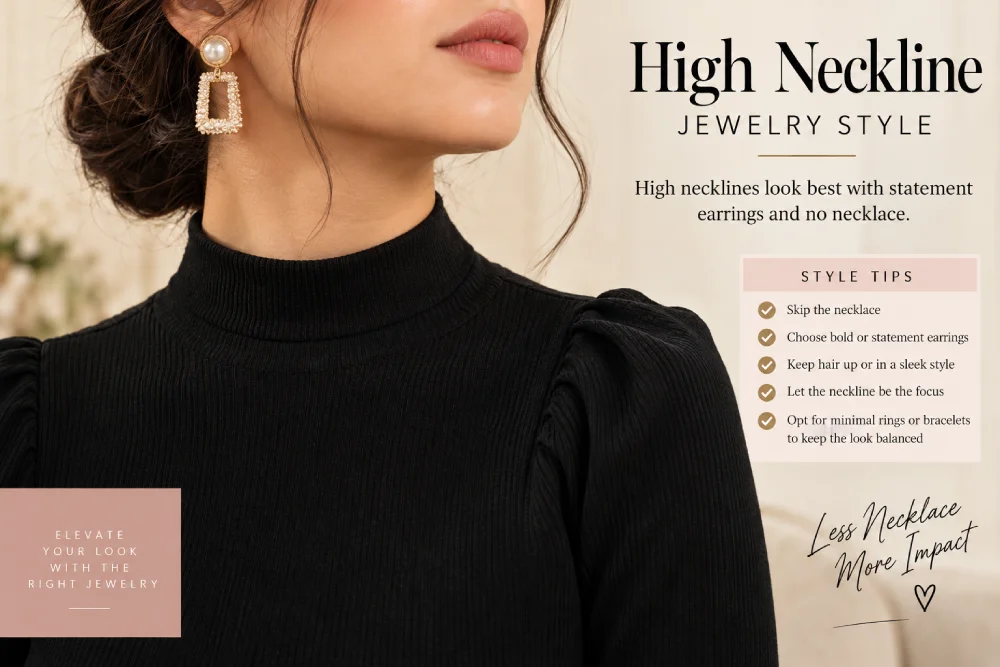
High necklines — crew necks, turtlenecks, and collared tops or kurtas — leave very little visible space between the neckline and the jaw, which is the single biggest source of confusion in necklace-neckline advice, since “crew neck” and “round neckline” get used interchangeably in a lot of styling content despite describing genuinely different amounts of exposed skin.
With a true high neckline, you have two reliable options: a longer necklace (matinee or opera length) worn over the fabric, which creates vertical length below the high collar, or skipping a necklace altogether and letting earrings — statement studs, danglers, or jhumkas — carry the look instead. A short necklace simply has no clear place to sit on a high neckline and will usually look crowded or accidental rather than intentional.
Collared shirts and kurtas with a visible collar follow the same logic — a delicate chain long enough to sit below the collar, or no necklace at all, both work better than anything that would sit awkwardly on top of the collar itself.
5. Adjusting Chain Length, Pendant Size and Layering
A few adjustments make any of the pairings above work even better for your specific outfit and proportions.
Pendant size should scale with neckline depth. A deeper V-neck can support a larger pendant since there’s more visible space for it to sit in; a shallower V or scoop looks better with a smaller, more delicate pendant that doesn’t overwhelm the limited space.
Layering follows the neckline’s shape, not just general styling rules. For a V-neck, layer necklaces at different lengths that all follow the downward V line. For a round or square neckline, layering works best when every piece sits above the fabric edge rather than one piece crossing it — pulling from the general layering technique covered in our jewelry stacking guide, but applied specifically to keep each piece clear of the neckline itself.
When in doubt, try the necklace on with the actual outfit before deciding. Necklines vary enough between garments, even within the same general category, that trying a piece on tells you more than any general guideline can.
The Bottom Line
Choosing a necklace for your neckline comes down to matching the necklace’s length and shape to how much of your neck and chest the neckline actually shows — open necklines want a necklace that follows their line, closed or high necklines want clear separation above or below the fabric, and the one mistake to avoid across every category is a length that lands right at the edge, where it competes with the outfit instead of completing it.
For more on necklace types, general styling principles, and layering multiple pieces, see the complete Jewelry Guide.
FAQs
What length necklace works best with a V-neck top? A princess-length pendant necklace (about 17–19 inches) that sits with its point inside the V, rather than below it, generally works best, since it follows the neckline’s own downward shape.
Should I wear a necklace with a strapless dress? Yes — a choker or short necklace sitting just above the collarbone works well with strapless necklines, since the open space benefits from a clear, framed necklace rather than being left completely bare.
What necklace works with a high or collared neckline? Either a longer necklace (matinee or opera length, roughly 20 inches or more) worn over the fabric, or no necklace at all with statement earrings carrying the look instead. Short necklaces generally don’t have enough visible space to sit well on a high neckline.
Why does my necklace look wrong even though I chose the right style? The most common issue is length — a necklace that lands exactly at the edge of your neckline, rather than clearly above or clearly below it, tends to look cluttered regardless of the style. Adjusting the length slightly usually fixes this.
Can I layer necklaces with any neckline? Yes, but the layering should follow the neckline’s shape — lengths that mirror a V-neck’s downward line, or pieces that all sit above the fabric edge on a round or square neckline. Our jewelry stacking guide covers the general layering technique in more depth.
What necklace works best with a round-neck saree blouse or kurta? A choker or short necklace sitting above the neckline generally works well, similar to a Western round or scoop neckline. For festive or bridal wear, this is often layered with a longer statement piece for added occasion-appropriate drama.