How to Clean Silver Jewelry: Tarnish and Care Guide
Published: September 23, 2026 Last Updated: September 24, 2026 Quick Summary: Most tarnished silver jewelry, especially those only mildly
Quick Summary:
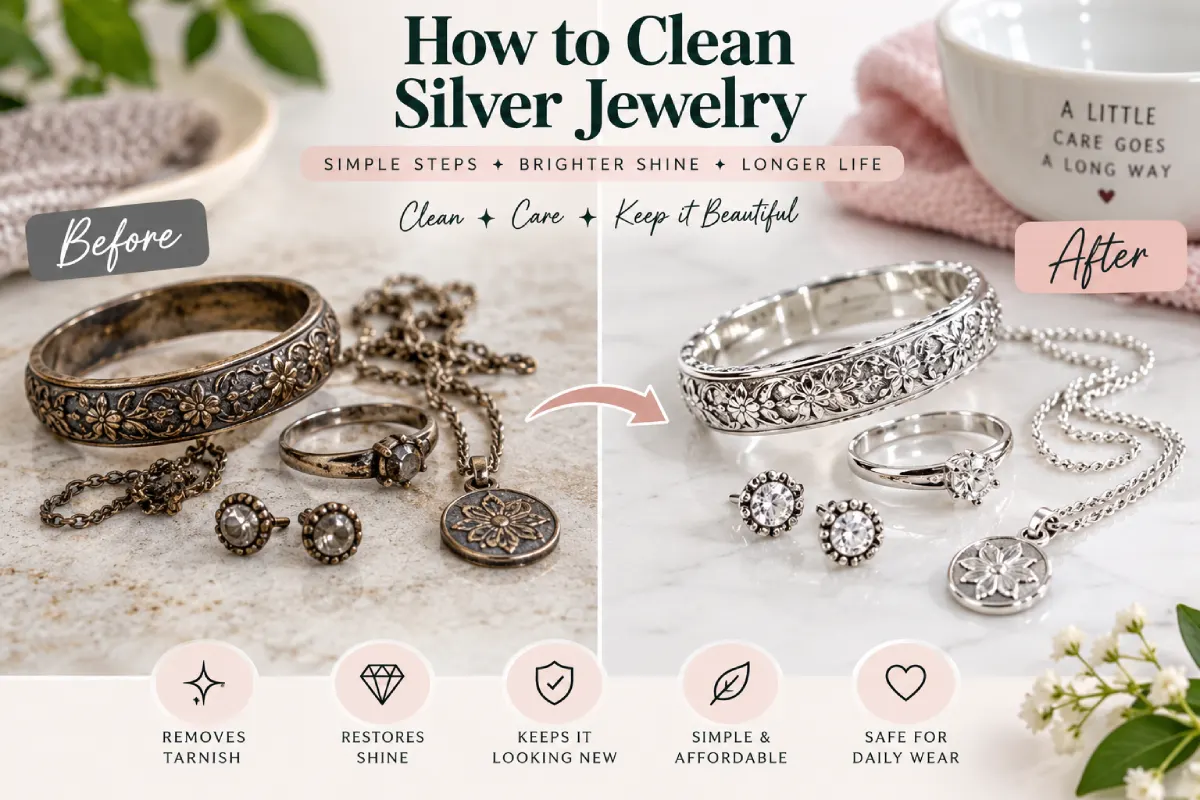
Most tarnished silver jewelry, especially those only mildly tarnished, can be cleaned at home with just soap and water. If your jewelry is more badly tarnished, it can be cleaned with a baking soda paste and a soft polishing cloth. Do not use any of these methods including the aluminum foil/boiling water trick for any pieces with glued in stones, pearls or with an oxidized (blackened intentionally) finish, as the heat, chemicals and vigorous rubbing will damage or remove the finish all together. If you are unsure about any jewelry you own, especially priceless or antique pieces, please contact a jeweler.
The silver jewelry looks more dull and drab or has a blotchy stain – this is tarnishing, a natural chemical process – not wear and tear, and not a fake. What’s the best way to clean silver jewelry? There’s one thing we all tend to forget before grabbing the baking soda – clean your silver jewelry according to what your jewelry is made of.
This guide will first go through that test, then explain what cleaning works, what not to do on fine pieces, and how to dry and store silver so that it stays shiny for longer.
1. Check the Silver, Stones and Finish Before Cleaning
Before you clean anything, look closely at the piece. Three things change what‘s safe to use:
Is it solid sterling silver, or silver plated? Solid sterling silver will be stamped 925 somewhere on the piece, such as on the inside of a ring band or on a clasp. Silver plated pieces have a thin layer of silver plated over something else, and cannot stand the same scrubbing or soaking treatment, as an abrasive method that works with solid sterling silver can remove the plating and reveal the base metal underneath.
Does it have stones, pearls, or other materials glued in? The largest risk category for glued in stones, pearls and opals. Soaking, heat and some polishing cloths can loosen the glue, scratch the pearl or dull the stone‘s surface. If you don‘t know how a stone is set, gently clean around it rather than through it.
Is the finish plain, or intentionally oxidized/antiqued? A lot of silver jewelry — especially detailed, textured, or antique-style designs common in Indian silver jewelry — is deliberately darkened in the recessed areas to bring out the pattern. That dark finish isn’t tarnish, and cleaning methods designed to strip tarnish will strip that finish too, permanently flattening the design.
If your piece is plain sterling silver with no stones and no intentional dark finish, you have the most flexibility in the methods below. If it’s plated, gemstone-set, or oxidized, skip ahead to the section on what to avoid.
2. What You Need to Clean Silver Jewelry
For most routine cleaning, you don‘t need anything specialized:
- A soft lint free cloth – an old cotton t-shirt is suitable.
- Standard mild dish washing detergent, such as:
- Warm water
- A soft-bristled toothbrush, for finer areas
- A silver polishing cloth, for delicate tarnish and everyday maintenance
- Baking soda, for moderate tarnish, only applied to plain sterling silver
Avoid anything that isn‘t designed for use with silver – even everyday cleaning products, paper towels and stiff bristled brushes can scratch your silver.
3. How to Clean and Polish Suitable Silver Pieces
For light tarnish on plain sterling silver:
- Dissolve a few drops of mild dish soap in a bowl of warm water.
- Submerge the object in the solution for several minutes.
- Buss softly with a clean cloth never use harsh scrubbing motions. Work with the grain, if any, in the metal.
- Wash with warm water, rinse thoroughly, and dry immediately (refer to drying section below that part is more important than you think).
For moderate tarnish that soap and water doesn‘t fully clear:
- Create a mixture by combining two tsp of baking soda with just a cc of water.
- Use it with a soft cloth, rubbing gently in a light circular movement. (A toothbrush is useful to get into the fine detail or along chain links.)
- Rinse thoroughly and then dry immediately, as baking soda left to sit may cause the surface to look less shiny.
A silver polishing cloth is a suitable intermediate step for either level of tarnish, and it’s the safest you can keep for every day touch-ups between more thorough cleaning as it requires no soaking or chemicals whatsoever.
4. Cleaning Methods to Avoid on Delicate Jewelry
There are a few “homeopathic” silver treatments that are actually safe (but potentially damaging to the wrong kind of jewelry), such as:
| Method | Good for the following. | Avoid on |
|---|---|---|
| Aluminium foil + baking soda + hot water | Massively scratched plain sterling silver with no stones. | Glued in stones/pearls(hot can rubble off the glue), oxidised/antique finish( reaction strips away the permanent black detailing) silver plated jewelry. |
| Toothpaste | When occasionally lightly polishing a plain, sturdy silver | Any item that has either stones, engraving or a matte/ brushed finish (can be scratched by the abrasives) |
| Ammonia-based solutions | Hardly required for jewelry grade tarnishing | Other items: pearls, soft/porous stones, or anything that concerns you ammonia is powerful enough to do more harm than good if you use it too carelessly. |
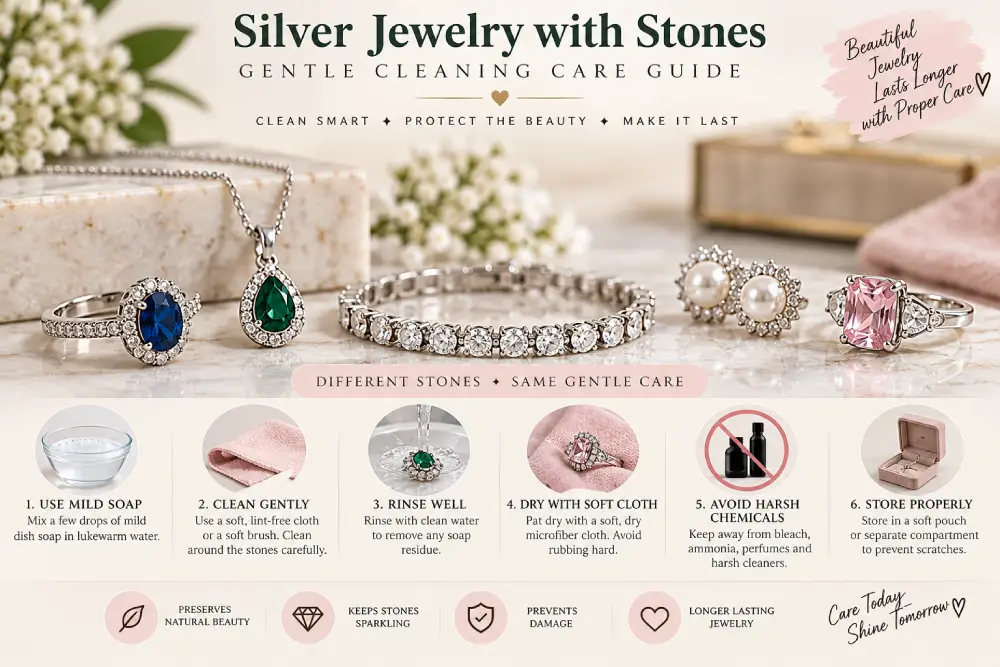
If you are cleaning a gemstone ring, pearl necklet or oxidised jewelry, using mild soap and water with the method described in Section 3 and, being careful not to scrub anything other than the metal, almost certainly beats most of the listed methods outlined in this table.
5. Drying, Storage and When to Use a Professional
Dry the piece immediately, after each time it is rinsed. Silver left to dry in the air, particularly if there are pockets of soap or water in detailed areas, leads to the formation of water spots and a quicker re-tarnishing rate. Toweling is the most expedient.
How to properly store silver Let the silver dry completely afterwards and store it in an airtight pouch or lined jewelry box, with other jewellery, preferably in a dry environment and not directly touching other items to prevent scratching. Consider using a anti-tarnish pouches / strips, which you can purchase at your jeweller – to significantly reduce the tarnish!
Know when to get professional help. Use a jeweler instead of cleaning at home if you have any loose stones, a badly worn or cracked looking setting, an antique or family heirloom item that you don‘t know what to do with, or if you find yourself having to clean it again every few days, indicating that you‘re actually removing a plating rather than just tarnish. It‘s also a good idea to have a professional clean important or expensive jewelry so you don‘t run the risk of damaging it yourself for a relatively small expense.
The Bottom Line
Cleaning silver jewelry safely isn’t really about which recipe you use — it’s about matching the method to the piece. Plain sterling silver can handle baking soda, a polishing cloth, or even the foil method for heavier tarnish. Anything with stones, pearls, plating, or an oxidized finish does better with a gentle soap-and-water clean and, when the tarnish won’t budge, a trip to a professional. Get that match right, and your silver will stay brighter for longer with far less risk of damage.
For general day-to-day jewelry maintenance beyond silver specifically, see our Jewelry Care Tips guide, or head back to the complete Jewelry Guide for an overview of materials, styling, and buying jewelry in India.
FAQs
Can I use toothpaste to clean silver jewelry?
Yes, but only on the occasional basis, and only on solid, plain sterling silver without stones or intricate detail. Toothpaste has a mild abrasive component which can scuff softer finishes or knock the polish off gems; it‘s a good practice for once in a while, not regularly.
Is it safe to clean silver jewelry with baking soda every week?
Should be fine on bare sterling (fine) Silver but not even needed weekly in my opinion, it‘s a mild abrasive and frequent cleaning just tends to fade the surface over time. Better to use a soft cloth after each wear with a bit of baking soda used in moderation every once in a while.
Why does my silver jewelry tarnish so quickly?
The tarnishing rate is affected from the contact with sweat, humidity, some foods and chemicals present in lotions, perfumes and cleaning products. If silver is kept in an airtight pouch and eliminated before taking a shower, swimming or putting any kind of cosmetic product on the skin the tarnishing rate will decrease considerably.
Can I clean silver jewelry with stones or pearls the same way as plain silver?
No. Use mild soap and water on the metal only. Do not soak, use heat treatments or harsh polishing methods, as these can loosen glued setting or erode pearls and other soft stones.
What’s the difference between tarnish and an oxidized (antiqued) finish?
Tarnish is an unwanted chemical reaction that dulls the whole piece unevenly. An oxidized finish is an intentional dark treatment, usually in the recessed parts of a design, applied during manufacturing to bring out detail. Tarnish-removal methods will also strip an oxidized finish, so it’s worth identifying which one you’re dealing with before you clean.