Jewelry Care Tips: Storage, Daily Wear and Maintenance
Published: September 23, 2026 Last Updated: September 24, 2026 Quick Summary: The most damaging jewelry habits are easy to
Quick Summary:
The most damaging jewelry habits are easy to avoid: applying lotions and perfumes before you put on your jewelry; wearing jewelry while you exercise or sleep; tossing jewelry into a drawer where multiple items are stacked one on top of each other (we’ve all done it!); neglecting to use appropriate humidity controls in jewelry boxes. The appropriate level of jewelry care is also influenced by what it’s made of: solid gold and sterling silver can take more abuse than gold vermeil and gold-plated, and gemstones require a more delicate touch than standard jewelry finishes. This guide covers daily habits, storage and travel pack advice and the telltale early signs of damage (there’s one type of silver-specific tarnish removal that we don’t discuss here because it has its own feature later in this guide).
Most jewelry doesn‘t get “old” from age it gets “old” from a handful of bad habits stretching over the course of months or years. Jewelry handling tips are about the small things you do daily, how you pack jewelry when you travel, what storage differences exist, and the ways jewelry care needs changes for solid gold, plated, or gemstone pieces.
1. Everyday Habits That Help Protect Jewelry
A couple of simple adjustments to your everyday life can help you avoid damage much more effectively than any product can repair afterwards.
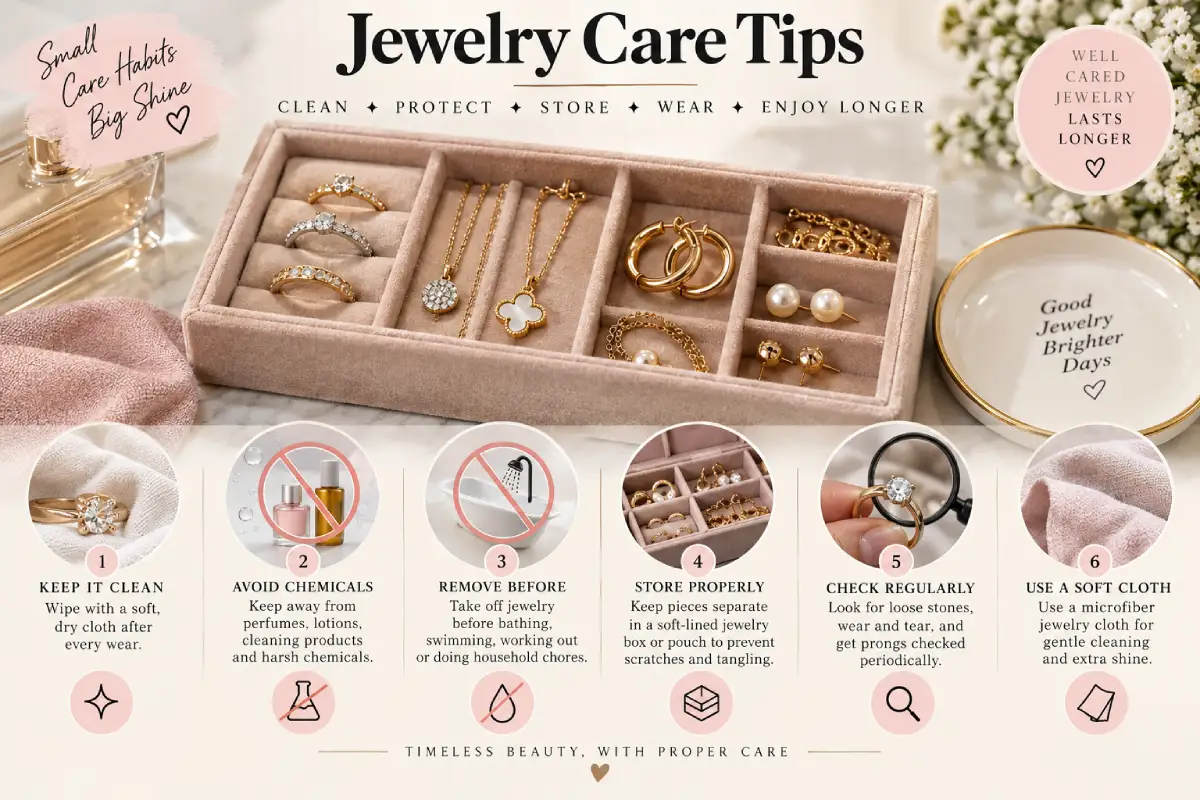
Wear your jewelry last and remove it first. Lotions, perfumes, hairsprays and makeup all have chemicals that can strip out the finish of a metal or tarnish a stone and will dull their appearance. Wearing your jewelry after applying the cosmetics or else prior to applying them will minimize their exposure to the cosmetics.
Remove jewelry before sleep, exercise, and water exposure. Sleeping in jewelry is one of the main reasons for bent prongs, kinks in chains, and early fractures to clasps, as the jeweler‘s piece is constantly and uncontrollably pressured for many hours at a time. Sweat from running can also hasten tarnishing on silver, and can sometimes dissolve the glue on glued-in stones, and chlorinated or hard water will dull plating and also harm some stones.
Wipe pieces down after wearing them. Once all day at the end of the day and runs over everything in soft, dry cloth before build them up oils and residue they are and deep clean to require less.
2. How Metals, Plating and Gemstones Change Care Needs
Not all jewelry can handle the same treatment. Here‘s how care needs generally differ by material:
| Material | Everyday tolerance |
What to avoid |
|---|---|---|
| Pure gold (14K–22K) | Durable for daily wear; can usually tolerate brief immersion in water | Harsh chemicals Chlorinated water for long durations |
| 925(sterling silver) |
Durable, but tarnishes naturally over time |
Extended water contact / sulfur conditions full cleaning steps are included in our dedicated silver care guide |
| Gold-plated/ vermeil | Best for less frequent use; the gold layer will eventually wear away the more frequently you wear it. | Water, lotion, perfume and friction all increase the rate of plating wear. |
| Gemstones (diamonds and sapphires and other hard stones) |
Generally resilient, but settings need periodic checking |
Chemical exposure directly to the stone; ultrasonic cleaning in the presence of surface fractures. |
| Softer or porous stones (pearls, opals, turquoise, emeralds) | Needs the most delicate treatment of any category. | Water soaking Chemical cleaners High heat which can affect the finish of the surface |
The rule of thumb: The better made and more valuable a piece is, the more day-to-day use it will stand up to. The more fragile the material (a plating, softer stones, glued settings), the more it should be used as an occasional piece rather than something to wear every day.
3. How to Store Jewelry Without Tangles or Scratches
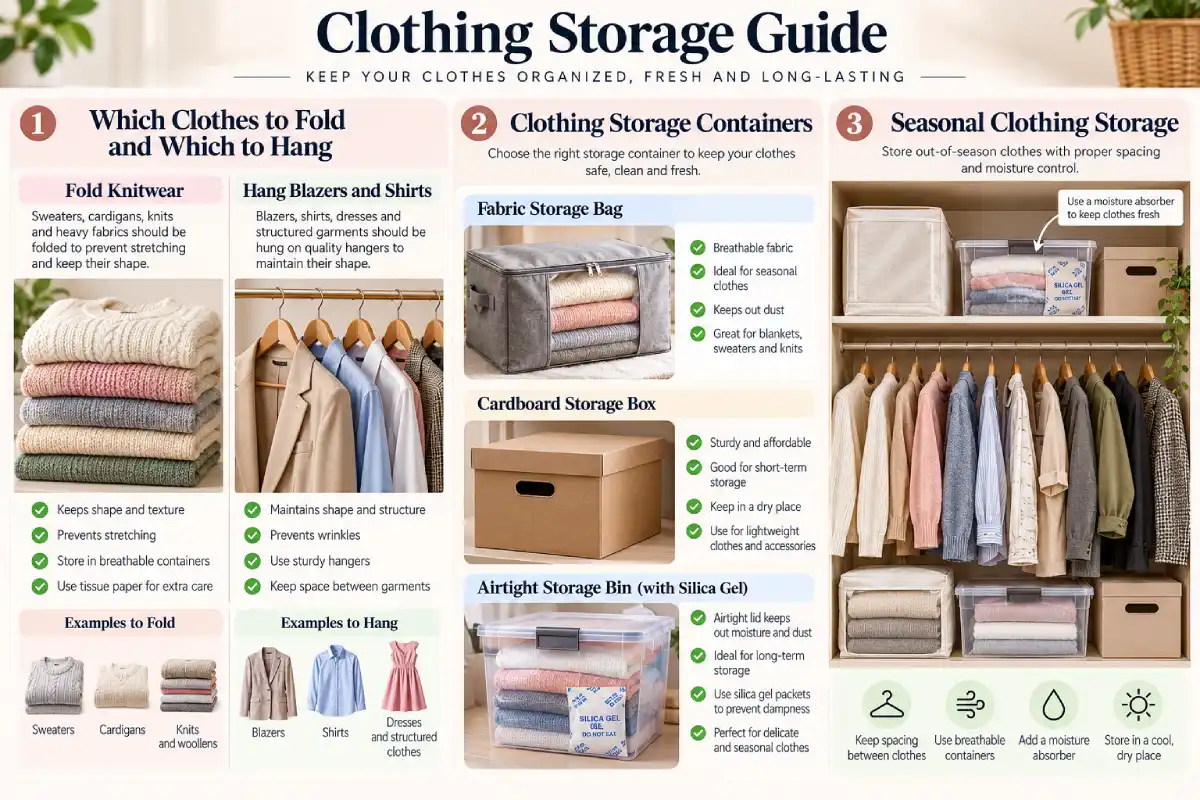
Store pieces separately. Metal rubbing against metal is the most common reason for surface scratches, particularly when between a hard and a soft metal. A jewelry box with dividers for each piece, or individual small bags for each, prevent this far better than one shared drawer or bag.
Keep your chains and necklaces closed and lying flat or hanging. A closed clasp slows a chain from slipping through itself and balling or burring up,which is the leading factor that causes those ten sucky minutes to constant disentangle.
Avoiding humid conditions, particularly in warm or coastal areas: Silver can tarnish more quickly when it’s exposed to air that’s heated or moist. If your box is completely sealed, it may be worth putting a packet of silica gel or a handful of anti-tarnish strips at the bottom of the box to absorb moisture; this may be particularly well worth doing in high-humidity climates year-round rather than just during the monsoons.
Don‘t leave jewelry out in direct sunlight or in a bathroom. They will introduce more heat, humidity or moisture fluctuations than a well designed storage area and will especially wear down plated finishes.
4. Packing Jewelry for Travel and Occasional Wear
Travel is where the damage to jewelry occurs where you least expect it: the jewelry is loose in a bag, gets tangled with other jewelry, or smashes against other objects.
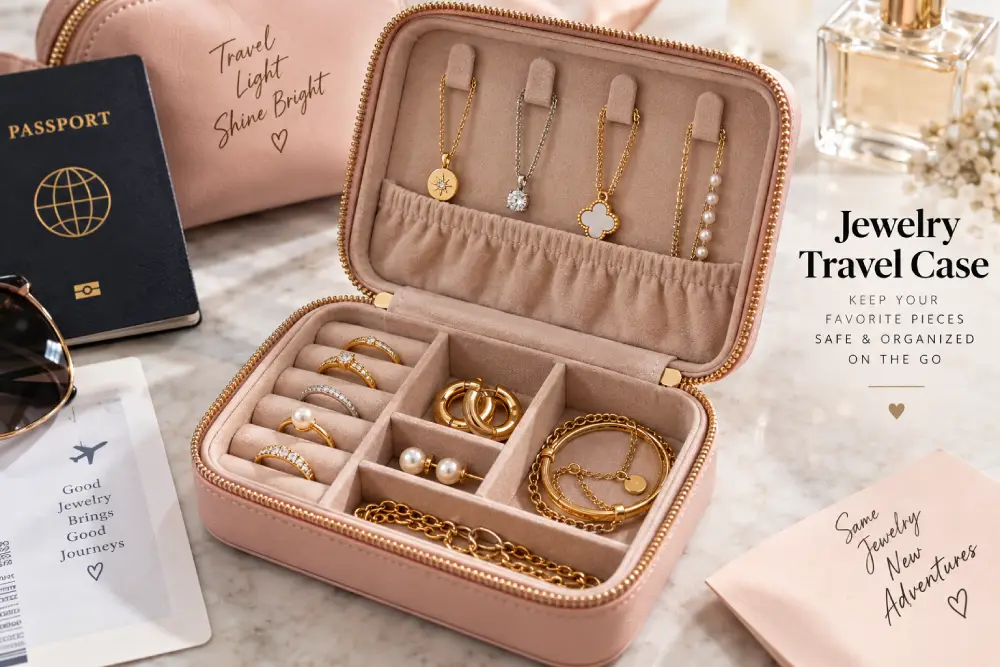
- Use a specific jewelry travel case or roll preferably with sections or pockets for each item and not just all together in one pouch;
- All necklaces and bracelets should be fastened before packing. For necklaces, it might be best to thread through a straw or small card with a hole punched in it to keep the chain from slipping and knotting during transit.
- Bring expensive packaged jewelry with you on the plane in your carry on bag, since the checked luggage is handled less carefully, and it‘s also more protected and in plain sight.
- Only pack the jewelry you plan to wear during the trip. Think about it each additional item can get lost, caught, tangled, and therefore more likely to get lost, and a single, compact travel jewelry box will be far easier to find and manage than hauling an entire jewelry case “just in case.”
5. Checking Clasps, Settings and Signs of Damage
Small issues are caught early with bi-weekly surveillance so they‘re not missed stones or broken chains.
Test clasps for a secure close. If your clasp is feeling loose, not clicking tightly closed, or has begun to bend, bring it back to the bench to have it fixed rather than putting the piece back on one of the most common reasons people lose their jewelry is a snapped clasp.
Examine the prongs and setting carefully in a well-lit area. If the tiny pointed projections (the prongs) which secure a stone are puckering up against it or there is a space between a stone and any prong, it requires fixing. Gently touch the stone with only a small amount of force and see if it moves slightly if it does, the setting needs repair.
Inspect the check chains for any weak links or thin sections, especially in the part of the chain where the clasp is also located and experiences the highest repetition of the necklace or bracelet.
Get your treasured or highly used gem jewelry and pieces checked annually by a professional. Jewelers can check settings up close and know when wear is occurring in places not visible to the naked eye. This is particularly recommended for engagement rings, family heirlooms, or everyday wear.
The Bottom Line
Good jewelry care isn’t about one deep clean now and then — it’s a handful of small, repeated habits: apply products before you put jewelry on, remove pieces before sleep and exercise, store everything separately and away from humidity, pack thoughtfully when you travel, and check settings and clasps regularly. Match that routine to what each piece is actually made of, and most jewelry will hold up well for years.
For silver-specific tarnish removal, see our dedicated How to Clean Silver Jewelry guide, or head back to the complete Jewelry Guide for an overview of materials, buying, and styling.
FAQs
How often should I clean my jewelry?
Generally a light clean with a soft cloth after each wear and a more thorough clean every few weeks if worn regularly is a good general routine. Items worn daily will require a more regular clean than those that are only worn once a month or so.
Can gold-plated jewelry get wet?
Better to steer clear if you can. Because the water accelerates the wear of the plating over time, take off your vermeil and gold-plated jewelry before showering, swimming or even washing hands.
What’s the best way to store jewelry to prevent scratches?
Separate the store in an individual part, separate small bag or in its original box, not placed in a bag or in a single order drawer. Metal-on-metal contact is one of the causes of scratches on the surface.
Does humidity really affect jewelry?
Yes, especially in the case of sterling silver (which tarnishes more rapidly in humid conditions) and for plated items (where trapped moisture and moisture in the environment can cause more rapid wear). This process can be aided by gel packs of silica or anti-tarnish strips in your storage box (appropriate to your climate).
How can I tell if a gemstone setting needs repair?
Look for a stone that feels loose, wiggles when touched lightly, or has a. visible gap between the stone and the prongs holding it. Any of these signs means it’s worth having the setting checked by a jeweler before you wear the piece again.
What’s the best way to pack jewelry for travel?
Use a dedicated jewelry case or roll with separate compartments, fasten necklaces and bracelets closed before packing, and bring only the pieces you’ll actually wear on the trip. Keeping jewelry in your carry-on rather than checked luggage also reduces the risk of rough handling or loss.