Best Acne Treatment Routine for Clear and Healthy Skin
Published: June 16, 2026 Last Updated: June 18, 2026 An effective acne treatment routine uses a gentle cleanser, a
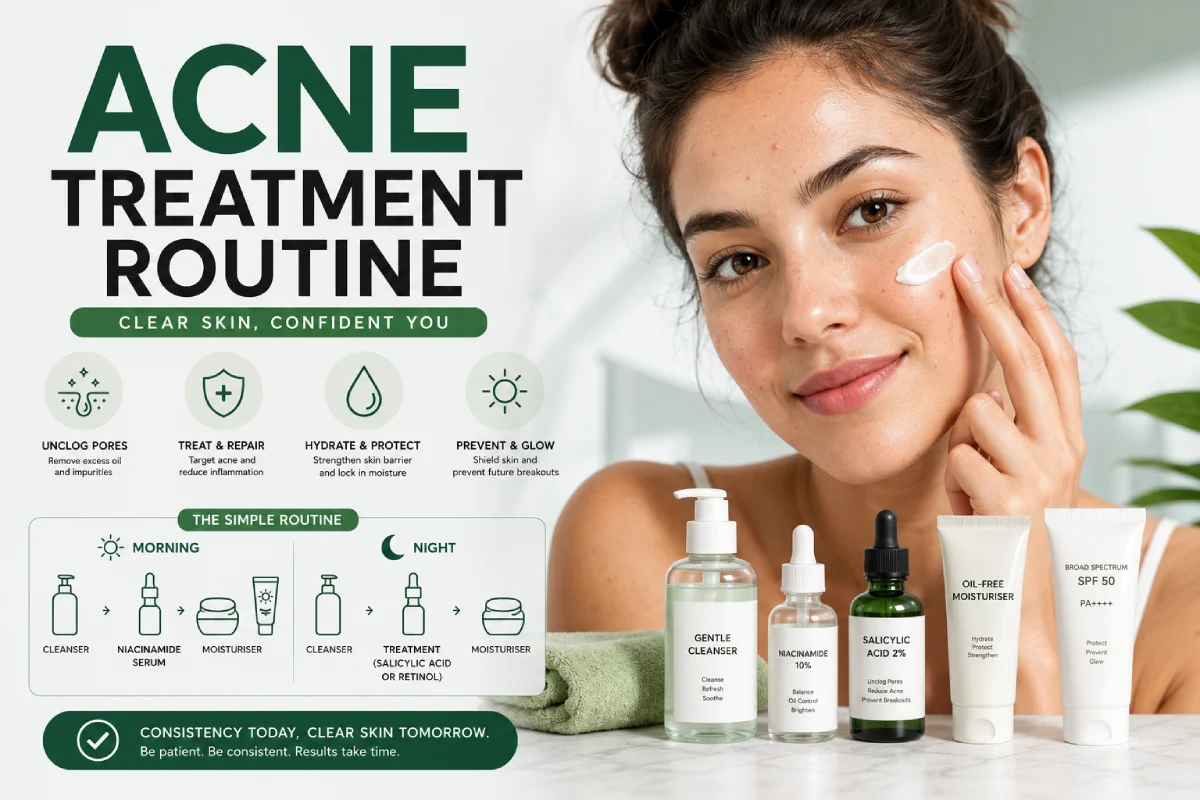
An effective acne treatment routine uses a gentle cleanser, a targeted active ingredient (salicylic acid for clogged pores, niacinamide for oil control and inflammation, or azelaic acid for pigmentation and redness), a lightweight non-comedogenic moisturiser, and daily SPF 30–50. In the morning, focus on protection — niacinamide serum and SPF. At night, focus on treatment — salicylic acid or retinol on alternate nights, never together. Introduce one active at a time over 4–6 weeks. Give any acne treatment routine 8–12 weeks before judging results — skin needs time to complete multiple renewal cycles before significant improvements are visible.
If you‘ve been doing your acne treatment routine for months, and not seeing the actual effects on your skin, the problem isn‘t a product, it‘s your routine structure. A good acne routine does more than just kill the acne itself it rebalances the skin barrier, prevents future spots and reduces pigmentation from existing lesions.
Here‘s what actually works in 2026 for skin at least, in UK and Indian skin alike.
What Causes Acne Breakouts?
Acne develops when the skin pores become clogged with a mixture of too much sebum (oil), dead skin cells and bacteria, but the cause that initiates the production of too much sebum, and subsequently the bacteria environment, will be different from individual to individual.
Most common factors are hormonal changes, high-glycaemic diet, stress-elevated cortisol, some skincare products: especially if containing comedogenic agents and damaged skin barrier.
In India, pollution, heat and humidity increase sebum production and cause the pores to clog more rapidly. Hard water deposits and the UK central heating are both desiccants that strip the skin barrier. The skin being under barrier itself is more prone to breaking out as it oils up as a defense.
It is important to know your trigger as the symptom (putting a spot on it) is a never ending process if the cause is not treated.
Best Acne Treatment Ingredients in 2026
In 2026, the top acne-fighting ingredients are going to be Salicylic Acid, Azelaic Acid, Niacinamide, and hypochlorous acid and each one is targeting a different problem within the process of acne. Let‘s see what each one does and for which skin type you should use it:
Salicylic Acid For Clogged Pores and Blackheads
Salicylic acid is a BHA or Beta hydroxy acid, These penetrate deep into the pores helping to clear and reduce problem skin at the source. It is oil-soluble and therefore able to enter the pore unlike the AHAs which only work on the surface.
This is why it is often better to use a 2% salicylic acid serum/treatment than a cleanser, as this will be in contact with the skin for longer. For the vast majority of people, the optimum is between 0.5% and 2%, with a low dose being used initially and increased according to skin tolerance.
Best for: Oily, blackhead-prone, or congested skin.
Niacinamide For Oil Control and Barrier Repair
The regulating secretion of Sebum, reinforcing and repairing the barrier, as well as cutaneous inflammation can be effectively regulated by niacinamide, three major factors contributing to the formation of acne.
It‘s also one of the very best ingredients for fading post-acne dark marks making it an absolute lifesaver for Indian skin tones where the persistence of PIH can be greater than the zits.
Mixture of niacinamide and salicylic acid works together for the perfect combination: controlling excessive production of oil and fighting against acnes.
Best for: All skin types, especially combination and sensitive.
Azelaic Acid For Inflammation and PIH
Azelaic acid: Efficacious for the reduction of erythema, antimicrobial against acne bacteria and has a clinically proven benefit for post-acne pigmentation. In addition to the benefits of topical azelaic acid use on the skin post-acne a topical formulation has shown statistically significant reduction in post-acne hyperpigmentation at 12 weeks.
It is gentler than retinoids and safe to use in pregnancy this makes it one of the most versatile members of the acne treatment hall of fame.
Best suited to: Skin which is sensitive and prone to redness, or very much in the midst of dealing with PIH and actively breaking out.
Retinoids For Long-Term Prevention
Retinoids are the most effective treatments for both acne and anti-ageing – however do introduce them slowly to prevent the cure-all purge period! They function by strengthening cellular renewal, so that dead cells aren‘t laying around blocking up pores.
Begin retinol at 0.25–0.5% twice weekly. Allow 4–6 weeks for the retinol to take effect before determining treatment efficacy.
📖 Read More: Skincare Routine for Acne-Prone Skin — The Complete Guide
Daily Acne Skincare Routine: Morning and Night
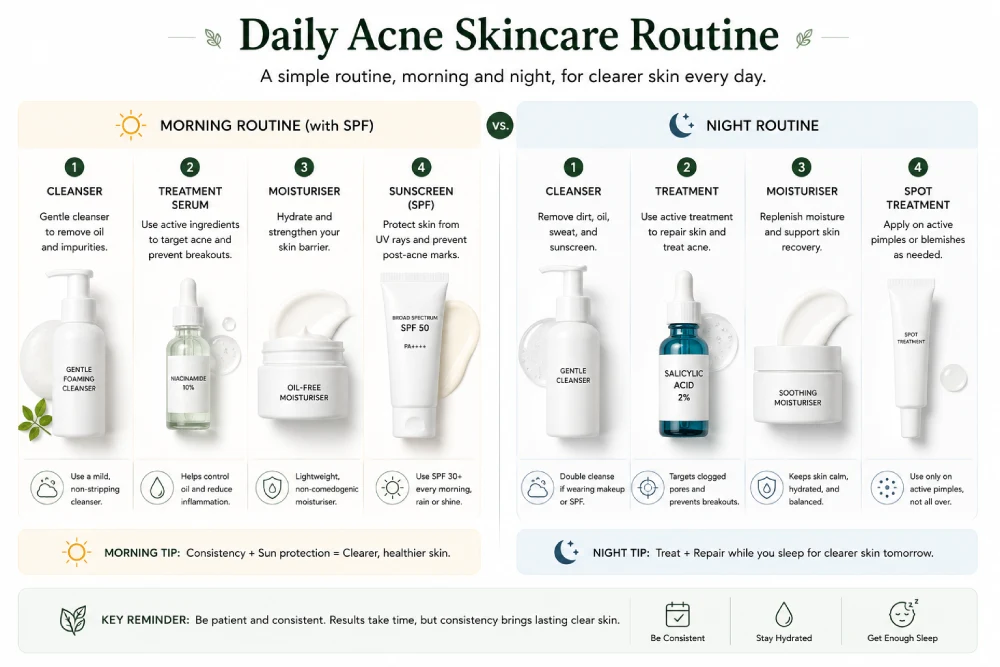
The ingredients supported by studies are: salicylic acid, is an unclogging ingredient, benzoyl peroxide an antibacterial agent and retinoids to prevent further outbreaks. Niacinamide and cermaids also aid in the skin barrier function during its treatment for acne.
Here‘s how to structure both routines:
Morning Acne Routine
Step 1 Soothing gel cleansers (gentle, non-stripping to remove previous day‘s oil)
Stage 2 Serum containing niacinamide (controls oil, aids the skin barrier, prevents PIH)
Step 3 A light, non-comedogenic moisturiser (important to never miss this step)
Step 4 SPF 30-50 (essential to always wear before leaving the house, salicylic acid can be Photo-sensitising)
Night Acne Routine
- Double cleanse (particularly after SPF or make-up use)
- Salicylic acid toner or serum (every other night to begin with)
- Retinol or azelaic acid (alternate nights; never retinol or azelaic acid on the same night as salicylic acid)
- Moisturizer (light gel based for oily skin, Ceramide based for dry or sensitive skin,)
It will take 6 12 weeks to see any noticeable improvement, with a true roller. The right way to use it means regular and patient use it takes the skin a full renewal cycle to do its thing.
Acne Treatment Mistakes That Make Breakouts Worse
They are the most frequent ways to actually make the acne worse.
Over-cleansing. washing 3-4x a day destroys the skin barrier, and causes it to over produce oil to make up for it. And an oily face is a breakout face! Two is plenty.
Skipping the moisturizer. I see this mistake time and time again, people with acne prone skins miss out the moisturiser to prevent further breakouts. When done correctly moisturising can be very beneficial. Choose non-comengineic formulas with niacinamide, ceramides or hyaluronic acid.
Mixing incompatible actives Do not mix benzoyl peroxide and retinoids; they can reverse each other‘s benefit and lead to irritation. Use on alternate nights (for example) or prescribed use of benzoyl peroxide in the morning and retinoids in the evening.
Expecting overnight results. Generally 4–6 weeks is when you start seeing some improvements and after 12 weeks you should see major changes in your skin. Not giving your products a long enough trial and changing to something else is one of the most common reasons your treatments aren‘t working.
Skip SPF. Due to increased photosensitivity with salicylic acid, daily SPF is required when using acne medications. Exposure to non-treated UV also significantly increases PIH, especially in Indian skin tones.
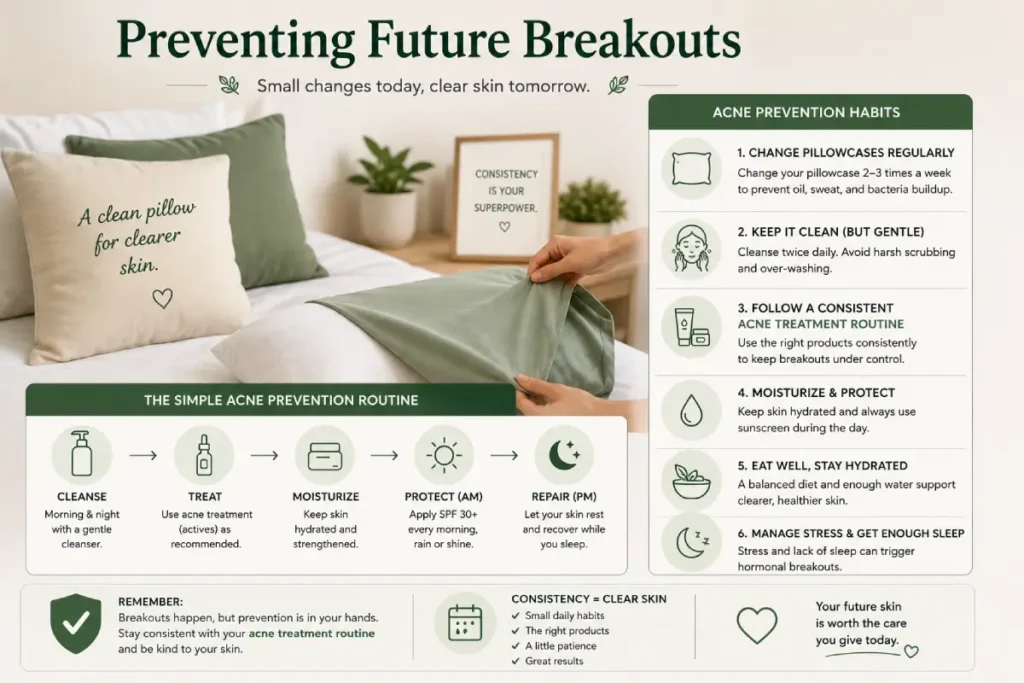
Preventing Future Breakouts
Treating active acne is only half the work. These habits prevent new breakouts from forming:
Change your pillowcase twice weekly. Bacteria, oil, and product residue transfer directly onto skin overnight — a clean pillowcase is one of the most underrated acne prevention habits.
Avoid placing your hands on your face. Our hands are full of bacteria and excess oil. We will unknowingly touch our face over 20 times per hour.
Stay consistent over intensity. Begin with one active and build in others over 4–6weeks. Prevent irritation and increased sensitivity by layering too many actives at once.
Pay attention to your diet. Foods with a high Glycaemic Index cause an insulin spike that stimulates the skin to produce too much sebum. For some, dairy products will have the same effect. It won‘t apply to everyone, but if you are finding your skin staying inconsistent even when using a good routine, then diet is probably something to investigate.
📖 Read More: Skincare Routine — The Full Pillar Guide
Conclusion
A good basic acne regimen is always better than any miracle product. Use a mild cleanser, introduce just one active product (salicylic acid or niacinamide depending on your skin) and want a moisturizer and sunscreen every single day.
Stick with your acne treatment routine for 8 to 12 weeks of real commitment before you look again. That bright, healthy skin at the end of that time wasn‘t a mistake it was doing what works.