Dermatitis Types & Treatments: Complete 2026 Guide
Published: July 24, 2026 Last Updated: July 24, 2026 “Dermatitis” gets used as a catch-all term, but it’s really
Last Updated: July 24, 2026
“Dermatitis” gets used as a catch-all term, but it’s really an umbrella covering several distinct skin conditions — each with its own cause, pattern, and treatment. If you’ve been treating a stubborn rash the same way for weeks with no improvement, there’s a good chance it’s simply the wrong approach for your specific type. Here’s how to tell dermatitis types apart and treat each one correctly.
What Is Dermatitis?
Dermatitis is a general term for inflamed, irritated skin — it can show up as redness, itching, dryness, or flaking. The most common types are contact dermatitis, seborrheic dermatitis, and atopic dermatitis (commonly called eczema), and each is triggered differently.
Contact Dermatitis Symptoms
Contact dermatitis develops when skin reacts to something it directly touched, and it comes in two forms that are often lumped together.
- Irritant contact dermatitis: caused by repeated exposure to harsh substances like detergents, solvents, or frequent hand-washing.
- Allergic contact dermatitis: an immune reaction to a specific allergen, like nickel, certain fragrances, or latex.
What to look for: redness, itching, and sometimes blistering that appears within minutes to hours of exposure, usually confined to the exact area that touched the trigger.
Treatment approach:
- Identify and avoid the specific irritant or allergen — patch testing can help pin down allergic triggers.
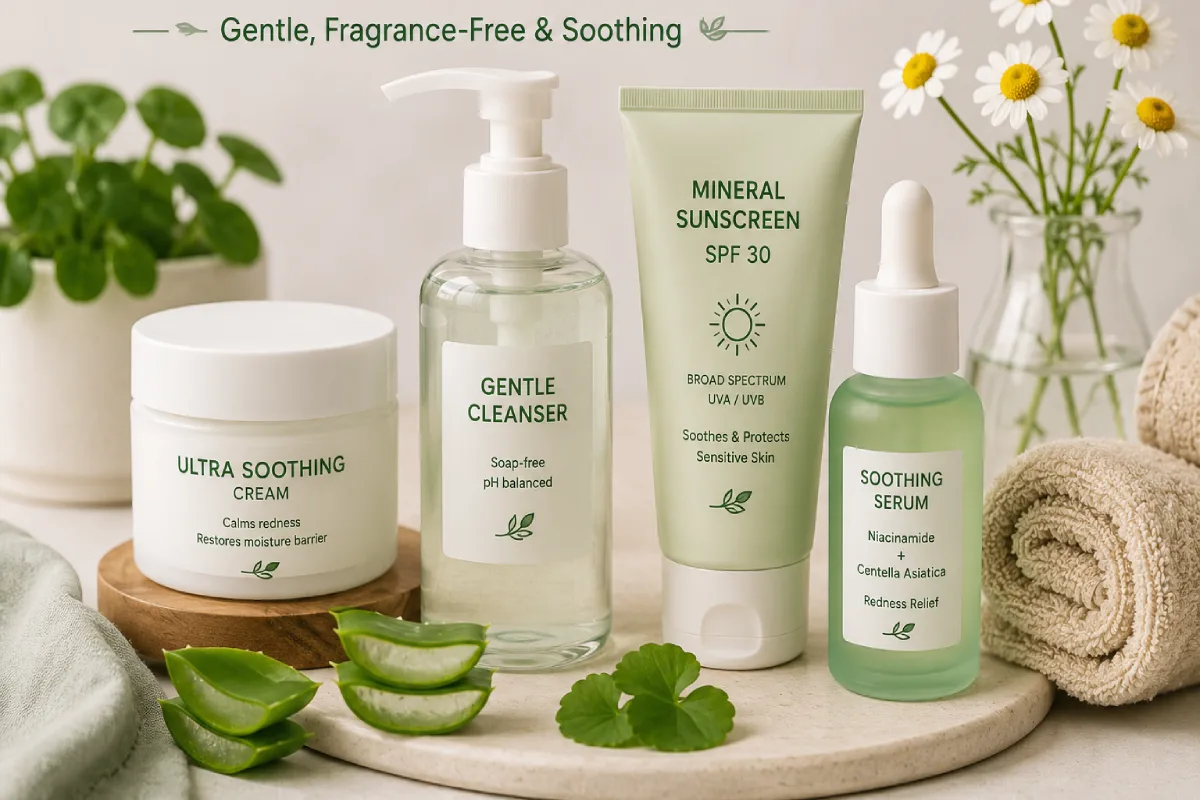
- Use fragrance-free, hypoallergenic moisturizers to rebuild the skin barrier.
- A short course of topical corticosteroids can calm active flares.
Seborrheic Dermatitis Treatment
Seborrheic dermatitis shows up in oil-gland-rich areas — the scalp, eyebrows, sides of the nose, and chest — and is driven largely by an overgrowth of a naturally occurring yeast on the skin.
What to look for: greasy, flaky patches with mild redness, often mistaken for simple dandruff when it’s on the scalp.
Treatment approach:
- Antifungal shampoos or creams (ketoconazole or similar) to target the yeast overgrowth directly.
- Gentle, non-stripping cleansers — over-washing or harsh products can worsen flare-ups.
- Topical corticosteroids or calcineurin inhibitors for itching and redness during flares.
- Periodic maintenance use of antifungals even after symptoms clear, since seborrheic dermatitis tends to recur.
Atopic Dermatitis vs. Contact Dermatitis
This comparison is one of the most searched, since both conditions cause red, itchy skin but need different long-term management.
| Feature | Atopic Dermatitis (Eczema) | Contact Dermatitis |
|---|---|---|
| Cause | Chronic, linked to allergies and immune response | Direct reaction to an irritant or allergen touching skin |
| Onset | Often begins in childhood | Can develop at any age, tied to specific exposure |
| Location | Can appear anywhere; inner elbows, knees common in adults | Limited to the exact area of contact |
| Duration | Chronic, with recurring flares | Usually resolves once the trigger is removed |
| Key management focus | Long-term moisture barrier repair and trigger management | Identifying and avoiding the specific irritant or allergen |
Practical tip: if a rash keeps returning in the same spot every time you wear a certain ring, use a certain detergent, or handle a certain product, it’s very likely contact dermatitis rather than eczema.
How to Treat Dermatitis at Home
Regardless of type, a few home-care basics support healing and reduce flare frequency.
- Moisturize consistently: apply a fragrance-free moisturizer within minutes of bathing to lock in hydration.
- Use lukewarm water: hot showers strip natural oils and can worsen any type of dermatitis.
- Choose gentle, fragrance-free products: for laundry detergent, soap, and skincare alike.
- Avoid scratching: it breaks the skin barrier further and increases infection risk.
- Track your triggers: a simple diary noting new products, stress levels, and flare timing often reveals patterns within a few weeks.
Myth vs. Fact: Dermatitis
| Myth | Fact |
|---|---|
| All dermatitis is the same condition | It’s an umbrella term covering several distinct conditions with different causes |
| Seborrheic dermatitis is just dandruff | It’s a related but more persistent condition that often needs antifungal treatment |
| Dermatitis is contagious | None of the common types spread from person to person |
| Moisturizer alone can treat all types | Seborrheic dermatitis specifically needs antifungal treatment to address the underlying cause |
| Eczema is something you outgrow completely | Many people carry it into adulthood, though flares often become less frequent |
Common Mistakes People Make With Dermatitis
- Treating every flare-up with the same over-the-counter cream, regardless of type.
- Over-washing seborrheic-prone areas, which can worsen flaking and irritation.
- Ignoring patterns that point to a specific contact allergen (like jewelry or a new lotion).
- Using hot water for showers, which dries out already-compromised skin.
- Stopping treatment the moment symptoms improve, rather than continuing maintenance care.
When to See a Dermatologist
Most mild dermatitis responds well to consistent home care within a few weeks. It’s time to see a dermatologist if a rash spreads, oozes, shows signs of infection, or doesn’t improve despite avoiding likely triggers and using basic treatment. A dermatologist can also run patch testing to pinpoint specific allergens behind persistent contact dermatitis, or prescribe stronger treatment for chronic atopic or seborrheic dermatitis that isn’t responding to over-the-counter options.
Final Take
Dermatitis types and treatments aren’t one-size-fits-all — contact, seborrheic, and atopic dermatitis each need a different approach to actually clear up. Identifying your specific type, avoiding known triggers, and using targeted treatment (antifungals for seborrheic, allergen avoidance for contact, barrier repair for atopic) will get you further than treating every flare the same way. If home care isn’t cutting it after a few weeks, a dermatologist visit is worth the trip.
7. FAQs
Q1: What are the main types of dermatitis? The most common types are contact dermatitis, seborrheic dermatitis, and atopic dermatitis (eczema), each with different causes and treatment approaches.
Q2: How do I know if I have contact dermatitis or eczema? Contact dermatitis is usually limited to the exact area that touched a trigger and resolves once it’s avoided, while atopic dermatitis (eczema) is chronic, often starts in childhood, and can appear anywhere on the body.
Q3: What is the best treatment for seborrheic dermatitis? Antifungal shampoos or creams that target yeast overgrowth, combined with gentle cleansing, are typically the most effective approach.
Q4: Can dermatitis be treated at home? Mild cases often respond well to consistent moisturizing, gentle fragrance-free products, and trigger avoidance, though seborrheic dermatitis usually needs antifungal treatment specifically.
Q5: Is dermatitis contagious? No, the common types of dermatitis — contact, seborrheic, and atopic — don’t spread from person to person.
Q6: When should I see a dermatologist for dermatitis? If a rash spreads, shows signs of infection, or doesn’t improve after a few weeks of consistent home care and trigger avoidance, it’s time for a professional evaluation.
8. Image Suggestions
| Section | Image Idea | SEO Filename | ALT Text |
|---|---|---|---|
| What Is Dermatitis | Close-up of inflamed, red skin patch | dermatitis-types-overview.webp |
Overview of common dermatitis types on skin |
| Contact Dermatitis | Redness and irritation on skin near jewelry or a watch strap | contact-dermatitis-symptoms.webp |
Contact dermatitis symptoms from an allergen trigger |
| Seborrheic Dermatitis | Flaky, oily patches on scalp or hairline | seborrheic-dermatitis-treatment.webp |
Seborrheic dermatitis treatment for scalp flaking |
| Atopic vs Contact Dermatitis | Side-by-side comparison graphic of eczema and contact dermatitis | atopic-vs-contact-dermatitis.webp |
Atopic dermatitis versus contact dermatitis comparison |
| Home Treatment | Fragrance-free moisturizer being applied after a shower | how-to-treat-dermatitis-at-home.webp |
At-home dermatitis treatment and moisturizing routine |
| When to See a Dermatologist | Dermatologist examining a patient’s skin | when-to-see-a-dermatologist-for-dermatitis.webp |
Dermatologist consultation for persistent dermatitis |