How to Manage Anxiety Naturally: 12 Proven Methods for 2026
Published: September 3, 2026 Last Updated: September 7, 2026 Anxiety is rarely something that can be “talked away”. This
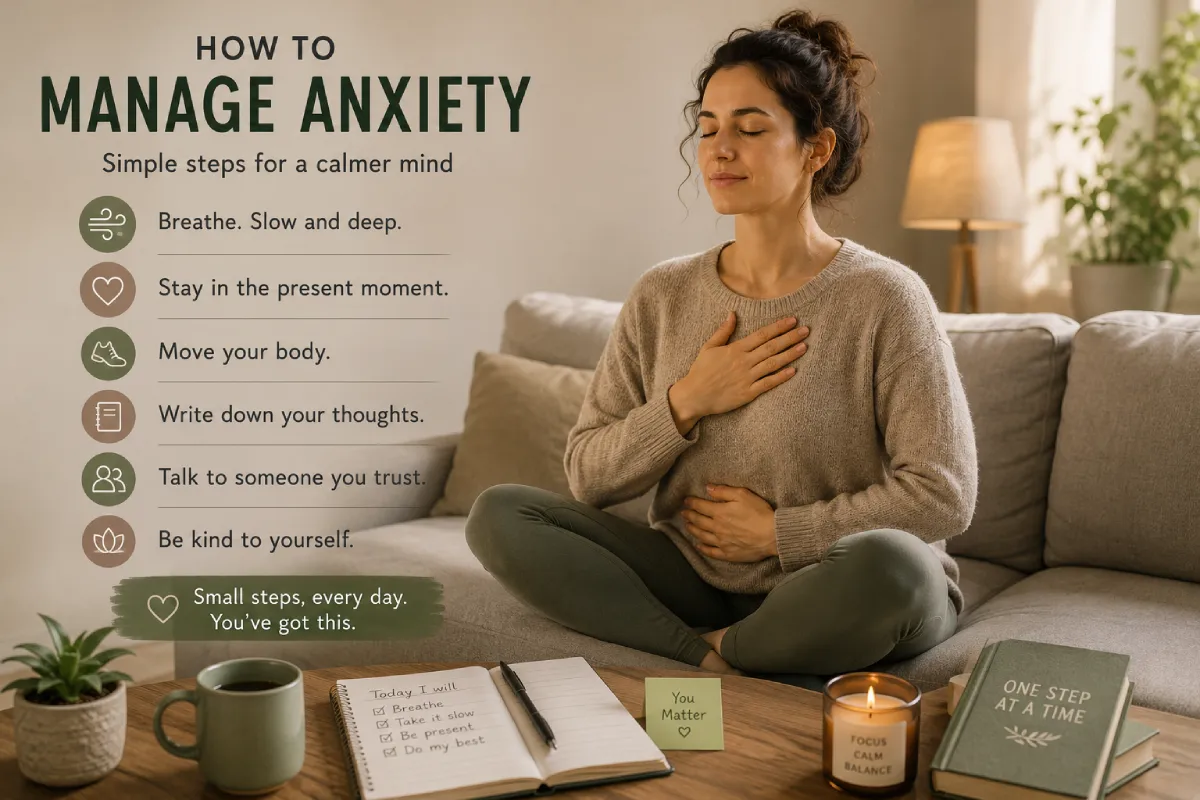
Anxiety is rarely something that can be “talked away”. This is because anxiety is not purely about anxious thought it is a reaction of the nervous system to a perceived threat, even if you‘re just sitting at your desk. Learning how to manage anxiety naturally means working with your body first, then your mind. Here are 12 methods that actually help, split into what to use right now and what to build over time.
In-the-Moment Anxiety Coping Skills
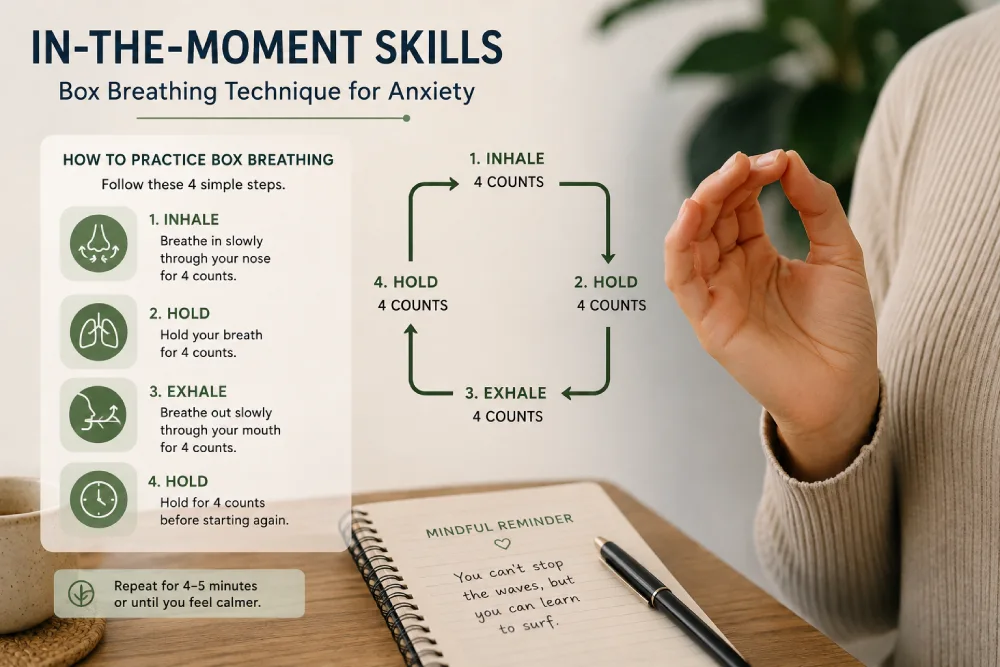
1. Box breathing. Breathe in four, hold four, breathe out four, hold four. Repeat for 2 minutes. There is arguably nothing more reliable than this at snapping you out of a stress response. It bypasses your mind and is a direct cue to your nervous system to downshift fromfight-or-flight.
2. 5-4-3-2-1 grounding. Say 5 things you can see, 4 things you can feel (touch), 3 things you can hear, 2 things you can smell and 1 thing you can taste. Using the 5-4-3-2-1 grounding technique to deal with anxiety can help take you out of a hopeless spiral in your mind and bring you to the physical environment.
3. Cold water reset. Spraying cold water on face or holding cold (wet towel, bottle etc…) will abruptly trigger the dive reflex and prolong the racing HR.
4. Verbalize it. Even simply “I‘m feeling anxious right now” and not fighting the anxiety can actually make the feeling go away that quickly.
5. The worry window. Put offworrying for 10 minutes a day. During this “worry time,” try to accept the worries of the moment and put them off until tomorrow.
6. Physiological Sigh. Two rapid inhales through nose, one long exhale through mouth. Possibly the fastest breathing pattern to immediately relax a nervous mind.
Longer-Term Natural Anxiety Remedies
7. Every day try to keep moving. Reduction of cortisol and excess stress hormones through even a 10 min walk. You do not have not to do strenuous sport- the constance is more important than the pressure.
8. Limit your intake of caffeine after lunch. Caffeine acts as a stimulant that mirror the physical sensations of anxiety and further amplifies them. Getting your last drink of caffeine by mid-afternoon may bring your anxious state down considerably.
Protect your sleep window. Anxiety and sleep are mutually triggering. Wake at the same time every day even weekends and over weeks your nervous system will settle down.
10. Wear down the linger. Constantly following Instagram or glancing at Twitter feeds perpetually leaves our parasympathetic nervous systems aroused keep timer comparison and scrolling at bay for a short period of time. Consolidating alerts and setting aside time away from the phone alleviates the moderate sensation of chronic unrest.
11. Take a brief daily mindfulness practice. Two to five minutes of interest in the here and now (for example, paying attention to your breathing or to your environment without judgment) programs your brain to identify anxious loops in their early stages. For a complete beginner program, check out our mindfulness for beginners guide.
12. Support your gut-brain connection. Balancing blood sugar and avoiding skipped meals prevents the crashes that often masquerade as anxiety. Our mental wellness guide covers this link in more depth.
Common Mistakes When Managing Anxiety
- If one treats it solely as mental. Ignoring all body based techniques (breathing, grounding) and just jumping to “positive thinking” never alone seem to be enough.
- Using techniques only at the time of a crisis. They work better if they are used every now and then even on relaxed days, so that the techniques are not so unfamiliar when they are used.
- Hoping that anxiety will go away It won‘t. The aim here is to learn to manage it effectively; not to have eradicated it altogether, as some is not only inevitable but desirable.
Myth vs. Fact
| Myth | Fact |
|---|---|
| Deep breathing is simply a placebo. |
Techniques like box breathing measurably shift your nervous system out of fight-or-flight |
| The more you talk about anxiety the worse it makes it | Its naming and utterance generally deminish its severity |
| Anxiety what does it mean? Means there‘s a problem with you. | It‘s a normal stress response that may become persistent if unsupported. |
When to Seek Professional Help
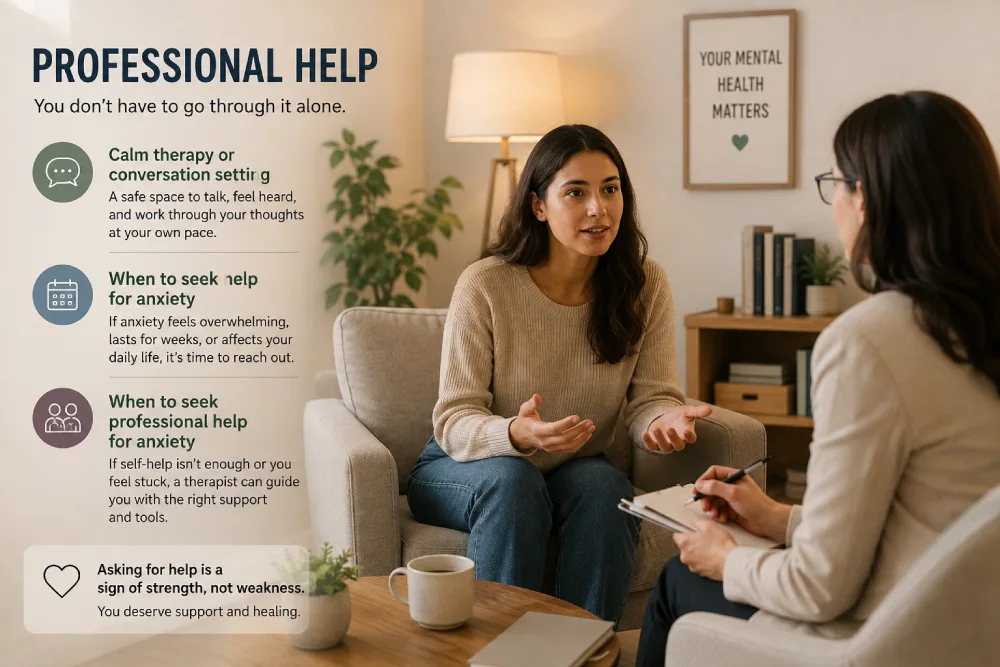
Natural therapies really do work, but there are limits to what they can do. In particular, you may wish to seek talk therapy or even take medication if your anxiety:
- Millions of health professional visits. Appears on most days for over two weeks
- Interferes with how you sleep, eat, or have energy
- Disrupts your ability to work, have relationships, or do the activities you used to like12. Interferes with work, relationships, or fun activities you used to enjoy.
- Comes to mind think of hurting yourself-If yes, call emergency services or crises helpline immediately
In the US, tele therapy and employer EAPs have enabled access on the cheap. India is rapidly adding tele therapy apps and helplines, but it may be prudent to check a provider‘s credentials before paying for a longer term subscription.
It‘s not about finding the one ‘best’, ‘best’ technique for managing anxiety, but rather having a small set of reliable strategies, such as a breathing method you use in the moment, a grounding technique for a spiral, and a handful of small daily routines that decrease your baseline. Choose one or two from these strategies to implement at first.
FAQs
How do I manage my anxiety naturally? Techniques that are body based are box breathing, different types of grounding, moving the body daily and the preservation of sleep and prevention of cross over by limiting the stimulantness of caffeine and the passive amounts of time spent on screens.
What is the fastest way to settle down an overwrought mind? The physiological sigh ( a quick inhale followed immediately by a second quick inhale, then a long exhalation, as in [7]) or box breathing (inhale, hold, exhale, hold, repeat) shifts your nervous system away from the fight-or-flight response in as little as 2 minutes.
What are some grounding techniques for anxiety? Just the 5-4-3-2-1 is an easy and quick grounding technique to help with anxiety. It requires you to name 5 things you see, 4 things you can touch, 3 things you hear, 2 things you smell, and 1 thing you can taste.
Is it really possible for breathing practices to help with anxiety? Yes. Breath practices like box breathing communicate with your nervous system using a language that it understands very quickly, which can help to calm it down.
When should I seek help? If you have experienced the above symptoms on 50 percent or more of the days for at least 2 weeks, if you are having trouble sleeping or having difficulties in your personal relationships, or if you are suicidal or have thoughts of harming yourself, then you should seek help instead of treating yourself.
Can exercise relieve anxiety? Yes. even a walk relieve cortisol levels and helps expel stress hormones accumulated, (which put muscles tense), so movement is one of the most effective skills in dealing with anxiety in the long term.
Final Conclusion
The art of easing anxiety naturally is simply: gather your own content little bag. a breathing method in the interim, a grounding jog to keep going down the drain, and a few routines each day that keep your base level calmer for a length of time. Choose one technique to practice today and incorporate it into a larger mental health routine.