How to Clean Shoes: Leather, Suede, Canvas and Mesh
Published: September 25, 2026 Last Updated: September 25, 2026 Quick Summary: There’s no single way to clean shoes —
Quick Summary:
There’s no single way to clean shoes — the right method depends entirely on the material. Leather needs gentle wiping and conditioning, suede needs dry brushing rather than water, canvas can handle a damp scrub, and mesh needs a soft touch to avoid tearing. Getting the material identification and drying step right matters just as much as the cleaning method itself.
Mistake number one in shoe cleaning is not using the wrong product: it‘s thinking that because a certain cleaning approach is safe on a kind of leather, it must be safe on everything. Method A on canvas can disintegrate a pair of suede kicks. Method B on leather can fold running shoes in half. The first step is easy: Find out what you‘re cleaning. The last is crucial: dry the shoes thoroughly so all your hard work isn‘t wasted.
Identify the Shoe Material and Check Care Instructions
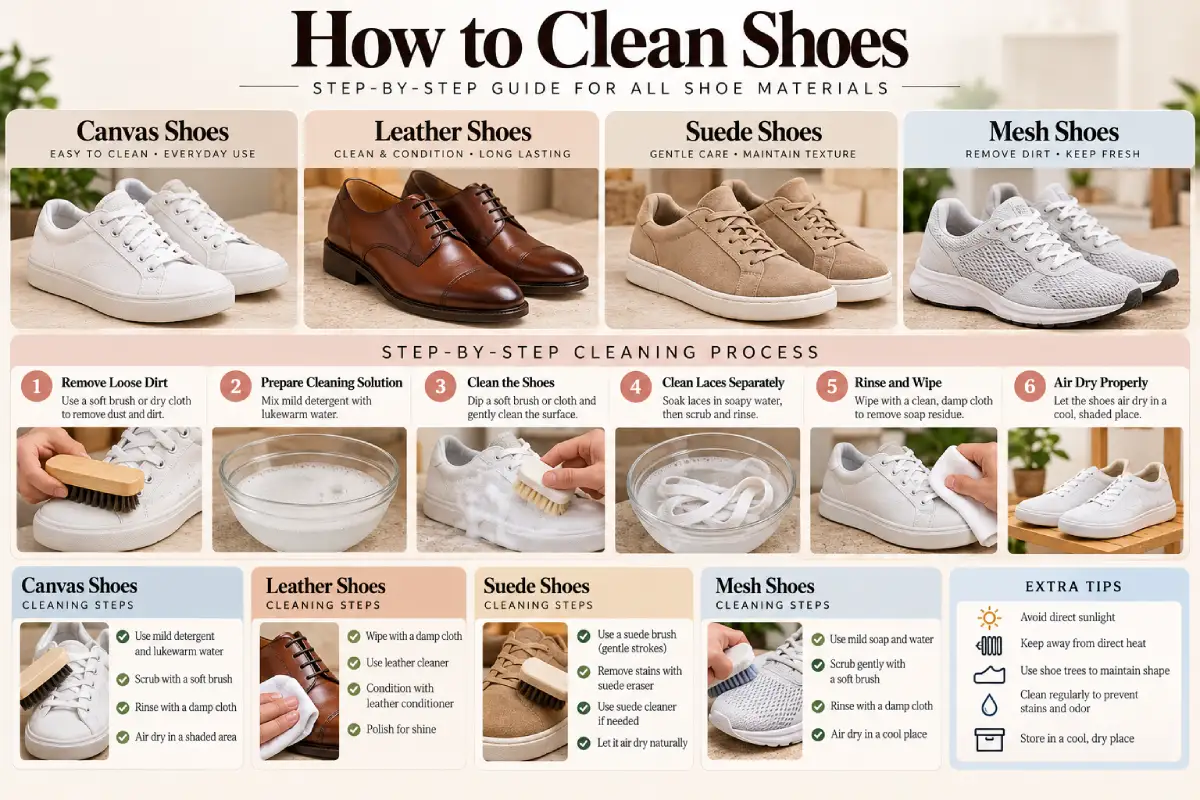
Be sure to identify the upper before you begin. Look inside the shoe (or on the inner box) for a care label or the materials list many manufacturers will print it directly on the box. If it‘s not present, you can often glean some clues from:
- Leather has a smooth, slightly glossed, (or matte) surface, with a feeling of firmness.
-
Suede has a soft, textured, slightly fuzzy nap — it’s technically a type of leather, but its finish and care needs are different enough to treat separately.
- Canvas, which is a woven fabric similar to thick cotton, has a visible weave.
- Mesh Mesh is a lightweight breathable fabric that can be woven or knitted and sometimes slightly elastic. We often see it on trainers and sport shoes.
If shoes are made from materials – such as a leather sneaker with mesh panels or sued leather shoes – then clean each section individually using the appropriate cleaning method.
Prepare Laces, Insoles and a Small Test Area
Spending a few minutes planning ahead of time will make the actual cleaning process quicker and more safe for the material.
Remove the laces and insoles if possible. Most fabrics will be easily hand washed separately and should be washed in warm water with a small amount of mild detergent. Allow to dry in the air. For information on cleaning shoelaces see here.
Always test any cleaner, any cleaning solution or any new product on the unseen underside of the visible upper first. Usually below the tongue or just inside near the sole. This is more important on suede and leather as the wrong product can stain and be hard to remove.
Cleaning Leather and Suede: Different Approaches
Leather is most receptive to gentle persistent cleansing, rather than rough treatment on an irregular basis. First, clean off grit with a gentle dry cloth, then apply the first layer of actual dirt with a another cloth very lightly moist with water – no soaping or vigorous scrubbing of the leather as this will have an adverse affect on the aging of it, causing it to dry out and crack when the moisture it introduced during cleaning dries out. Finish by working in a leather conditioner once the whole shoe is dry – I find this step to be neglected most of the time, and it is what is prevents the leather form cracking after repeated cleans and use.
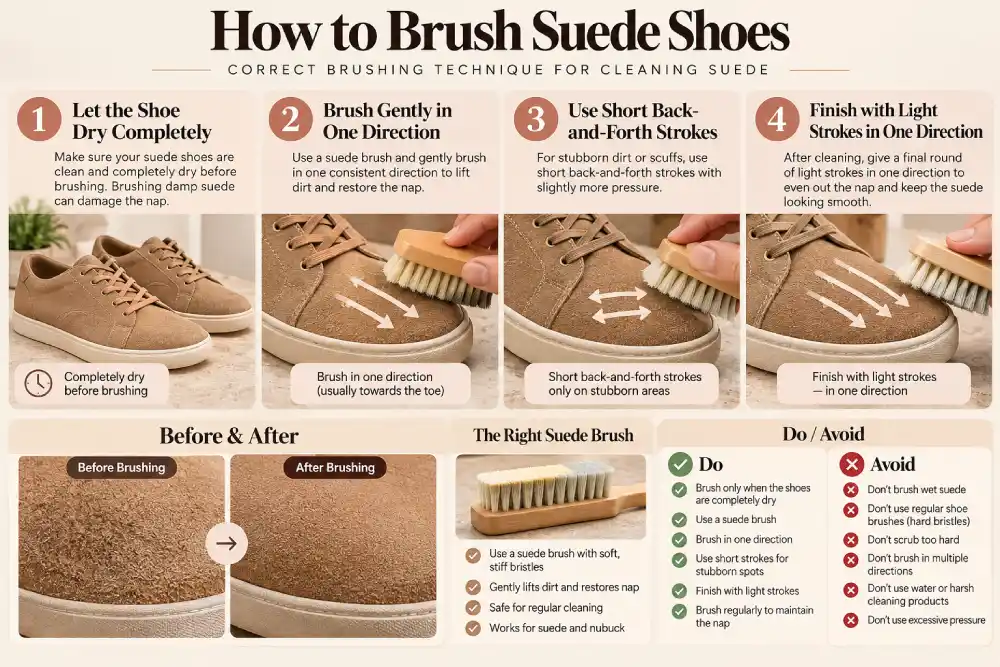
Suede, however, requires an entirely different approach, as it is much more prone to water damage than smooth leather. Use a dry suede brush to brush in a single direction, lifting dirt and dust from the nap with the brush rather than smashing it into the nap with a bounce. For light staining, lightly rubbing a suede eraser or a clean, dry sponge can lift the stain without adding moisture. In cases where a stain requires a wet solution, a little mild white vinegar mixed with water and dabbed on with a cloth (not splashed on or poured) is a commonly used spot-treatment test but, again, test on an inconspicuous part of the shoe first. brushing it again to restore the nap. Once clean and fully dry, a suede protector spray helps guard against future water and stains, and is worth reapplying periodically rather than just after a single cleaning.
Cleaning Suitable Canvas and Mesh Shoes
Canvas is the most forgiving of the four materials and can generally handle a damp scrub. Mix a small amount of mild detergent with warm water, and use a soft brush or old toothbrush to scrub the fabric gently, working in small sections. Rinse by wiping with a clean, damp cloth to remove soap residue, rather than submerging the shoe fully, which can weaken glue and internal construction over time.
Mesh needs a gentler hand than canvas, since its looser, more delicate weave can tear or stretch under too much scrubbing pressure. Use the same mild detergent and warm water approach, but with a soft cloth or very soft brush rather than a stiff one, and use light, circular motions instead of hard scrubbing. Mesh also holds moisture longer than canvas because of its structure, which makes the drying step below especially important for this material.
For any sneaker made from a combination of these materials, along with leather or synthetic panels, treat each section with its own method — sneaker-specific care is covered in more depth in the full guide to sneaker types and styling, including which materials suit which sneaker styles.
Drying, Storage and When to Seek Specialist Cleaning
You can clean a shoe in whatever way you like, but the way the shoe is dried is as important as the cleaning procedure. Always air dry shoes indoors at room temperature, avoiding direct sunlight and direct heat sources such as radiators and hair dryers since rapid high heat can melt soles, split leather, and cause fabric uppers to shrink or become misshapen. To help shoes retain shape and dry from the inside, loosely stuff shoes with paper towels or a clean cloth.
Store clean shoes (completely dry) in a well-ventilated area rather than in a sealed bag, to avoid creating a damp environment that could promote mildew and develop a smell over time. Using multiple pairs in turn rather than the same every day allows each pair to have a little more time to dry out thoroughly.
There are some things that really should go to a professional: a set-in stain in light colored suede, a large amount of water damage on leather, or a pair of shoes so precious that even a small mistake would be very expensive to replace. A good shoe cleaning and repairing service has chemicals and equipment designed and dedicated to these tougher jobs and so there is no shame in going rather than home. shoe yourself.
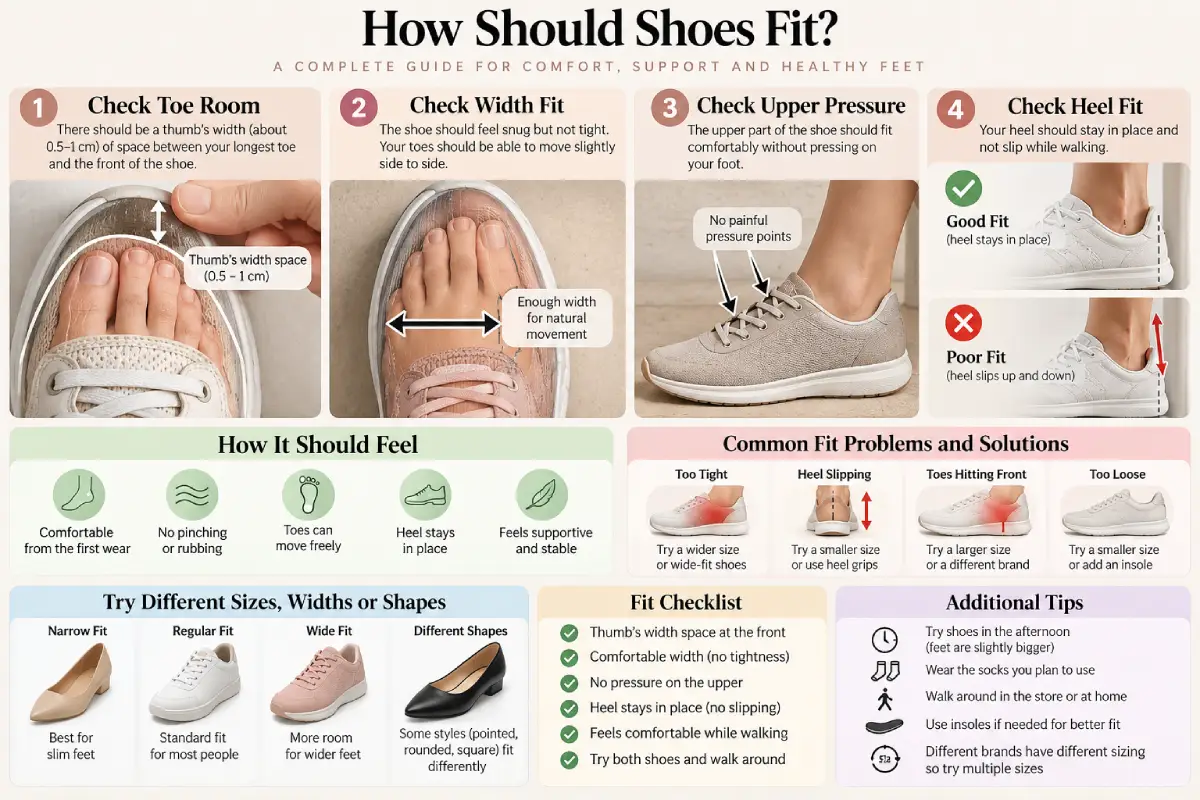
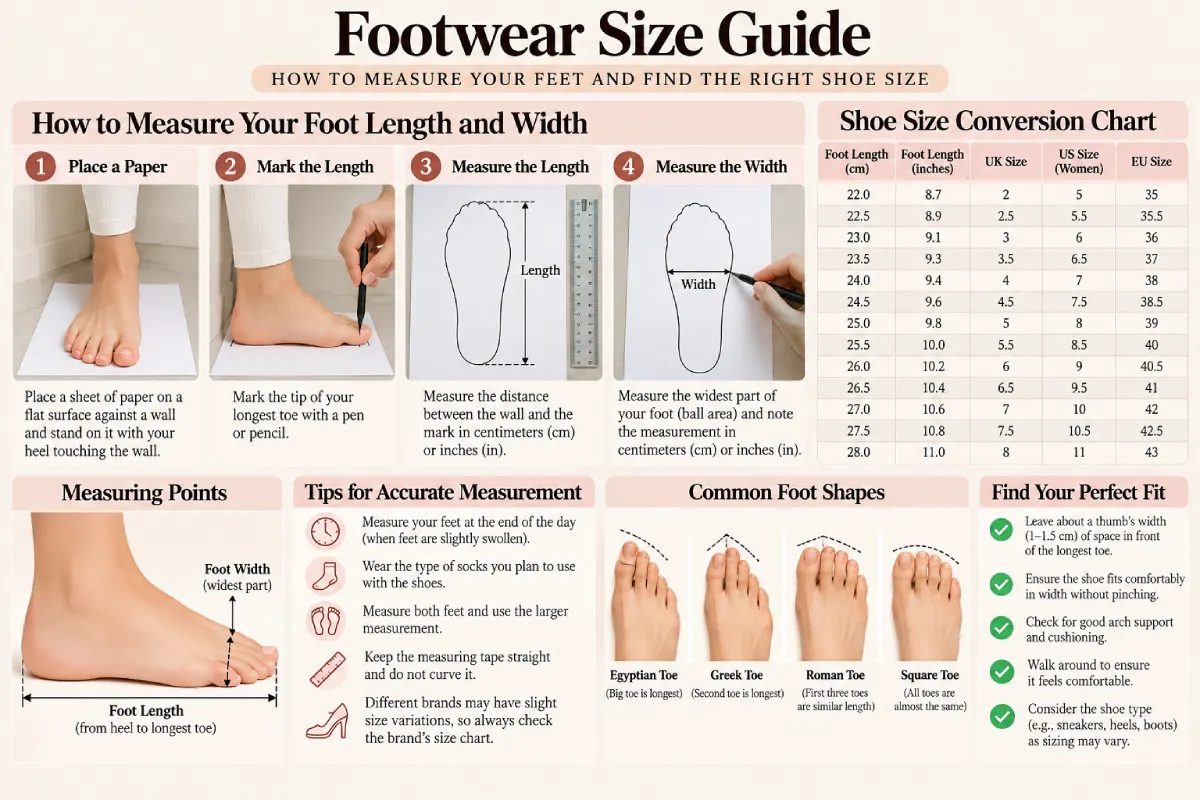
Knowing how to clean shoes properly — by material, not by habit — is what actually extends how long a pair lasts. Pair good cleaning habits with a proper fit from the start, since a well-fitted shoe generally shows less uneven wear than one that doesn’t fit correctly; how a shoe should fit covers that side of things. For everything else in building and maintaining a footwear collection, the complete footwear guide is the place to start.
FAQs
Can I use the same cleaning method for leather and suede shoes?
No. Leather can be wiped with a lightly damp cloth, but suede is far more susceptible to water damage, and should in the most part be cleaned dry with a brush or suede eraser, or if absolutely necessary, dry spot cleaned. Applying excessive water can damage it permanently.
Is it safe to put shoes in the washing machine?
It totally varies on what the shoe is made of and what they have on them. Canvas shoes that are not heavily glued or detailing can go in the washer on a cold, low agitation cycle inside of a mesh bag, but leather and suede shoes with glued components or bare structural parts should never be put in a washing machine.
How do I clean white shoelaces or shoes without discoloring them?
Wash the hand-wash laces separately in warm water with a small amount of gentle detergent, using an old toothbrush to scrub them, and dry them flat (not scrunched up or twisted, which can lead to uneven drying and distortion of the shape).
What’s the fastest safe way to dry wet shoes?
The safest way of drying the shoes is to allow them to air dry naturally at room temperature in an environment protected from direct sunlight and intense ambient heat. Filling the shoes loosely with paper towels or a clean cloth helps them hold shape and absorb moisture from the inside, speeding up drying without using direct heat.
When should I take shoes to a professional cleaner instead of cleaning them myself?
Consider a professional service for deep-set stains on light suede, significant water damage to leather, or any shoe where a cleaning mistake would be costly — professional cleaners have material-specific tools and products that go beyond typical at-home methods.
Final Conclusion
Knowing how to clean shoes properly comes down to matching the method to the material — a rule that’s simple to state but easy to ignore when you’re just trying to get a stain out quickly. Treat leather gently, keep suede away from water, let canvas and mesh handle a proper scrub, and always dry shoes slowly at room temperature. Do that consistently, and your shoes will hold their shape and color far longer than they would with a one-size-fits-all approach. For the fit and styling side of your footwear collection, the complete footwear guide is a good next stop.