Jewelry Care Tips: Storage, Daily Wear and Maintenance
Published: September 23, 2026 Last Updated: September 23, 2026 TL;DR Most jewelry damage comes from a handful of avoidable
TL;DR
Most jewelry damage comes from a handful of avoidable habits — putting jewelry on before your lotion and perfume instead of after, sleeping or exercising in it, storing pieces piled together, and letting humidity sit unchecked in a jewelry box. The right care also depends on what a piece is made of: solid gold and sterling silver tolerate more than gold-plated or vermeil pieces, and gemstones need their own gentler handling. This guide covers daily habits, material-specific care, storage, travel packing, and how to spot early signs of damage — everything except silver-specific tarnish removal, which has its own dedicated guide.
Most jewelry doesn’t wear out from age — it wears out from a handful of avoidable habits repeated over months or years. These jewelry care tips cover the daily routines, storage methods, and travel habits that make the biggest difference, along with how care needs actually shift depending on whether you’re wearing solid gold, plated jewelry, or gemstone pieces.
1. Everyday Habits That Help Protect Jewelry
A few small changes to your daily routine prevent more damage than any cleaning product will fix after the fact.
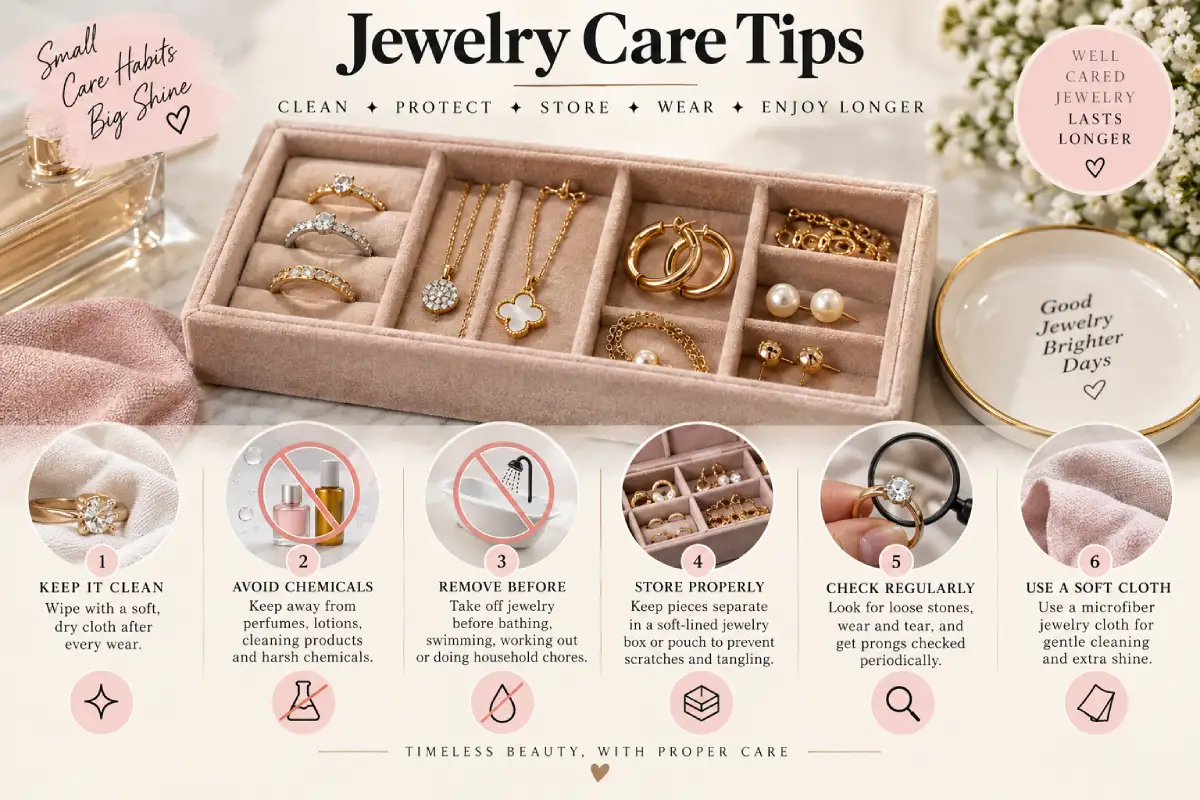
Put jewelry on last, take it off first. Lotion, perfume, hairspray, and makeup all contain ingredients that can dull metal finishes and cloud gemstones. Getting dressed and applying products before you put your jewelry on — rather than after — keeps that exposure to a minimum.
Remove jewelry before sleep, exercise, and water exposure. Sleeping in jewelry is a common cause of bent prongs, kinked chains, and clasps that wear out early, since the piece is under constant, uncontrolled pressure for hours at a time. Sweat during exercise speeds up tarnishing on silver and can weaken adhesive on glued-in stones, and chlorinated or hard water can dull plating and damage certain gemstones over time.
Wipe pieces down after wearing them. A quick pass with a soft, dry cloth at the end of the day removes oils and residue before they build up, which reduces how often you need a deeper clean.
2. How Metals, Plating and Gemstones Change Care Needs
Not all jewelry can handle the same treatment. Here’s how care needs generally differ by material:
| Material | Everyday tolerance | What to avoid |
|---|---|---|
| Solid gold (14K–22K) | Most durable for daily wear; can generally handle brief water exposure | Harsh chemicals, chlorinated water for extended periods |
| Sterling silver (925) | Durable, but tarnishes naturally over time | Prolonged water exposure, sulfur-heavy environments — full cleaning steps are covered in our dedicated silver care guide |
| Gold-plated / vermeil | Best for occasional rather than daily wear; the gold layer wears thin over time | Water, lotion, perfume, and friction, all of which speed up plating wear |
| Gemstones (diamonds, sapphires, and similar hard stones) | Generally resilient, but settings need periodic checking | Direct contact with harsh chemicals; ultrasonic cleaners on stones with visible fractures |
| Softer or porous stones (pearls, opals, turquoise, emeralds) | Needs the gentlest handling of any category | Water soaking, chemical cleaners, and high heat, all of which can dull or damage the surface |
The general rule: the more precious and solid a piece is, the more everyday wear it can handle. The more delicate the material — plating, soft stones, glued settings — the more it needs to be treated as occasional, careful wear rather than a daily-use piece.
3. How to Store Jewelry Without Tangles or Scratches
Store pieces separately. Metal touching metal is one of the most common causes of surface scratches, especially between harder and softer metals. A lined jewelry box with individual compartments, or small pouches for each piece, prevents this far better than one shared drawer or bag.
Keep chains and necklaces closed and laid flat, or hung individually. A closed clasp prevents a chain from sliding through itself and knotting, which is the main cause of the kind of tangle that takes ten frustrating minutes to undo.
Manage humidity, especially in warm or coastal climates. Silver tarnishes faster in humid air, and moisture trapped in a closed box can also affect plated pieces over time. Silica gel packets or a few anti-tarnish strips in your jewelry box are a simple, low-cost way to reduce this, and they’re worth using year-round in especially humid regions rather than only during the monsoon season.
Avoid storing jewelry in direct sunlight or a bathroom. Both introduce more heat, humidity, or moisture swings than a dedicated storage spot, and can accelerate the wear on plated finishes in particular.
4. Packing Jewelry for Travel and Occasional Wear
Travel is when jewelry damage happens most unexpectedly — pieces shift around loose in a bag, tangle with each other, or get crushed under heavier items.
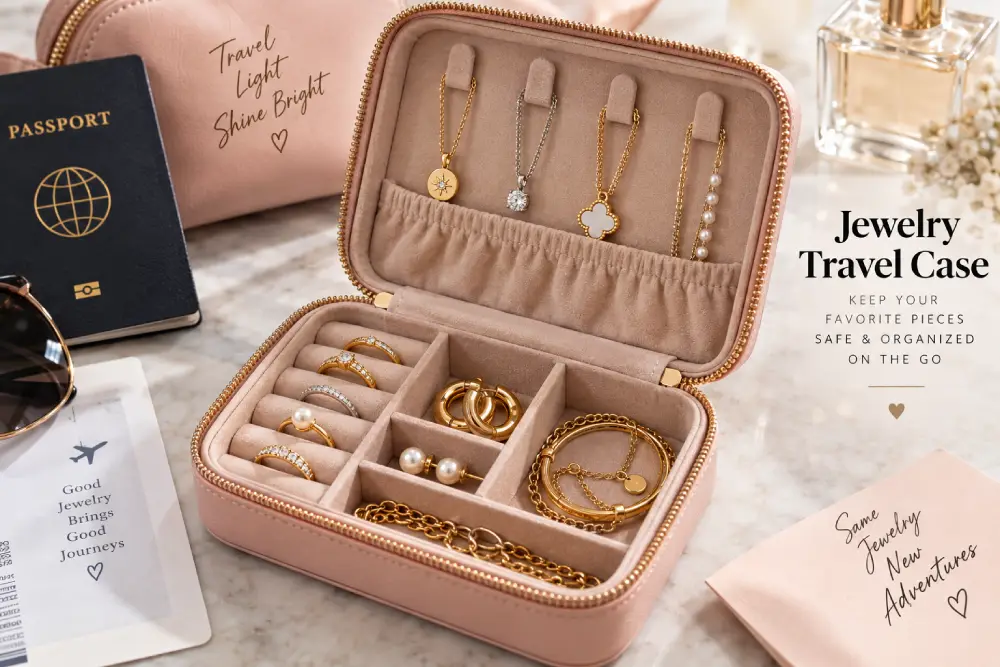
- Use a dedicated jewelry travel case or roll, with separate compartments or pouches for each piece, rather than a single pouch with everything loose together.
- Fasten necklaces and bracelets closed before packing them, and consider threading a necklace through a straw or a small card with a hole punched in it to keep the chain from sliding and knotting during transit.
- Pack jewelry in your carry-on rather than checked luggage when flying, both to avoid the rougher handling checked bags receive and to keep valuable pieces with you rather than out of sight.
- Bring only what you’ll actually wear on the trip. Every extra piece is another item that can tangle, scratch, or get misplaced, and a smaller, well-organized travel set is easier to keep track of than a full jewelry box brought along “just in case.”
5. Checking Clasps, Settings and Signs of Damage
A quick check every few weeks catches small problems before they become lost stones or broken chains.
Test clasps for a secure close. A clasp that feels loose, doesn’t click firmly shut, or has started to bend is worth having repaired before you wear the piece again — a failed clasp is one of the most common ways jewelry gets lost.
Look at prongs and settings under good light. Prongs holding a stone in place should sit flush against it with no visible gap; a stone that wiggles even slightly when you touch it gently is a sign the setting needs attention.
Check chains for weak links or thinning spots, particularly near the clasp, which takes the most repeated stress of any point on a necklace or bracelet.
Have valuable or frequently worn gemstone pieces professionally inspected roughly once a year. A jeweler can check settings under magnification and catch early wear that’s difficult to see with the naked eye, which is especially worthwhile for engagement rings, heirloom pieces, or anything worn daily.
The Bottom Line
Good jewelry care isn’t about one deep clean now and then — it’s a handful of small, repeated habits: apply products before you put jewelry on, remove pieces before sleep and exercise, store everything separately and away from humidity, pack thoughtfully when you travel, and check settings and clasps regularly. Match that routine to what each piece is actually made of, and most jewelry will hold up well for years.
For silver-specific tarnish removal, see our dedicated How to Clean Silver Jewelry guide, or head back to the complete Jewelry Guide for an overview of materials, buying, and styling.
FAQs
How often should I clean my jewelry? A quick wipe with a soft cloth after each wear, plus a deeper clean every few weeks depending on how often you wear a piece, is a reasonable general routine. Frequently worn pieces need more regular attention than occasional-wear items.
Can gold-plated jewelry get wet? It’s best to avoid it when possible. Water speeds up plating wear over time, so removing gold-plated and vermeil pieces before showering, swimming, or washing your hands helps the gold layer last longer.
What’s the best way to store jewelry to prevent scratches? Store pieces separately — in individual compartments, small pouches, or their original boxes — rather than piled together in one drawer or bag. Metal-on-metal contact is one of the most common causes of surface scratches.
Does humidity really affect jewelry? Yes, particularly for sterling silver, which tarnishes faster in humid conditions, and for plated pieces, where trapped moisture can accelerate wear. Silica gel packets or anti-tarnish strips in your storage box help manage this, especially in humid climates.
How can I tell if a gemstone setting needs repair? Check under good light for a stone that sits loosely, wiggles when gently touched, or has a visible gap between the stone and the prongs holding it. Any of these signs means it’s worth having the setting checked by a jeweler before you wear the piece again.
What’s the best way to pack jewelry for travel? Use a dedicated jewelry case or roll with separate compartments, fasten necklaces and bracelets closed before packing, and bring only the pieces you’ll actually wear on the trip. Keeping jewelry in your carry-on rather than checked luggage also reduces the risk of rough handling or loss.