How to Clean Silver Jewelry: Tarnish and Care Guide
Published: September 23, 2026 Last Updated: September 23, 2026 TL;DR Most tarnished silver jewelry can be cleaned at home
TL;DR
Most tarnished silver jewelry can be cleaned at home with mild soap and water for light tarnish, or a baking soda paste and gentle polishing cloth for moderate tarnish. Skip harsh methods like the aluminum foil and boiling water trick on anything with glued-on stones, pearls, or an oxidized (intentionally blackened) finish — heat, chemicals, and vigorous rubbing can damage or completely strip these pieces. When in doubt about a valuable or antique piece, a professional jeweler is the safer choice.
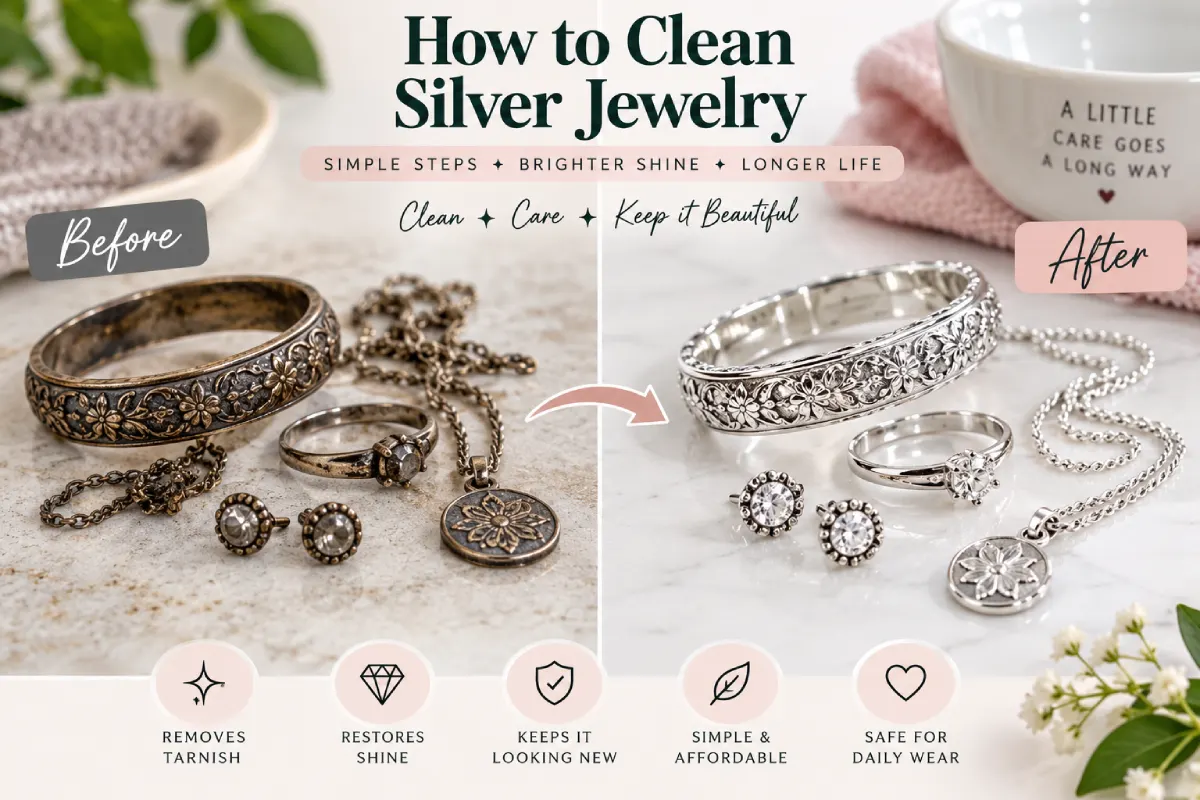
If your silver jewelry has gone from bright to dull or developed a dark, blotchy tint, that’s tarnish — a normal chemical reaction, not a sign your piece is damaged or fake. Knowing how to clean silver jewelry safely comes down to one thing most guides skip: matching the cleaning method to what your piece is actually made of, before you reach for the baking soda.
This guide walks through that check first, then covers the cleaning methods that work, the ones to avoid on delicate pieces, and how to dry and store silver so it stays bright longer.
1. Check the Silver, Stones and Finish Before Cleaning
Before you clean anything, look closely at the piece. Three things change what’s safe to use:
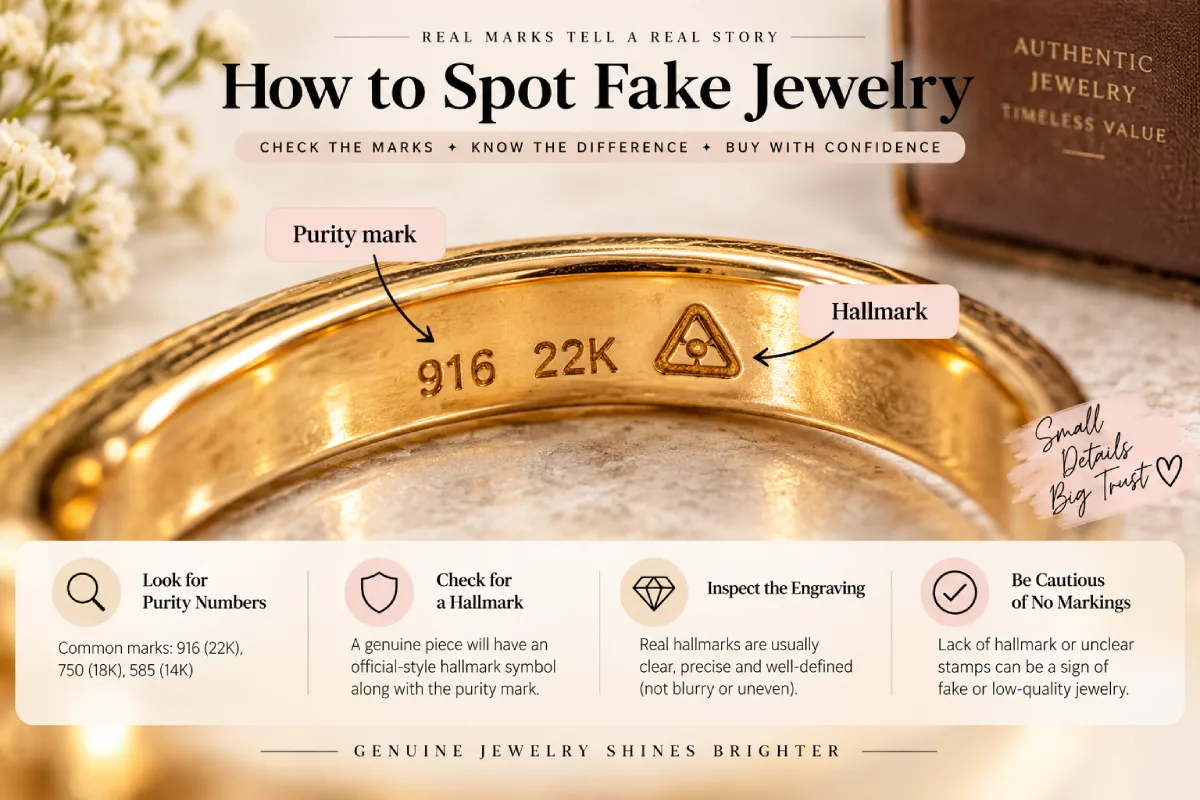
Is it solid sterling silver, or silver-plated? Sterling silver is marked 925 somewhere on the piece, usually inside a ring band or on a clasp. Silver-plated jewelry has a thin silver layer over a base metal, and it can’t handle the same scrubbing or soaking — an abrasive method that’s fine on solid sterling silver can wear through plating and expose the metal underneath.
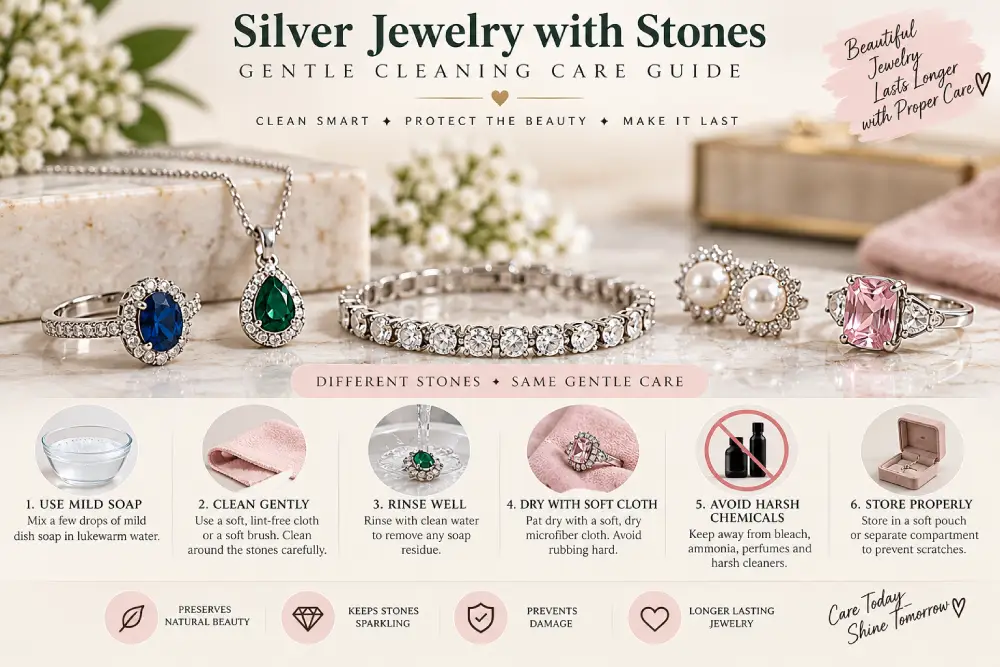
Does it have stones, pearls, or other materials attached? Glued-in stones, pearls, and opals are the biggest risk category. Soaking, heat, and even some polishing cloths can loosen glue, dull a pearl’s surface, or damage delicate stones. If you’re not sure how a stone is set, clean around it rather than through it.
Is the finish plain, or intentionally oxidized/antiqued? A lot of silver jewelry — especially detailed, textured, or antique-style designs common in Indian silver jewelry — is deliberately darkened in the recessed areas to bring out the pattern. That dark finish isn’t tarnish, and cleaning methods designed to strip tarnish will strip that finish too, permanently flattening the design.
If your piece is plain sterling silver with no stones and no intentional dark finish, you have the most flexibility in the methods below. If it’s plated, gemstone-set, or oxidized, skip ahead to the section on what to avoid.
2. What You Need to Clean Silver Jewelry
For most routine cleaning, you don’t need anything specialized:
- A soft, lint-free cloth (an old cotton t-shirt works fine)
- Mild dish soap
- Warm water
- A soft-bristled toothbrush, for detailed areas
- A silver polishing cloth, for light tarnish and regular touch-ups
- Baking soda, for moderate tarnish on plain sterling silver only
Skip anything abrasive that isn’t specifically made for silver — regular household cleaners, paper towels, and stiff-bristled brushes can all scratch the surface.
3. How to Clean and Polish Suitable Silver Pieces
For light tarnish on plain sterling silver:
- Mix a few drops of mild dish soap into a bowl of warm water.
- Soak the piece for a few minutes.
- Gently rub with a soft cloth, following the direction of any grain or texture in the metal.
- Rinse thoroughly under warm water and dry immediately (see the drying section below — this step matters more than most people expect).
For moderate tarnish that soap and water doesn’t fully clear:
- Mix baking soda with a small amount of water to form a thick paste.
- Apply it with a soft cloth, using gentle circular motions — a toothbrush works well for chains and detailed edges.
- Rinse completely and dry right away, since any leftover baking soda residue can leave its own dullness behind.
A silver polishing cloth is a good middle step for either level of tarnish, and it’s the safest option to keep on hand for regular touch-ups between deeper cleans, since it doesn’t involve soaking or chemicals at all.
4. Cleaning Methods to Avoid on Delicate Jewelry
Some popular home remedies for silver are genuinely effective — and genuinely risky on the wrong piece:
| Method | Works well for | Avoid on |
|---|---|---|
| Aluminum foil + baking soda + hot water | Heavily tarnished, plain sterling silver with no stones | Glued-in stones or pearls (heat can loosen adhesive), oxidized/antique finishes (the reaction strips the intentional dark detailing), silver-plated jewelry |
| Toothpaste | Occasional light polishing on plain, sturdy silver | Anything with stones, engraving, or a matte/brushed finish (the abrasives can scratch it) |
| Ammonia-based solutions | Rarely necessary for jewelry-level tarnish | Pearls, soft or porous stones, and any piece you’re not fully confident about — ammonia is strong enough to damage more than it cleans if used carelessly |
If you’re cleaning a gemstone ring, a pearl necklace, or an oxidized-finish piece, the soap-and-water method from Section 3, used gently and only on the metal, is almost always the safer choice over any of the methods in this table.
5. Drying, Storage and When to Use a Professional
Dry immediately, every time. Leaving silver to air-dry — especially with any soap or moisture trapped in detailed areas — is one of the most common causes of water spots and faster re-tarnishing. Pat the piece dry completely with a soft, lint-free cloth right after rinsing.
Store it properly between wears. Keep silver in an airtight pouch or a lined jewelry box, away from humidity, and separated from other pieces so it doesn’t get scratched. Anti-tarnish strips or pouches, available at most jewelry supply stores, can meaningfully slow down future tarnishing if you have pieces you don’t wear often.
Know when to stop and call a professional. Take a piece to a jeweler instead of cleaning it yourself if it has loose stones, cracked or worn-looking settings, is an antique or heirloom piece you’re unsure how to handle, or if tarnish keeps returning heavily within days of cleaning, which can sometimes point to a plating issue rather than ordinary tarnish. A professional cleaning is also worth it for anything with significant sentimental or monetary value — the cost is small compared to the risk of DIY damage.
The Bottom Line
Cleaning silver jewelry safely isn’t really about which recipe you use — it’s about matching the method to the piece. Plain sterling silver can handle baking soda, a polishing cloth, or even the foil method for heavier tarnish. Anything with stones, pearls, plating, or an oxidized finish does better with a gentle soap-and-water clean and, when the tarnish won’t budge, a trip to a professional. Get that match right, and your silver will stay brighter for longer with far less risk of damage.
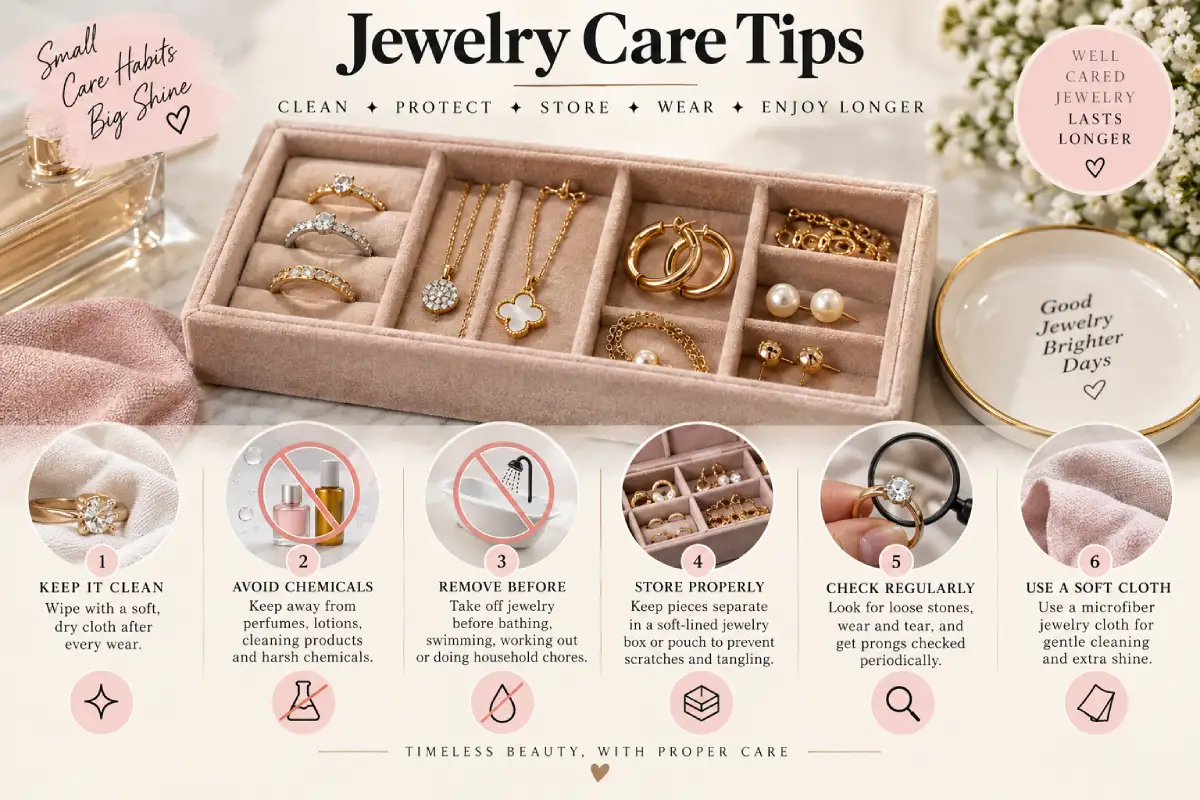
For general day-to-day jewelry maintenance beyond silver specifically, see our Jewelry Care Tips guide, or head back to the complete Jewelry Guide for an overview of materials, styling, and buying jewelry in India.
FAQs
Can I use toothpaste to clean silver jewelry? Yes, but only occasionally and only on plain, sturdy sterling silver with no stones or detailed engraving. Toothpaste contains mild abrasives that can scratch softer finishes or dull gemstones, so it’s better as an occasional touch-up than a regular method.
Is it safe to clean silver jewelry with baking soda every week? Baking soda is safe for plain sterling silver but isn’t necessary weekly — it’s a mild abrasive, and cleaning that often can gradually dull the surface. A soft cloth wipe after each wear, with baking soda reserved for moderate tarnish every few weeks, is a better routine.
Why does my silver jewelry tarnish so quickly? Tarnish speed depends on exposure to sweat, humidity, certain foods, and chemicals in lotions, perfumes, and cleaning products. Storing silver in an airtight pouch and removing it before showering, swimming, or applying skincare products will noticeably slow down tarnishing.
Can I clean silver jewelry with stones or pearls the same way as plain silver? No. Stick to gentle soap and water on the metal only, and avoid soaking, heat-based methods, and abrasive polishing, since these can loosen glued settings or damage pearls and softer stones.
What’s the difference between tarnish and an oxidized (antiqued) finish? Tarnish is an unwanted chemical reaction that dulls the whole piece unevenly. An oxidized finish is an intentional dark treatment, usually in the recessed parts of a design, applied during manufacturing to bring out detail. Tarnish-removal methods will also strip an oxidized finish, so it’s worth identifying which one you’re dealing with before you clean.