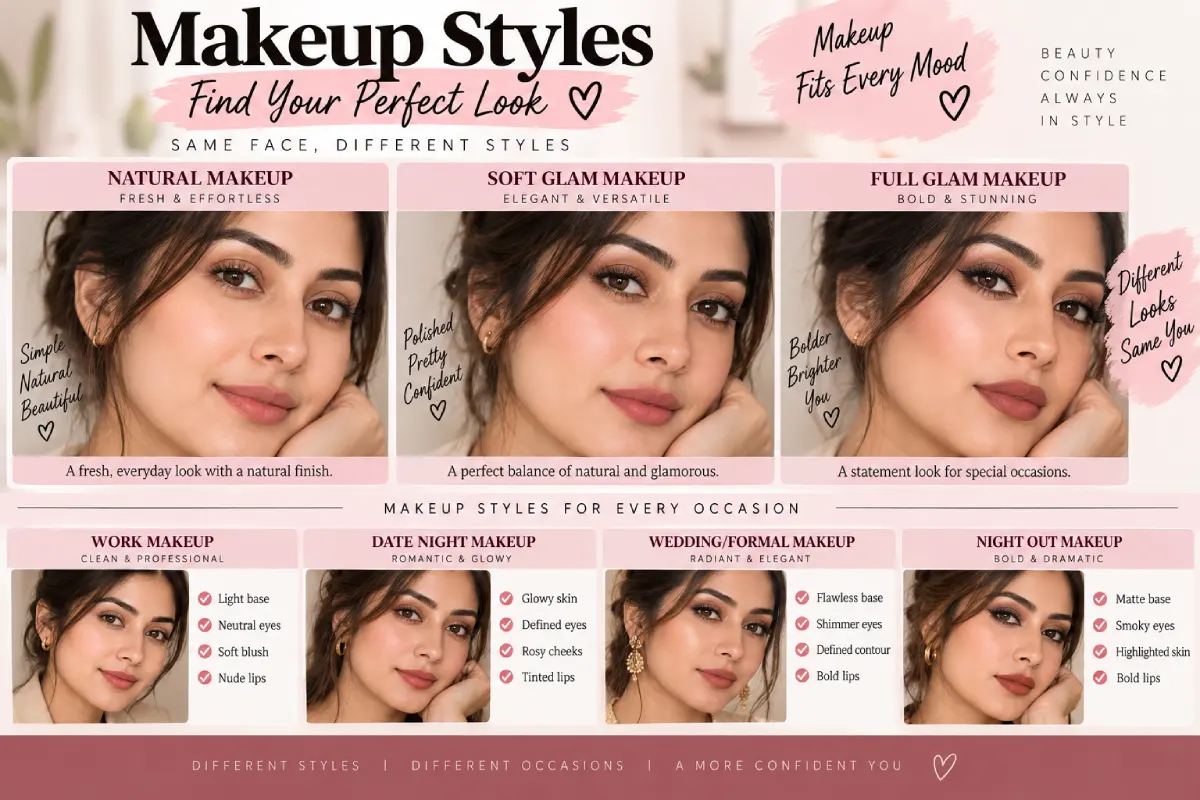
Natural Makeup Look: Easy Step-by-Step Tutorial
Published: September 15, 2026 Last Updated: September 15, 2026 The goal of a natural makeup look is to look
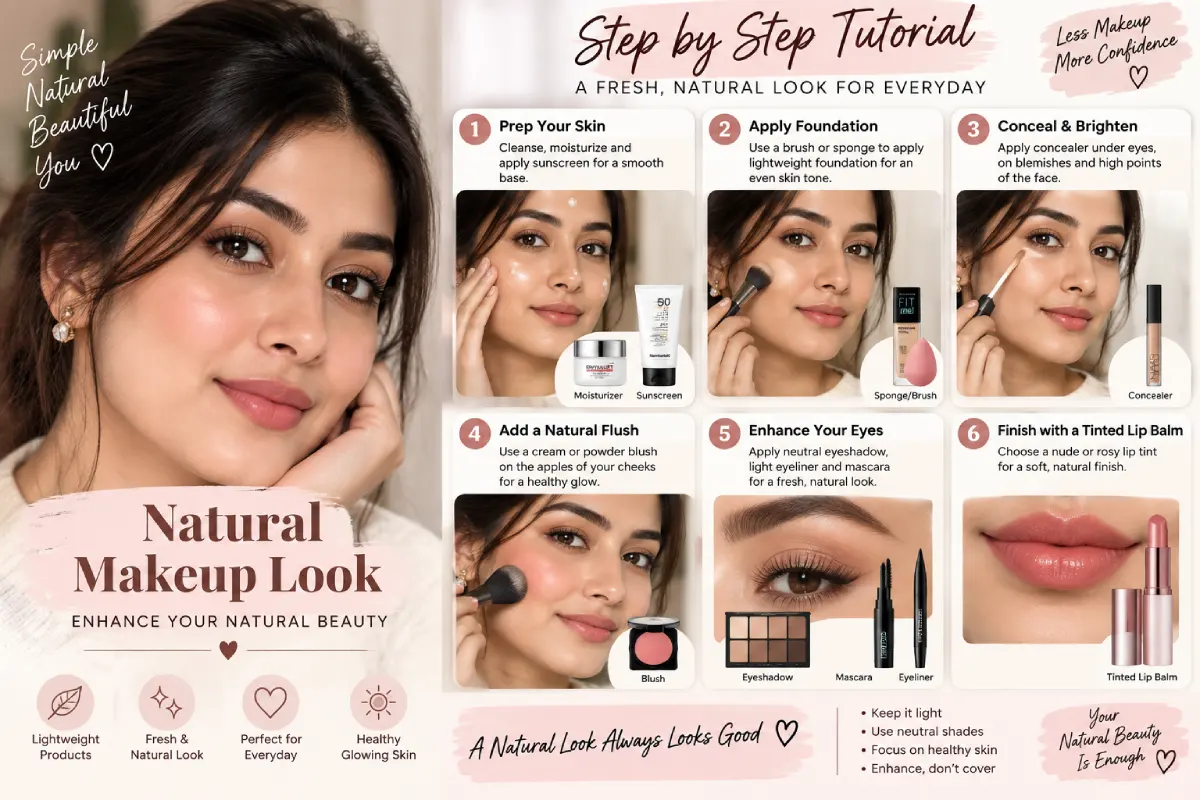
The goal of a natural makeup look is to look like you‘re not wearing any makeup at all. Sounds easy enough, but honestly it can be one of the most difficult to do well. When you use too much product or apply it in the wrong way, “natural” can quickly become “trying too hard”. This tutorial will teach you how to create just that soft, natural, “your skin but better” finish.
What Do You Need for a Natural Makeup Look?
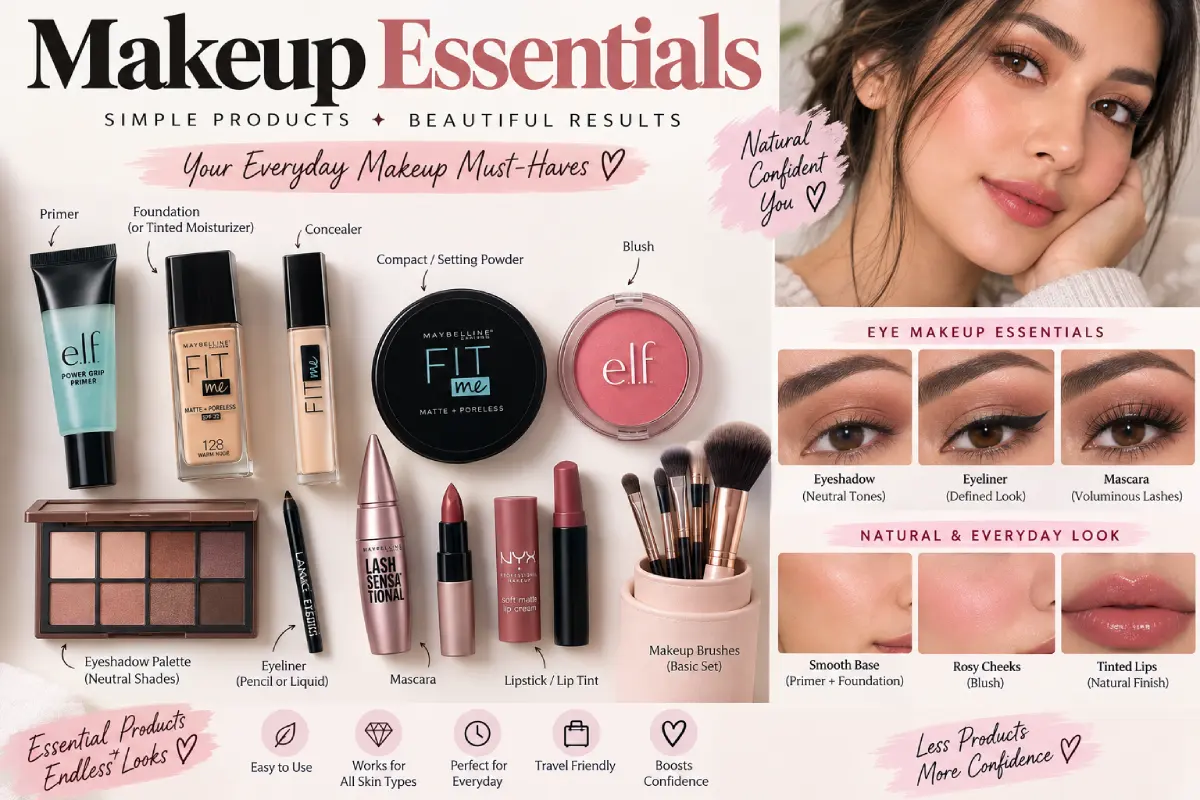
Here, you require fewer products than you might assume, although the formulations are even more critical than for a complete-glam appearance. For a natural appearance, you generally require:
- A light moisturizer appropriate for your skin type
- A tinted moisturizer, BB cream or sheer-to-medium coverage foundation
- A liquid or cream concealer/cover-up (not a heavy, full coverage stick)
- A blush in a cream or powder form in a soft colour suitable for the skin tone.
- A beige/neutral eyeshadow in one or two shades.
- Mascara
- A tinted lip balm or a light layer of lipstick
Creams and liquids are going to blend into the skin more naturally than a heavier powder, which is why you‘ll be seeing more and more of these in natural-type looks. If you‘re still gathering your kit, the [Makeup Essentials guide]([VERIFY LIVE URL]) will give you an idea of what you really need to buy.
How to Prep Your Skin for Natural-Looking Makeup
For a natural style, skin prep is more important than for almost any other style. Very little product is used on top of the hair to hide texture or dryness.
- Cleanse to eliminate any oil and impurities from your skin.
- Moisturize well your base has to be you hydrated and softness-skin, so do not neglect this step or do it quickly.
- Allow a few minutes for the moisturizer to absorb before applying anything else, as this is the most frequent cause of a patchy base. Makeup applied before the moisturizer is absorbed sits on a clearly defined line.
- Apply a lightweight primer only if you have visibly enlarged pores or oily areas to soften — for a natural look, primer is optional rather than essential.
In humid or hot climates go for a gel-based or oil free moisturizer if you want your base not to move halfway through the day.
How to Create a Natural Makeup Base Without Looking Cakey
This is the point at which many natural-looking tries tend to go awry: using foundation in the same way as you would for full coverage, and then questioning why it doesn‘t look natural.
Exactly what to do:« The use a sheer-to-medium coverage formula, put it only where you actually need it, and blend gently with a wet sponge instead of a brush.
Here‘s the practical version:
- Begin with a small quantity of the detail far too little you reckon you will need. Add more to detail-points when and where required.
- Apply with a slightly damp makeup sponge, pressing firmly rather than dragging through as you do so, so that the makeup is pressed into the skin rather than sit on top of it.
- Avoid using concealer all over the face. Only use as a concealer underneath the eye area or touch up on blemishes, blending well at the edges so you have nothing but a smooth transition.
- Apply just those areas that get oily during the day (most commonly your T-zone) with a gentle dusting of translucent powder. Leave off powder altogether on dry areas so your skin still looks like skin.
Mistake: Applying foundation with a brush in circular motion all over face. This creates a much more obvious ‘painted on’ type of finished that is very unsatisfactory when going for a natural appearance. To avoid this use a sponge and a light dabbing technique.
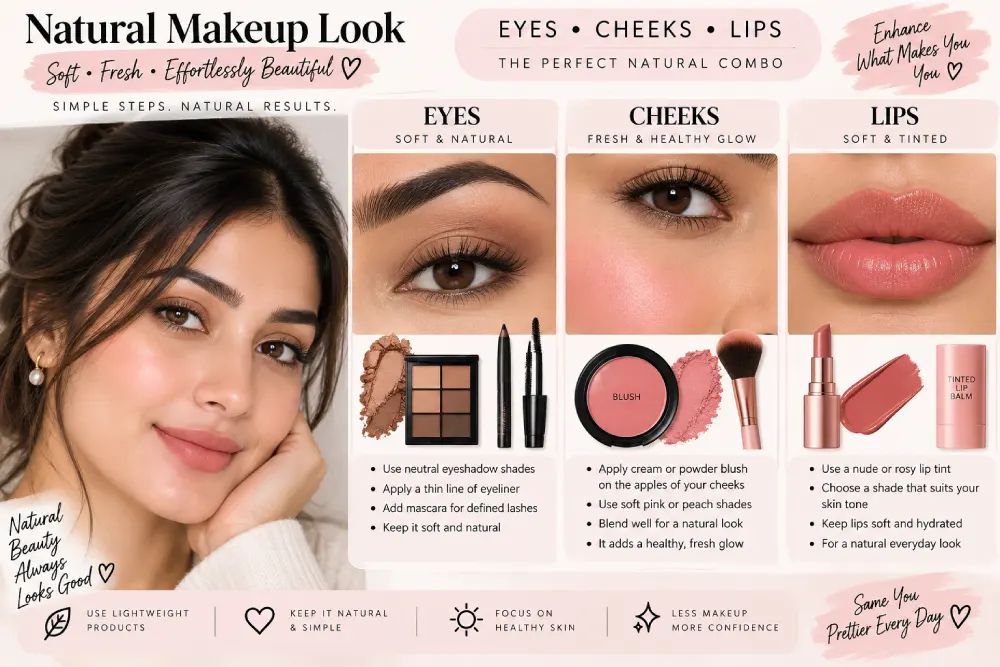
How to Apply Natural Eye, Cheek, and Lip Makeup
After the base is complete, color is applied in light amounts and blended seamlessly beyond the edges.
Eyes: Apply one soft, matte color (a warm, light brown or taupe is truly universal) over whole lid and drag a bit into crease, avoiding eyeliner of any sort. For a more developed look, apply 1 layer of mascara, primarily on the roots of the lashes.
Cheeks: the best (most natural looking) flush comes from a cream blush, applied with the fingertips to the apples of the cheeks and worked upward and outward. Powder blush also looks good, but because a cream formula sits closer to the skin, it appears more like natural flush.
Lips: finish with a tinted balm or sheer lipstick that is very close to your own natural lipcolor. If you want a little more color, go one or two shades darker than your true lipcolor.
Practical example: For fair to medium skin tones, a warm taupe eyeshadow, peachy-pink cream blush, and rosy-nude lip balm work well together. For deeper skin tones, a warm bronze eyeshadow, berry or terracotta cream blush, and brown-nude lip balm create the same soft effect.
How to Make a Natural Makeup Look Last All Day
To answer straightforward: only Set your Oily areas, don‘t layer against layer, and have one product in your bag for touchups rather than reapplying the whole look.
A few specifics:
- Apply a light dusting of powder to your T-zone in the morning and once again at midday, if you feel necessary rest of the face will become cakier as day progresses if you powder on them.
- A setting spray is used to set everything in place and to help things stay in place in humid weather without making anything look like it has been added.
- For touch ups, blotting papers plus a dab of cream blush refreshen a natural look more quickly than putting on more foundation. If you find skin getting oily after lunch time, oil-absorbing sheets are more effective than piling on more powder.
Common Mistakes That Ruin a Natural Look
| Mistake | Why It Happens | Fix |
|---|---|---|
| Setting your foundation with a full-coverage foundation. | If we assume “natural” still has to even, comprehensive coverage. | He borrows a sheer- to- medium formula and uses it solely as required |
|
Applying too much powder |
Trying to prevent shine everywhere at once |
Just powder the T-zone and leave the other areas dewy. |
| Heavier contour than when “custom” is labelled | Replicate the techniques but with less intensity. Full-glam contour. | Skip contour, or apply a hint of bronzer instead to add some color |
| Black eyeliner and fake eyelashes | Treating “natural eyes” as still requiring definition | Apply brown eye liner or skip it is most often sufficient with one coat of mascara. |
| Omit skin preparation | Basing the finish on make up only assumes |
Prioritize moisturized, well-prepped skin before any product goes on |
Frequently Asked Questions
What is a natural makeup look, exactly?
A natural look is one in which you apply light-weights, very blindable products to create the sense of enhancing your features but still looking like your skin. Nobody should be able to tell you‘re wearing makeup, just that you look good.
Do I need a full skincare routine before a natural makeup look?
You don‘t have to go overboard, but if you cleanse and moisturize first as standard, it will make a noticeable difference when you want a very natural look. You need a really smooth, hydrated base for such a lightweight covering.
Can I do a natural makeup look if I have oily skin?
Yes select an oil-free or gel-based moisturizer, choose a lighter foundation, and set only the T-zone with just a light dusting of powder rather than powdering your entire face.
How is a natural look different from “no-makeup makeup”?
They‘re very similar, and sometimes used as synonyms. However, both denote subtle, blended makeup that mimics enhanced skin, not actual makeup.
Why does my natural makeup look cakey by the afternoon?
This is usually caused by using too much product initially, over-powdering, or skipping proper skin prep — all three cause makeup to sit on top of skin rather than blending into it, which becomes more visible as the day goes on.
Final Word
A natural makeup look isn’t about doing less effort — it’s about applying the right amount of product, in the right formula, blended in the right way. Once you get comfortable with thinner layers and a damp sponge, this becomes one of the fastest, most repeatable looks in your routine. For the full step-by-step order this technique builds on, or to explore other styles once you’ve got this one down, head back to the complete [Makeup Tutorial guide]([VERIFY LIVE URL]).