Burnout Recovery Guide: How to Heal & Come Back Stronger in 2026
Published: September 8, 2026 Last Updated: September 8, 2026 Have you been looking for burnout recovery? If you‘ve taken
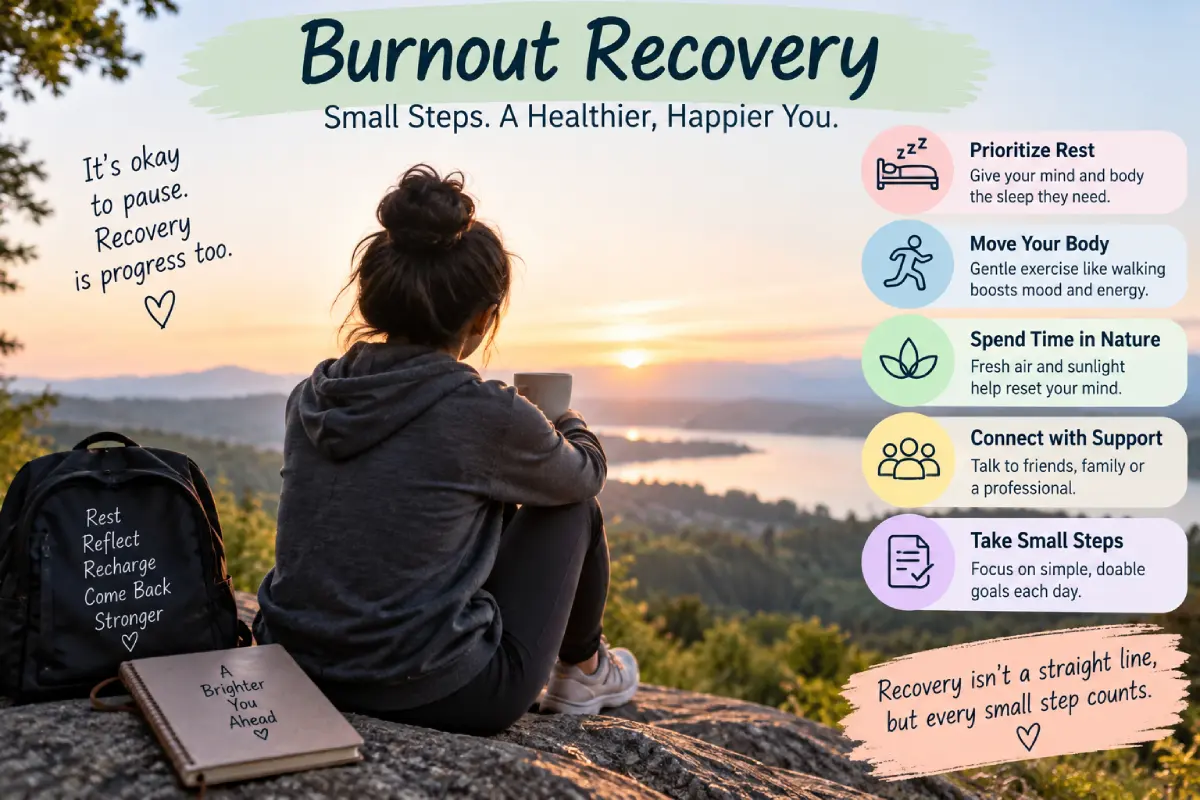
Have you been looking for burnout recovery? If you‘ve taken a weekend off, you may have noticed that it hasn‘t solved the problem and that‘s the point. Burnout isn‘t simply exhaustion. It‘s something so different that the World Health Organization designated it as an occupational phenomenon caused by chronic, unmanaged stress at work. And overcoming burnout takes a real plan.
What Burnout Actually Is
The three central signs of burnout are depletion or exhausted feeling, cynicism or alienation from work/studies, and inefficacy or unhappiness with one‘s job/studies. It is not caused by a one-time stressful event but tends to develop from chronic stress repeated over time.
Common burnout symptoms include:
- Unrelieved fatigue that is not alleviated by an adequate period of sleep.
- Bored,.Frustrated, or even indifferent about working in fields that were once of great interest to you
- A sudden decrease of concentration, motivation or output.
- More irritable/shorter temper
- Physical symptoms such as headaches, muscle pain, or being sick all the time
The Stages of Burnout
Burnout doesn’t happen suddenly. You recognize your status, your position may be much more purposefully pinpointed:
| Stage | What It Looks Like |
|---|---|
| Honeymoon | Enthusiasm mount ed but were sinking in the overextension. |
| Stress initiates. | Occasional fatigue, frustration, missed breaks |
| Chronic stress | Sustained tiredness, cynicism begins to enter his mind |
| Burnout | Detachment; physical signs/complaints with feeling of failure; State of numbness |
| Habitual burnout |
Burnout becomes the baseline; recovery requires significant change |
Practical example: The person who is in the ‘onset of stress’ stage might simply need to have clearer boundaries and an easier week. While the person who is in the ‘habitual burnout’ stage probably needs structural shifts such as less work, a longer break, or a different position and not just a few self-care moves.
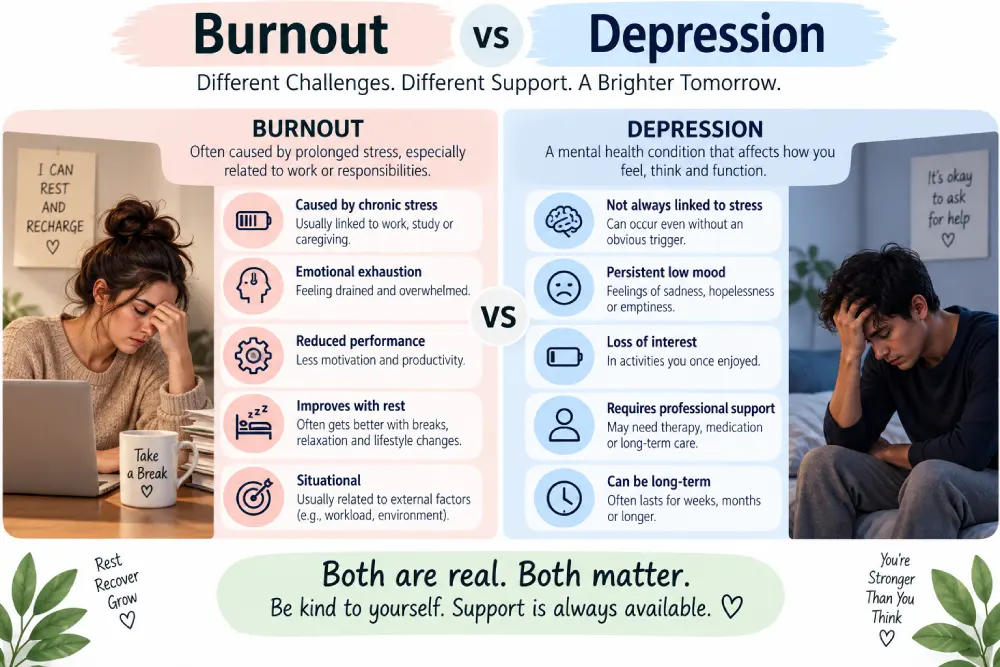
Burnout vs. Depression: What’s the Difference?
This is by far the most searched for, and most mis-understood comparisons in the space.
| Burnout | Depression |
|---|---|
|
Typically tied to a specific context (usually work) |
Often influences all aspects of life and has an impact on every area, not just one. |
|
Exhaustion and detachment often ease with time off or role changes |
More persistent symptoms whether environment is changed |
| Cynicism is thought to be stressor specific (e.g. this is your job) | The other questionnaire tend to be more global with regards to low mood and hopelessness: |
| Can often be improved by structural and lifestyle modifications | Often needs clinical treatment |
Sometimes there is overlap between depression and burnout, and unmanaged burnout can even turn into depression as time goes on. If your low mood, hopelessness, or anhedonia persists outside of work and doesn‘t improve with a weekend or holiday away from the grind, consider chatting with a mental health professional to figure out what‘s up.
You can also Read:- adaptogens for natural
A Real Burnout Recovery Plan
1. State your location. Refer to the table of stages above to gauge how severe the burnout is and therefore how massive the adjustments will need to be.
2. Get real; recovery time, not just weekend. Significant burnout recovery will require ongoing time away from the primary stressor rather than 48 hours particularly in the chronic or habitual phases.
3. Do the work, don‘t just treat the symptoms. If it‘s all about your work, that suggests a genuine discussion about workload, boundaries or role expectations might be needed- not just a better night‘s sleep. Details on boundary setting that works are availablehere.
4.Re-establish the foundation of nervous-system regulation. Sleep, exercise, and easy-to-use stress-regulation techniques all support your body regaining its original ability to meet demands.
5. Bring all your responsibilities back up to speed slowly. Going from zero to intensity within a day or two of feeling the very first signs of burnout is one of the most common relapse patterns for burnout within the first few months.
6. Seek help if still not moving forward. If tiredness, disconnection or low mood is not better after real changes in life, a therapist or doctor can help identify if it is burnout or depression etc., and advise what to do.
Common Mistakes People Make With Burnout Recovery
- Having gotten a full fix at vacation, then after some moderation had yourselves right back where you started.
- Forcing through instead of naming, which further delays recovery and intensifies the exhaustion.
- Confusing illness with laziness and then layering on guilt on top of being already drained.
- Passing over the structural change, and ponder why burnout comes back a few months later.
Preventing Burnout From Coming Back
That‘s not really recovery ‘til prevention is built in. That usually involves maintaining the boundaries you put back in place during recovery, noticing early ‘onset of stress’ signs before they escalate, and factor-in scheduled, automatic recovery in the same way as you do sleep and food.
Conclusion
Burnout recovery isn’t about pushing harder or waiting it out — it’s about honestly naming where you are, addressing the real cause, and rebuilding gradually instead of snapping back to full intensity. If work is the primary driver, pairing this recovery plan with better boundaries makes a real difference long-term. For the complete picture of how stress builds toward burnout and how to manage it at every stage, visit our stress management guide.
For more on burnout as a recognized occupational phenomenon, the World Health Organization’s burnout classification page is a useful external reference.
FAQs
How would you recognize the initial symptoms of burnout? Signs at the beginning of the process often include an unrelieved fatigue, taking fewer breaks, driving productivity through aggravation; and a sense of disconnection from work that was once pleasurable.
How is it different from depression? Burnout is generally context dependent, usually involving the work environment, and alleviation usually results from structural changes such as lighter load or recovery time. Whereas depression usually encompass all aspects of life and do not go away by environmental adjustments; they usually need clinical attention.
The recovery time of burnout? The length of time to recover ranges vastly depending on the stage, with a couple of weeks being sufficient for early stage stress to a number of months for chronic or habitual burnout if structural cause is not given attention.
If I am burned out, can I recover without quitting my job? Yes, most of the time. Recovery seems to center around renegotiating work load, boundaries, or role expectations than quitting altogether. Sometimes the role or environment change is needed in harder or more chronic burnout situations.
What do I do to prevent a relapse from occurring? The best way to prevent relapse is to continue to maintain the boundaries I put in place through recovery, catching the early signs of stress before they escalate and put in consistent recovery time instead of waiting to become overwhelmed again.