Breathing Exercises for Stress: 8 Techniques That Work (2026)
Published: September 8, 2026 Last Updated: September 17, 2026 Of all the tools for managing stress, breathing exercises for
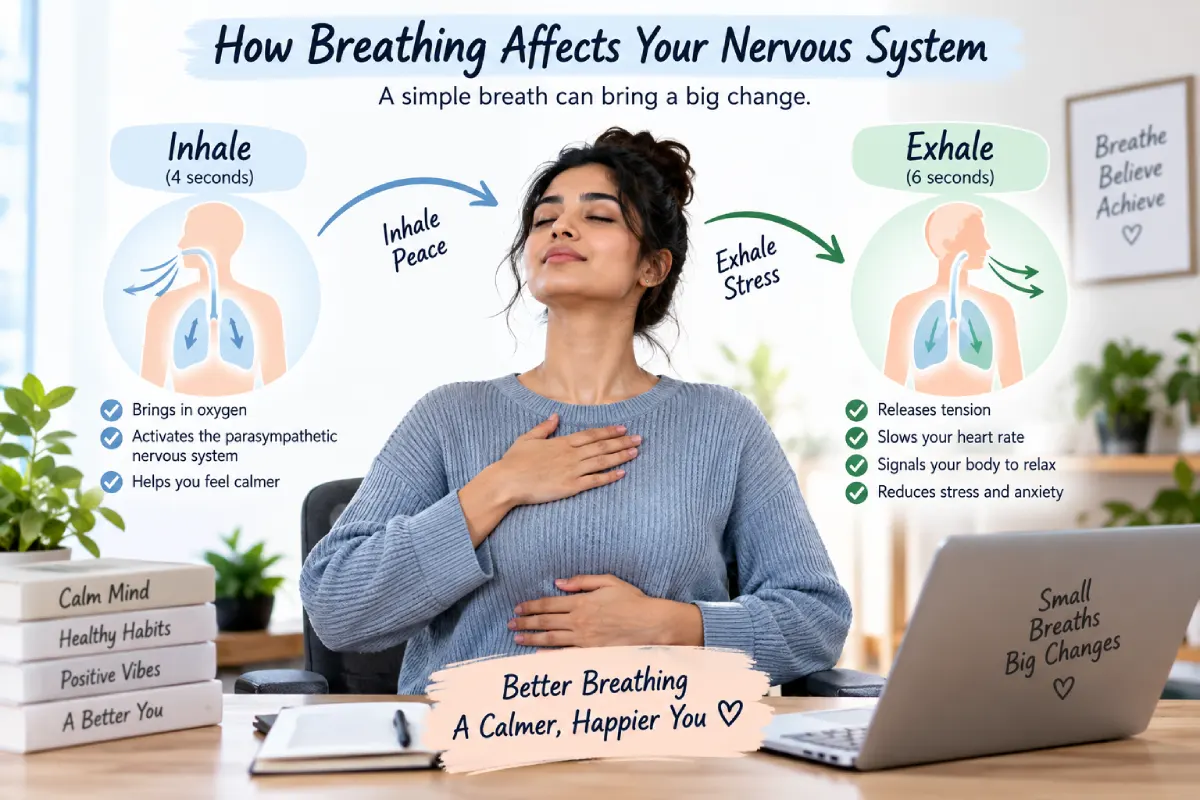
Of all the tools for managing stress, breathing exercises for stress relief have the most direct effect on your body. That’s because your breath is the one part of your stress response you can consciously control — and controlling it sends an immediate signal to your brain that it’s safe to calm down.
Below are 8 methods that I have compiled based on what you actually want/need for in the moment.
Why Breathing Works So Fast
As when you are under stress, your breathing automatically shortens, which keeps your nervous system in stress mode. If you regulate your exhalation by lengthening it (it‘s longer than your inhalation), you activate your vagus nerve, the major relaxation link to your body. That‘s why breathing is so effective; a minute or less, faster than most other methods.
For an Immediate Panic or Spike
1. The physiological sighBreathe in through the nose for a count of two, add a shorter, sharper inhalation on top of that through the nose, then breathe out again through the mouth. Doing this double inhale is one of the quickest ways to de-escalate stress in the moment and if you‘re quickly overwhelmed or panicked.
2. Box breathing Breathe in 4, hold 4, breathe out 4, hold 4. Repeat 4 times. Easy to recall under stress and inconspicuous enough to be practiced in a work meeting or in public.
For General Tension and Everyday Stress
3. 4-7-8 breathing Breathe in for 4 through your nose and then hold for 7 then breathe out slowly through your mouth for 8. This one is particular good for winding down after a long day as it has a longer hold and longer exhalation.
4. Diaphragmatic (belly) breathing Put one hand on your chest and the other on your belly. Breathe so that only the belly hand goes up and not the chest. This restores shallow “stress breathing” to a full and calming style and is worth doing every day.
5. Longer exhale breath breathe in for four, breathe out for six to eight, with no pauses. This is the least complicated approach to take advantage of the soothing effects of a longer exhale in a way that is free of numbers to remember.
Pranayama Techniques for Deeper Calm
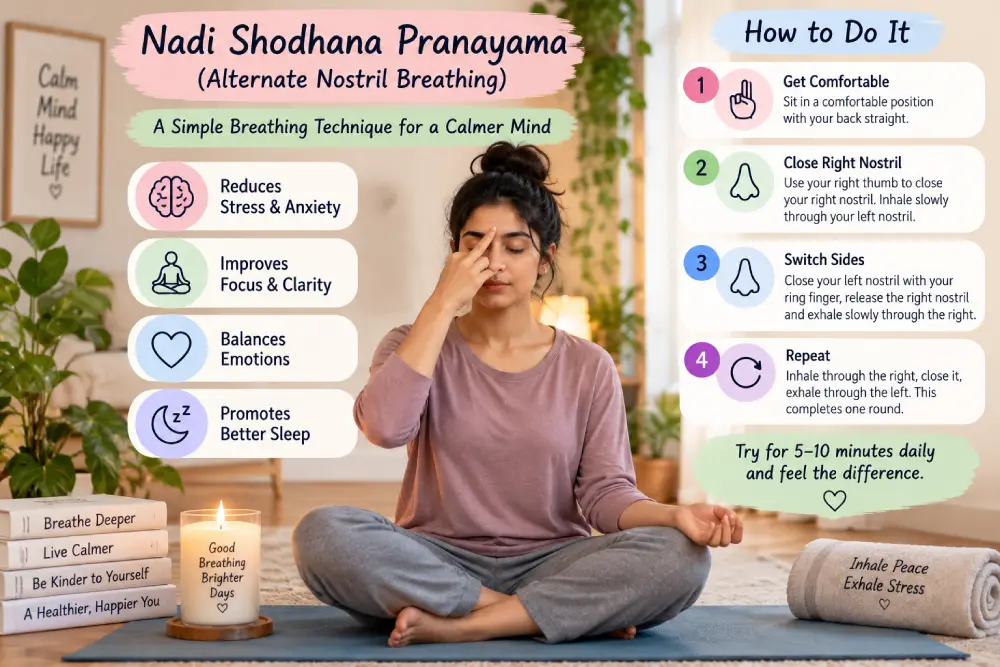
6. Nadi Shodhana alternate breathing exclusively inhale left, close it exhale right, then inhale right exhale left, keep alternating. In the Western world, this method of pranayama has become very popular to bring the nervous system into balance and to calm worried, scattered thinking.
7.Bhramari (humming bee breath) Breathe in normally then breathe out with a low hum keeping your lips sealed. The vibration will stimulate the vagus nerve directly and is especially useful for a mind that won‘t settle prior to sleeping.
8. Sheetali (cooling breath) Make a tube with your tongue (or purse your lips if you can‘t curl your tongue and breathe in through your mouth; breathe out through your nose. This mantra actually has a cooling effect on the body and is very effective if your stress manifests in heat, anxiousness, or anger.
Common Mistakes That Reduce Effectiveness
- Belly breathing into the chest rather than the belly is counterproductive because this keeps the stress response activated rather than relaxed.
- Rushing the exhale, the exhale is actually the more relaxin’ part.
- Can I get by with one attempt of a technique in a crisis rather than doing it repeatedly that works so much better when you need to use it.
- Shoulders tight when breathing, partially counteracting the relaxing effect of the stretch.
Which Technique to Use When
| Situation | Best Technique |
|---|---|
| Abrupt attack of panic or feeling overwhelmed | Physiological sigh |
| Want to maintain appearance of being calm when out or at work | Box breathing |
| Relaxing in the evening |
4-7-8 or Bhramari |
| Daily practice / develop a habit | Diaphragmatic breathing |
|
Racing, anxious thoughts |
Nadi Shodhana |
| Frustrated or
irritability |
Sheetali |
Building Breathing Into Your Day
Breathing techniques work best when they’re not just a crisis tool. Practicing even one technique for 2-3 minutes daily — not just when you’re already stressed — trains your nervous system to reset faster over time. Pair it with your other go-to methods from our fast stress relief techniques guide for a fuller in-the-moment toolkit.
Conclusion
Breathing exercises for stress are one of the few tools that work almost instantly and require nothing but a few minutes of attention. Start with one technique — box breathing or the physiological sigh are the easiest entry points — and build from there based on what your day actually needs. For the bigger picture on how stress affects your body and how to manage it long-term, visit our complete stress management guide.
For more on the science behind breathwork and the nervous system, the Harvard T.H. Chan School of Public Health mental health resource is a useful external reference.
FAQs
Which breath is most effective for stress? Physiological sigh, double inhale and prolonged exhale, is one of the quickest responding protocols to relieve acute stress, while box breathing is a more consistent, more discreet protocol for daily practice.
In what ways can box breathing reduce your stress? Box breathing utilizes equal duration counts for inhale, hold, exhale, and hold in order to slow the pace of your breathing and communicate to your nervous system that you are no longer in fight or flight.
What does 4-7-8 breathing achieve? By utilizing a prolonged breath-hold and exhalation, 4-7-8 breathing is particularly useful for relaxing oneself before going to sleep or upon returning home.
Does pranayama help with stress management? Yes. Ancient practices such as Nadi Shodhana and Bhramari are traditionally utilized for a purpose dampening the nervous system, reducing anxious thought, and nourishing emotional wellbeing.
How long do I practice? Most breathing methods will begin to work within 1-3 minutes, but the more often you practice, every day, and especially during stressful times rather than just then, the more effective they become.