How to Sleep Better Under Stress: 2026 Science-Backed Guide
Published: September 8, 2026 Last Updated: September 8, 2026 If you’ve ever felt exhausted all day but suddenly wide
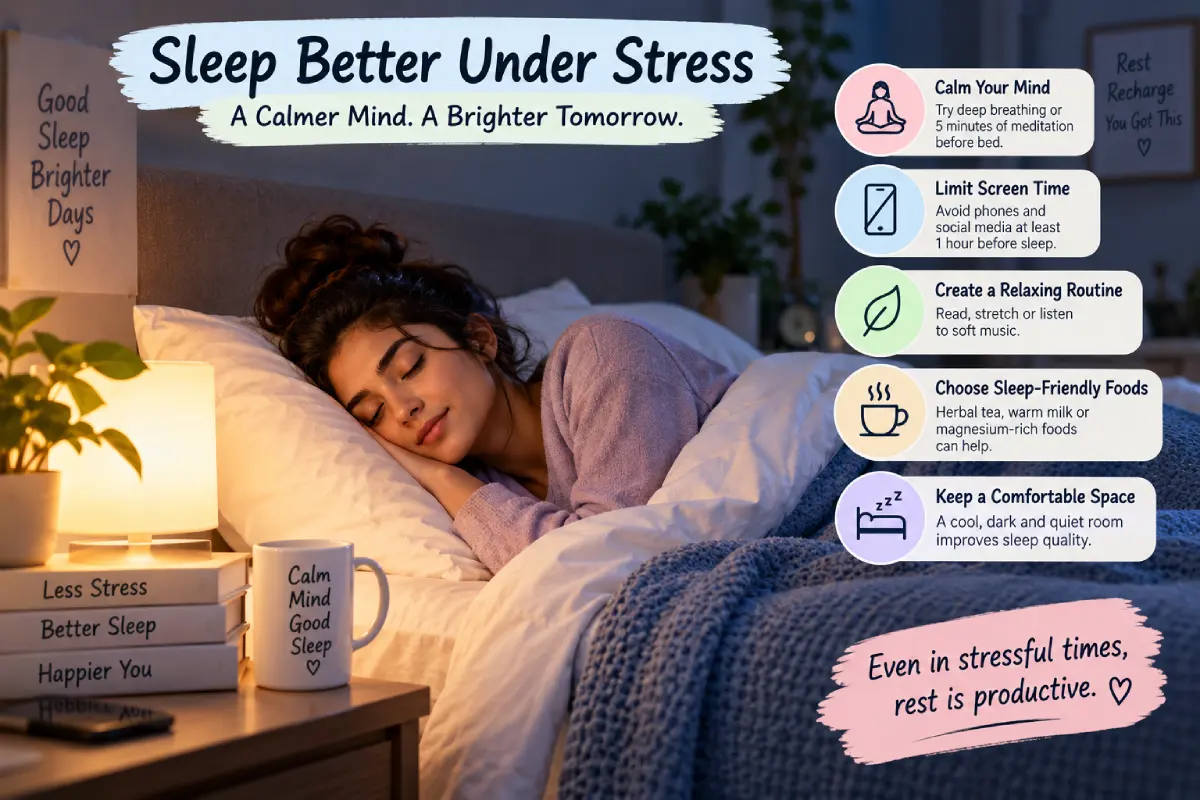
If you’ve ever felt exhausted all day but suddenly wide awake the moment your head hits the pillow, you already know how tightly stress and sleep are connected. Learning how to sleep better under stress isn’t about trying harder to fall asleep — it’s about addressing the cortisol and mental-noise cycle that’s keeping your body on alert when it should be winding down.
This is what really happens, and what things help.
Why Stress Wrecks Your Sleep
Cortisol this is the body‘s primary stress hormone. This hormone naturally follows a diurnal rhythm. High in the morning to drive you out of bed, and decline through the day until its optimal level at night time allows your body to rest. Chronic stress reaches the internal set points as depicted and reversed this curve, and causes an evening rise.
That‘s why the classic symptom of stress-induced insomnia is not necessarily difficulty sleeping (although that also occurs) but feeling tired yet wired. Your body is tired but your nervous system hasn‘t heard that it‘s OK to relax yet.
Common stress-sleep patterns:
- Difficulty falling asleep because your mind is recalling every detail from the day
- I go to sleep okay, then wake up 2-4am with racing thoughts.
- Light, restless sleep that does not seem refreshing after 7-8 hours.
- Already feeling stressed before you are even fully awake.
Build a Wind-Down Routine That Actually Works
The general ‘sleep hygiene’ advice is not enough if your nervous system is in high stress mode. A proper wind-down routine must actually reduce arousal, not just shift it.
1. Create a “worry cutoff” time. Allow yourself a defined period, 30-60 minutes before sleep, during which to journal your worries. This conveys to your mind that these thoughts have been “saved” and can stop bouncing around in your head.
2. Lights dim 1 hour before bed. High exposure to light, especially blue light emitted from screens, reduces natural melatonin production and allows cortisol to remain high for longer.
3.Choose a relaxation activity instead. Reading, slow stretching or even happy, calming music or audio options will keep your mind busy without the spike of alertness that screens induce.
4. Incorporate a breathing strategy. A long, slow exhale sequence, such as the 4-7-8 breathing technique, will cue your nervous system to transition towards rest, at the moment just before you attempt to fall asleep.
5. Wake and sleep at same time everyday, including weekends. This prevents your cortisol rhythm from being further confused, and increases the problem.
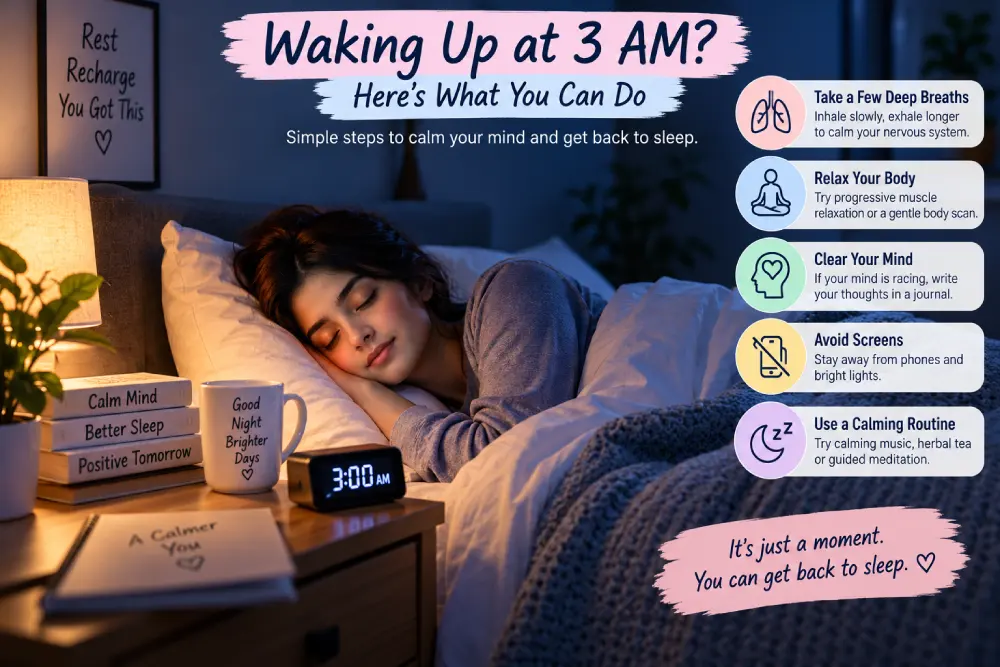
What to Do When You Wake Up at 3am
A night-time waking with a busy mind is one of the most frequent stress-sleep grievances and it‘s almost never about the sleep at all.
- Avoid glancing at the time or your phone both increase alertness and anxiety about “how much sleep remains.”
- Remain in bed and keep your eyes shut, even if you are not tired, as lying still will provide some level of rest.
- Attempt breathing slowly rather than actively trying to fall back to sleep. This may be one of the biggest mistakes that many insomniacs make. The act of trying to sleep will typically make sleep elusive, but by concentrating on breathing it reduces the feeling of pressure to fall asleep.
- If after 20 mins, you are still wide awake, just get up for a while, do something low-lit and calming and go back to bed instead of lying there, annoyed.
Where Melatonin and Natural Aids Fit In
Melatonin is a natural hormone produced by your body in response to nightfall, no drug! Low dose natural melatonin supplements may be used to help re-set a circadian rhythm disturbance ( in particular the sleep timing disturbances of stress when combined with addressing the stress and sleeping habits above with light exposure), but only as a possible addition, not instead.
Magnesium and soothing herbal teas (chamomile, tulsi) are other natural remedies taken regularly to induce relaxation prior to sleep. Their effect may not be as strong as implementing a predictable bedtime routine.
Common Mistakes People Make
- Making efforts to “power through” on less sleep rather than finding out why the sleep is being broken up to begin with.
- Using screens as a “wind down” tool, knowingly promoting this.
- Oversaturated if he depends solely on supplements and does not change the light, routine and stress habits that are causing the problem.
- Staring at the clock during night awakenings. This behavior (which worsens anxiety and makes returning to sleep even more difficult) continues to be reinforced with the passage of time.
Conclusion
Sleeping better under stress starts with recognizing that poor sleep usually isn’t a sleep problem on its own — it’s a stress problem showing up at night. A consistent wind-down routine, a worry cutoff time, and a calming breathing technique before bed address the root cause far more effectively than any single sleep hack. For the fuller picture of how stress affects your body throughout the day, see our complete stress management guide.
For more on the connection between stress, cortisol, and sleep, the Sleep Foundation’s resource on stress and insomnia is a useful external reference.
FAQs
So why am I so tired but so wired? Your “tired, but wired” state is a result of your perpetually high cortisol levels in the evenings. Our adrenal hormones should fall off by that point, no to keep us awake, alert, and stressed.
What is the most effective bedtime routine for stress-related insomnia? Should have a specific worry-cutoff time in which jot down all thoughts, activities like 60mins before bed; turn off lights; no screens; and end with a slow breathing method such as 4-7-8 breathing.
Is it normal for me to wake up at 3am when I am stressed? Yes, it is quite common for people who are stressed to wake up in the middle of the night and have racing thoughts or a mind that is spinning. This is more likely to be due to higher evening cortisol levels rather than an actual sleep disorder.
Can melatonin restore long-term sleep disturbances due to stress? Melatonin is effective in correcting a disturbed sleep pattern, yet is most successful when used alongside decreased light intake and a reliable nightly routine.
What is the expected time to recover from stress in terms of sleep? improvement often occurs after one week of regular pre-sleep routines, but the complete restoration of disrupted cortisol rhythm may require several weeks of regularity.