Best Overnight Face Masks for Acne Treatment and Skin Repair (2026)
Published: July 3, 2026 Last Updated: July 3, 2026 Skincare is a rushed affair for most cleanser, serum, moisturizer,
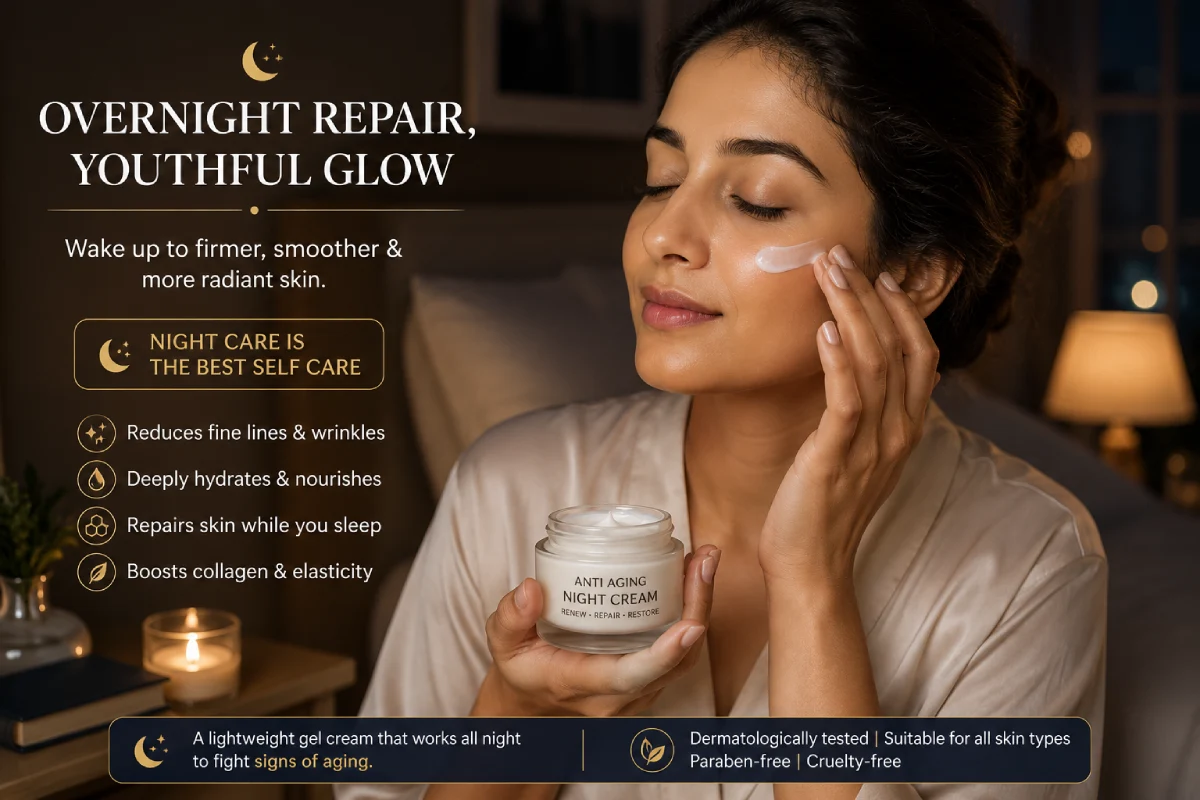
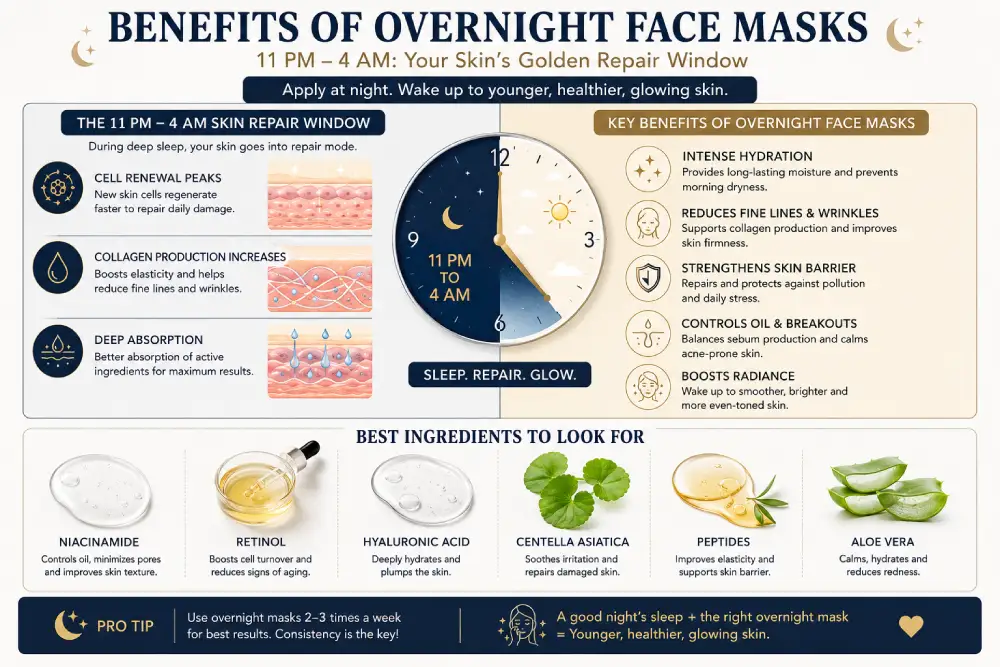
Skincare is a rushed affair for most cleanser, serum, moisturizer, and then you‘re late. However your skin performs a large part of its repair work during this time and this is between 11 PM and 4 AM, when cell turnover peaks and blood flow to the skin is increased. That‘s when the overnight face masks for acne, formulated to attack issues, work providing active ingredients for 6–8 uninterrupted hours as opposed to just 15 minutes when you rinse off a mask.
The concept is simple it‘s execution that has to be right. Leave the wrong ingredient overnight on already compromised, acne prone skin and you‘ll wake up to more irritation, not less. This explainer explains the actual utility of overnight masks, what ingredients really work through the night, how to use them safely on Indian skin and the honest comparison against rinse-off masks.
What is an overnight face mask?
An overnight face mask also known as a sleeping mask or sleep pack is a leave-on mask used as the last step of your bedtime regime and washed away in the morning. As opposed to a clay or charcoal mask that you leave on your skin for 10 15 minutes, an overnight mask stays on your skin for 6 8 hours.
They are not the same as:
- Night creams Night creams are general daily moisturisers, which can be used on the face overnight. They do not contain active ingredients in clinical strength. They smooth and nourish the skin.
- Spot treatments ـ Spot treatments use targeted application of powerful actives (benzoyl peroxide, salicylic acid) directly on each individual spot. A overnight mask is used to treat the whole face.
- Heavy occlusive sleeping masks Examples of sleeping masks, especially those in the Korean beauty formats, are thick occlusive balms that are intended to strictly contain water and moisture. These are not suitable for oily or acne-prone skin as they hold in the fluid and create further congestion.
For acne Indian skin the best overnight masks are: water-based or gel-type or thin film masks that deliver actives effectively and do not clog pores, absorb well into the skin and do not feel warm in India‘s warm nights.
Benefits of Overnight Masks for Acne-Prone Skin
The longer contact time associated with an overnight mask is much more than just a convenience; it makes a significant difference to the way certain actives work.
Longer exposure = deeper, slower active delivery Salicylic acid, niacinamide and retinol must work for longer than 15 minutes (time a rinse-off product takes to be rinsed off) for the ingredient to reach the lower layers of the pore. The overnight format allows continuous delivery throughout the night; this is why speed of pore-refinement and improvement to skin texture are often considerably quicker with overnight products than with rinse-off equivalents.
Works in the skin‘s own repair time frame The proliferation and renewal of skin cells takes place during the approximately 11 PM until 4 AM, which is the simultaneous time frame of the drop in cortisol and the increase in blood flow to the skin. By applying treatment actives just prior to this time frame, you are working in harmony with the body‘s biological rhythm.
Lower irritation potential than daytime actives Retinols and AHAs are photosensitizing they increase the sensitivity of the skin to UV. Use overnight, so lose the sun exposure component altogether. Mask format, so spread more evenly than spot treatment, and can give the skin time to adjust to them.
Ideal for Indian skin’s specific recovery needs Post-acne hyperpigmentation (PIH) — those dark marks left after a pimple heals — is one of the most persistent skin concerns for Indian skin. Overnight masks with niacinamide, kojic acid, or vitamin C work on pigmentation during the hours when skin renewal is highest, which is where they’re most efficient at fading marks.
Best Ingredients for Overnight Acne Treatment
Some ingredients are not suitable for 6 8 hours application. Here are the actives with the most acne-specific history of success and what to watch out for in each.
Niacinamide (5–10%)
The absolute best multi-tasking overnight ingredient for Indian acne prone skin. Controls production of excess sebum, reduces post-inflame PIH, mattifies appearance of the pores and soothes the skin at the same time. An ideal product for all night use as it is non-irritating when left on skin for 8 hours. works particularly well as an overnight gel mask for oily and combination skin types.
Safe for overnight use: Yes across all Indian skin types. Amongst the actives with the lowest irritation risk.
Salicylic Acid (0.5–2%)
In overnight it will have more time to allow BHA to penetrate into the pore and remove the sebum-dead cell plug that causes blackheads and whiteheads. Very good as an overnight spot treatment or a thin film across congested areas. At 2% used every night it can be drying and may be more suitable 2-3 times a week.
Unsafe as overnight use: Yes, at 0.5–1% for regular usage..(At 2%frequency should be limited to 2–3 nights a week. However, morning use of moisturizer is essential)
Retinol (0.025–0.1%)
One of the most effective over-the-counter anti-acne, anti-aging actives. Speeds up cell turnover, clears pores and prevents dead cell build-up. Best used at night only because of photosensitivity. When used in an overnight mask or serum form, retinol has a full 8 hours to reach the skin speeding up its effects but also making it more likely to cause dryness/peeling for first-time users.
Good for overnight: yes, use slowly. Begin 0.025% two nights a week. Up freq only if no irritated skin. Use SPF next day.
Centella Asiatica (Cica)
Plant extract with excellent wound-healing and anti-inflammatory activity. Aids in reducing the redness associated with inflamed breakouts, strengthening the skin barrier during ongoing acne treatment and soothing the skin after a breakout to reduce the blotchy and raw appearance of inflamed skin. Especially suitable for Indian skin prone to inflammation and post-breakout redness.
Safe for overnight use: Yes — but introduce slowly. Start with 0.025% two nights per week. Increase frequency only when skin shows no irritation. Always apply SPF the next morning.
Aloe Vera Gel (as overnight mask base)
Pure aloe vera gel applied as a thin film over clean skin used as a light weight overnight mask in oily skin can soothe inflammation, lightly attack bacteria, provide moisturization without causing congesting pores, and does not excite heat retention like petrolatum and other heavy products do on hot Indian summer nights. Simple, convenient & effective for mild acne, prickly-heat-like pimples.
Safe to use for overnight: Yes one of the safest overnight options for very oily and sensitive-oily Indian skin. Should be refrigerated prior to use during summer for additional comfort.
Kaolin Clay (Thin Application, Not Standard Mask Formula)
All normal clay masks will dry and crack – they are not formulated to be used overnight. A very light coating of a layer of kaolin clay blended with a layer of aloe vera gel or a light serum, applied as a mask for 1-2 hours is suitable as an extended treatment (not grown out for 8 hours overnight) of very oily skin, during the day or early evening. (8 hour overnight growth is not advisable as excess clay left on the skin will draw moisture from the skin, not oil).
Can it be left overnight: (yes/no) No. use as a 1–2 hr. treatment only not all nite.
💡 For the complete ingredient guide across all acne mask types — rinse-off, clay, charcoal, and BHA — read our main guide to the best face masks for acne.
How to Use Overnight Masks Safely
Who you apply it with just as important as what you apply it with. Here is the procedure for 5-minute overnight acne Masking on Indian skin with seasonal modifications:
Step-by-Step Application
Step 1 Double cleanse. First pick off sunscreen and surface pollution with an oil cleanser followed by a gel or foaming cleanser. Never put an overnight mask over sunscreen, makeup or city pollution…nothing‘s getting to the active over barrier dirt.
STEP 2 Apply your treatment serum first (for example niacinamide, vitamin C or targeted acne serum). Let a minute or 2 absorb.
Step 3 Apply the overnight mask last, applying gently (do not rub in) for gel textures, pat onto skin; smooth on thin layer for the aloe vera; and for leave on salicylic acid treatments, a thin layer over only any congested or breakout-prone areas as opposed to the whole face.
Step 4 — Do not layer a heavy night cream or occlusive moisturiser on top. The overnight mask IS your final step. Adding a heavy cream on top traps heat and sebum, which worsens congestion on acne-prone skin.
Step 5 Adjust for Indian climate:
- Summer/Monsoon (April-September): Use only light gel masks overnight. Don‘t go anything occlusive. Air-conditioned sleep calls for more dense formulas if necessary.
- Winter (November-February): Over night formats that are slightly richer will be more effective because the air tends to be much dryer and skin will tend to lose more moisture overnight.
Step 6 Keep your pillowcase free of contaminants. You simply can‘t do a mask Overnight if you have acne-prone skin. Pillowcases will build up sebum, bacteria, and dead skin. If you wear a mask and then rub your face on a contaminated pillowcase all night, you‘ll reverse most of the good you‘re doing with the treatment. Wash your pillowcase at least twice weekly while you‘re doing active overnight masking. Satin and silk pillowcases apply less friction to inflamed skin.
7. Rinse it‘s Morning. Rinsing from most overnight masks you should use a mild gel cleanser in the morning. Use SPF straight away especially important after a Retinol or salicylic acid over night mask.
Who Should NOT Use Overnight Acne Masks
- Note: Active, inflamed cystic breakouts leave-on treatments applied to large inflamed areas, can cause more redness and irritation. Use only a spot treatment for the cysts, mask the surrounding skin.
- Broken or weakened skin barrier – if your skin is flaking or peeling away or stinging from over-exfoliation, discontinue overnight actives completely until the barrier repair itself.
- Pregnancy or breastfeeding – the use of retinol in all overnight treatments should be avoided. (Other non-prescription products such as niacinamide, centella and aloe vera are commonly known to be safe but it is always important to consult your doctor).
- First time retinol users never start retinol as an overnight mask. Start it as a 2-nights-per-week serum, make sure your skin is fine with it, then go for the overnight.
Overnight Face Masks vs Traditional Face Masks
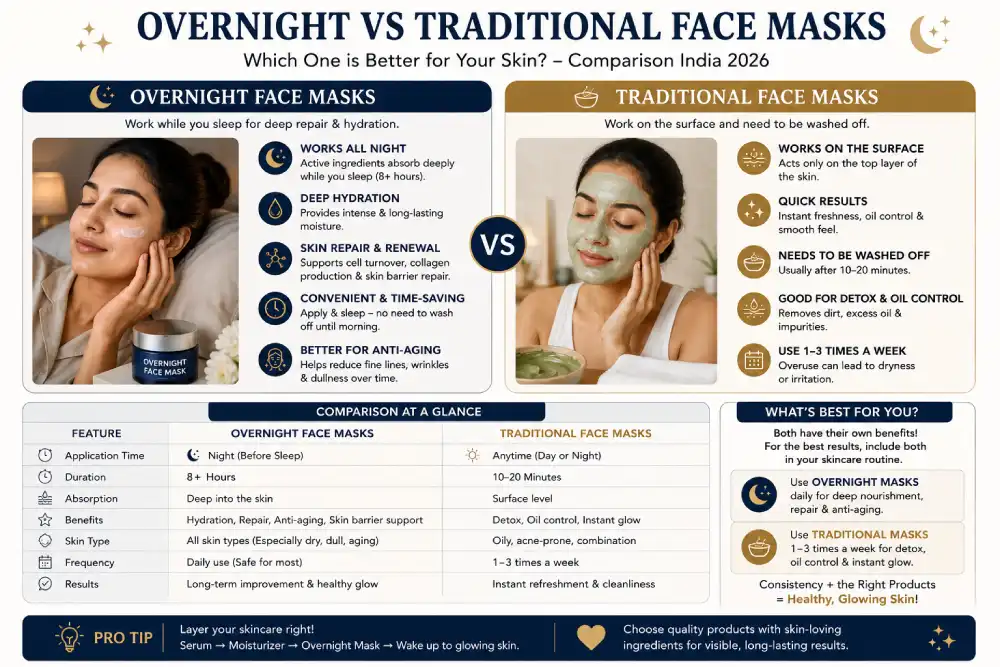
The “correct” choice is what your skin requires on any given night, not which formula is “better”.
| Factor | Overnight Mask | Traditional Rinse-Off Mask |
|---|---|---|
| Contact time | 6–8 hours | 10–15 minutes |
| Best for | Skintone repair, PIH lightening, oil control, barrierydrink support. | Deep pore cleansing Oil absorption Blackhead removal |
| Texture | Lightweight gel, serum-like, thin film | Clay, cream, charcoal are of medium weight. |
| Acne active delivery | Much slower and deeper, a longer duration (hour or several hour) | Fast surface action, pore-drawing |
| Oiliness during use | Can feels just a little sticky (gels formulas) | Lots of oil is actively absorbed while on[] |
| India-specific note |
In humid months, use gel only — heavier formats trap heat |
Clay mask is best for controlling oil during monsoon. |
| Frequency | 2–3 nights a week (actives); whatever is best for sensitive formulas | Once to three times a week based on the strength. |
| Morning rinse needed | Yes rinsing actives in the morning always) | Yes always rinse before it completely dries up |
| Best combined with | Serum of niacinamide before the mask [the mask was used over the serum] | Double cleanse pre, light moisturizer post. |
| Best Indian brands |
Plum E-Luminence Simply Light Overnight Mask, Minimalist Niacinamide 10%, The Moms Co Natural Vita Rich Face Serum (overnight use) |
Plum Green Tea Pore Cleansing Mask, MCaffeine Naked Detox Mud Mask, Dot & Key Volcano Rage Clay Mask |
The practical recommendation for most Indian skin types: do a traditional clay or BHA rinse-off mask 1–2 times a week for pore clearing and oil control; add an overnight niacinamide or centella gel mask 2–3 nights a week for skin repair, PIH fading, and sebum regulation. The two formats work well together they do not replace each other.
💡 See our complete comparison guide for face masks for oily acne-prone skin — including which rinse-off formats work best for different levels of oiliness.