Best Face Masks for Acne: Top Ingredients, Benefits & Expert Picks for Clear Skin
Published: June 22, 2026 Last Updated: August 31, 2026 If you’ve been dealing with stubborn breakouts, oily T-zones, and
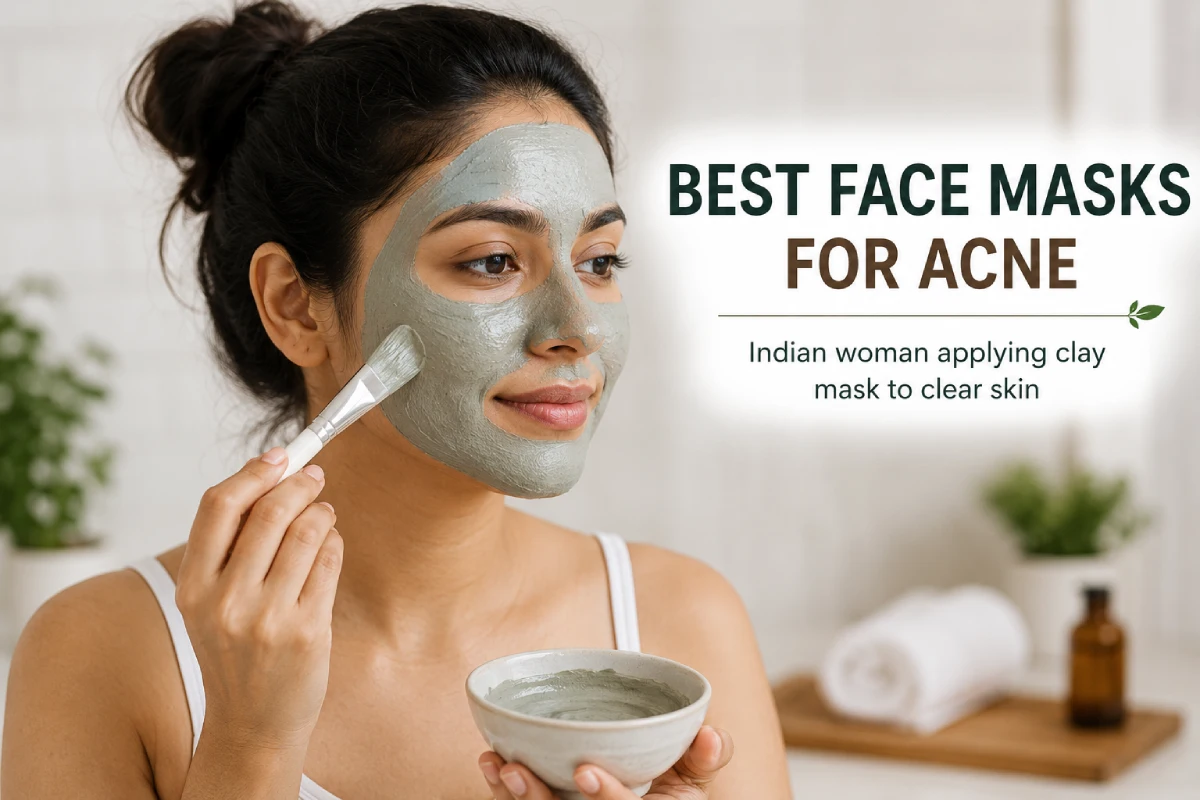
If you’ve been dealing with stubborn breakouts, oily T-zones, and those frustrating under-skin bumps that refuse to go away, you’ve probably wondered whether the best face masks for acne can actually help — or if they’re just another skincare gimmick. The honest answer? The right mask, used the right way, can genuinely make a difference.
Face masks for acne aren’t a cure. But they are one of the most effective tools in your skincare routine for unclogging pores, absorbing excess oil, and calming the inflammation that makes breakouts worse. And when you know what to look for — and what to avoid — they become far more than a weekly spa ritual.
In this guide, we break down everything you need to know: how face masks actually fight acne, the best ingredients to look for, how to choose between clay, charcoal, and salicylic acid masks, how often to use them, and the common mistakes that could be making your acne worse. We’ve also linked to our complete cluster guides so you can go deeper into any topic that matters most to you.
How Face Masks Help Reduce Acne and Breakouts
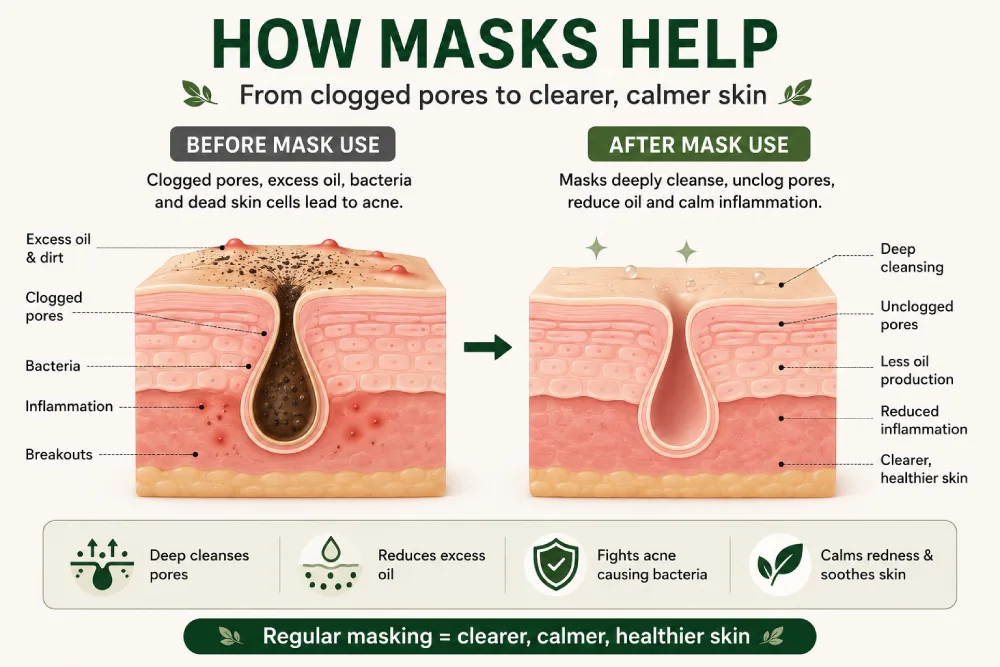
Before I jump to the ingredients and product recommendations, here‘s a brief explanation on how acne face masks even work in the first place. Most of your acne begins in a similar manner: excess sebum (oil) mixes with dead skin cells and enters your pores. Bacteria, namely Cutibacterium acnes (evidence of now-obsolete Propionibacterium acnes), feeds on that then heats up and causes your pimple to become inflamed.
A well-formulated acne face mask targets this process at multiple stages:
The 4 Ways Face Masks Fight Acne
- Deep pore cleansing: Clay-based masks extract impurities, excess oil and debris from deep inside pores reducing blackheads and preventing new ones from forming.
- Oil absorption: Masks that contain bentonite or kaolin clay are particularly good at drawing excess sebum out of your skin without disrupting the protective moisture barrier.
- Bacteria suppression: The formulation of tea tree oil, sulphur and benzoyl peroxide means bacteria that cause acne doesn‘t thrive.
- Reduce inflammation: Ingredients such as niacinamide, aloe vera, and green tea soothe the flames and swelling that cause the pimples to look more prominent and painful.
What face masks can‘t do is cure your blemishes for good on their own. They are most effective when used as a regular skincare regime that also comprises of a mild cleanser, non-comedogenic moisturiser and a SPF – all 365 days.
Are Face Masks Better Than Spot Treatments for Acne?
– Were it down to the particular kinds of acne you have. Spot treatments with either benzoyl peroxide or salicylic acid penetrate more deeply and act quicker on active spots. You can use face masks for:
- Prevention of further breakouts by maintaining open pores
- Full face treatment on oily, congested skin
- Helping to soothe post-breakout redness and irritation
- Multi-mounting multi-processing or multi-breakout processing one component of a project while other sections of that project are being completed.
According to many skincare experts, you should apply both (targeted area treatments on active pimples and a weekly mask for general skin clarity).
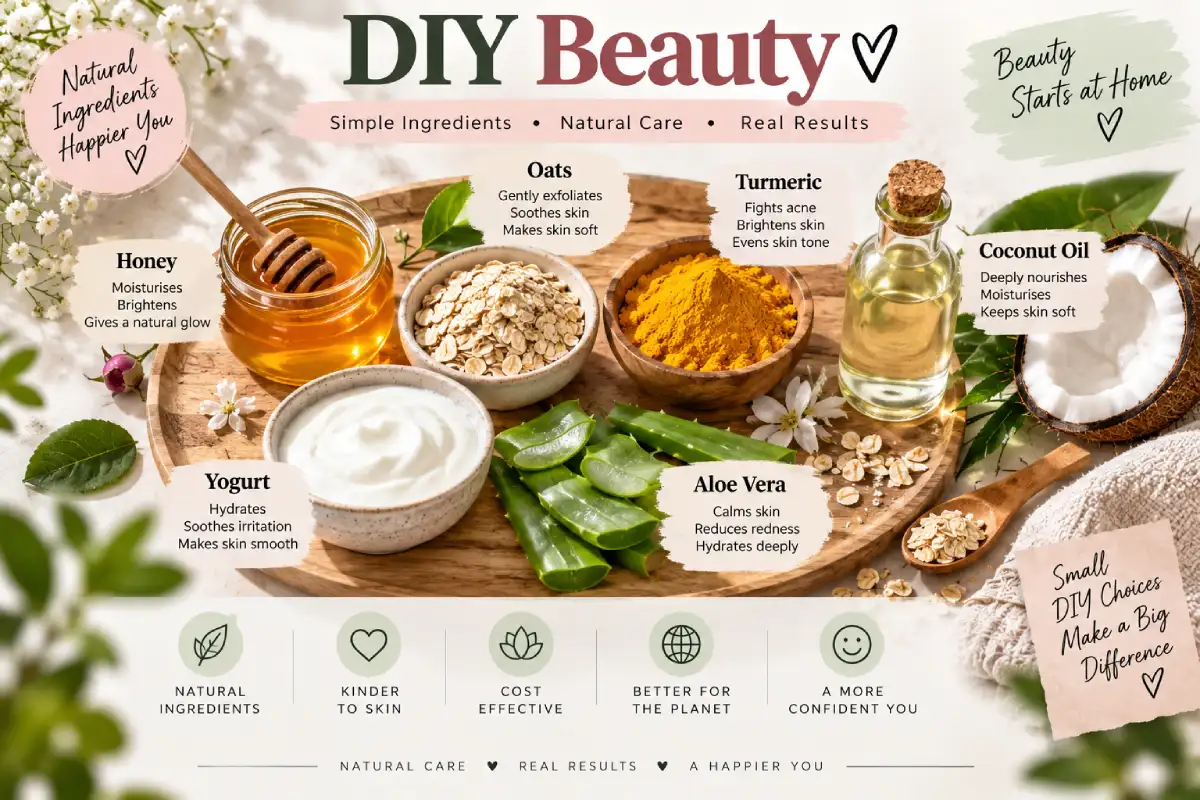
Read More: Homemade Face Masks for Acne — Natural Options That Actually Work
Best Ingredients to Look for in Acne Face Masks
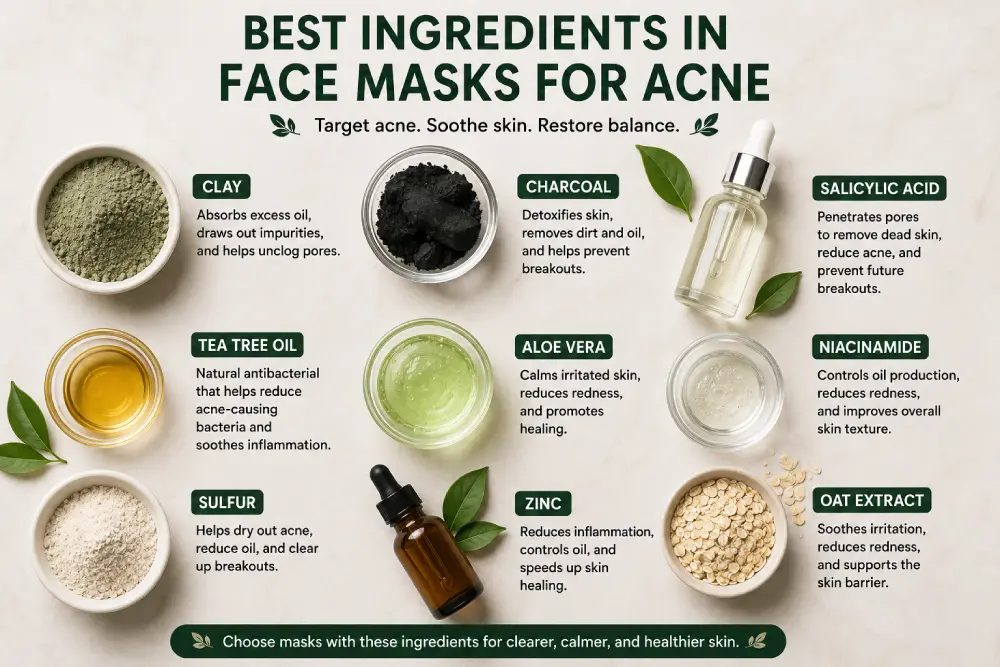
Not all acne face masks are the same. It‘s really in the ingredients where the differences shine through. Here are the best actives for your natural acne mask and how they work.
Salicylic Acid (BHA)
What it does: Salicylic acid is oil-soluble and can go deep into plugged pores and clear away the sebum and dead skin cells that result in blackheads and whiteheads. Acne sufferers and their dermatologists have learned to love the ingredient thanks to its extensive amount of research.
Best for: Blackheads, whiteheads, inflamed pimples, and oily/combination skin.
Looking for a concentration: 1–2% in OTC products.
Kaolin Clay
What it does: A light, soft clay that draws out and absorbs excess oil without leaving the skin feeling tight or flakey. Not as powerful as bentonite so good for sensitive or combination skin.
Suitable for: Sensitive or inflamed skin, sluggish skin, oil.
Bentonite Clay
What it does: A more potent clay with a negative electrical charge, which draws positively charged toxins and impurities from the depths of the pores. More absorbent than kaolin, its perfect for a very oily and breakout prone skin.
Most suitable for: very oily skin, thorough cleansing of the pores and blackheads.
Indian PorsuttonA note for Indian skin:-The Indian climate is humidity, humid condition and also more heat gives boost to too much oiliness.So, for Indian summer times PorsuttonS bentenite clay is best used.
Niacinamide (Vitamin B3)
What it does: shows to minimize the look of pores, normalizes oil production, soothes irritation and fades post-acne hyperpigmentation. One of the most multi-tasking ingredients in acne care.
Ideal for: Post-acne marks, sensitive skin, inflamed skin, problematic skin.
Concentrations to search for: 5–10%.
Tea Tree Oil
What it does: Natural antibacterials which kills acnes/blemish causing bacteria without the dryness of benzoyl peroxide. Research shows tea tree oil 5% works as well as benzyl peroxide 5% with fewer side effects.
Best for:Inflammatory acne. Mild-moderate breakouts.
Always choose the tea tree oil in a formulation rather than the straight oil.
Sulfur
What it does: “Sulfur will dry out oil, kill bacteria and eliminate inflamed lesions. It is best for hormonal acne and cystic breakouts.
Best for: Cystic acne, hormonal breakouts, skin that is not so dry and not so oily.
Activated Charcoal
What it does: Charcoal behaves like a magnet for impurities, removing pollution, dirt and oil build-up from within the pores. It can be viewed as more of a detoxifying rather than an unctuous anti-aging remedy.
Best for: congested complexions, blackheads, pore minimising, city skin affected by pollution.
Ingredients to Avoid in Acne Face Masks
- Coconut oil very comedogenic and can be used to clog many skin types.
- Heavy mineral oils — may enclose bacteria within pores
- Artificial fragrances regular irritants that cause inflammation on acne prone skin
- Alcohol as an active Ingredient absorbs too much drying out the skin therefore creating rebound oil production.
Read More: Clay Face Masks for Acne: The Complete Deep-Dive Guide
Clay vs Charcoal vs Salicylic Acid Face Masks for Acne
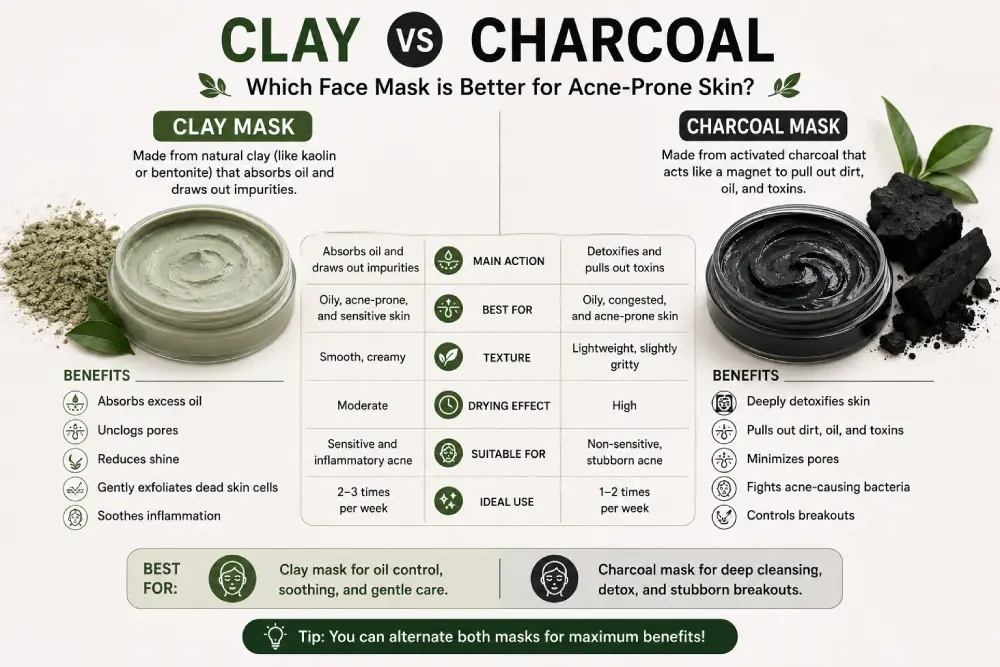
Been in a pharmacy aisle and trying to decide between a clay mask, a charcoal mask and a salicylic acid mask you‘re not the only one. They all tend to be sold in the same way, however they have different mechanics and benefit different skin types. Here‘s everything you need to know:
| Feature | Clay Mask | Charcoal Mask | Salicylic Acid Mask |
| Primary Action | Absorbs sebum, draws out impurities | Detoxifies, attracts surface pollution | Within pore, preps exfoliates. Works on blackheads to open pores and remove blockages. |
| Best Skin Type | Oily to combination | Oily, congested, urban skin | Oily, combination, acne-prone |
| Best For | Everyday oil control, blackheads | Deep cleansing, post-pollution detox | Blackheads, whiteheads, acne prevention |
| Sensitivity Risk | Low (kaolin) to Medium (bentonite) | Medium | Medium avoid on broken/irritated skin |
| Drying Effect | Moderate | Moderate | Low to moderate |
| Frequency | 2–3x per week | 1–2x per week | 1–2x per week |
| Best Used When | Weekly oil control routine | After heavy pollution exposure | Active breakouts, clogged pores |
Which one to choose?
The best choice depends on your primary concern:
- If your main concern is oily skin and blackheads: begin with a clay mask based on kaolin or bentonite as these are the most tested and proven options for Indian skin tones.
- If you live in a polluted city (Delhi, Mumbai, Bengaluru): A charcoal mask once a week will add a cleansing layer to your normal acne routine.
- For problem blackheads and congested skin: A salicylic acid mask digests deep through to the pores and is more effective than a clay for congestion.
- If you have sensitive or even reactive skin: Use a kaolin clay mask with soothing ingredients such as aloe vera or chamomile extract.
Read More: Face Masks for Oily Acne-Prone Skin — Complete Guide for India
How Often Should You Use Face Masks for Acne-Prone Skin?
One of the most frequently asked questions we get at Cultones: how often should I use a face mask for acne? Well it isn‘t a one size fits all answer it depends on your skin type, what kind of mask you are using, and how your skin reacts.
General Frequency Guidelines by Skin Type
| Skin Type | Recommended Frequency | Best Mask Type |
| Oily skin | 2–3 times per week | Bentonite or kaolin clay, charcoal |
| Combination skin | 1–2 x/week (T-zone) | T“son tanned, resting clay mask on cheeks. |
| Sensitive skin | No more than weekly | Kaolin clay, aloe Vera gel, oatmeal-based masks; |
| Dry + acne-prone skin | Once per week max | Niacinamide masks, non-drying gel formulations |
| Post-active acne/healing skin | Pause masking till breakouts coole Q: Should maskingpause be turned off until break out settled down? A: Needs to be turned off before breakout clears (seek advice from the National Booking System). | Spot only treatment then gentle clay 1×/week |
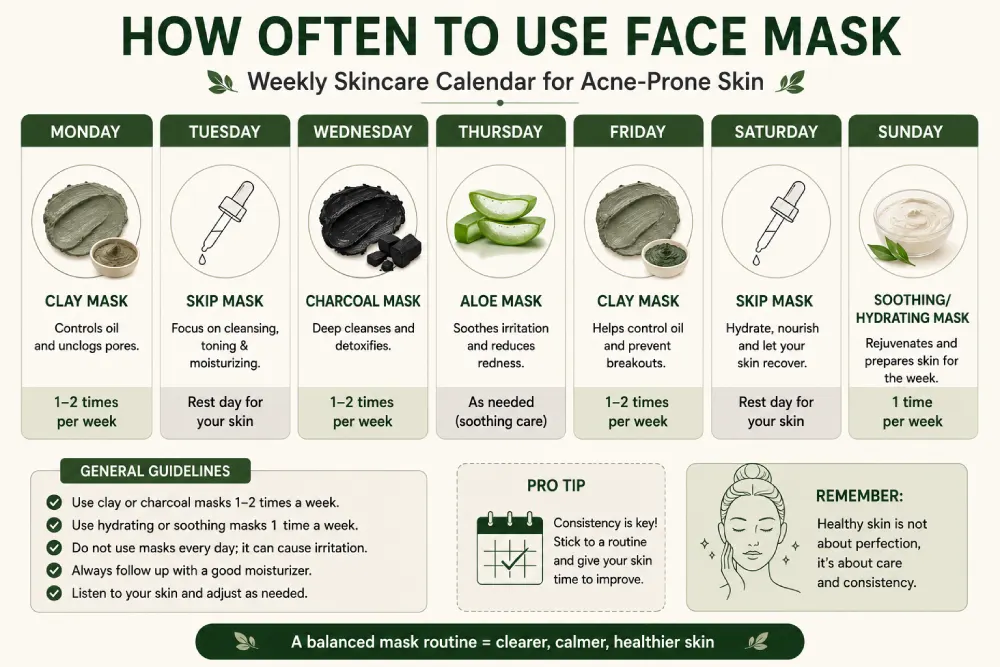
The Right Way to Incorporate Masks Into Your Weekly Routine
Step 1: Wash your face with a light foaming or gel cleanser before putting on a face mask.
2. Spread the mask on dry skin (if it doesn‘t say on the label to dampen your skin).
Step 3 wait the full recommended use time (never more) over-masking is a genuine threat.
Next 4: Rinse with 35-40° C water, never hot water as this can cause inflammation.
Step 5: Follow up straight away with a non comedogenic toner, serum or moisturiser. Moisturise after a clay mask, never miss it!
Myth: More Masking = Faster Results
This is among the most damaging myths in acne care. Overapplication of clay or charcoal masks drains the skin‘s essential oil barrier. When your skin is feeling oil-starved and tight, it responds by pumping out even more oil increasing your breakouts, not diminishing them.
The right frequency allows your skin to recover, keep its protective barrier, and really gain from the active ingredients in the mask.
Read More: Overnight Face Masks for Acne — When to Use Them & What to Look For
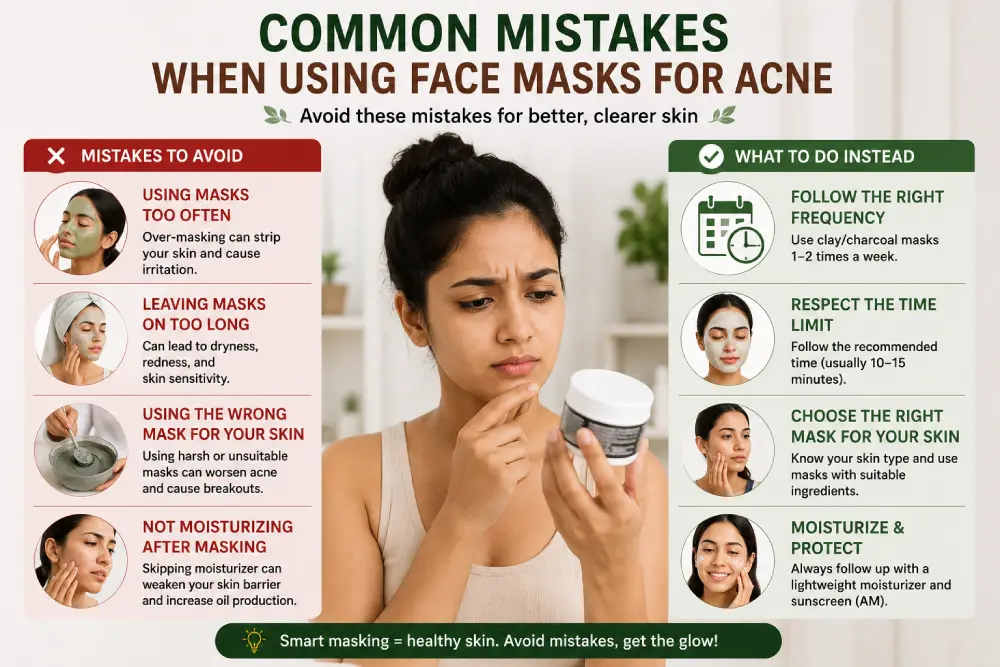
Common Mistakes to Avoid When Using Face Masks for Acne
Even with the best face mask for acne, you‘ll never get the results you want if you‘re using it wrong. Here are the most common mistakes that Indian skin care consumers make and how to correct them.
Mistake 1: Leaving the Mask On Too Long
This is the biggest one. Clay masks are meant to be effective in their wet stage, and once it begins to crack and dry out, it will start drawing moisture to your skin instead of oil. While most dermatologists recommend removing clay masks when still a little sticky (10–15 minutes), never completely dry.
Mistake 2: Skipping Moisturiser After a Clay Mask
Many people don‘t bother with moisturiser if their skin feels “clean” after a mask. Don‘t make this mistake. Clay masks do absorb oil, including the natural oils your skin needs. After removing the mask use a light moisturizer.
Mistake 3: Applying Masks to Unwashed Skin
Applying a mask on top of sunscreen, makeup or urban grime is like putting a mask on top of a filter: the mask is getting through a barrier of…grab bag contents. Always cleanse before masking. And if you exfoliate physically, don‘t exfoliate and mask on the same day.
Mistake 4: Using the Wrong Mask for Your Skin Type
There are a number of very oily skin formulas, probably a bentonite clay mask for example, which can be too drying even for combination or sensitive skin types. Just because it is labeled “acne”, it may not be right for your skin type, or it may not be just what you need:
Mistake 5: Masking on Active, Inflamed Breakouts
A strong clay mask, charcoal mask, or exfoliating mask can exacerbate inflammation if used directly on inflamed, painful, pustule or cystic lesions. If you have an active, painful breakout, do a spot treatment at the offending blemish, and then apply a mask on the rest of your face, avoiding the active blemish.
Mistake 6: Not Patch Testing New Masks
Indian skin is one of the most diverse there is – it ranges from very dry in winter in Rajasthan to incredibly greasy in Kerala‘s humidity. Always perform a patch test on your inner arm or behind your ear for 24–48 hours before applying any new face masks to your entire face.
Mistake 7: Expecting Overnight Miracles
Acne face masks are not a quick fix, but are more of a skin care routine. A steady weekly application for 4–8 weeks, is what results in visible improvement to smoothness and reduction.
Read More: Face Masks for Acne Scars
Myth vs. Fact: Face Masks and Acne
| Myth | Fact |
| ACNE CAN BE CURED COMPLETELY BY FACE MASKES | Nothing manages acne like the mask, nothing cures it. Routine + correct actives = al long term result |
| Use mask everyday for more rapid result | Clays: clog the acne and strips the skin barrier on a daily basis leading to rebound oiliness and increased breakouts |
| The more comfortable your mask feels to you, the more effective it is. | Tightness=excess drying. Take mask off before it completely dries to a crack2 |
| Natural/DIY masks are always safer than shop-bought. | Some other DIY ingredients: lemon, soda, toothpaste, can weaken the skin barrier and make more worse the acne. |
| Removing- We say that most of blackheads can be removed by charcoal mask Permanently. | Charcoal masks remove surface impurities (blackheads), but will still be reprecipitated for lack of consistent management of the oil + dead cell build-up beneath. |
Expert Tips for Getting the Most Out of Your Acne Face Mask
- Use a clean brush or spatula to apply your mask fingers pass bacteria.
- Keep your clay Mask in a cool, dark place, so that they don‘t dry out in the tube.
- Never use more than one active mask at the same time. One a week or so is enough!
- Complement following masking with a niacinamide serum for a double-whammy acne treatment.
- If you feel you have combination skin oily and dry? Multi-mask: put a hydrating mask on the cheeks and clay-based mask or strip-mask on the T-zone.
- Always SPF the morning after a chemical exfoliant mask (AHA/BHA masks increase UV sensitivity).
Final Thoughts: Building Your Acne Mask Routine
Choosing the best face mask for acne is not about purchasing the most effective or most expensive out there. Selecting the appropriate mask entails with knowing your skin type, identifying the active ingredients you need to combat the acne, and applying it with appropriate frequency and method.
Begin with the essentials: a mild kaolin or bentonite clay mask 1–2 times weekly if you have an oily or combination skin. Patch test each new item. Apply a non- comedogenic moisturiser. And wait at least four to six weeks before you notice a change.
Ready to go a little further? Our complete cluster guides below will help you pinpoint the perfect mask for your exact application.
Frequently Asked Questions
Q1. Which is the most effective face mask for acne in India?
Common ingredients in the best face masks for acne in India include kaolin clay, bentonite clay or salicylic acid. Ideally you should choose a non-comedogenic formulation suitable for Indian skin and weather conditions. Some Indian brands on Nykaa and Amazon India include:
Q2. Is it okay to use a facial mask on my skin daily in acne?
No. Clay or exfoliating face masks every day will strip away your skin‘s natural oil barrier, leading to rebound oil production and an increase in breakouts. Use up to 1 3 times per week, depending on your skin type, as directed.
Q3. Is face mask beneficial in terms of acne scaring?
Yes, some face masks can aid fade existing post-acne marks. Masks with niacinamide, vitamin c, AHAs (glycolic acid etc), and kojic acid could help with hyperpigmentation and skin-tone evenness.
Q4. Which is good for acne, clay or charcoal mask?
Clay masks (in particular, KAOLIN and BENTONITE) are more suited to prolonged acne treatment, as their properties help absorb excess sebum while drawing impurities from the pores. Charcoal is used mainly as a ‘decongesting’ mask for removing skin impurities and pollution from the surface of the skin- not as specifically acne targeted.
Q 5 I have active spots, can i safely wear a face mask?
Don‘t use a rough clay or exfoliating masks on pimples as this can overly irritate inflamed skin. Apply the mask to unaffected parts of the face and target any lumps and bumps with a separate spot treatment.
Q6.How do home-made face masks handle blemishes?
There are some effective DIY masks containing ingredients like multani mitti, turmeric or raw honey suitable for oily and acne prone skin. Do not use lemon juice, baking soda and toothpaste as they may break your skin‘s pH and barrier.
Q7. What is the recommended length of time I should keep a face mask on for my acne?
Most clay and acne masks should be used 10 15 minutes. Rinse off while still slightly damp, before the mask has set and dried fully. Over-drying and over-stimulating the skin with masks can encourage increased sebum production.
Q8. Which product should I use after applying a mask for acne?
Once you wash off your mask, it‘s best to tone (optional), followed by a light, non-comedogenic serum and water-based moisturiser (niacinamide is the best adjunct to masking) to finish. Always moisturise, even after a clay mask.