Best Face Masks for Acne Scars and Dark Spots
Published: July 1, 2026 Last Updated: July 2, 2026 Acne may clear up, but its scars may stay around
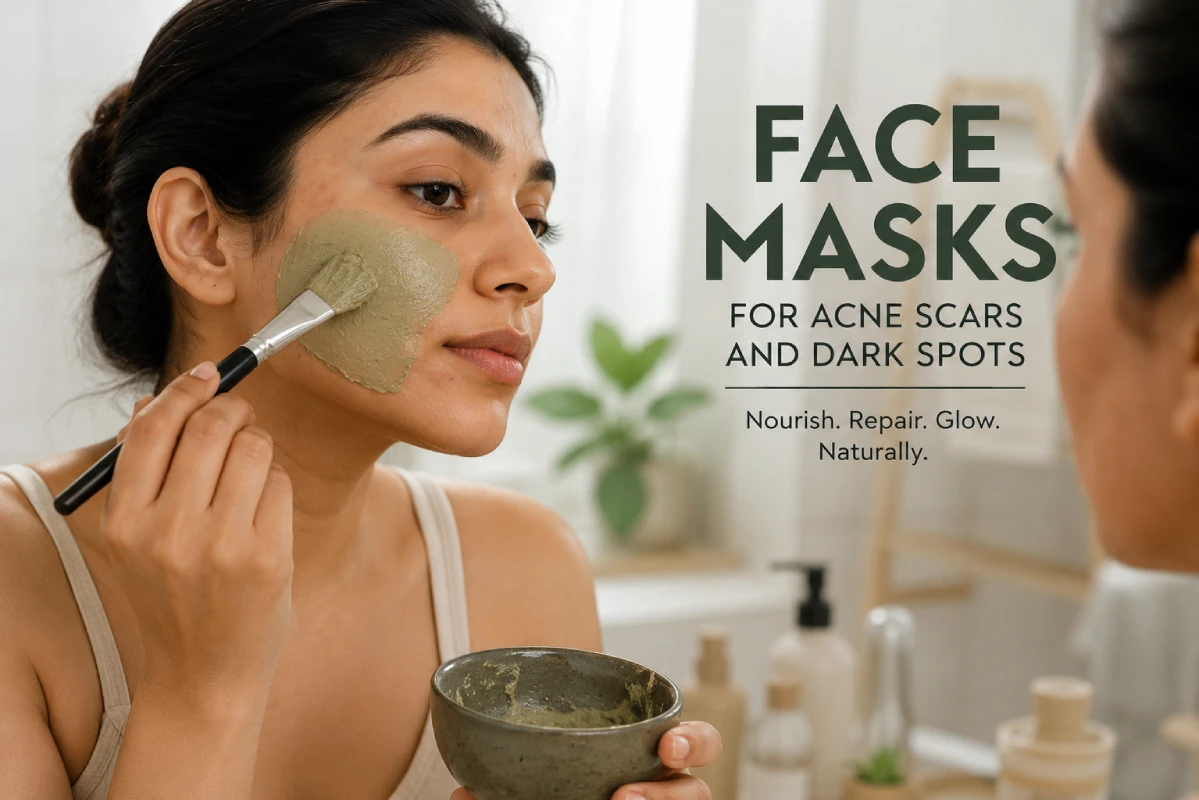
Acne may clear up, but its scars may stay around much longer and that’s what causes many to try to get rid of face masks for acne scars. Proper use of a good quality mask can truly diminish superficial color and uneven texture. Just be aware of what it is capable of, and when something more heavy-duty is called for.
Can face masks help improve scars?
And here‘s the unvarnished truth: That depends on the kind of scar you‘ve got. Flatter, blotchier marks left over once a pimple has healed what the dermatologist calls post-inflammatory hyperpigmentation are happy campers when treated with face masks containing exfoliants and brightening agents. Conversely, the inset, nicked holes of ice-pick or boxcar scars are lodged in the dermis, which face masks can easily penetrate.
So, where face masks are great for color correction and smoothing out the surface, they will not do much if you have deep scarring and need the actual surface time to be resurface which generally requires either a microneedling or laser resurfacing procedure performed at a doctor‘s office.
Best Ingredients for Acne Scar Treatment
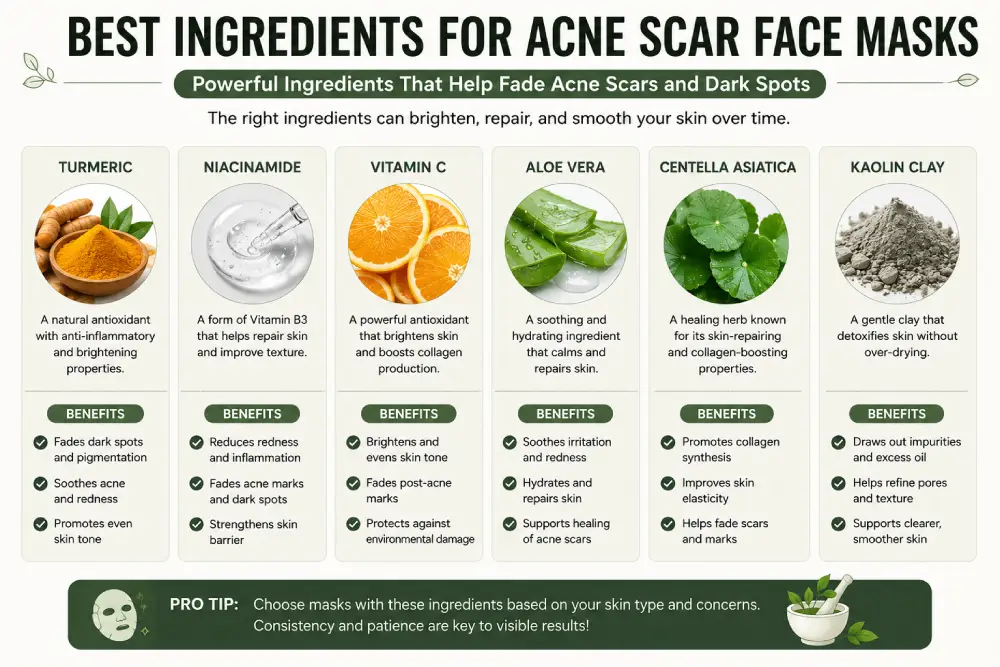
Not all masks are created equal. These ingredients have real backing for scar and mark fading:
- Niacinamide – Soothes redness and post-acne red marks and strengthens the barrier function of the skin.
- Vitamin C brightens dullness and helps fade discoloration with the added benefit of antioxidant support.
- AHAs (glycolic or lactic acid) exfoliate dead skin cells by removing the layer of dull dead skin cells to reveal healthy, brighter skin underneath.
- Turmeric A popular Indian spice which possesses anti-inflammatory benefits that will soothe inflamed breakouts and allay redness.
- Clay (multani mitti, kaolin, bentonite) – absorbs excess oil and toxins has a drying effect, ideal for oily, skin prone to breakouts.
- Honey active antibacterial and moisturizer and promotes the healing of the skin.
Rule of thumb: If you mainly want redness andscarringto heal (honey, turmeric, aloe), then be gentle; if you wantbrightlyoredarker, stubbornspots to fade (exfoliating actives, AHA, vit C), then attack.
Face Masks for Hyperpigmentation and Dark Spots
Acne scars – India has high prevalence of these dark spots post breakouts in skin, as compared to western due to higher melanin activity units that react more visibly to inflammation. For this concern priority to masks or pastes with:
- In this study Vitamin C or niacinamide: (1) was used to brighten.
- AHAs (mild) for mild exfoliation
- Turmeric with besan (gram flour); a classic pair traditionally used for generations smoothing out tone
Do not put strong undiluted lemon juice directly on skin? Although common in DIY life hacks for skin whitening, it can easily irritate or darken pigmentation of skin which has been in the sun too.
How long before I start to see any results?
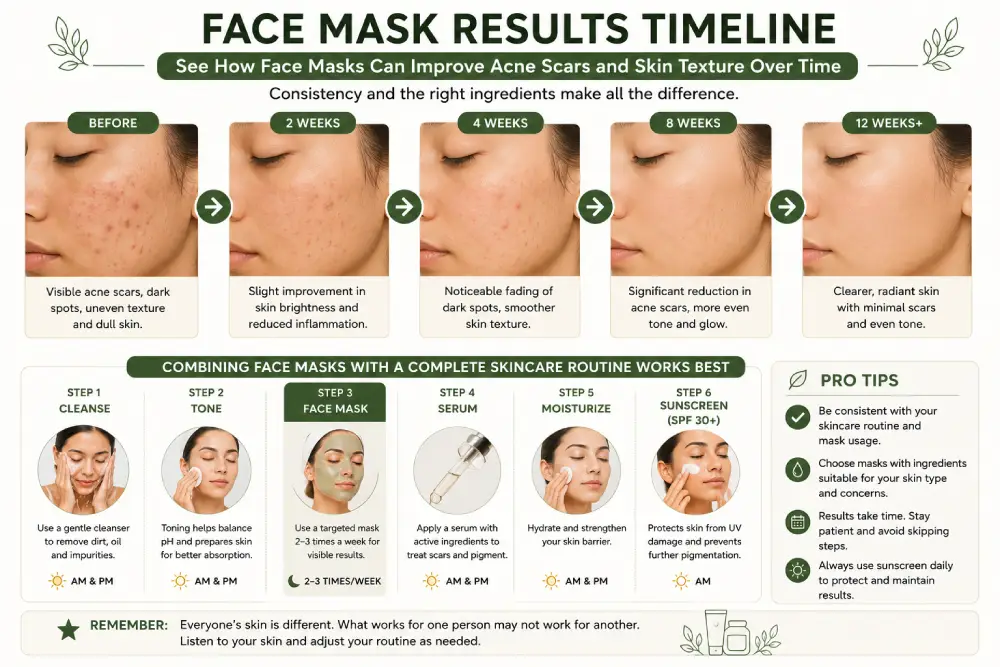
This is where most people give up too early. Face masks work gradually, not overnight:
- Begins. 2–3 weeks– minor changes in skin texture and glow
- 6–8 weeks This should start seeing progressively lightening of dark spots, if early stages of improvement are present. Use should be at least two to three times per week.
- 3+ months more normalization of skin tone, deeper hyperpigmentation is present16.
Myth vs. Fact: Myth -Using mask every day speeds up result. Fact – Excess use of mask and those which exfoliate the skin can cause damage to your skin barrier causing a flare up / worsening of marks. Should be used 2-3 times a week.
💡 For a full side-by-side breakdown of clay vs charcoal vs salicylic acid masks across all acne-prone skin types, read our main guide to the best face masks for acne.
Combining Face Masks with Other Acne Treatments
Face masks work best as one part of a bigger routine, not a standalone fix:
- When using masks, opt for a mild cleanser as well as daily use of a good SPF as sunlight is a main cause of dark spots acting slower to diminish.
- Avoid masking with strong acids on the same night if you are already using the actives like retinols.
- Ensure you pair mask treatment with a good moisturiser afterwards to support your skin barrier while it heals.
- For even more scarring, pair your self-treatment masking at home with seeing a dermatologist for a chemical peel, microneedling, or combination of such treatments. They take less time to be effective than just a mask does.
Final Thoughts
Acne scar face masks really do work to fade pigmentation, soothe inflammation and smooth texture provided that you‘re dedicated and disciplined with your routine. For pigmented, flat marks, niacinamide, vitamin C and turmeric are your best bet. For indented, textured scars masks are an effective addition to your routine rather than the end all and be all of skincare.
FAQs
Q1. Do face masks work to get rid of acne scars?
They only really work for surface level dark marks and to improve the skins texture. You won‘t see the scars go you have to see an expert for that.
Q2. How often should I use a face mask for my acne scars?
2–3 times a week is best. Daily use, particularly of exfoliating masks, can be harsh on the skin and make marks worse.
Q3. Does turmeric help to get rid of acne scars?
Yes, the anti-inflammatory properties of turmeric help to soothe the redness and, very slowly, lighten the skin tone.
Q4. Will face masks give results more quickly for dark spots?
Not really. Both masks and treatment creams require regular application over a period of several weeks and the best results are usually seen when both products are used together.
Q5 Should I apply sunscreen after a face mask?
Yes, of course. The effect of the sun on hyperpigmentation is much negative, so applying sunscreen affects the best result on clearing dark spots.