15 Best DIY Face Masks at Home for Every Skin Type
Published: July 21, 2026 Last Updated: July 21, 2026 Good DIY face masks at home don‘t require a shopping
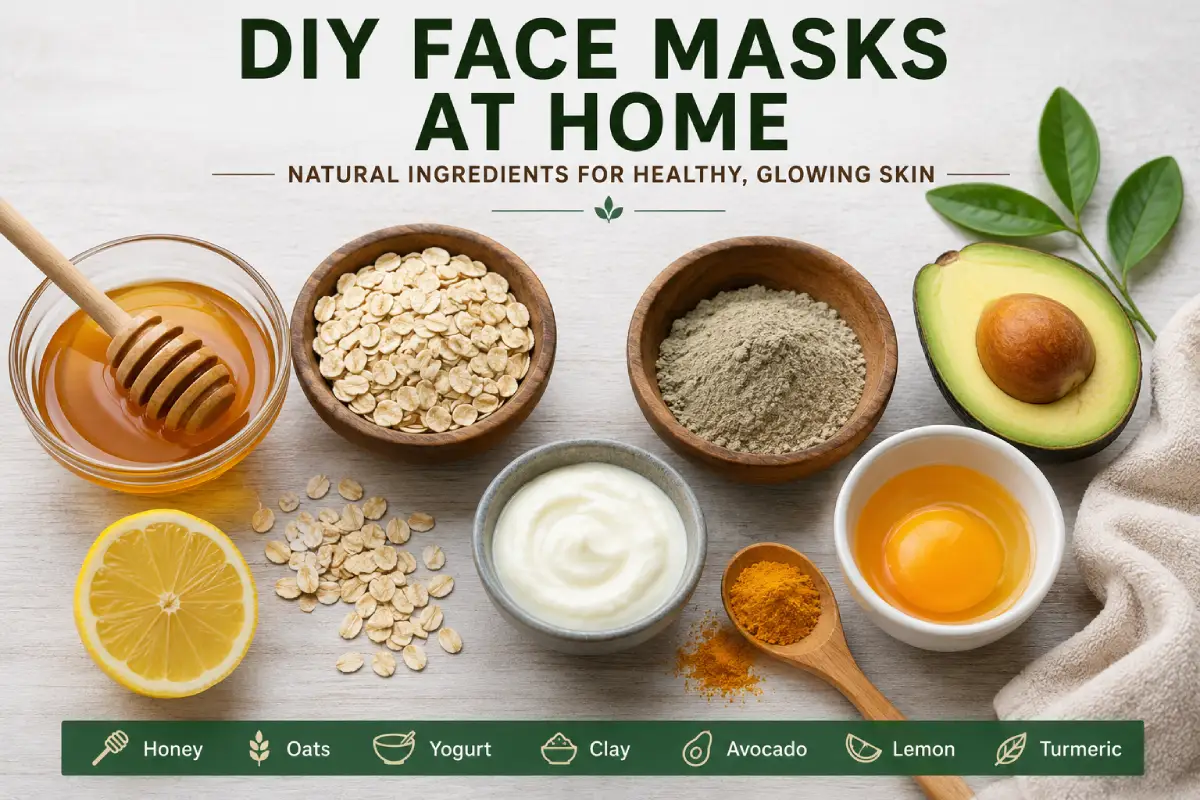
Good DIY face masks at home don‘t require a shopping trip or dozens of ingredients. A lot of the best ones are already nestled away in your kitchen honey, oats, clay, avocado, turmeric each provides a different benefit, and the challenge is selecting the right one for your skin rather than whatever‘s momentarily fashionable.
Here is a simple breakdown of 15 easy and effective masks sorted by skin type make sure you find one that will actually work.
Why DIY Face Masks Work
Natural ingredients such as honey, clay and oatmeal have genuine, recordable effects on the skin (hydrating, mild abrasive exfoliant, absorbent of oil, anti-inflammatory). While not substitutes for the rest of your skin care regime, they can be added once or twice a week with good, visible effects on the texture, hydration and tone of your skin in between cleansing and moisturizing.
It‘s all about consistency; choose ingredients that really match your skin needs as opposed to piling up every popular ingredient on one mask.
Honey Face Mask Recipes
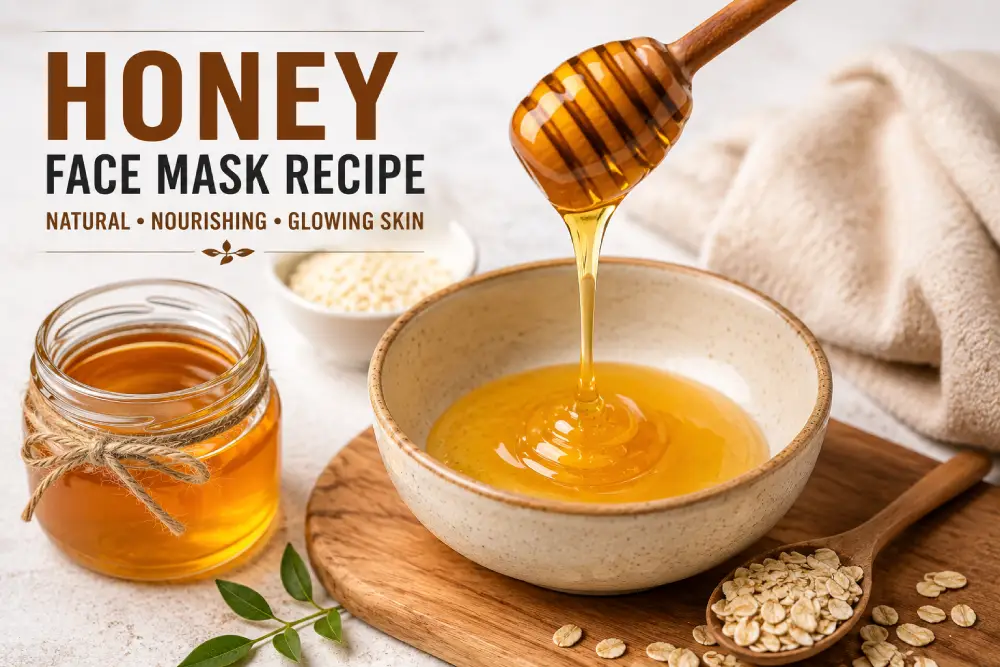
Honey itself is anti-bacterial and moisturizing and makes a good base for nearly all skin types.
- Honey + cinnamon mild antibacterial used temporarily once in a while for spots.
- Honey + oatmeal calming and gently exfoliating, suitable for all other skin types, particularly combination skin
- Honey + yogurt hydrating with soft lactic acid even a little brightening
- Plain honey a basic 15- minute mask for dull skin or that needs extra moisture.
Raw or manuka honey should be used where available, as the more highly refined honeys contain less active enzymes.
Turmeric Face Mask Benefits
Turmeric – the anti-inflammatory compounds in turmeric work to soothe redness, puffiness and irritation when used regularly.
- Turmeric + yogurt + honey‐ Brightens and calms, good for dull uneven skin tone.
- Turmeric + milk another milder option for those with sensitive skin.
- Turmeric+ besan(gram flour) + rosewater An age old blend widely used in India for cleansing and glow.
Here‘s an upfront warning: Turmeric often leaves a yellow hue in lighter skin colors. Washing it off well and then using a mild cleansing cream prevent it from staining.
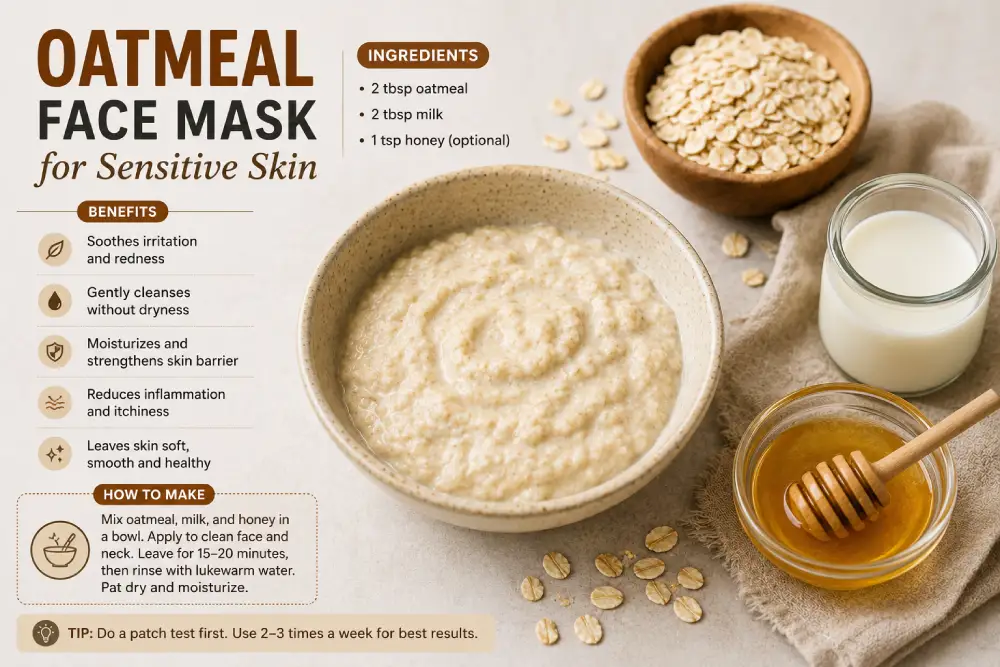
Oatmeal Face Mask for Sensitive Skin
As one of the most soothing and least aggressive exfoliants, it is a good choice for problems skin or anyone who finds most you can be a little abrasive.
- Oatmeal + honey + warm milk soothing, hydrating, and softening for dry, sensitive skin
- Oatmeal+ German chamomile tea calming for redness-prone or reactive skin
- Decided not to include ‘maybe too light and a little crumbly’ lump of finelly ground oatmeal + water a minimal-ingredient choice for very sensitive skin in the first place
Blending the oats into a fine powder first will stop the rough texture from scratching delicate skin.
Clay Face Mask for Oily Skin
These work to absorb excess oil and draw out impurities. This makes them very popular for those who have oily and acne prone skin.
- Bentonite clay + water excellent, time-honored oil-absorbing base mask
- Mild clay for combination skin: kaolin clay + rose water
- Multani mitti (Fuller‘s earth)+ rose water one of the best natural Indian clay packs, fit for the hot climate in India and relevant to the humid climate.
Always use a non-metal bowl to mix the clay in; metal reacts with some of the minerals in the clay making it less active.
Avocado Face Mask for Dry Skin
Avocado is a source of “HEALTHY” fats and antioxidants that provide nourishment and plumping to the skin.
- Avocado + honey one of the most basic two ingredients hydrating mask.
- Avocado + Oatmeal + jojoba oil– rich, best used for very dry or flaky skin.
- Avocado+weird tasting yellow stuff, yogurt, tsp of lemon huge facial extremely moisturizing with a very slight brightening effect
Mash the avocado well for a silky, uniform consistency; clumps will make application more difficult and leave you with an unbalanced rinse.
How Often to Use DIY Face Masks
- Oily and acne-prone skin: clay masks 1–2 times per week.
- Dry skin–masks of avocados or honey 2 to 3 times weekly.
- Reactive skin: oatmeal based masks (one given per week, rest of week none) patch test 1st.
- Combination skin: clay on the T zone, otherwise nourishing masks.
No matter how mild, too much application of any mask will cause loss of the skin barrier. Excessiveness does not equate to improvement.
Common Mistakes with DIY Face Masks
- Not doing a patch test before testing a new combo of ingredients, such as wearing a turmeric or citrus-based mask
- Wearing masks much too long after published guidelines, often under the belief that it ‘makes them work better’
- The reduction of mineral effectiveness of metal bowls or utensils by using them with clay masks is…
- Masks can be applied to ‘dirty’ or unwashed skin where soil and oil can become locked underneath the mask instead of being treated for.
- Choosing a popular mask that really doesn‘t sit well with your skin type
Myth vs. Fact
Myth: The longer the face mask stays on the better the outcome. Truth: Most face masks are for 10 20 minutes, so when left on for a long period of time, in the case of a clay mask, it may be excessively drying the skin by depleting the skin of moisture, and may cause irritation.
Myth: No breakouts or reactions caused by natural masks. Fact: Sensitive skin can react to any ingredient. Common irritants include lemon, cinnamon, and turmeric. Do a patch test even if you use everyday kitchen ingredients.
Action Steps to Start Today
- Know your skin type before selecting a mask, not following what everyone else is using.
- Always patch test any new for you ingredients composite on your inner arm 24 hours before using on your face.
- Begin with once weekly and monitor your skins reactions before increasing.
- Always remove with a clean towel and remember to moisturise at the end.
- Keep it simple- two or three optimized components are likely to out perform a long complex recipe
Face masks that you make at home are one of the most easy methods available of providing your skin with truly natural treatment in between your routine steps. chose your mask to suit your skin type, patch test and stick to it. This is what will turn cosmetic step to cosmetic treat.
FAQs
Q: What is the best DIY face mask for oily skin? A: Clay masks (bentonite, kaolin or multani mitti) are most effective for oily skin as they absorb excess oil and make pores less obvious.
Q: How often can I apply a turmeric face mask? A: Should only be used 2 3 times a week; use on a daily basis may be viewed as excessive and irritating, especially to more sensitive skin types. However, can lead to temporary staining of the skin.
Q: Which is the most gentle DIY face mask for sensitive skin? A: Oatmeal masks are always the most gentle, which you should use with honey or chamomile, i.e. oatmeal calms your skin without scrubbing away and leaving your skin sensitive.
Q: How long to leave in a do it yourself face mask? A: Most masks work in 10-20 minutes. Keeping it on for more time will not enhance the effects. In fact, it might make your skin drier and more irritated.
Q: Are DIY face masks a replacement for your daily skincare routine? A: No as a quick weekly treat, but not a substitute for cleansing, moisturizing and SPF-ing every day!