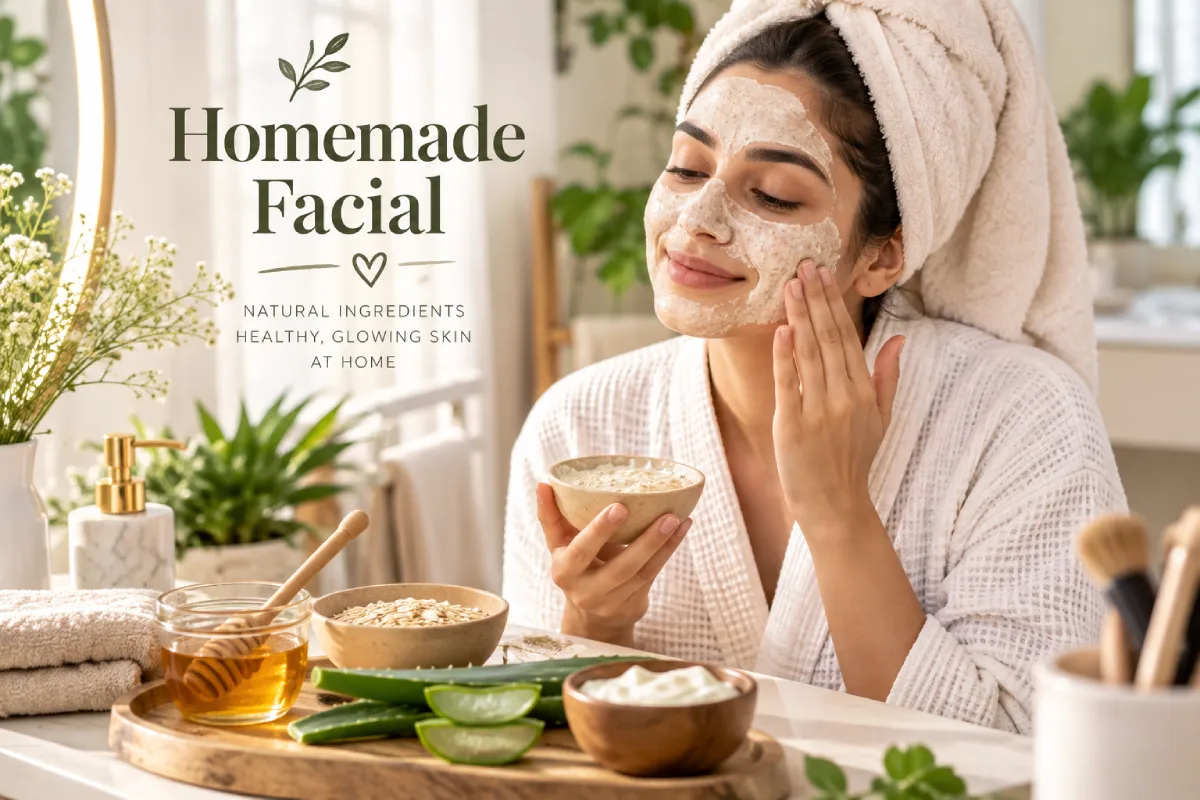
Natural Beauty Remedies: Simple At-Home Beauty Practices
Published: September 17, 2026 Last Updated: September 17, 2026 Natural beauty remedies may help with everyday concerns such as

Natural beauty remedies may help with everyday concerns such as mildly dry skin, occasional itching, or hair that feels rough after washing. Choose a modest goal, understand the limits, and stop if the remedy causes discomfort.
What Are Natural Beauty Remedies?
Natural beauty remedies are home practices using naturally derived ingredients or simple physical measures to improve comfort or appearance. Examples include a cool compress, colloidal oatmeal skincare, and coconut oil applied to hair before washing.
“Natural” does not mean suitable for everyone. A remedy may ease a symptom without treating its cause: cooling itchy skin, for example, does not identify why the itching started.
Cultones’ DIY beauty guide explores homemade preparations. Here, the emphasis is on matching a remedy to a limited purpose and recognizing when professional advice is more useful.
Simple Natural Beauty Remedies to Try at Home
1. A cool compress for occasional mild itching
Wet a clean, soft cloth with cool water, wring it out, and rest it gently on the itchy area for about five to ten minutes. Avoid rubbing or scratching.
This can provide temporary relief without adding a new botanical ingredient. The American Academy of Dermatology recommends cool, damp compresses as one home measure for itch relief.
Use cool water rather than pressing bare ice onto your skin. If the itching keeps returning, or a rash develops, investigate the cause with a clinician instead of repeatedly cooling the area.
2. Colloidal oatmeal for mildly dry, itchy skin
Colloidal oatmeal is finely processed oatmeal used in skin-protecting products. It can help retain moisture and soothe mild irritation. A coarse breakfast-oat scrub is a different preparation and should not be treated as interchangeable.
An easy option is a fragrance-free colloidal oatmeal cream, applied according to its label. If you prefer a bath, choose a colloidal oatmeal bath product and follow its mixing and soaking directions. Avoid hot water, and take care because the tub may become slippery.
Skip oatmeal products if you have an oat allergy. Cleveland Clinic’s colloidal oatmeal guidance explains its uses and limitations, including that it may be insufficient for more severe skin conditions.
3. Coconut oil as a prewash hair treatment
For hair that feels dry or rough, try a small amount of coconut oil on the lengths and ends before shampooing. Start sparingly so you can judge whether your hair feels softer or simply heavier afterward. Follow the directions if using a formulated hair product.
A 2003 study of hair damage found that coconut oil reduced protein loss from damaged and undamaged hair under the tested conditions. The researchers were affiliated with a hair-oil manufacturer, and the findings concern hair fibers—not proof of faster growth or treatment for hair loss.
Keep oil away from your face if it bothers your skin, and stop if scalp discomfort develops.
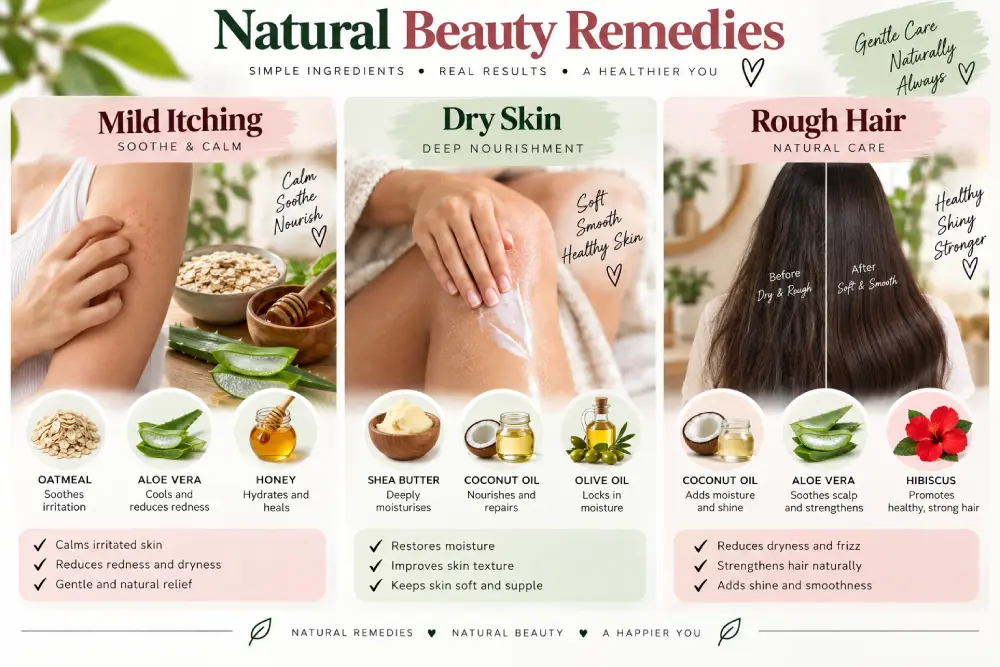
Natural Ingredients Used in Beauty Remedies
Choose an ingredient for a specific job. The same ingredient does not need to appear in your face mask, hair treatment, and body care.
| Ingredient or material | Reasonable role | Limitation to remember |
|---|---|---|
| Cool water and a clean cloth | Temporary relief for mild itching | Does not explain or treat the underlying cause |
| Colloidal oatmeal | Moisture support and relief of mild irritation | Avoid with oat allergy; follow the product directions |
| Coconut oil | A prewash option for hair fibers | Evidence about protein loss does not establish hair regrowth |
| Aloe vera gel | An ingredient in topical skin products | Can cause burning, itching, or rash in some people |
Aloe deserves particular care because the inner gel, latex, and whole leaf are different preparations. The US National Center for Complementary and Integrative Health reports that topical gel is generally tolerated but can cause reactions. A freshly cut leaf is not equivalent to every studied aloe product.
Whether buying coconut hair oil in India or colloidal oatmeal in a US drugstore, check the label and intended use. Familiarity, price, and traditional use cannot predict your response.
Read more: Clean Beauty — for how to read a clean beauty label and where to start swapping products.
How to Use DIY Beauty Remedies Safely
Try one change at a time. Keep a short note of the ingredient, application area, and response. If several mixtures are introduced together, identifying the cause of irritation becomes harder.
Test new skincare products properly. The AAD suggests applying a product to a small test area twice daily for seven to ten days, using its normal contact time. Rinse-off products should be rinsed as directed. This home product test cannot rule out every reaction or replace medical allergy testing.
Keep preparation hygienic. Wash your hands and keep containers clean. Avoid storing water-based homemade mixtures without a validated preservation system. Refrigeration does not establish a safe shelf life.
Leave citrus juice out of skin remedies. Citrus exposure, particularly lime juice, followed by sunlight can cause a phototoxic reaction with blistering and lingering discoloration. Sunscreen is not permission to use citrus as a brightening treatment.
Keep remedies optional within your usual care. Cultones’ natural beauty tips cover broader everyday habits.
When to Stop Using a Natural Beauty Remedy
Stop and gently rinse off a preparation if you develop burning, increasing itching, swelling, or a new rash. Do not keep applying it to “get used to it.” The AAD’s product-testing guidance above recommends discontinuing products that cause reactions.
Seek medical advice if symptoms persist, worsen, or keep returning. Take the ingredient list and your notes to the appointment.
Get emergency help for difficulty breathing, throat or tongue swelling, or fainting after an exposure. These can indicate a serious allergic reaction.
FAQs
Can natural beauty remedies remove acne scars or dark spots?
The methods here are not established treatments for scars or persistent pigmentation. Avoid expanding a soothing remedy into a promise about correcting a different concern.
Is fresh aloe always better than packaged gel?
No. Freshness does not establish safety or effectiveness. Aloe preparations differ, and both fresh ingredients and formulated products can cause reactions.
Can I use these remedies every day?
There is no universal schedule. Follow labeled directions for formulated products and assess whether the remedy is needed. Repeated discomfort is a reason to stop.
Are expensive ingredients more effective?
Price alone cannot establish benefit. A clean cloth and cool water may be enough for temporary itch relief; an elaborate mixture is not automatically more useful.
Should a natural remedy tingle to work?
No. Burning or worsening discomfort is not a useful success marker. Wash the preparation off and discontinue it rather than increasing the contact time.
Final Conclusion
Natural beauty remedies are most useful when their purpose stays realistic: easing mild discomfort or improving how hair feels. Start with one suitable option, keep preparation clean, and stop if your skin reacts. Persistent concerns deserve an assessment, not a stronger homemade mixture.