Workplace Health and Wellness: The Real Secret to a More Productive Team
Published: June 9, 2026 Last Updated: October 19, 2026 The space we work in most of us, for over
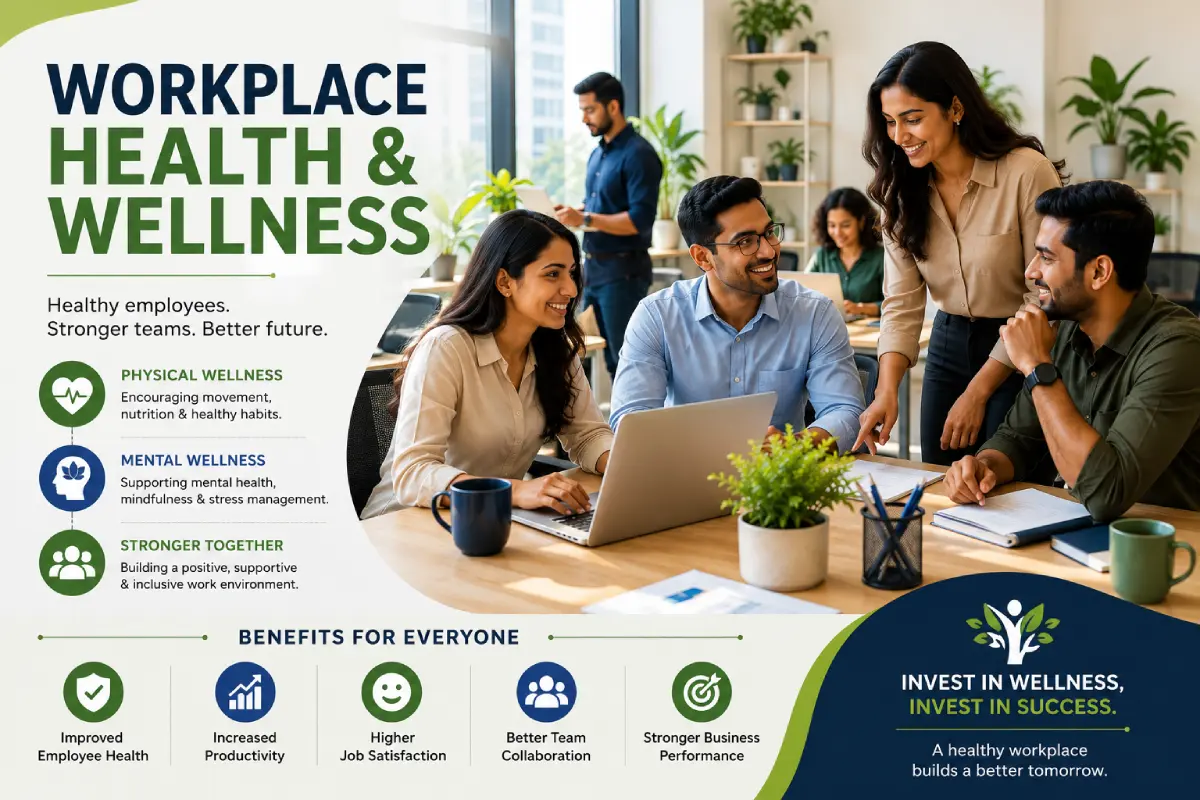
The space we work in most of us, for over a third of our lives can make all the difference in terms of our overall health and well-being. At a workplace health and wellness programs aren‘t just about the membership to the local gym or the free bag of fruit in the lunch room. They are about creating a place people can do their best work at work.
Whether you are in charge of a corporate team in New York or a fast expansion startup in Bengaluru, the principles are the same: healthy employees will do better work. Allow us to explore exactly how this would manifest:
What Is Workplace Health and Wellness, Really?
Workplace well-being includes all factors that influence employees’ experiences of and attitudes towards work. These include:
- Physical health (ergonomics, fitness and nutrition, preventive services)
- Mental health anger management, stress because of the work, burnout prevention, psychological safety.
- Work-life balance – flexible time, setting boundaries, unplugging policy
- Financial wellness — fair pay, benefits clarity, financial education
- Social wellbeing team connection, inclusion, community
Honestly effective employee wellness program takes all five into consideration. An organization that only implements one, for example a step challenge, may see a temporary increase in engagement, but the core issues involving burnout and turnover will not be addressed.
Why Workplace Wellness Directly Affects Productivity
Here‘s the data point that should matter to every manager and business owner:
Organizations that take wellbeing seriously inbuilt into their culture, can have up to 20-25% more productivity. According to the McKinsey Health Institute research. That sort of increase can be the difference between a good quarter and a great one.
Here‘s why wellness and performance are so closely linked:
- Burnout kills efficiency. According to a Deloitte survey, 77% of employees were burned out. All have made more mistakes, missed deadlines, and drifted away silently.
- Stress builds up. Long term stress at work isn‘t just bad for your head it, causes more days off sick, affects your ability to focus and makes people leave.
- Healthy people are engaged people. Employees who perceive that they are supported tend to give extra effort, be punctual and be willing to go an extra mile.
Top Workplace Mental Health Strategies for 2026
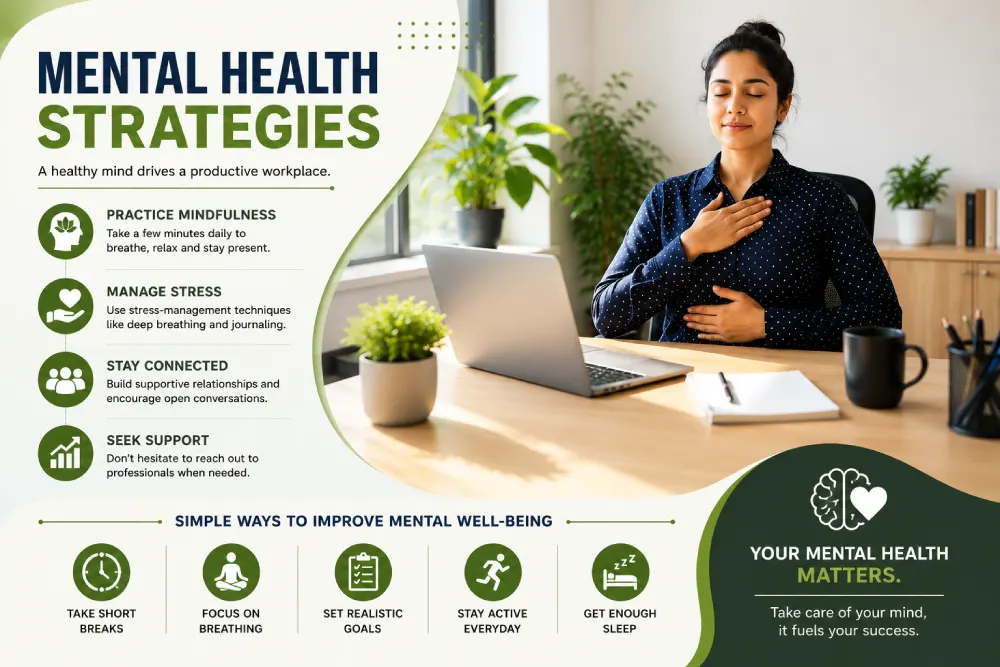
Mental health is the buzzword wellness issue of the hour and for good reason. Here‘s what truly makes a difference:
1. Normalize Mental Health Conversations
The most significant challenge that prevents employees from reaching out for support is the stigma around it. When a leader is willing to give their team permission to be open about stress, anxiety, or their own mental health challenges by speaking candidly, it makes a huge difference. Daily check-ins, anonymous pulse surveys, and mental health days count.
2. Train Managers in Psychological Safety
Psychological safety – Believing that you can voice your opinion without any repercussions – is the single best predictor of how well a team will perform. Those who foster Psychological Safety experience higher collaboration, reduced time to execute a task, and reduced attrition.
3. Offer Accessible Mental Health Resources
It could be an Employee Assistance Program (EAP), access to therapy apps or just a wellbeing lead. In India, YourDOST and iCall have opened up avenues for far easier access to mental health support within organizations.
Office Wellness Tips That Are Actually Easy to Implement
This does not all have to be expensive. Sometimes, small and regular additions can make the most significant difference:
- Natural Light and Air Quality. Relocating desks closer to windows or introducing plants can help to alleviate eye strain as well as lift spirits.
- Movement breaks. Promote quick walks, stand up desks, or just a 5-minute stretch from your desk. Sitting for more than 8 hours a day is a health hazard and US and Indian companies are beginning to see it.
- Healthy snacks. All at the office, it is easier to replace crisps with nuts and fruit and high-protein snacks. It‘s good value for money.
- Meeting-free blocks. Blocking out a few hours per day for focused, uninterrupted work can cut down a ton of context-switching fatigue.
Work-Life Balance Strategies That Actually Work
Work-life balance is just another phrase we hear until your star performer leaves because they haven‘t taken a good break in two years. Here‘s what is doing the trick:
- Flexible working hours, in particular for those jobs which do not always require the employee to work consistently from 9am till 5pm
-
Hybrid or remote options where possible
- There should be clear expectations around messaging outside business hours (no Slack at 11pm unless urgent)
-
Mandatory leave policies that actually encourage people to use their PTO
- Respect for holidays that are celebrated nationally in the US & India which have extensive and compelling reasons to be respected
This kind of resetting can be a real game-changer particularly for teams based in India where extensive working hours have become the “norm”.
Corporate Wellness Solutions Worth Investing In
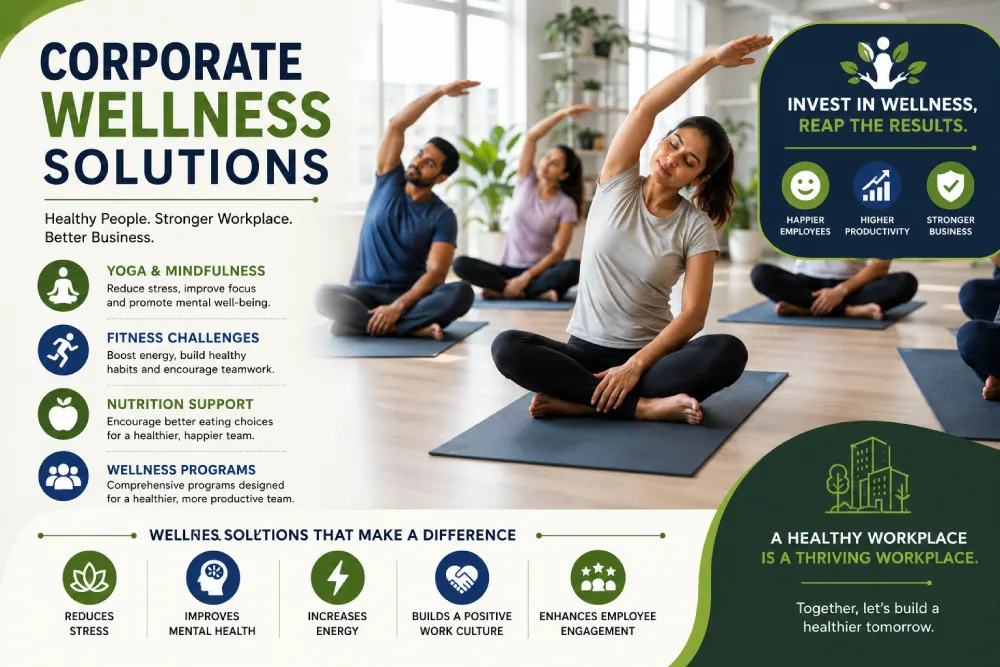
But if you‘re ready to add some structure, here are corporate wellness solutions that work.
- Fitness reimbursement. Covering gym memberships or fitness app subscriptions (such as Cult.fit or Peloton) would cost less than 1 sick day per month.
- Mindfulness and meditation programs. Effective for alleviating stress and enhancing concentration such as Headspace for Work or Calm Business.
- Financial wellness workshops. Employees, particularly those of GenZ age, consider financial stress one of the biggest determinants of wellbeing. We tend to ignore investments in education around budgeting and preparing for retirement.
- Nutrition programs. Having a nutritionist do a monthly webinar or offering healthy meals through a vendor such as Cultones can have your peoples’ energy shining through visibly.
Myth vs. Fact: Common Wellness Misconceptions
- MYTH: Wellness programs are only for big companies. FACT: Some of the most-high impact programs cost less than $10 per employee per month. A team of only 10 people can create a meaningful wellness culture.
- MYTH: Wellness is an HR issue, not a leadership issue. FACT: Culture begins at the top. Participation rates on wellness programs really increase when senior leaders get involved.
- MYTH: Remote workers don‘t need wellness support. FACT: One of the biggest impediments to remote work is loneliness. Virtual wellness programs (online yoga classes, checking-in apps, team coffee chats) are just as vital.
Common Mistakes Companies Make With Wellness Programs
- Introduction of programs that no one asked for in the first place
- Concentrate on physical health and forget mental or financial well-being
- Indicating wellness KPIs for participation counts instead of actual health outcomes
- Relegation to the point where no one will be doing it (light nudges suffice)
- Failing to review and iterate what worked in 2022 may not work in 2026
5 Action Steps to Start This Week
- Using a brief, 5-minute anonymous wellness surveys on your team.
- Block one “no-meeting afternoon” per week as a pilot
- Share one mental health resource with your team in your next Slack or email update
- Audit the benefits you are currently offering. Are the employees really aware of what benefit‘s are actually being delivered?
- 2 team challenge: 10-minute walk after lunch, 30 days
Final Conclusion
Workplace health and wellness isn‘t a fad; it‘s a business strategy. The companies that are leading today aren‘t just selling better products; they‘re creating better places to work. And that begins with real concern for the people we work with.
No matter if you‘re managing a 10-employee team in Hyderabad or a 1000-employee company in Chicago, the principles are the same: pay attention to your employees, provide a space free from obstacles for wellbeing, and walk the talk.
Begin small. Be consistent. And remember a healthier team is a better team.
Are you ready to build a healthier workplace Culture? Look for Cultones’ wellness solutions at www.cultones.com