Nutrition and Healthy Eating: Simple Tips for Real Wellness
Published: June 2, 2026 Last Updated: June 16, 2026 Have you ever been confused by all the conflicting advice
Have you ever been confused by all the conflicting advice about diets? Nutrition and healthy eating do not have to be complicated. The fact is many small, feasible adjustments to your eating habits can have a positive impact on your vitality, mental well-being, appearance and future health all without having to sacrifice what you enjoy.
Whether you are in the US managing a busy work schedule or in India working around the seasons of festive foods, this piece is real, straight- forward and do-able.
What Is Balanced Nutrition?
A balanced diet involves providing your body with adequate amounts of all the essential nutrients, both macro nutrients (carbohydrates, Proteins, Fats) and micro nutrients (Vitamins, minerals). It does not mean reducing intake in order to lose weight.
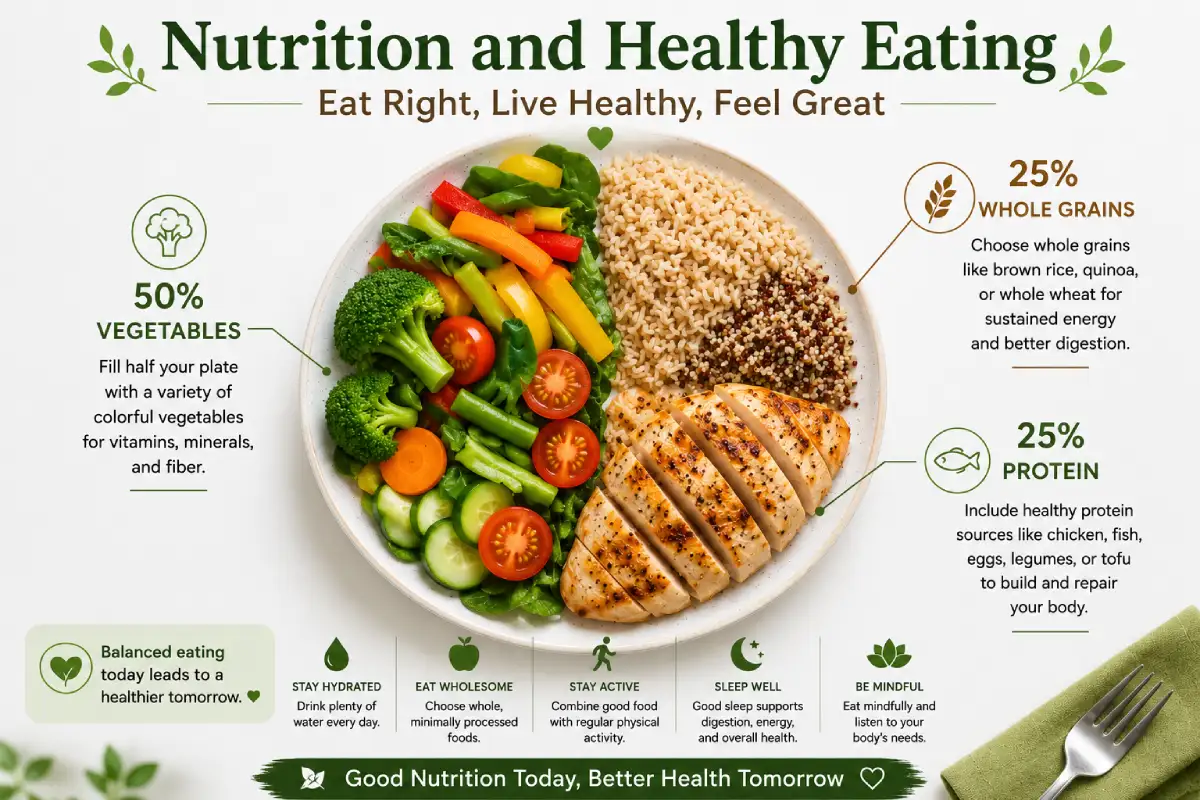
A balanced plate typically looks like:
- Half your plate: vegetables and fruits
- One quarter: whole grains (brown rice, oats, rotis)
- One quarter: lean protein (Lentils, eggs, chicken, tofu)
- A little: these are many types including unsaturated: nuts, seeds, olive oil, ghee (in moderation)9.
This principle works regardless of whether which you‘re developing a healthy eating plan or just trying to become a cleaner eater.
5 Balanced Nutrition Tips You Can Actually Follow
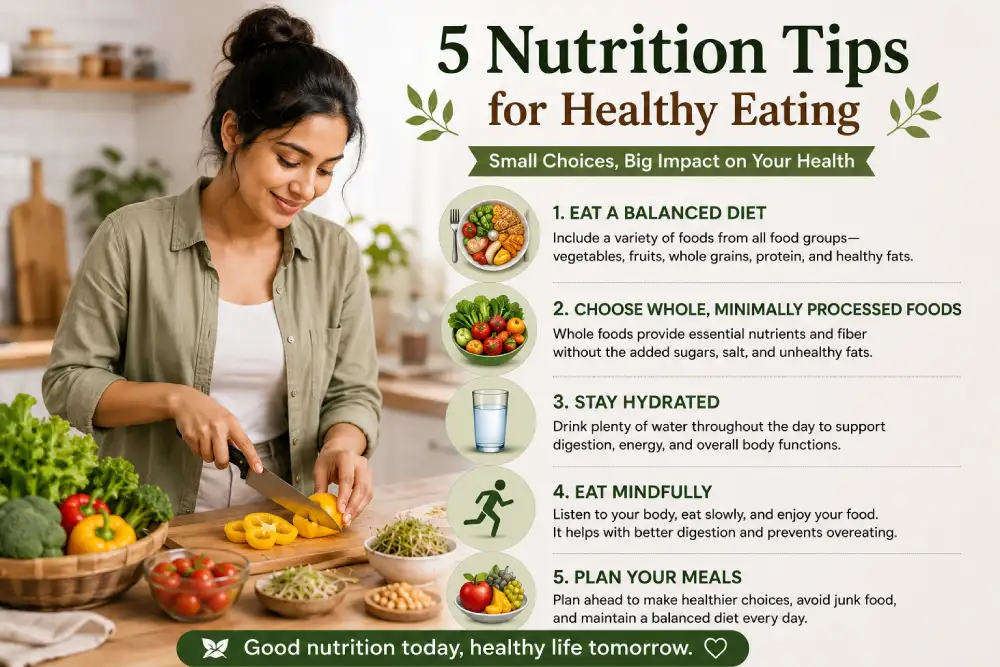
1. Prioritize Whole Foods Over Packaged Ones
The most basic rule and the one you should remember from any wellness nutrition guide is the fewer ingredients on the label the better. Wholefoods such as fresh vegetables and fruits, legumes, wholegrain foods are naturally high in fiber, antioxidants and nutrients they can‘t make up for.
Practical swap: Replace your afternoon biscuit or chips with a handful of almonds or roasted chana (India) or apple slices with peanut butter (US).
2. Don‘t Skip Protein Especially at Breakfast
Protein fills you up, maintains muscle, and burns off easily. Sadly, most people eat too little of it, particularly at breakfast.
- Others reasonable choices are: eggs, Greek yogurt, cottage cheese
- Options favoring India: Moong dal chilla, paneer, sprouts
- US-friendly options: eggs, Greek yogurt, cottage cheese
- India-friendly options: moong dal chilla, paneer, sprouts
Aim for a source of protein at every meal. According to the CDC’s Healthy Eating guidelines, pairing protein with fiber is one of the most effective strategies for maintaining energy and digestive health throughout the day.
3. Master Healthy Meal Planning
Nutritional complacency. It‘s too easy to give up on a good, healthy diet if you haven‘t prepared for the mid-morning or mid-afternoon snacking. When used to hunger and not prepared for it, the desire for something convenient and tasty will be irresistible.
Here‘s a simple weekly meal planning routine:
- Sunday: batch cook grains and/ or lentils or beans
- Monday–Wednesday: Consume fresh cooked food with pre-prepared ingridients
- Thursday: sales: vegetables and fruits revisited: midweek restock;
-
Friday–Saturday: Flexible, but keep healthy snacks ready
Simply planning three meals a week causes a large decrease in junk food impulse decisions.
4. Add Superfoods for Health Without the Hype
‘Superfood’ is a marketing term but the science behind some ingredients is real. No need for exotic powders, some of the world‘s best ‘superfoods’ for health are right in your kitchen.
US Superfoods to add:
- Blueberries (antioxidants)
- Walnuts (omega-3 fatty acids)
- Spinach (iron, folate)
- Chia seeds (fiber, calcium)
Indian Superfoods to add:
- Turmeric (anti-inflammatory curcumin)
- Amla / Indian gooseberry (vitamin C superfood)
- Methi / Fenugreek (blood sugar control)
- Moringa (iron, protein, vitamins A and C)
No need to change your diet. Simply include 1 or 2 of them one or two of your already-eaten meals.
5. Hydration Is Part of Your Nutrition Plan
Water might not be included in most people‘s list of nutrition “habit”, but it should be. Dehydration hampers digestion, drain your energy, makes your skin less clear, and even causes your body to send false signals of hunger.
One general aim: 8–10 glasses a day (more depending on your activity level and body size in hot climates such as much of India or the summer in the US South).
Practical tip: Keep a water bottle on your desk where you can see it. You‘ll tend to drink more if you see the water.
Common Nutrition Mistakes to Avoid
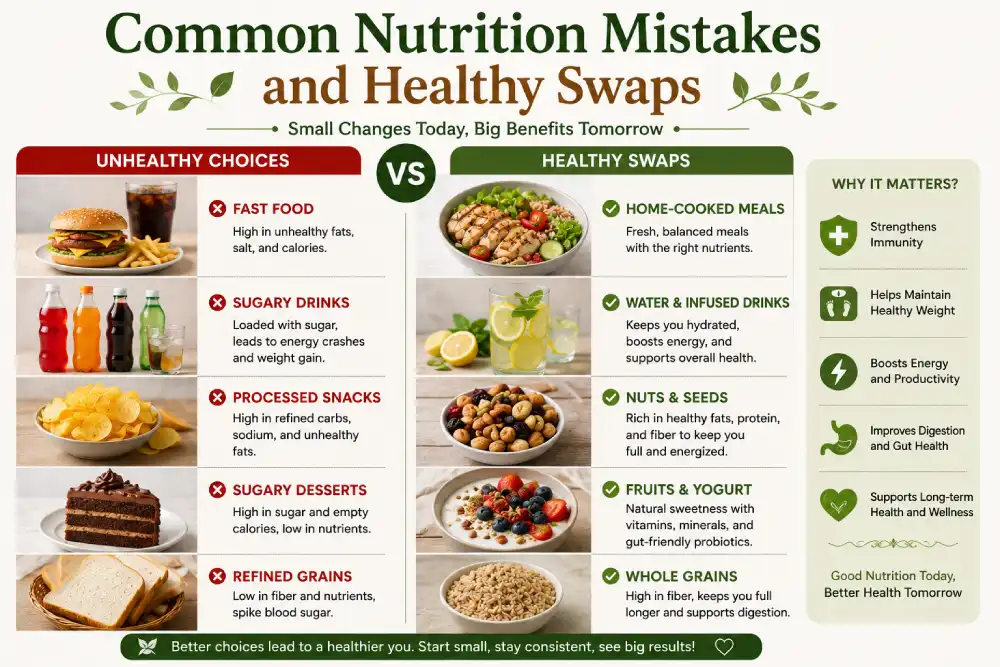
Even well-meaning eaters make these errors:
- Fasting, skipping meals causes blood sugars to crash and chances of emotional eating are high.
- Consuming ‘diet’ foods – if you can find them without sugar. most are full of artificial ingredients
- Overlook portion size of healthy foods still contain calories
- All or nothing thinking – one bad meal does not ruin a week of good eating
- “Not reading labels” Sodium, added sugar, and trans fats hide in “healthy” products
Myth vs. Fact: Nutrition Edition
| Myth | Fact |
|---|---|
| Carbs cause weight gain | Carbohydrates, especially refined carbs can the so many roles15. Whole grain carbs are prechewn for2. The carbohydrates in food are the body‘s own fuel y they are good for you. |
| Fat is unhealthy for you. | Healthy fats (mostly from avocados, nuts and ghee) boost the health of your brain and hormones. |
| Better to eat less. | Undereating destroys metabolism. Eating properly is more important than eating less. |
| You require supplements to be healthy | A diverse diet of whole foods supplies most of the needs, then supplementation provides anything else needed. |
| Eating healthy is expensive | Legumes such as lentils are seasonal foods. Grains are also a cheap food; a bag of pasta in most supermarkets costs no more than one pound. |
Building Your Personal Wellness Nutrition Guide
Every body is different. These steps help you build a nutrition routine that actually sticks:
- Begin with one change not kill everything overnight
- Monitor how food affects you feel energy, mood, digestion their your signals.
- Eat out less. You decide what goes into your meal and how much as well as ensuring the quality is right.
- Eat consciously take your time, eat slowly, and focus on your food as there‘s no need for distraction
- Be consistent Not perfect. Consistency over the course of weeks beats perfection for three days.
Whether you’re following a health lifestyle plan linked to Health and Wellness or starting from scratch, it’s about progress not perfection.
A Note for Indian Readers: Your Traditional Diet Is Already Excellent
If dal-chawal, sabziand rotiis what you have grown up eating, then your traditional Indian diet falls in line with many rules of a balanced diet already. Your diet will already be very rich in plant protein, fiber, and anti-inflammatory spices such as haldi. It is the ultra processed foods you have added to your diet overtime (packaged namkeen, sugar-heavy chai, maide-fattening snacks) which become your problem.
Go back to what worked: more dal, more sabzi, less pre-prepared foods. That is already a huge step up nutrition-wise.
Quick-Start Action Plan
Ready to eat better starting today? Here‘s your 7-day launch plan:
- Day 1: One vegetable added in each meal.
- Day 2: Refined grain replaced with a whole grain (white rice→brown rice or millets)
- Day 3: Consume a protein-based breakfast
- Day 4 Consume 8 glasse of water77
- Day 5: Design three meals that can be prepared over the following three days.
- Day 6: Prepare one meal from scratch.
- Day 7: Check-in what did you enjoy? Keep it.
Small steps, real results.
Nutrition and maintaining a healthy eating pattern are the foundation of every wellness goal, especially when combined with consistent fitness and wellness routines: improved complexion, increased energy, weight management, and long-term disease prevention all begin on your plate.