Healthy Meal Planning Tips for a Balanced Lifestyle
Published: June 17, 2026 Last Updated: June 18, 2026 Getting take-out on weeknights because you ‘ran out of time’
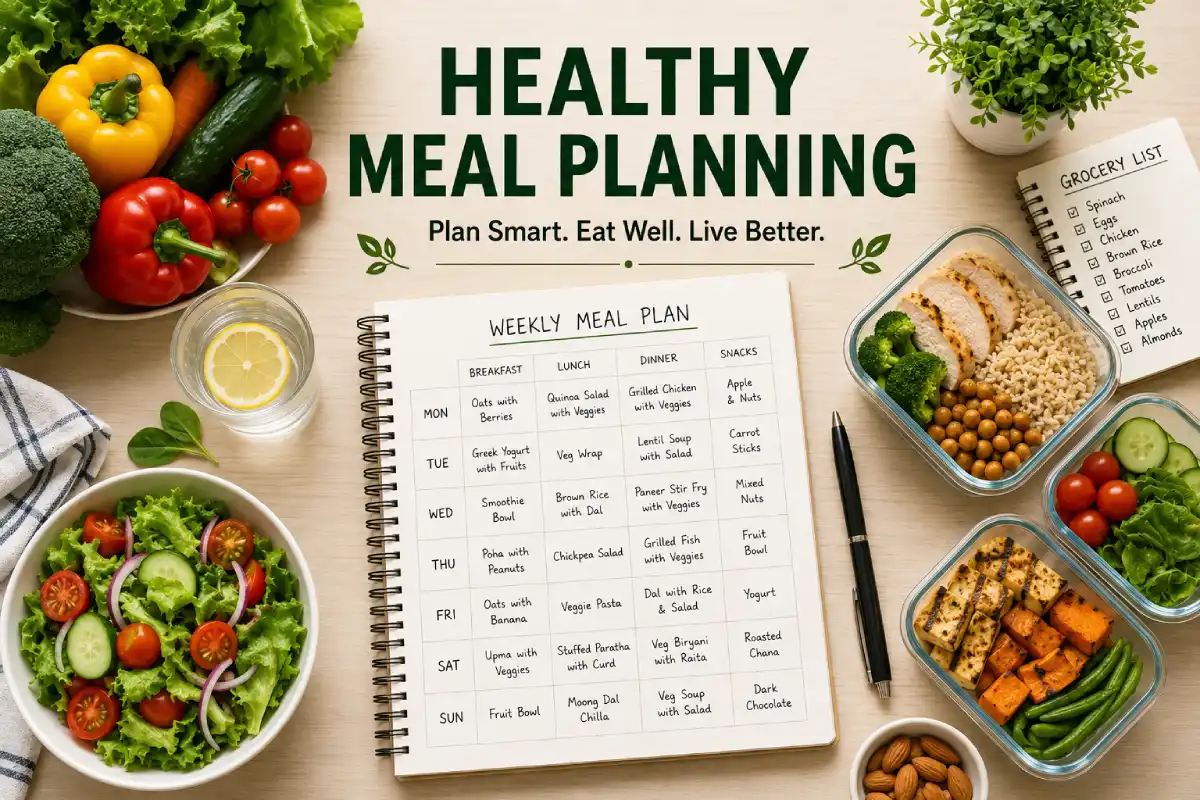
Getting take-out on weeknights because you ‘ran out of time’ is nothing to feel guilty about. Healthy meal planning is one of the most effective ways of eating healthy, saving money and reducing stress, all without living in your kitchen for hours each evening. No matter how hectic life is whether you‘re a New Yorker working long hours or a Mumbai housewife juggling family and career create a straightforward plan and you‘ll be eating your way to good health.
What Is Healthy Meal Planning, Really?
Meal planning isn‘t about having a strict menu and eating the same boring meals every week it‘s about deciding in advance what you‘re going to eat, considering your schedule and your nutritional needs, as well as availability.
It‘s not about being perfect. It‘s about making better choices by limiting the decisions you have to make each day, because too many decisions can lead to that moment of having a cookie for dinner.
Why Meal Planning Actually Works
The benefits go beyond just saving time. When you plan meals ahead, you naturally:
- Help members eat less impulsively, and select higher-quality foods.
- Reduce wasted food by forgotten items
- Use a shopping list to help you saving money.
- Keep a more stable energy level over the course of the day
Studies of habits also show that the pre-commitment can alleviate most of the cognitive load to stay on track when we are stressed.
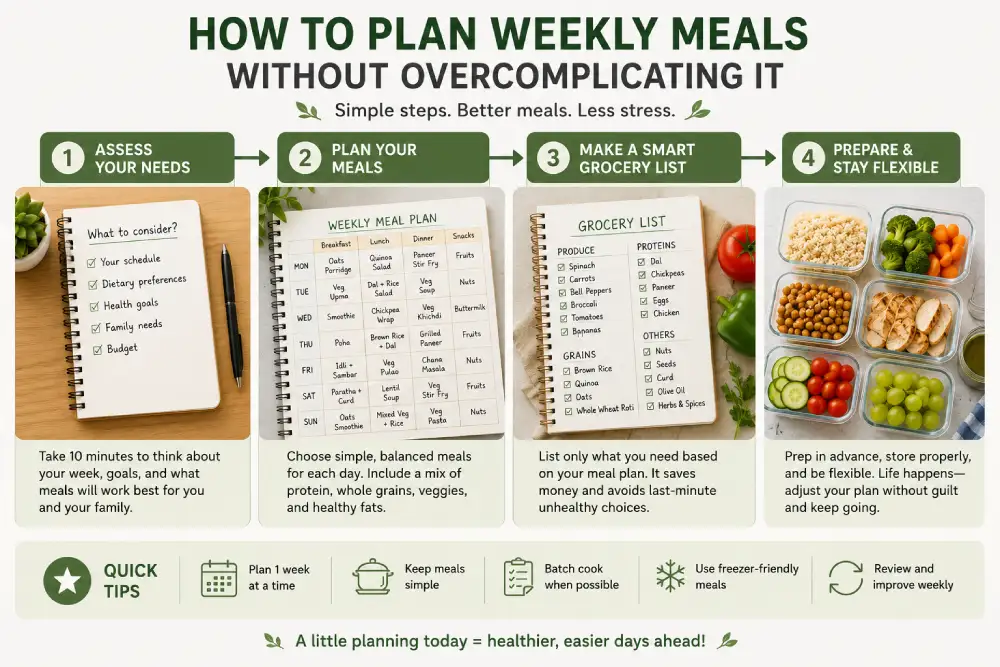
How to Plan Weekly Meals Without Overcomplicating It
A simple weekly system works better than an overly detailed one. Try this approach:
1. Choose a planning day. Many find Sunday to be the easiest choice but any regular day can be used.
Step 2: Selecting 3–4 base meals. Rather than creating 7 different dinners choose to rotate a few go-to meals with a few healthified twists.
Step 3, Build up from what you already have. Always look in your fridge, and store cupboards before you buy so you are not wasting money.
Step 4: Allow for one extra flexible night. We all get busy block out one night for leftovers or a dinner done in 10 minutes or less.
This system functions for a single meal or an entire family, as its aim is to be flexible rather than rigid.
Healthy Grocery Shopping Tips That Support Your Plan
Your meal plan is only as good as your grocery list. A few habits make a noticeable difference:
- Shop with a shopping list that contains the ingredients of the meals you will be preparing, rather than just wandering the aisles.
- Buy versatile staple ingredients (rice, lentils, seasonal vegetables) that can be used in many different meals.
- Elsewhere in India the local sabzi mandis are also often cheaper and fresher than in supermarkets
- In the US, buying staples such as grains and frozen vegetables in large quantity can be significantly cheaper.
Shop when hungry. This is the worst time to shop, and it‘s where impulse buying often trips you up from buying on your list.
Meal Prep for Busy Professionals
Lack of time is more of a challenge for working professionals than lack of knowledge about what to eat. Several fairly simple solutions include:
- Batch-cook grains or proteins on one day, mix with a variety of other ingredients to produce several nutritious meals throughout the week.
- Use one prep session (1 hour– 1 hour– 30 minutes) of prep day in lieu of (more than 1) daily cooking.
- Encourage healthy snacks to be pre-portioned so you do not find yourself reaching for the vending machine.
An example from real life: a software designer in Bengaluru, who was managing a hectic schedule that forced him to eat out & was having late night munching of fried & sweet snacks, began to pack boiled eggs, cut pieces of fruits & roasted channa every Sunday evening. In few week time, the desire of munching fried delicacies in the evening diminished to a large extent.
Common Meal Planning Mistakes to Avoid
Many people try meal planning and quit within a few weeks due to avoidable mistakes:
- Planning an excessively rich meal that is going to take hours to prepare
- This didn‘t take into account changes in the schedule such as people being away producing wasted food/groceries.
- Apart from personal taste declining preparation of a meal to the point of it feeling like homework.
- Attempted to plan all meals rather than the most difficult one, which is normally dinner.
Read More: Nutrition and Healthy Eating for broader guidance on building balanced meals, and explore our Main Health & Wellness Guide for the complete lifestyle roadmap.
Final Thoughts
Healthy meal planning doesn‘t have to be daunting. A weekly system that is adaptable, use of intelligent grocery shopping and some prep-time can make staying healthy much easier even when your weeks are the most hectic!
FAQs
Q1: How do I start healthy meal planning if I’m a complete beginner?
Start small by planning just dinners for the week using 3–4 simple, repeatable meals before expanding to breakfast and lunch.
Q2: Is meal planning expensive?
Not necessarily. Planning around seasonal produce and pantry staples often reduces grocery costs by minimizing impulse purchases and food waste.
Q3: How do I meal plan with a busy, unpredictable schedule?
Build in one flexible day each week for leftovers or a quick backup meal, so unexpected schedule changes don’t derail your plan.
Q4: Can meal planning work for picky eaters or families?
Yes, focus on a few reliable base meals with customizable toppings or sides, so everyone can adjust portions to their preference.
Q5: What’s the difference between meal planning and meal prepping?
Meal planning is deciding what you’ll eat in advance, while meal prepping involves actually cooking or portioning food ahead of time.
Q6: How many meals should I plan for each week?
Most people find success planning just dinners first, since that’s usually the most time-pressured meal of the day.