Clothing Care Guide: Washing, Drying, Ironing and Storage
Published: September 27, 2026 Last Updated: September 27, 2026 Caring for clothes properly comes down to five habits: read
Caring for clothes properly comes down to five habits: read the care label before you wash anything, build a simple washing and stain routine, match your drying and pressing method to the fabric, store clothes so they keep their shape, and handle small repairs before they become big problems. None of this requires expensive products — it requires consistency. This guide walks through each stage at a practical level and links out to deeper, step-by-step guides for washing, drying, storage, ironing, stain removal and repairs.
Most clothes don’t wear out from age. They wear out from the wrong wash cycle, the wrong dryer setting, or a wardrobe that traps monsoon humidity for months at a time. A clothing care routine isn’t about being precious with your wardrobe — it’s about a handful of small habits that add years to clothes you’ve already paid for.
This guide walks through the full lifecycle of clothing care: reading the label, washing, treating stains, drying, pressing, storing, and handling the small repairs that keep a garment wearable. Each section here gives you the practical overview you need to get it right today, and links to a deeper, step-by-step guide wherever you want more detail on a specific task.
Why a Clothing Care Routine Matters
Clothes are one of the few household purchases people replace far more often than necessary. A cotton shirt washed on the wrong cycle can shrink a full size in one wash. A wool sweater tumble-dried on high heat can felt permanently in minutes. A silk saree stored damp during monsoon can develop mildew stains that never fully lift.
None of this is really about expensive fabric or delicate handling. It’s about matching the method to the material, every time, without having to think too hard about it. Once that becomes routine, clothes simply last longer — and you spend less time and money replacing them.
In India specifically, two conditions make this more important than in many other markets: high humidity for a large part of the year, which affects drying and storage more than washing itself, and widespread mixed-fabric wardrobes (cotton, silk, synthetic blends, handloom fabrics) that don’t all respond the same way to heat or moisture. A generic “wash cold, dry low” rule doesn’t cover everything in a typical Indian wardrobe — which is exactly why the label-reading habit below matters so much.
Read the Care Label Before Choosing a Method
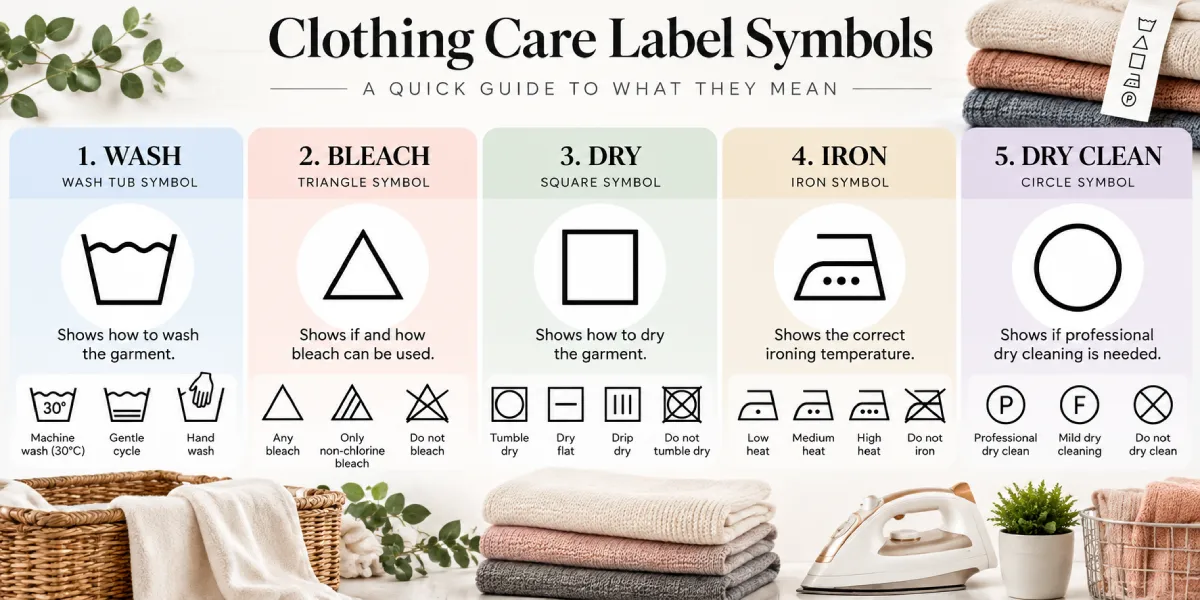
Before you wash, dry, or iron anything, the care label is the fastest way to avoid a mistake. Care labels use five families of symbols, and once you can recognize the shapes, you don’t need to memorize the specifics for every garment you own.
- Washing (a tub shape): tells you the maximum safe water temperature, or whether the item must be hand-washed or not washed at all.
- Bleaching (a triangle): tells you whether bleach is safe, and whether it must be non-chlorine (oxygen) bleach specifically.
- Drying (a square, sometimes with a circle inside): tells you whether tumble drying is safe and at what heat level, or whether the item should only be air-dried.
- Ironing (an iron shape with dots): the number of dots indicates safe heat level; a crossed-out iron means don’t iron at all.
- Professional cleaning (a circle): indicates dry-cleaning requirements, which matters most for structured or delicate garments.
A quick habit worth building: check the label the moment you buy something, not the first time you’re about to wash it. That way you already know, before laundry day, which pile a new garment belongs in.
If you only take one thing from this section, it’s this: care labels represent the minimum safe handling, not necessarily the ideal method — but they are the safest default when you’re unsure, and they take seconds to check.
How to Wash Clothes: Sorting, Cycles and Detergent
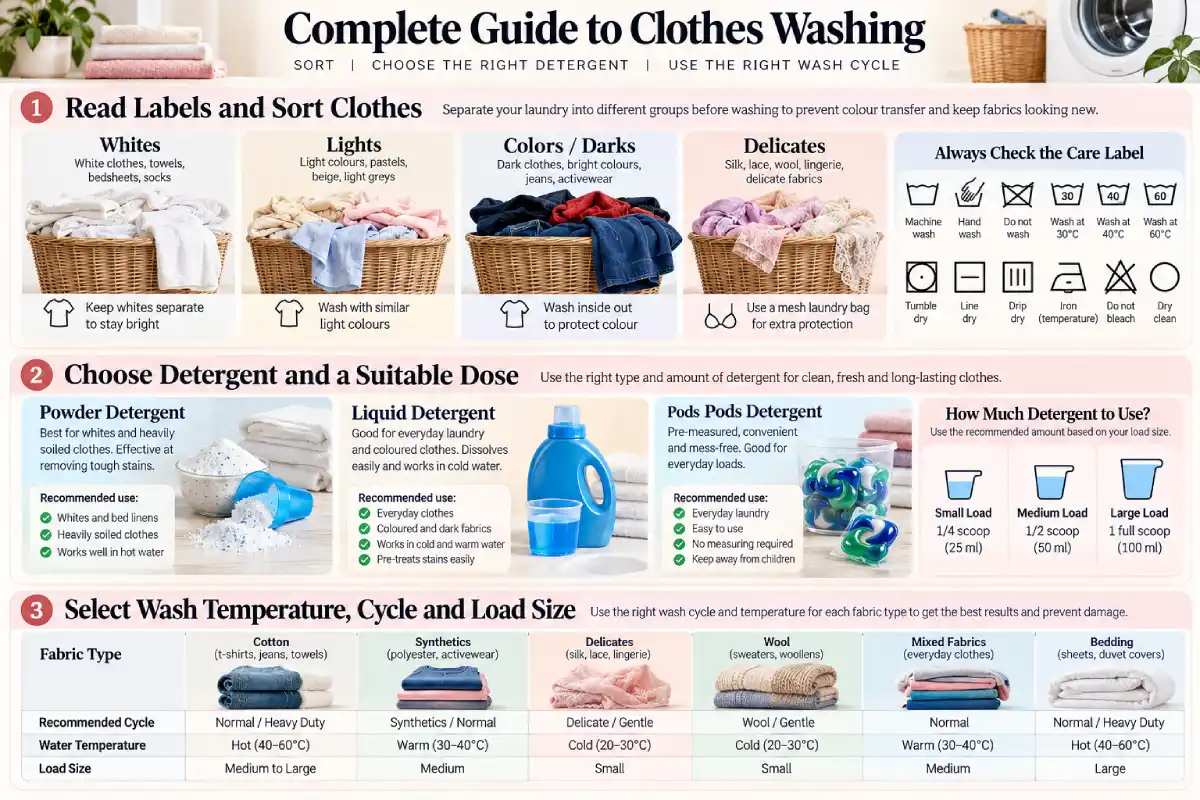
Washing is where most avoidable damage happens, because it’s the step people rush through the most. At the pillar level, three decisions matter most: how you sort a load, which cycle you choose, and how much detergent you actually need.
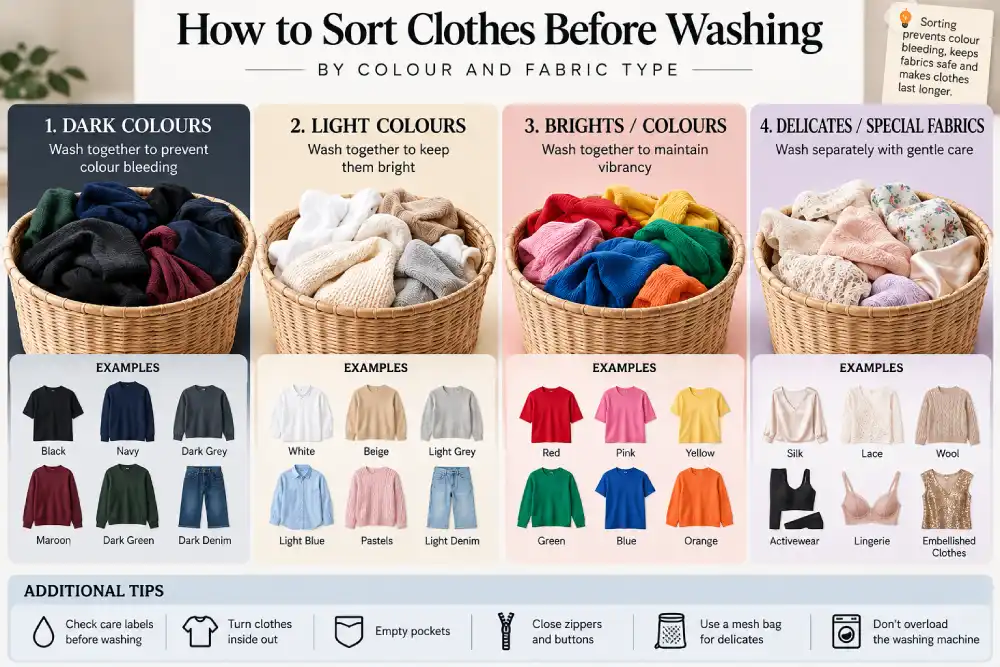
Sorting comes before anything else. Separate by colour first — darks, lights, and whites — because dye transfer is one of the most common and most avoidable forms of clothing damage. Then separate by fabric weight and fragility: heavy items like jeans or towels shouldn’t share a cycle with delicate fabrics like silk or fine knitwear, because the agitation and spin speed that’s safe for denim can stretch or abrade something delicate.
Cycle selection should follow the care label’s temperature guidance first, and the fabric’s fragility second. A cold or cool wash is the safer default for most everyday Indian wardrobes — it reduces shrinkage risk, protects colour, and is gentler on synthetic blends, which make up a large share of casualwear sold in India.
Detergent quantity is more often a problem of too much than too little. Excess detergent doesn’t rinse out fully, which leaves residue that can dull colour and irritate skin over time. A mild, correctly dosed detergent — and less frequent washing overall for items that aren’t visibly dirty or sweat-soaked — does more for garment longevity than an aggressive wash every time.
This section covers the overview. For a full breakdown of wash cycles, detergent types, water temperature by fabric, and load sizing, see the dedicated guide: How to Wash Clothes: Sorting, Cycles and Detergent.
Build a Simple Stain-Care Habit
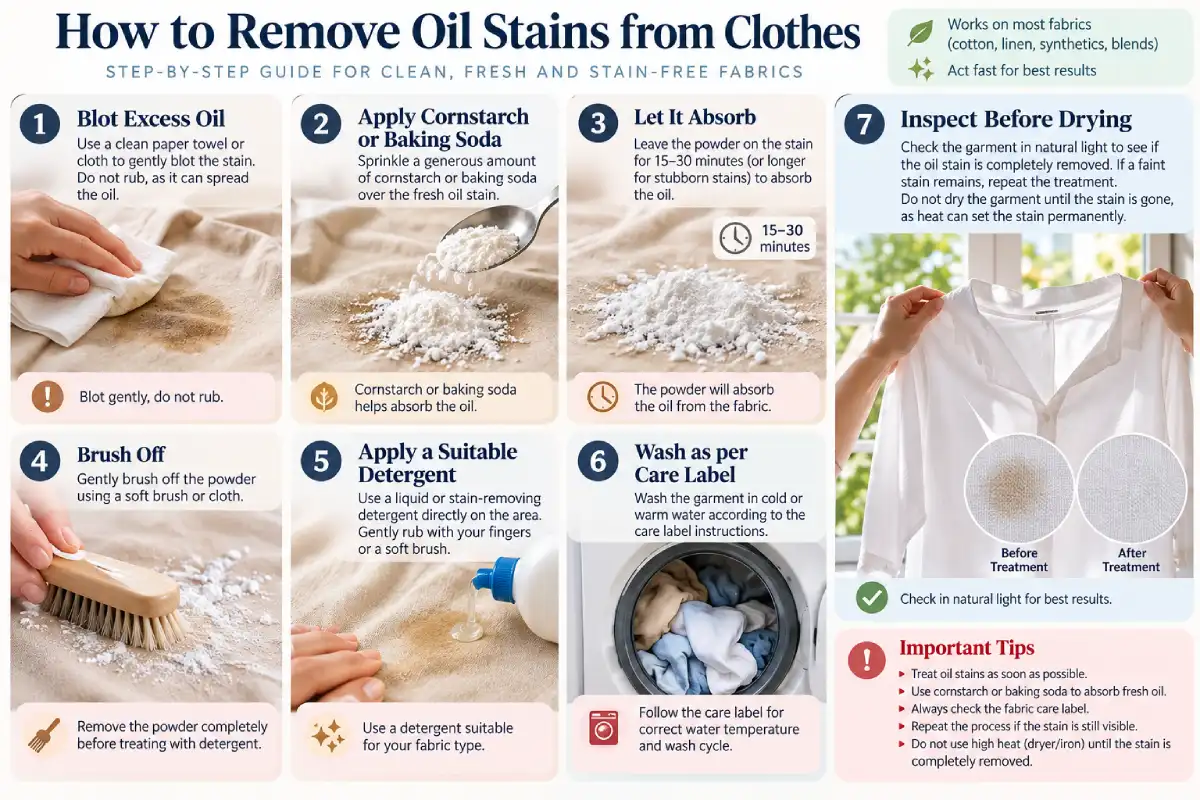
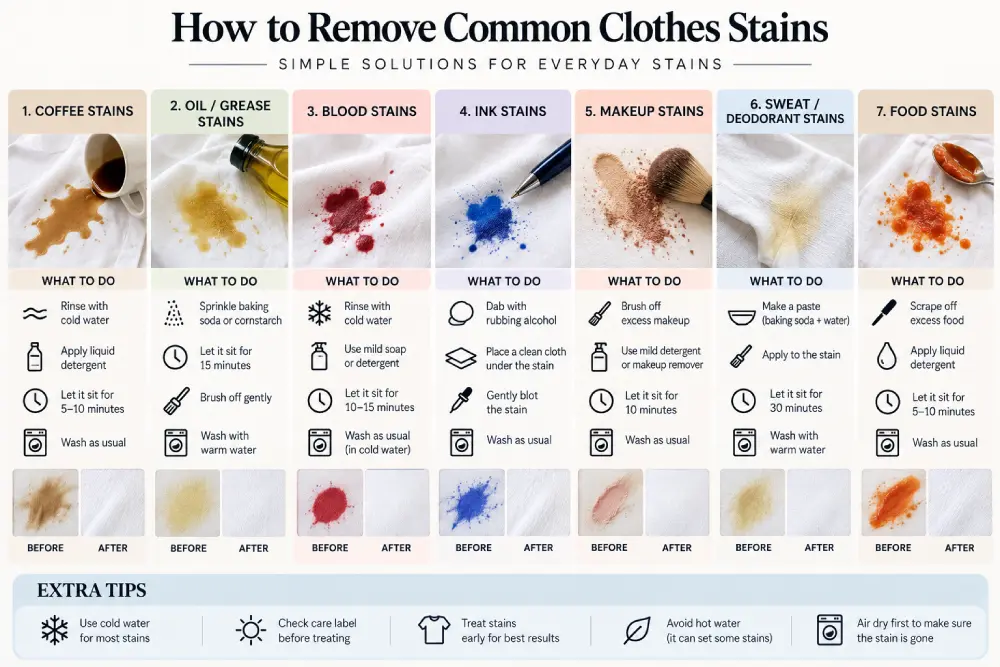
The single biggest factor in whether a stain comes out is speed, not product. A stain treated within the first few hours has a real chance of lifting completely; the same stain left through a full drying cycle is often permanent, because heat sets most stains into the fibre.
A simple habit works better than an elaborate one: keep a stain-treatment step as part of your normal routine, not a separate emergency project. Blot (don’t rub) fresh spills to avoid spreading them, treat the specific stain type before the item goes anywhere near a dryer, and always check that a stain is fully gone before drying — because heat can turn an invisible faint mark into a permanent one.
Different stains need different approaches — an oil-based stain behaves very differently from a food or ink stain, and treating it the wrong way can make it worse rather than better. If you’re dealing with an oil or grease mark specifically, this guide walks through it step by step: How to Remove Oil Stains from Clothes: Step-by-Step.
How to Dry Clothes: Air-Drying and Tumble-Drying Guide
In the dryer is where the damage to fabric becomes worst and irreversible a washing error can sometimes be fixed, but how a fabric has felted or shrunk in the dryer cannot.
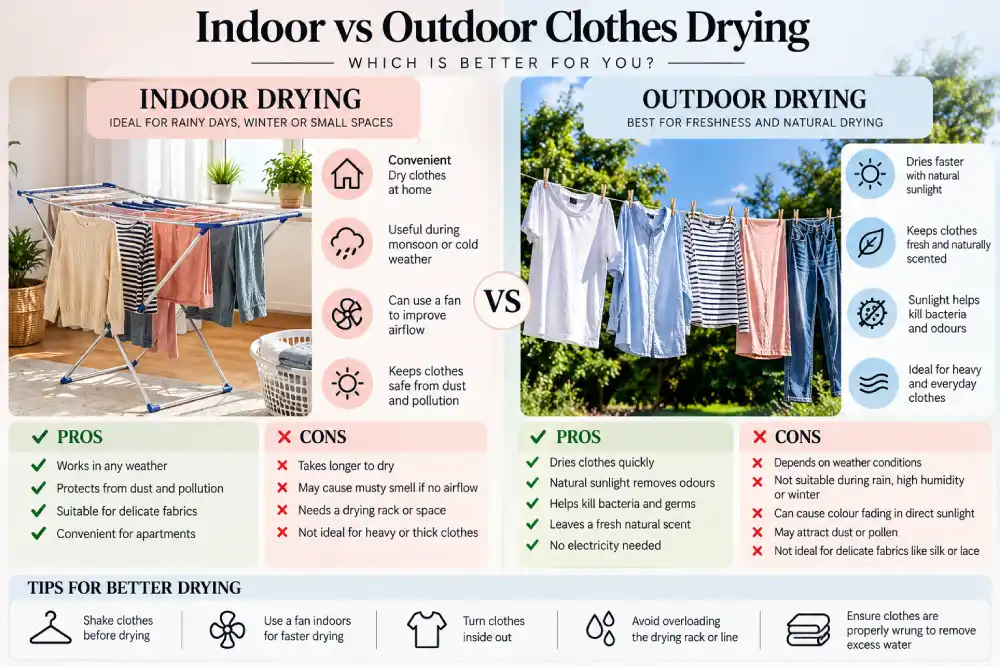
At the pillar level: The most significant forecast is natural versus tumble-dried; this should be based on the fabric, not the easiest option. Natural fabrics cottons, wools, linen are the most sensitive to heat. They tend to shrink and are best air-dried, or tumble-dried on the lowest heat possible. Synthetics handle machine drying well, although may stretch or pill with high heat from multiple cycles.
In much of India, moisture is a bigger practical problem than heat-sensitivity. In the monsoon, it’s often impossible to air dry outside, and drying indoors in a closed room can go a little ‘musty,’ with mildew developing before the clothes are actually completely dry. The basic solution is air-flow, not heat: lay the garments some distance apart, keep the space well-ventilated (fan or open window), and don‘t heap damp clothes even for a little while the smell and mildew come rapidly at those times.
This section covers the decision-making overview. For a full comparison of drying methods, heat settings by fabric, and specific guidance for drying indoors during humid weather, see the dedicated guide: How to Dry Clothes: Air-Drying and Tumble-Drying Guide.
How to Use a Steam Iron: Settings, Steps and Fabric Care
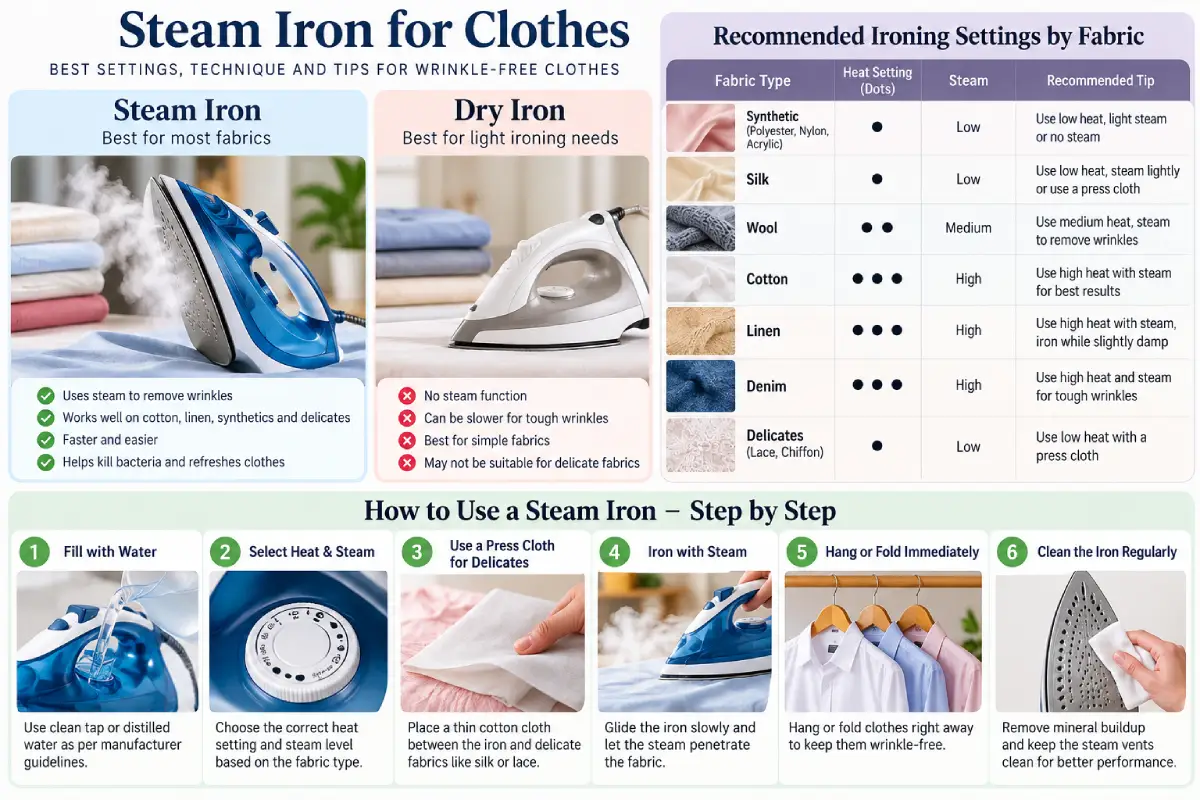
Ironing (or steaming) is the step that determines how a garment actually looks when worn, and it’s also one of the easiest steps to get wrong on delicate fabric, because heat damage from an iron is immediate and often visible instantly — scorching, shine marks, or melted synthetic fibres.
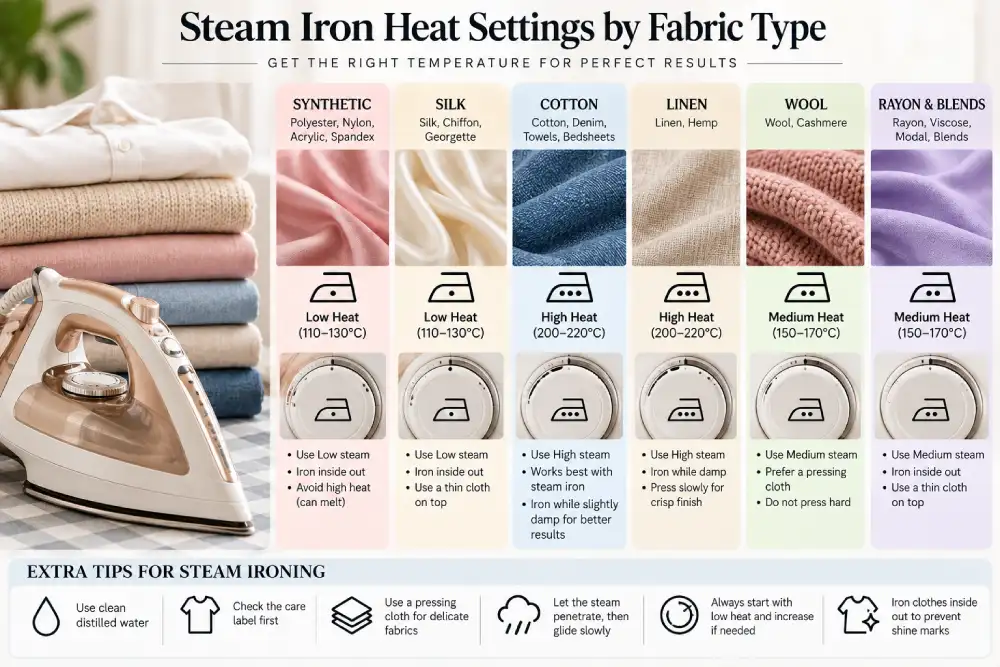
The core principle at the pillar level: match the iron’s heat setting to the most heat-sensitive fabric in the garment, not to the fabric that looks toughest. A cotton-linen blend, for example, should be ironed at the lower of the two recommended temperatures, not the higher one. For delicate or embellished fabric — common in Indian ethnic wear with embroidery, sequins, or zari work — a press cloth between the iron and the fabric, or a lower steam-only setting, protects both the fabric and any decorative work from direct heat contact.
Slightly damp fabric presses more easily and with less risk of scorching than fully dry fabric, which is why many people iron shirts straight after they’ve almost finished air-drying rather than waiting until they’re bone dry.
This section covers the general approach. For specific iron settings by fabric type, step-by-step pressing technique, and steam-versus-dry ironing guidance, see the dedicated guide: How to Use a Steam Iron: Settings, Steps and Fabric Care.
How to Store Clothes: Folding, Hanging and Seasonal Care
Storage is the stage most people think about least, but it’s responsible for a surprising amount of long-term clothing damage — stretched shoulders from the wrong hanger, permanent creases from tight folding, and, in India specifically, mildew and pest damage from humidity and poor ventilation.
Two decisions matter most at the pillar level: fold versus hang, and how you protect stored clothes from moisture and pests.
As a general rule, structured garments — jackets, blazers, anything with shoulder seams — should be hung, because folding creates creases in places that are hard to press out and can weaken the fabric at the fold line over repeated storage. Knitwear, on the other hand, should usually be folded rather than hung, because hanging stretches knit fabric out of shape at the shoulders over time.
The moisture question matters more in India than in drier climates. During monsoon months, clothes should be completely dry — not just dry to the touch — before they go into a wardrobe, since even slight residual dampness can trigger mildew in an enclosed space. Simple, low-cost protection — moisture absorbers like silica gel packets, good ventilation or an occasional open-door airing, and keeping some breathing space between hung garments rather than packing a rod tightly — meaningfully reduces musty smell, mildew and pest damage over a full season.
This section covers the overview. For a full breakdown of folding techniques by garment type, hanger choice, seasonal rotation, and moisture/pest protection for humid climates, see the dedicated guide: How to Store Clothes: Folding, Hanging and Seasonal Care.

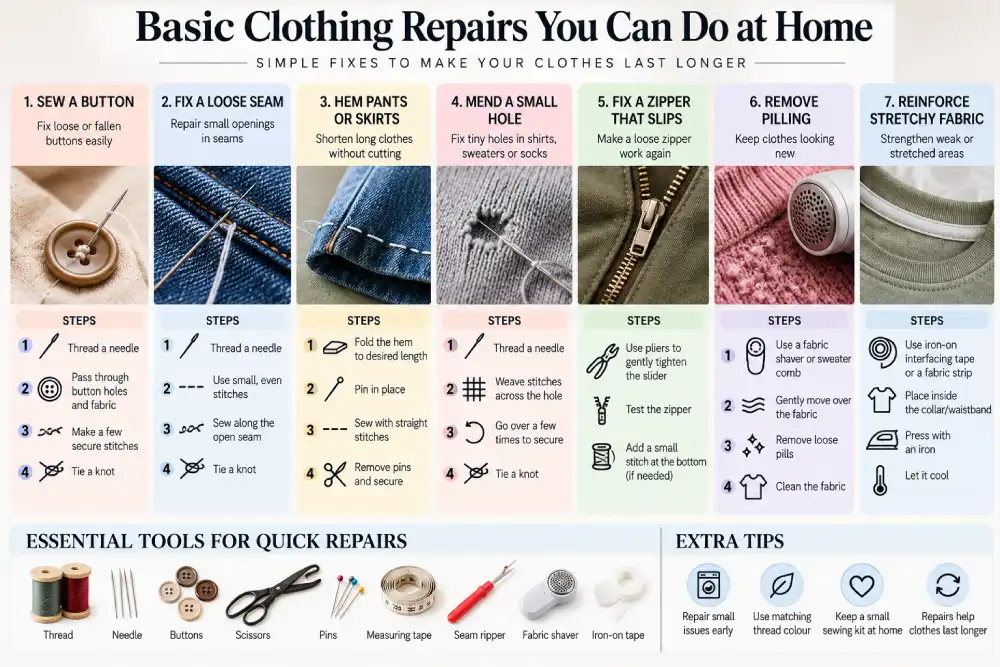
Basic Clothing Repairs: Sew a Button and Fix a Seam
A surprising number of clothes get retired not because they’re worn out, but because of a single loose button or a few centimetres of open seam that never got fixed. Left alone, small damage tends to get worse — a loose button falls off entirely, a small seam opening spreads under normal wear and movement.
At the pillar level, the useful habit is simply catching small damage early and knowing which repairs are realistic to do yourself. A loose button or a short, straight seam opening are both well within reach of a basic sewing kit and a few minutes, even without prior sewing experience. Damage to structural areas — a broken zip, a torn seam under real stress like a crotch or underarm, or damage to lined or tailored garments — is usually a better candidate for a tailor, since a rushed home fix can make the repair harder to do properly later.
This section covers the decision framework. For step-by-step instructions on sewing a button back on and fixing a small seam by hand, see the dedicated guide: Basic Clothing Repairs: Sew a Button and Fix a Seam.
A Simple Weekly and Seasonal Clothing Care Routine
Pulling all of this together, a realistic routine looks less like a checklist and more like a few habits repeated consistently:
- Check the care label when you buy something, not when you’re about to wash it.
- Sort by colour and fabric weight before every wash, and default to a cooler cycle when in doubt.
- Treat stains immediately, and never dry a garment until you’re sure the stain is gone.
- Choose drying method by fabric sensitivity first, and prioritise airflow over heat during humid months.
- Iron at the lowest safe setting for the most delicate part of the garment.
- Let clothes finish drying completely before folding or hanging them away, and give wardrobes occasional ventilation and moisture protection, especially through monsoon.
- Fix small damage — a button, a short seam — as soon as you notice it, rather than after it’s worn several more times.
None of these steps takes long individually. Done consistently, together, they’re the difference between a wardrobe that looks tired within a year and one that holds its shape and colour for several.
FAQs
How often should I wash my clothes?
Varies by garment and how it‘s worn, not by some set date. Garments worn directly on the skin (underwear, socks, undergarments) need to be washed after each wear while garments like jeans, jackets or shirts that are hardly worn against the skin can be worn several times before washing as frequent washing is one of the major causes of fabric wear and color fading.
What’s the safest default wash temperature if I’m not sure?
In general, a cold or cool wash will be the safest way to go. You are less likely to cause shrinkage or colour loss on most fabrics, and it should be kind to most blends of synthetics typically found in typical Indian wear. Only go warmer if you have to, and then follow the care label.
Can I air-dry clothes indoors during monsoon without them smelling musty?
Yes, but you need to consider how the air flow is affecting the odor too; based on the experiment we‘ve found that working with the air flow works better than applying heat. So space the garments apart instead of cramming them all together, use a fan, or leave the room aired, and never leave wet laundry in a heap, or in the washing machine for any length of time; this is when musty smells and mildew grow.
Why do my clothes lose shape even though I don’t wash them that often?
Storage is a common overlooked cause. The wrong hanger for a knit garment, tightly packed wardrobe rods, or putting away clothes that are slightly damp can all distort shape over time — separately from anything that happens during washing.
Is it worth fixing a loose button or small seam myself, or should I go to a tailor?
A loose button or a short, straight seam opening is realistic to fix at home with a basic sewing kit. Damage in structural or high-stress areas — a broken zip, a torn underarm or crotch seam, or anything on a lined or tailored garment — is usually better handled by a tailor, since a rushed home repair can make it harder to fix properly later.
CONCLUSION
Clothing care isn’t about following an elaborate system — it’s about a handful of decisions made consistently: reading the label before you act, matching your wash and dry method to the fabric rather than to convenience, storing clothes fully dry with a little moisture protection, and fixing small damage before it becomes a bigger problem. Each stage of that routine has more depth than a single hub page can cover — which is exactly why washing, drying, ironing, storage, stain removal and repairs each have their own dedicated guide linked throughout this page. Start with whichever stage is causing you the most trouble today, and build outward from there.