How to Dry Clothes: Air-Drying and Tumble-Drying Guide
Published: September 27, 2026 Last Updated: September 27, 2026 Quick Summary: Clothes drying comes down to one decision: does
Quick Summary:
Clothes drying comes down to one decision: does the garment go in the dryer, or not? Check the drying symbol on the care label first — an empty square means air-dry only, a square with a circle inside means tumble drying is allowed, and dots inside that circle tell you the safe heat level. Knits and delicate fabrics should be laid flat, not hung, since wet weight stretches them out of shape. Sturdy items like towels, denim and cotton basics tolerate tumble drying well. When air-drying indoors, airflow — not heat — is what actually gets clothes dry without a musty smell.
Drying is where most avoidable clothing damage happens — more than washing, and often more than anything else in the care routine. A shrunk sweater or a stretched-out T-shirt usually isn’t a washing mistake. It’s a drying mistake. The good news is that getting clothes drying right doesn’t take special equipment — it takes about thirty seconds of checking a label before you decide where a garment goes next.
Check Drying Symbols and Garment Instructions
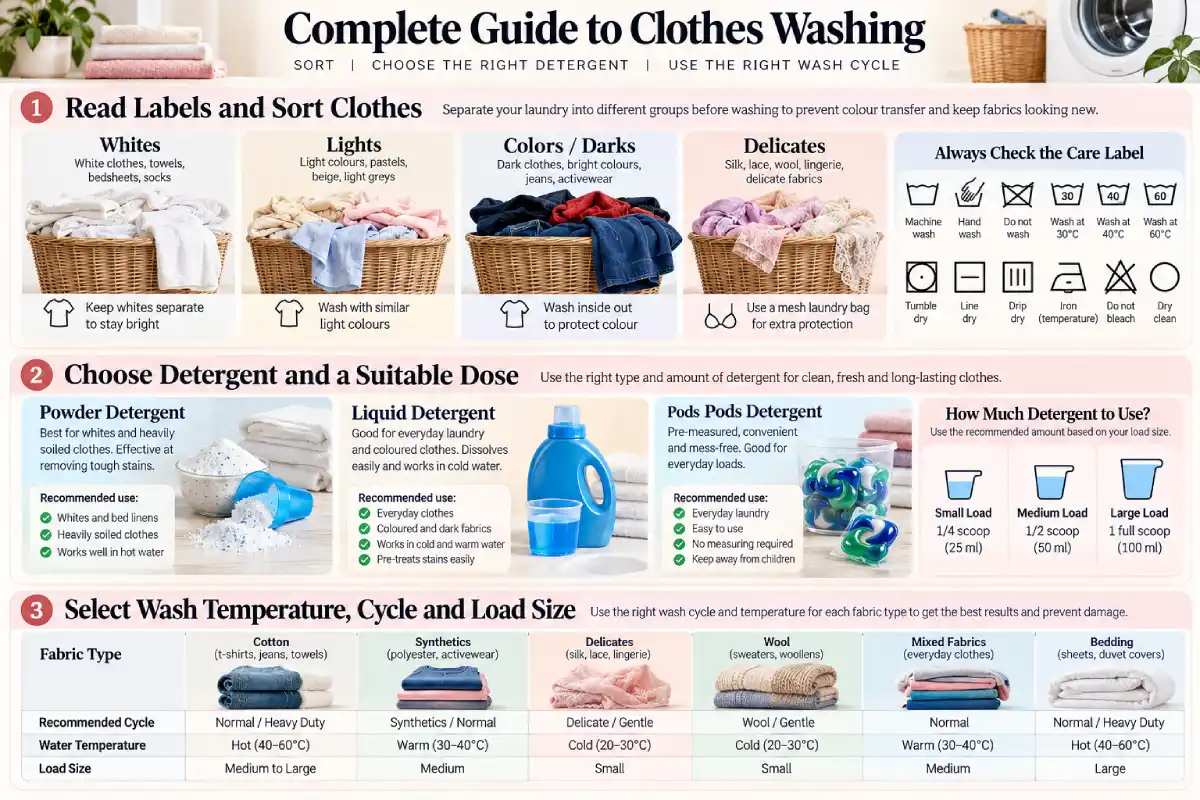
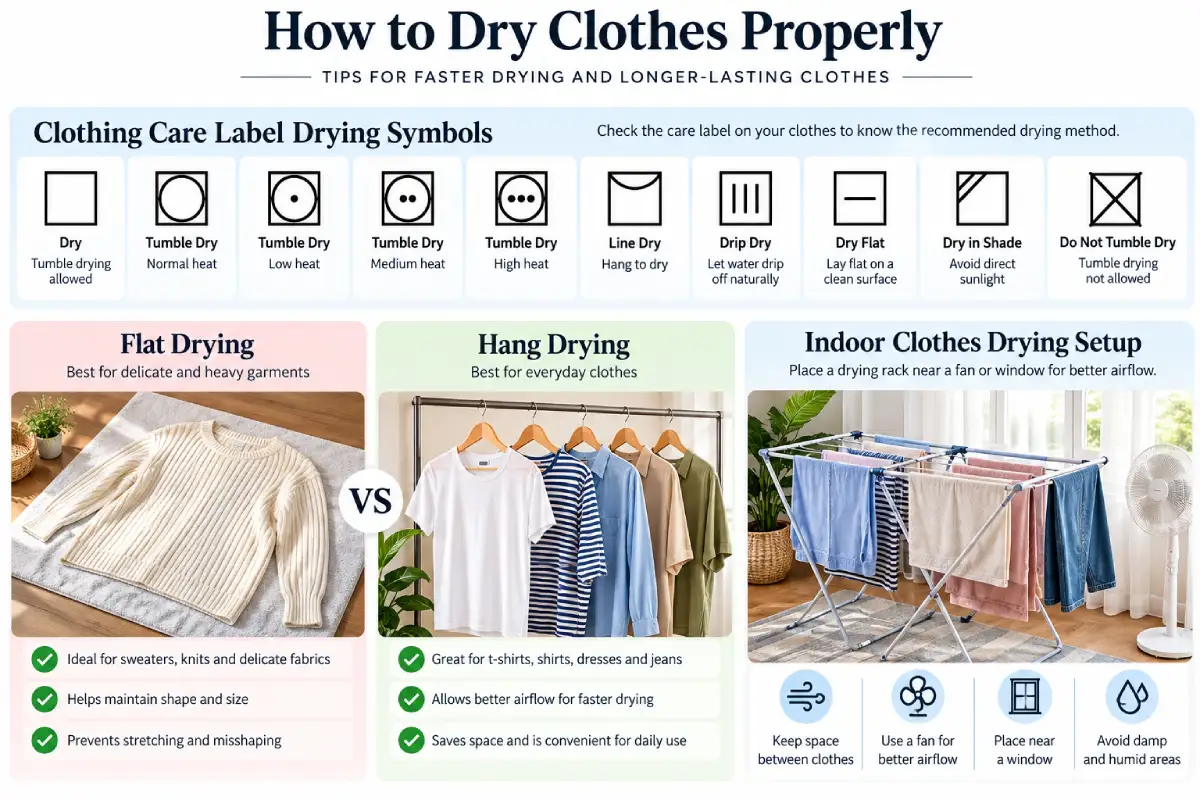
The care label’s drying symbol is the fastest way to avoid guessing. Here’s what the main symbols mean:
| Symbol | Meaning |
|---|---|
| Empty square | Air-dry only — no tumble dryer |
| Square with a circle inside | Tumble drying is allowed |
| Circle with one dot | Tumble dry on low heat only |
| Circle with two dots | Tumble dry on medium heat |
| Circle with three dots | Tumble dry on high heat is fine |
| Square with a circle, crossed out | Do not tumble dry under any circumstance |
| Square with diagonal lines | Dry in shade, away from direct sunlight |
| Square with one vertical line | Line-dry (hang to dry) |
| Square with a horizontal line through it | Dry flat |
A dryer symbol with zero dots generally means any heat setting is fine, while three dots signals the garment can handle high heat — usually sturdy cottons, linens, and towels. One dot means low heat only, which matters for anything delicate like silk, rayon, or spandex blends, since those fibers degrade under high heat faster than cotton does.
If a garment’s label is missing or worn off, treat it the way you’d treat anything unfamiliar: default to the gentler option. Air-drying is always a safe fallback, even for items that could technically tolerate the dryer — it just takes longer.
How to Air-Dry Clothes Indoors and Outdoors
Air-drying works differently outdoors than it does indoors, and the difference matters more than most people realize.
Outdoors, a clothesline or drying rack in direct airflow dries clothes efficiently, but direct sunlight can fade dark colors and weaken certain fibers over time — which is exactly what the “dry in shade” symbol is warning about. If you have the option, an airy, shaded spot dries clothes almost as fast without the fading risk.
Indoors, the entire process depends on airflow, not warmth. A wet pile of clothes on a drying rack in a closed room with no air movement will take far longer to dry and is far more likely to develop a musty smell than the same clothes spaced apart near an open window or a fan. This is especially relevant in humid climates — much of India during monsoon months, and humid regions of the southeastern US — where ambient moisture in the air already slows evaporation before you’ve added wet laundry to the mix.
A few adjustments that meaningfully speed up indoor drying:
- Leave real space between hanging garments so air can move around each piece, not just past the group.
- Position the rack near a fan, window, or air conditioner rather than in a closed corner.
- Avoid draping clothes over furniture or piling them — a pile traps moisture at the center far longer than the edges.
- In consistently humid weather, a dehumidifier in the drying area cuts drying time noticeably, since it’s actively removing the moisture that would otherwise slow evaporation.
When to Dry Flat or Hang Garments
Not every “air-dry” garment should be handled the same way, and this is where a lot of stretched-out sweaters and sagging necklines come from.
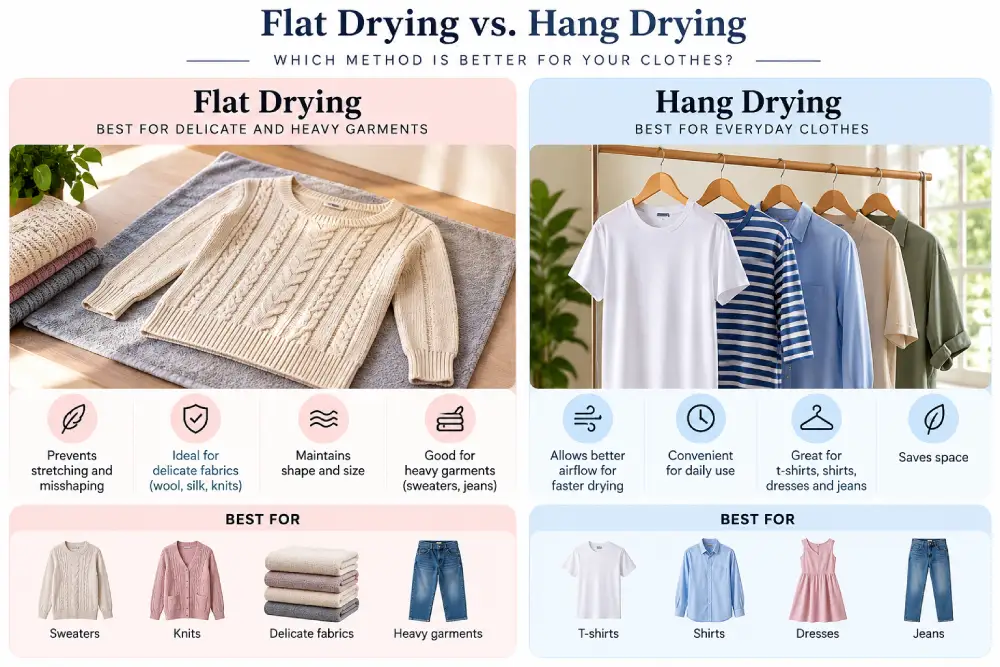
Dry flat: Knitwear, wool, cashmere, and other stretch-prone fabrics should be laid flat, not hung. A wet garment can weigh close to double its dry weight in absorbed water, and when that weight hangs from a shoulder seam or a hanger, it pulls the fabric down unevenly — stretching the body of the garment and sagging the neckline in a way that doesn’t bounce back once dry. Laying the item flat on a drying rack or a towel, and reshaping it gently to its original dimensions before it dries, prevents this entirely.
Hang to dry: Sturdier woven fabrics — cotton shirts, denim, most everyday casualwear — handle hanging well, since the fabric structure resists the same stretching that knits are prone to. Hanging is also more space-efficient and dries faster than laying flat, since air reaches both sides of the garment.
A simple rule of thumb: if a fabric would sag or lose shape on a hanger while dry, it will sag more while wet. When in doubt, flat is the safer default for anything knitted or elastic.
How to Choose a Suitable Tumble-Dryer Setting
If the care label allows tumble drying, the dot count tells you the ceiling — not necessarily the setting you should always use. Even when three dots (high heat) is technically permitted, a lower setting is gentler on colour and elasticity over the life of the garment, especially for anything worn often.
A few habits that make tumble drying safer, regardless of setting:
- Don’t overload the dryer. Clothes need room to tumble freely; an overstuffed load dries unevenly and takes longer overall.
- Sort by weight, the same way you would for washing. Heavy items like towels or jeans drying alongside lightweight T-shirts cause the lighter pieces to overdry while the heavier ones are still damp.
- Clean the lint filter before every load. A blocked filter restricts airflow, which extends drying time and can cause the dryer to run hotter than the setting suggests.
- Watch for permanent-press or gentle-cycle symbols (shown as one or two lines beneath the square). These indicate the garment needs a cooldown phase or reduced tumbling to avoid wrinkling or fiber stress — most modern dryers list a matching cycle name.
Troubleshoot Slow Drying, Odours and Wrinkles
Clothes dry more slowly than you want: An airflow rather than a heat problem more often than not. Clumped racks, closed spaces and the moisture in the air tend to slow evaporation. Even with a heat source it is more quickly remedied by spacing out the clothing and creating airflow.
Clothes have a stale smell when dry: in general, if your clothes have a musty odor they sat with excess moisture before being dried, rather than the smell being created after the garment is dried; mold and bacteria develop during the period before getting dried, not after. Solution: mitigate this by drying your clothes quickly, and never leaving excess moisture sitting in the washing machine or in the laundry pile.
Clothes emerge from air-drying with wrinkles: wrinkles form predominantly as fabric dries in a bunch while wet. By hand smoothing the cloth out as you hang or lay it and hanging shirts by their collar on a hanger versus hanging them over a rod one can reduce the wrinkle formation to a degree where most casual clothes don‘t need to be ironed.
Getting our clothes dry is all about getting the right “equipment” (fashion terminology!) and learning what kind of airflow it needs to be effective. None of it has anything to do with what we‘ve got in our “extras” kit bag. becomes routine, it quietly prevents most of the shrinking, stretching, and fading that otherwise cuts a garment’s life short.
FAQs
Can I put “dry flat” clothes in the dryer if I’m short on time?
It‘s better left unfumbled. The “dry flat” icon generally used for knits and fabrics prone to stretching out of shape when tumble dried and heated, rather than when wet and weighed down (although that is not unheard of). Drying on a no-heat or air-fluff setting on the dryer is a more gentle compromise than heated, but flat is still a better bet.
Why do my clothes still feel damp after a full dryer cycle?
Usually this is an overloading or lint-filter problem. An overloaded dryer won‘t circulate the air properly and since a clogged lint filter impairs air circulation in a similar fashion, that too helps. Hence, cut back on dry load and keep cleaning the lint filter before each cycle.
Is it bad to dry clothes indoors every day?
Absolutely not, as long as there is airflow. The problem with regular indoor drying is not the frequency – it‘s the still, damp air surrounding the clothes. That is cured by a fan, open window or dehumidifier even with daily indoor drying.
Do dark clothes really fade faster in direct sunlight?
Yes — UV exposure breaks down dye molecules over time, which is why care labels sometimes specify “dry in shade” for darker or printed fabrics. Shaded, airy outdoor drying gets most of the speed benefit of sunlight without the fading risk.
What’s the fastest way to dry a heavy item like a towel or jeans without damaging it?
Sort it into its own load rather than mixing it with lighter items, use the highest heat setting the care label allows, and make sure the load isn’t overfilled — heavy items need more tumbling room to dry evenly than a mixed load allows.
FINAL CONCLUSION
Clothes drying isn’t complicated once the decision-making is in the right order: check the symbol first, match the method to the fabric — flat for knits, hanging for sturdier weaves, tumble drying only within the heat limit the label allows — and prioritize airflow over heat when drying indoors. Get that sequence right consistently and clothes drying stops being a source of shrunk sweaters and stretched necklines. For the rest of the care routine — washing, ironing, and storing what you’ve just dried — the full Clothing Care Guide covers each stage in one place.