Best Face Wash for Dry Skin Women: Gentle & Hydrating Picks
Published: September 10, 2026 Last Updated: September 17, 2026 The lack of softness and the traces of dryness that

The lack of softness and the traces of dryness that appear just a few minutes after face washing or the dryness and flakiness that develop regardless of whether you use a rich moisturizer means that you are not using a moisturizer that is too harsh, but a cleanser that is. Th best face wash for dry skin women is one that does not only cleanse but also nourishes to help keep your skin away from the all too familiar feeling of tightness.
How to Choose the Best Face Wash for Women With Dry Skin
Dry skin occurs when the body produces an insufficient amount of natural oils, or sebum, and/or when the skin‘s protective barrier becomes damaged and loses moisture at a faster rate than the body can replace it. For women, another factor to consider is daytime use of makeup and SPF – you have to find a deep cleaning cleanser that gets the job done thoroughly without stripping.
Main message:A fresh-feeling face-wash, that has your skin feeling “clean” and “comfortable”, never “tight” or “squeeky” is the one that is working. If you feel uncomfortable, then you should change the formula, not put up with it.
What to look for:
- A cream or hydrating gel rather than a foaming, oil-stripping formulation.
- Dry or fragrance free, as dry skin may be more sensitive and fragrance aggravate the condition
- A non-foaming/low-foaming consistency lots of foam can be an indicator of sulfates, which are very drying for dry skin
For a full comparison of textures and ingredients across every skin type, our best face wash guide is a helpful starting point before narrowing down to dry-skin-specific picks.
Best Hydrating Ingredients to Look for in a Face Wash
When it comes to the hydration factor in a cleanser it boils down to a handful of proven ingredients everything else is really just marketing.
| Ingredient | Why It Works for Dry Skin |
|---|---|
| Ceramides | Restore and strengthen the natural moisture barrier of the skin |
| Glycerin | A humectant that increases water to the skin while cleansing. |
| Hyaluronic Acid | Maintains moisture helping skin remain full and soft not tight |
| Squalane | A light emollient, which softens the skin and does not leave a greasy film. |
| Oat Extract | Calms and soothes irritation typical with those who have dry, sensitive skin. |
Practical Tip: For dry skin ceramides are desirable as not only do they have an immediate moisturizing effect but they are also repair the barrier responsible for holding this moisture in in the long term. This is further along the ingredient list.
Cream vs Gel Face Wash: Which Is Better for Dry Skin?
Both textures can be suitable for dry skin. However, it is a matter of how dry the skin is and in which climate you live.
| Cream Cleanser | Hydrating Gel Cleanser | |
|---|---|---|
| Best for | Very dry, flaky or sensitive skin. | The crust may be somewhat dry, such as in warmer/humid climates |
| Feel | Rich, cushiony, not completely rinsed “squeaky clean” | Smoother, on nose lighter, a little fresher. |
| Risk | Can become heavy when the weather is hot and humid | May be less nourishing for extremely dehydrated or winter damaged skin |
Practical example: A woman with dry skin in a humid Indian city may be bestoffusing a lightweight hydration gel formula. Whereasthe same skin type experiencing a cold, dry US winter would probably require the comfort of a cream to provide the cushion.
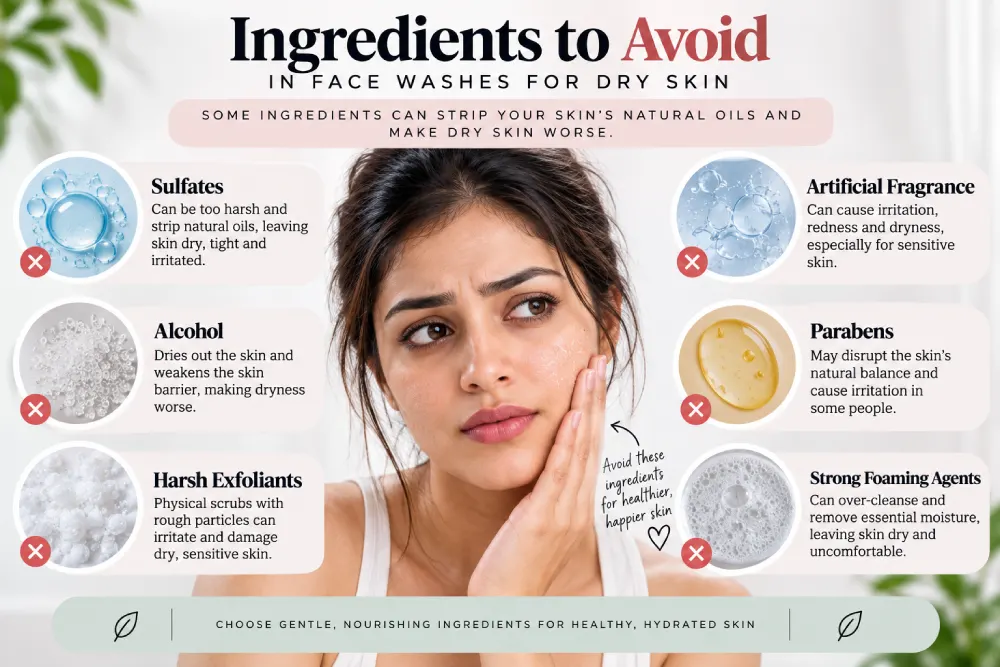
Which Face Wash Ingredients Can Make Dry Skin Worse?
There are ingredients that discreetly work against a hydrating formula‘s purpose, even in those marketed as gentle.
- Sulfates (SLS/SLES): Responsible for that tight, stripped feeling after washing 1 in the most significant offenders, as they are harsh surfactants.
- Denatured alcohol:-found in “soothing” or oil-control products for oily/combination skin, but can be very drying & irritating to dry skin.
- Synthetic fragrance: This commonly inflames, itchy and hypersensitive particularly on predisposed dry compromised skin.
- High percentage exfoliating acids: Ned in moderation but daily use of strong AHAs/BHAs can further aggravate dryness and impaired barrier function
Myth vs Fact: “A face wash that foams a lot is cleaning more thoroughly.” Fact: Heavy foam is often a sign of sulfates, which tend to be more drying — not more effective — especially for already-dry skin. The American Academy of Dermatology specifically recommends fragrance-free, gentle cleansers for relieving dry, irritated skin.
How Often Should Women With Dry Skin Wash Their Face?
For most women with dry skin, twice daily remains the golden standard but it will be more important here than with other skin types to pay close attention to the details.
Action steps:
- “First cleanse … in the morning with a gentle formula, or in certain circumstances apply merely a rinse of tepid water if your skin feels taut even with a mild cleansing formula.”
- Make sure to do a complete and thorough cleanse at night to get all of your makeup, sunscreen and daily buildup off.
- Use water that is always lukewarm and never hot. Hot water is cleansing for dry skin.
- Use a moisturizer within 60 seconds of cleansing with the skin damp. The moisturizer then helps seal in moisture and hydrate the skin.
- You may also want to try cleansing just once a day if your skin is feeling tight or flaky with a hydrating cleanser until your skin barrier has had a chance to recover
Major error: skipping the morning cleanse altogether because it would otherwise be too drying, not thinking that just adding water might not be enough to go a long way toward cleaning out the layers of sweat, oil and hair products accumulated overnight.
Top Tip: If you apply rich night cream or facial oil, an ultra light cleanse (you don‘t have to be foaming all the time) in the morning allows your day cream and SPF to absorb properly, not rest ontop of all of it!
Does Weather and Indoor Heating Affect Dry Skin Differently?
Yes, and it can be worth designing for. Both indoor heating and air conditioning both actually dehydrating your body skin (by drawing moisture from the air that in turn draws out of your skin) no matter what the season outside. Ladies working in heavy air-conditioned pressure in India or in heated houses in the US can experience a much damper skin than the climate outdoors.
Life hack: Always have travel sizes of your hydrating cleanser and moisturizer with you at work (on your desk or in your bag) if you work in conditioned air environments a mid-afternoon refresh of moisturizer (no cleanser needed, just the moisturizer) can stop your skin feeling tight and gross later in the day.
Conclusion
The best face wash for dry skin women comes down to choosing a cream or hydrating gel formula built around ceramides, glycerin, and hyaluronic acid, while steering clear of sulfates, alcohol, and heavy fragrance. Cleanse gently once or twice a day, follow immediately with moisturizer, and adjust your formula seasonally if your skin feels tighter in colder months. For the bigger picture on matching a face wash to your exact skin type, And our best face wash for pimples and dark spots what to look for ingredients for every skin type.
FAQs
Q1. Recommend the best face wash for women with dry skin. Cream or hydrating gel-based cleansers containing ceramides, glycerine and hyaluronic acid work well and cleanse the skin without robbing it of moisture.
Q2. Which face wash (cream or gel) is best for dry skin? Cream face washes are ideal for very dry and flaky skin types while light weight, hydrating gels tend to work well in cases of mild dryness in warmer climates.
Q3. Which ingredients worsens dry skin in facewash? Sulfates, denatured alcohol, synthetic fragrance and exfoliating acids in large concentrations are the ingredients that worsens a dry skin.
Q4. How often should women with dry skin cleanse their face? twice daily is the norm, however, if the skin feels tight after using a mild cleanser, use it once a day until the barrier is restored.
Q5. Why does my skin feel tight after cleansing even if it is advertised as “hydrating”? Generally this tends to be because the cleanser still has Sulfates or Alcohol in it although it may say that the formula is hydrating (look at the ingredients list, not the claim).