How to Style Belts with Jeans, Dresses and More
Published: September 24, 2026 Last Updated: September 24, 2026 Quick Summary: Belt width and placement should complement the garment.
Quick Summary:
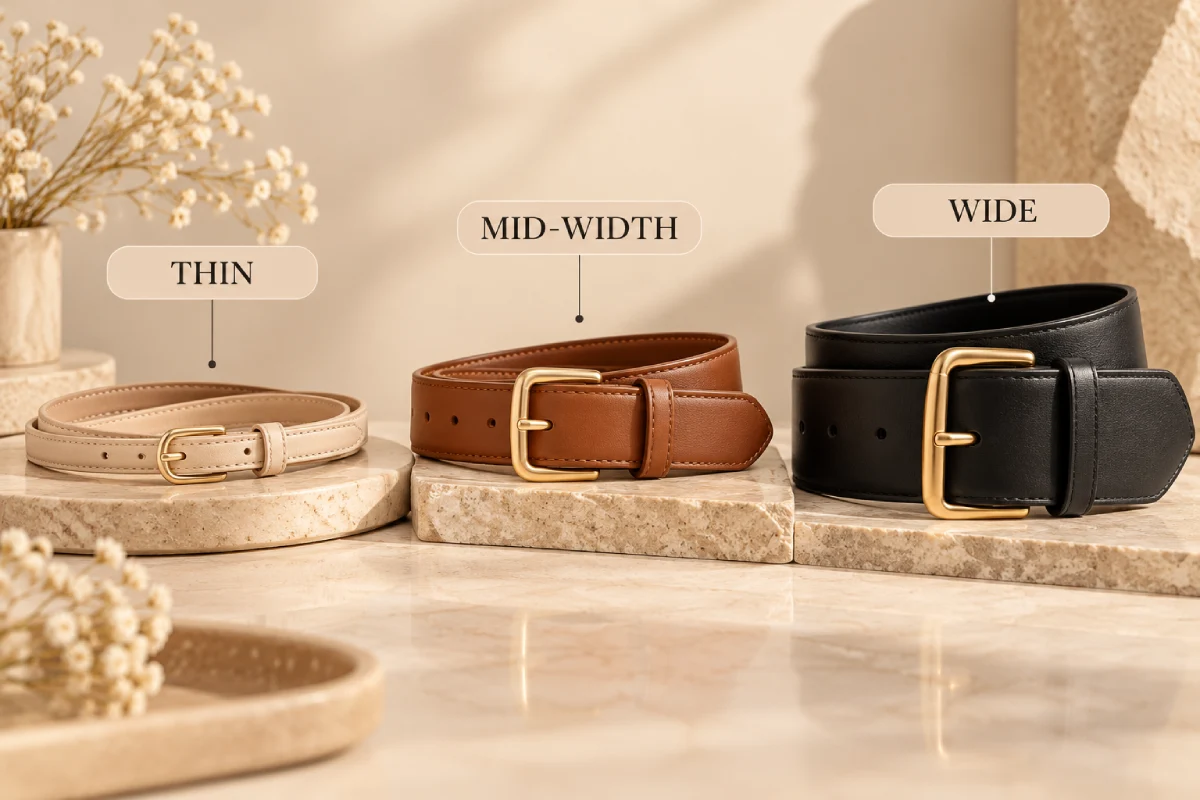
Belt width and placement should complement the garment. Slim (under 1 inch) belts flatter tapered trousers, flowy dresses, and as a layering piece over a blazer for a slightly more relaxed feel than a cinched in waist. Medium (1 to 2 inches) belts are the most versatile for jeans and daily wear, they add waist definition but aren’t jarring or too dressy for most casual wear. Wide (2+ inch) belts give you the most waist shaping, and look best over dresses, over coats, and over heavy knits. Waist placement is just as important as width – a belt sits very differently on and above your waist, and both are correct, depending on the body shape and silhouette you wear.
A belt is one of the most affordable tools for altering the way an outfit reads, but it’s also one of the most easily misfitting too thin or thick, at the wrong place in the outfit, or when a piece of clothing didn’t really need it in the first place. The trick to styling belts properly is balancing three factors in harmony: width, positioning, and what you’re actually wearing it with.
There is no need to overthink any of this. When you‘ve figured out which width works for which garment, and where a belt should be actually sit, styling becomes a quick, repeatable choice rather than guesswork.
Choose Belt Width, Length and Position
The width of the belt is the initial issue. This can be divided into three ranges:
- Thin (less than about 1 inch) belts are the most versatile width. They can be threaded through tailored trousers, be looped over a loose dress for shape without bulk, or be worn on top of a jacket or cardigan for appeal.
- Mid-width belts (roughly 1–2 inches) are the most commonly reached-for width for jeans and everyday wear — wide enough to have presence, narrow enough to stay versatile across casual and semi-dressy outfits.
- Wide belts (2” or more) give the most shape at the waist and work well over dresses, coats, long cardigans and chunky jumpers where there‘s plenty of fabric for the width to have a something to define over.
Second is position, which can alter the impact of your width just as well as width itself can. Wearing a belt at the natural waist (the narrowest part of your torso and usually tip of your hipbones) is the most iconic and sharply defined image. Wearing it lower (almost always at your hipbones) creates a more casual, low-slung appearance. This can be best for flowing tops or dresses, where a waist-shown position would be too constricting. Neither is more “correct” than the other waist is more formal, lower can be easier.
For length and sizing, measure at the point you’ll actually wear the belt — waist or hips — rather than relying on your general clothing size, since belt sizing typically runs larger than trouser size to account for buckle and loop placement. Look for a belt with at least two or three comfortable adjustment holes rather than one that only just fits on the tightest setting.
How to Wear a Belt with Jeans and Trousers
Jeans and belts go together naturally, as denim is often styled with built-in belt loops. Jeans with a high waist are especially designed to work with a belt a modest-width belt with a simple buckle, or a touch of hardware detail, gives shape without clashing with the denim.
If you get a little bit of your top in the front, then the belt can actually do something. (Belt under a long, untucked top tends to drift away into the background.) Tip front tuck (tucking just the front in) can be a more casual alternative if full tuck sounds too trendy.
If when buckled your belt is a little long, loop the excess around and let it sit flat or tie it in a loose knot, making it a design decision rather than a style problem.
How to Belt Dresses and Skirts
While not all dresses require the use of a belt, shirtdresses, wrap dresses, as well as column or shift dresses with a straight silhouette generally show the most benefit, as they do not have a waistline already defined.
The wide belt is effective over a column or dress with a jumper shape, giving the wearer definition to a straighter shape. The slim belt is more appropriate on a dress with soft, draped fabric as it emphasizes the waist without breaking up the fabric or broadening the softer silhouette.
For skirts, the principle of width is the same: a mid or wide belt over a high waist skirt emphasizes and reinforces the waist, a narrow belt over a skirts and top ensemble will just serve as a more discreet finishing touch rather than an attraction to the eye.
Styling a Belt over Shirts, Blazers and Knitwear
Showing off outerwear and several layering pieces with a belt is where a belt is most transformative, as it can sculpt out a chunkier or oversized silhouette.
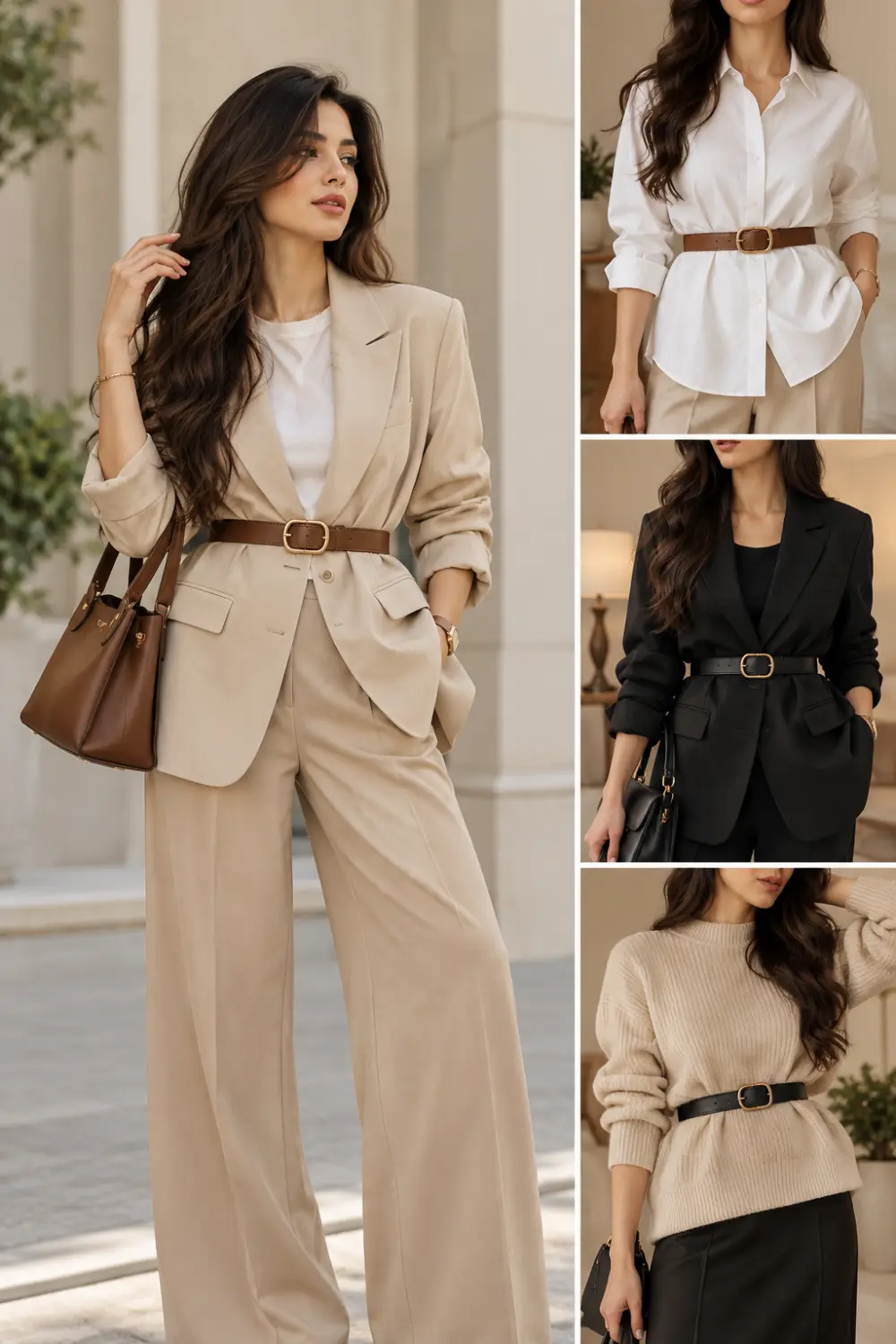
Over a blazer, a belt is particularly effective if your blazer has an oversized or boxy cut. Holding it in at the waist will give definition that the blazer lacks alone. If you‘d like to make your minimal blazer a little more interesting, choose a woven, embossed, or textured brown leather belt rather than a plain one.
A belt over a cardigan or long knitwear piece works similarly, adding shape to something that would otherwise read as shapeless, and it has the practical benefit of keeping a long, loose layer from swallowing your silhouette. For heavier knits, a mid-width or wide belt tends to look more proportionate than a very thin one, which can get visually lost against bulky fabric.
Matching Buckles and Colours Without Overcomplicating It
Belt-matching references can be unnecessarily confusing. My advice: keep it simple and easy. Match the metal tone of your belt-gold, silver, or a mixed/antique finish-to all other hardware (fancy jewelry, bag hardware, buttons) instead of trying to match the belt‘s color precisely to your shoes or bag. Matching in tone is fine, but not at all mandatory.
For garments without belt loops, a buckleless or tie-style belt is usually the easiest fix, since it isn’t dependent on loops to stay in place and can be worn slightly looser than a structured belt, resting naturally at the waist or hips over the fabric. This works well over dresses, tunics, cardigans, and coats — essentially anywhere a belt loop was never part of the design to begin with.
Frequently Asked Questions
Should a belt match my shoes or bag exactly?
Not necessarily. When you match the hardware tone on your belt (gold or silver) to other jewelry and accessories you are wearing it is done with the idea that it will appear classic a little more intentionally than matching the leather shade exactly since an exact match is not required for a belt to look bundled.
What width belt works best with jeans?
The mid-width belt width (1 2 inches) seems to be the most readily grabbed option for jeans as it is prominent enough to be a visual detail, but not so wide to compete with the denim itself.
How do I wear a belt with a dress that has no belt loops?
A buckleless or tie-type belt is the most straightforward, as it doesn‘t use loops and can be loose enough to sit comfortably directly on top of the fabric around the waist or hips.
Where should a belt actually sit — waist or hips?
Both are right, it just depends on the look you want. A belt at the waistline gives you a very defined “hourglass” shape, a belt around the hips toward the bottom of the body provides a more casual, “hip” or “low-slung” appearance particular helpful when wearing loosely fitting tops or dresses.
INAL CONCLUSION
Styling belts well comes down to matching width and position to the garment in front of you — a thin belt for flowing dresses and layering, a mid-width belt for jeans and everyday wear, a wide belt for structure over dresses, coats and knitwear. Position (waist versus hips) and buckle-tone coordination round out the decision, and a buckleless or tie-style belt solves the styling question for anything without loops. For more on building a complete, well-matched accessory collection, see the full fashion accessories guide.