Hair Accessories for Women: Types and Styling Ideas
Published: September 24, 2026 Last Updated: September 24, 2026 Quick Summary: There are a handful of basic styles of
Quick Summary:
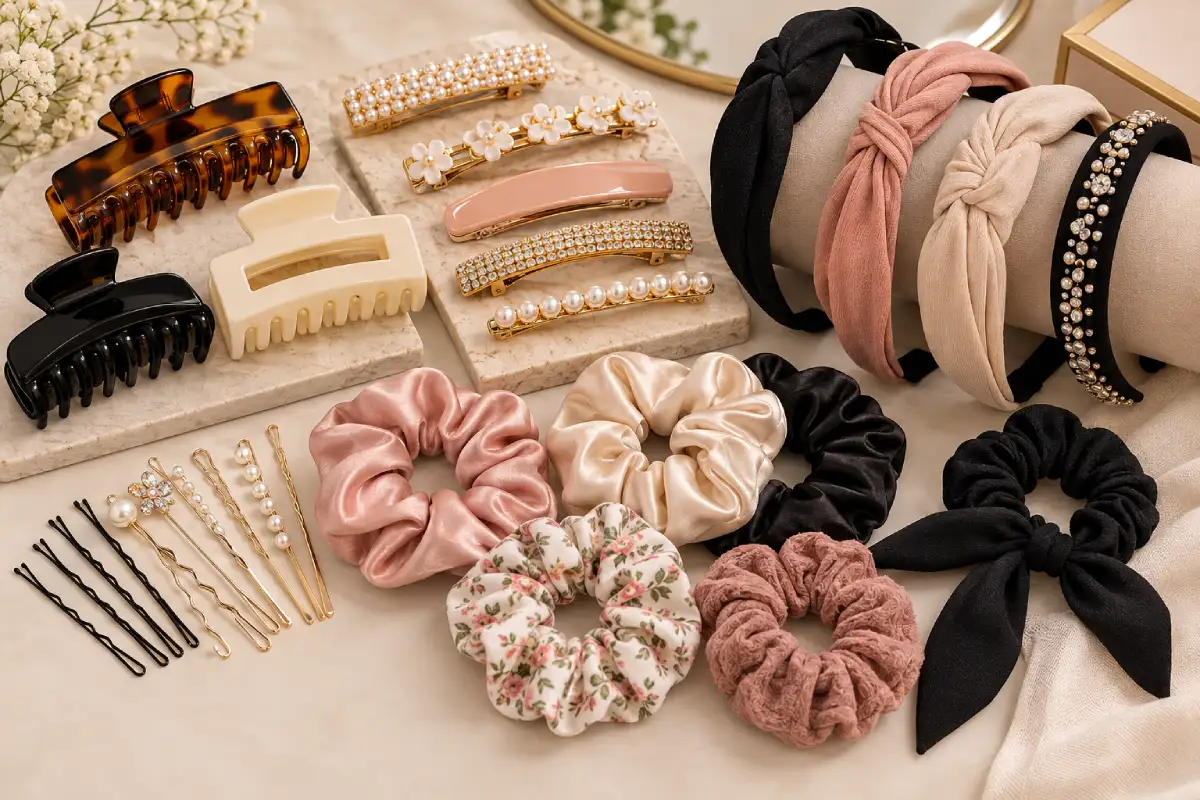
There are a handful of basic styles of hair accessories for women (claw clips, barrettes, pins, headbands and scrunchies), and every one plays a different role based on the type, length and thickness of your hair. Claw (or jaw) clips are great for up-dos with thick, medium-length hair, barrettes and pins are the best bet for finer or shorter hair, headbands are the easiest (and fastest) way to change your look without changing your hair, and scrunchies are the most gentle. More often than not, the best choice is figuring out a good size and strength of grip in relation to the amount of hair you actually have and not just to look good in a picture.
Probably, your hair accessory drawer contains more things than you actually wear. Some pull-out-claw-clips, a painful headband, scrunchies you didn‘t even remember you had. More often than not, it just means the item was never coordinated to your hair.
Hair accessories for women aren‘t one size fits all as most packaging would have you believe. A clip that clips perfectly on thick, wavy hair will hardly hold fine, straight hair, and a headband made for a quick errand run can leave marks if you wear it all day at your desk. Once you know what each type is actually built to do, picking the right one gets a lot easier — and so does making it last.
Hair Accessory Types and What Each One Does
There are five main types of hair accessory and each one works on solving a slightly different problem.
- Claw clips(also known as jaw clips) are essentially a spring-hinged jaw that clamp down on some hair. They are designed to be very sturdy and to grips a lot of hair, hence the popularity as up-do clips, half-ups, and topknots.
- Barrettes. These flat, hinged clips close with a snap over a small portion of the hair. They are more decorative and tighter than claw clips, and are better suited to pinning back a few hairs than pulling your whole ponytail through.
- The bobby pins and hairpins are the smallest tools in the drawer, used to pin flyaways, hiddenly hold a style in place or to put the finishing touches on an updo.
- Headbands: they rest across the very top of the head and restrain hair without creating a shape. They can be as simple as a slim, flexible band, or more elaborate with padding or decorations.
-
Scrunchies are soft fabric wrapped hair bands, gentler on your hair than a plain elastic band as the fabric disperses the pressure over your hair, rather than concentrating it in one area.
Knowing what this list matters more than it sounds like it should, because far too much styling frustration comes from using the wrong tool for the job attempting to gather a full. ponytail with a small barrette, for example, or expecting a headband to hold hair back the way a claw clip would.
Choosing Clips and Bands for Hair Length and Thickness
Size and grip strength must corresponds to the amount of hair you have to do the task not to the amount that looks appealing when hanging on a shop window.
For very thick/thick or long hair, you want a claw clip with a wide jaw opening (probably at least 4 inches across) and a tight spring (anything narrower will either not close all the way or will only grip the top few millimeters of your hair and will be falling out in an hour. The metal-spring claw clips usually have more grip for thick hair than the light plastic claw clips.
Smaller claw clips and barrettes tend to hold fine or thin hair more effectively than oversized ones; a large clip straining to contain a few hairs is bound to look clumsy and is unlikely to be able to close without pinching the hair. Opt for clips with narrow, evenly-spaced teeth.
Short hair (chin length to shoulder length): While it is possible to use large claw clips on such short hair, these will work for those who are willing to work them into shapes using multiple sets of snap barrettes and smaller claw clips. Larger barrettes, snap with barrette, claw clips, etc. just don‘t have the length needed for the less hair. Look into getting a set of small mini claw clips or snap barrettes for such styles.
Easy Ways to Wear Claw Clips, Barrettes and Pins
A claw clip doesn‘t have to mean a basic bun. A few reliable variations:
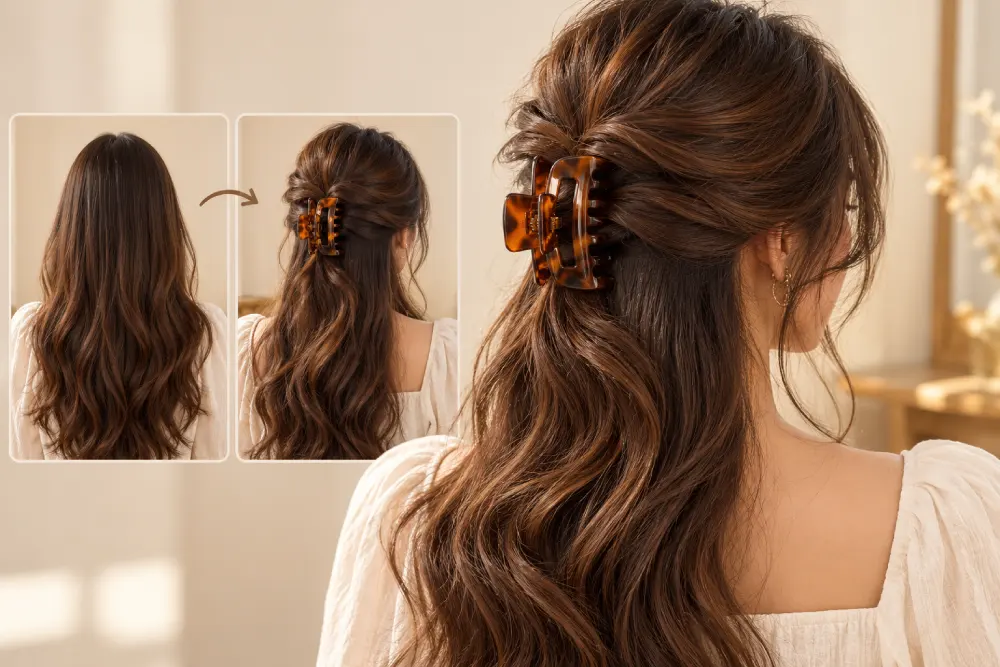
- Twisted half-up:The top/top layer of hair can be twisted away from the face before being secured with a claw clip. This is a more secure hold than a simple gather and appears more professional.
- Low claw bun: Pull hair to nape of neck, gather loosely, twist once and fold under before clip or pin (more casual and more relaxed than a top-knot).
- Barrette side-sweep: Pin your hair back with a single barrette to stay get your hair off your face without making your entire top look sleek.
- Bobby pin cross: For flyaways or an area that just won‘t hold always do two bobby pins in a cross with the ends crossing over each other, not just one bobby pin. It holds better and stays flatter against the head.
Headbands, Scrunchies and Occasion Styling Ideas
Headbands and scrunchies serve different purposes, and so may be advantageous at various points throughout your week.
A thin, flexible headband is the quickest way to switch up the mood of an outfit without requiring a change of hairstyle perfect for workdays or running errands, when you want something put-together without taking too much effort. Headbands with rhinestones, embroidery, or other noticeable details tend to feel more like an accessory; they work better for a night out than for work.
Scrunchies are the better choice whenever comfort matters more than sleekness — workouts, sleep, travel, or just an easy everyday ponytail — since the fabric doesn’t leave the crease or tension mark that a thin elastic band often does. Silk or satin scrunchies also cause less friction against hair than cotton ones, which matters if you’re prone to breakage or frizz around the hairline.
Fit, Comfort and Avoiding Snagging
The most popular complaint about hair accessories is the design — that they‘re falling out, pinching, or snagging on hair. There are a few tried-and-true things that really work:
- Snagging typically occurs from rough seams or from exposed metal teeth or hinges that pinch hair in between the jaw and the base. Clips with smooth rounded teeth and a fully enclosed hinge snag significantly less than cheaper clips with exposed metal springs.
-
Slipping almost always means the clip is too small for the amount of hair, not that the clip is faulty. Sizing up, or splitting very thick hair into two sections and using two smaller clips instead of one oversized one, usually solves it.
- However, headbands can cause pinching or tension headaches. If headband is too tight, it will pinch the same area for the entire day. Moving the headband back a little from the hairline (instead of pushing it into the forehead) can usually eliminate the pressure.
If a clip or headband continues to pull or damage hair after adjusting to a better fit, it may be time to give it up repeated strain on the same spot of scalp or hairline isn‘t something you have to deal with.
Frequently Asked Questions
What’s the difference between a claw clip and a barrette?
Claw clip has a spring-hinged jaw to hold a larger section of hair, so a claw clip is great for buns and updos. Barrette is a flatter, smaller clip for pinning back a section rather than gathering into an entire hairstyle.
Do claw clips work on short hair?
Yes, but a smaller “mini” clip tends to hold better than a full-sized one, because short hair cells don‘t bunch together as quickly in a large jaw span.
Why does my hair accessory keep slipping out?
It‘s nearly always a size mismatch between the clip and the volume of hair in it. A tiny clip that‘s not large enough for your hair/body thickness will not hold. Going larger or separating thick hair into two clips tends to work.
Are scrunchies actually better for your hair than elastic bands?
Fabric-wrapped scrunchies disburse the pulling pressure over a larger area than a plain elastic, and see in general less pulling and creasing (particularly in silk or satin).
FINAL CONCLUSION
Choosing the right hair accessories for women comes down to matching the tool to your hair, not chasing whatever’s trending. A claw clip built for thick hair will underperform on fine strands, a headband that’s comfortable for an hour at your desk might not survive a full day, and a scrunchy will almost always be gentler than a plain elastic. Get the type, size and fit right first, and the styling part — claw clips, barrettes, headbands, scrunchies — gets a lot more forgiving. For the bigger picture on building a versatile, well-matched accessory collection beyond just hair pieces, see the full fashion accessories guide.