Curly Hair Care Routine: Step-by-Step Guide for Healthy Curls
Published: September 14, 2026 Last Updated: September 14, 2026 The reason why curly hair looks different after each wash
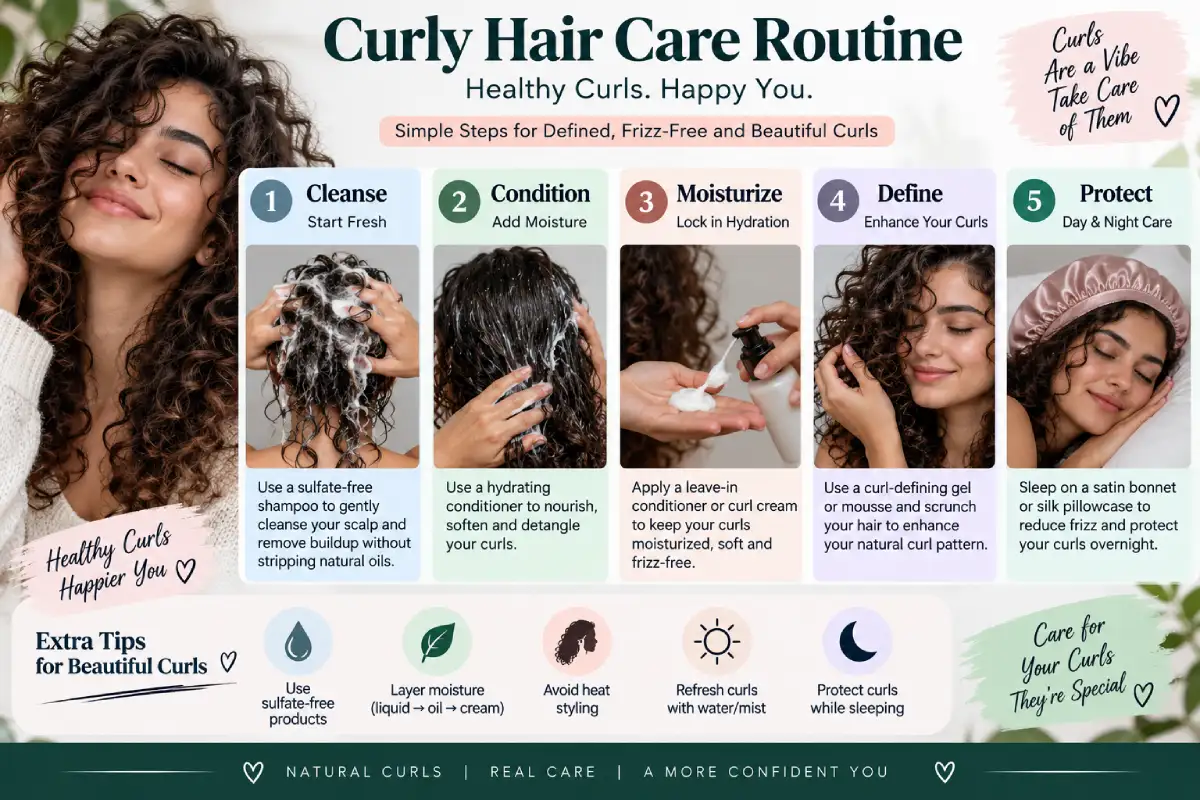
The reason why curly hair looks different after each wash is because when you have ringlets or coils, they bend and bend in different directions along the hair shaft, which makes it more difficult for the natural oil secreted from the scalp to travel down to the ends of the hair. This is a primary reason why curly and coily hair (mostly saved for Type 3 or Type 4) hair always needs more moisture than the straighter types, and often sets the tone for what happens within a curly hair care routine – washing routine, conditioning routine, and style routine.
Once you understand the sequence it follows a good, manageable curly hair care routine isn‘t hard: cleanse, condition, moisturize, define, and protect. Here‘s the step-by-step guide on how to do each step and the small technique adjustments that make the biggest difference between hair that looks defined and hair that looks frizzy by lunchtime. For the larger framework this routine is part of how to determine your porosity and scalp type.
What Should a Curly Hair Care Routine Include?
At minimum, a curly hair routine needs five parts, done in this order:
- Cleansing clean away oil, dirt and product buildup without removing moisture.
- Conditioning restore slip and softness after cleansing.
- Moisturising reverse, introducing moisture into the hair shaft.
- Defining arranging the curl pattern in order to have a reduction in frizz h—as the hair is drying
- Protection preventing any damage that can arise from cross friction occurring between wash days(i.e., at night)
The demands of wash day. Moisturize and protect are daily tasks on non-wash days, too, because curly hair dehydrates more quickly than it rehydrates.
How to Wash and Condition Curly Hair Properly
Most curl patterns need to be washed less often than straight hair. Washing two to three times per week is a good tentative guideline to follow for most curl patterns although really tight coils which are kept in protective styles may only require washing every 7-10 days.
Two practical rules make the biggest difference here:
- And, get a sulfate free shampoo, or a co-wash (like a conditioner) on the non-shampoo days. Sprays and gels are quite nice, but we need sulfate free shampoo, because they are a harsh to the hair. They wash very well, but they also remove the small amount of oils that even curly hair has trouble spreading through the hair already. Co-washing is for it dry hair types, an alternative to shampoo, but nothing beats a good shampoo every now and then for removing product buildup.
- Detangle while in the shower with the conditioner still in your hair. Conditioner gives your hair a little slip and allows either your fingers or a wide tooth comb to get through knots with much more ease than with dry hair. Do it in small sections working your way up from the ends.
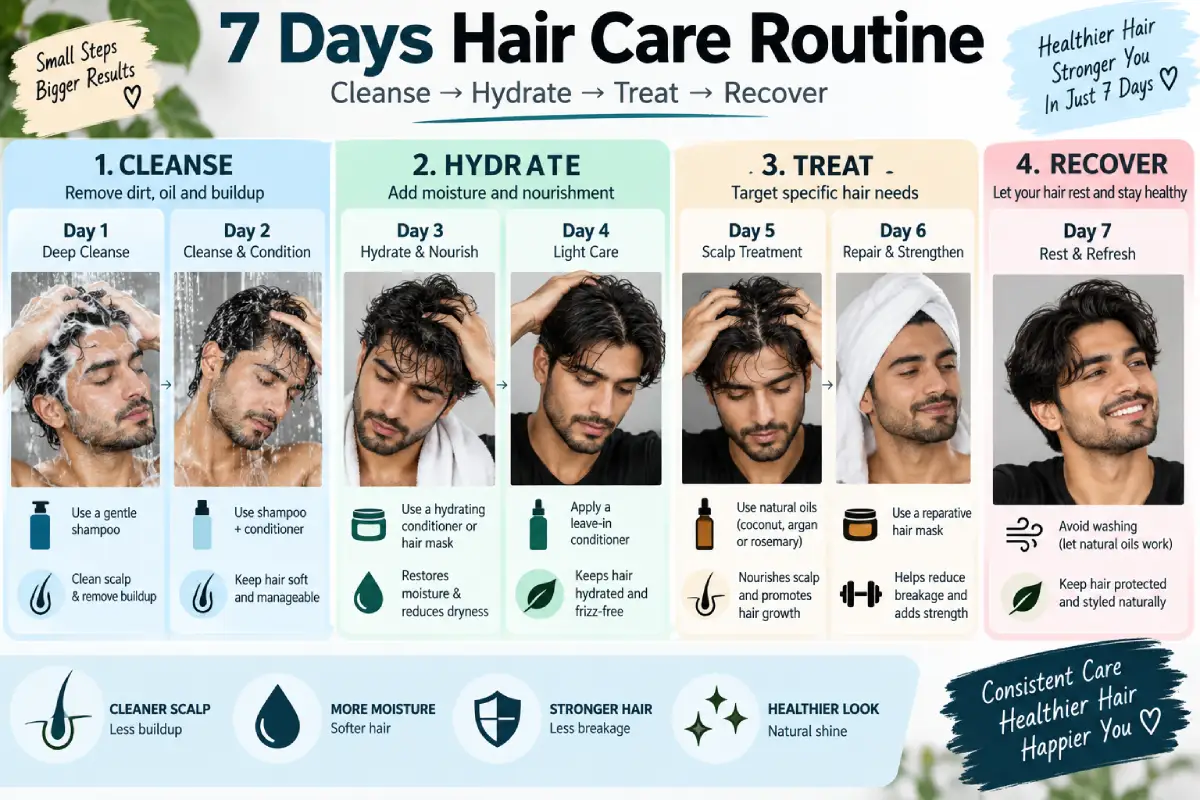
Leave a rinse-out conditioner on for a few minutes before rinsing, and rinse with lukewarm rather than very hot water — hot water can leave the hair cuticle more open than curly hair typically wants during drying. If you’re mapping this into a weekly plan alongside rest days and treatments, the 7-day hair care routine guide breaks down how to schedule washing around the rest of your routine.
How to Moisturize Curly Hair and Prevent Dryness
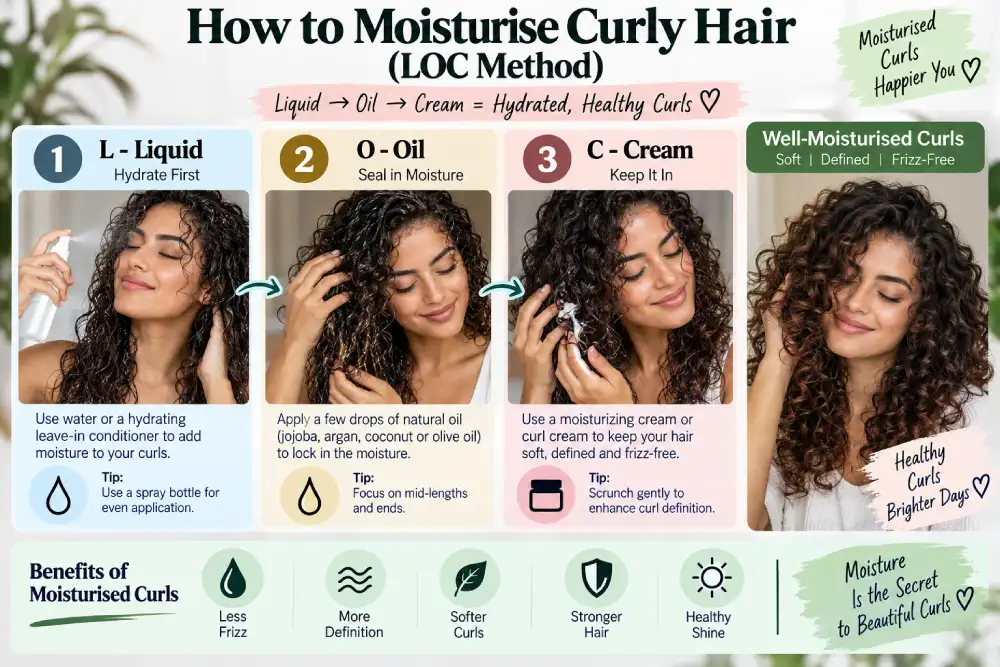
While those curling bends slow down distribution of the oil, it is necessary for moisture to be added intentionally as the scalp cannot do this. The typical method for this is:
- Liquid Use water or a water based leave-in on damp hair
- Oil then follow with a light oil to help seal in the moisture.
- Cream finish with a curl cream or butter for hold and definition
(LCO just reverses the order of the oil and the cream which order works better depends on your hair‘s porosity. It‘s something you might want to find out by doing the porosity test on the main hair care routine guide.)
More detailed and clinical explanations of the key role of structure in moisture retention issues can be found with the American Academy of Dermatology: “Maintaining the health of curly/textured hair”.
Apply moisturizing products to damp, not dry, hair — dry curls have less room to absorb anything applied on top. If dryness persists even with regular moisturizing, the issue may be broader than curl pattern alone; the guide to hair care for dry hair covers causes like hard water and heat damage that affect any texture.
How to Define Curls and Reduce Frizz After Washing
The most common cause of post-wash frizz is whether the curl clump has been ruffled enough before it has had a chance to set, rather than the lack of product. The two most important techniques are:
- Apply scrunch or rake into soaking wet hair; do not brush through the hair once it has dried. Brushing the hair once dry loosens the clumps that give curls form and shape, creating frizz.
- Use Plop or diffuse instead of towel-drying, roughly. Plopping ~ wraps your wet hair in a microfiber towel or a cotton t-shirt, leaving it there for ~10-20 mins to absorb the excess water while the pattern sets. Diffusing on a low, cool-to-warm setting does a similar thing with a blow-drier, and will cut down on the drying time.
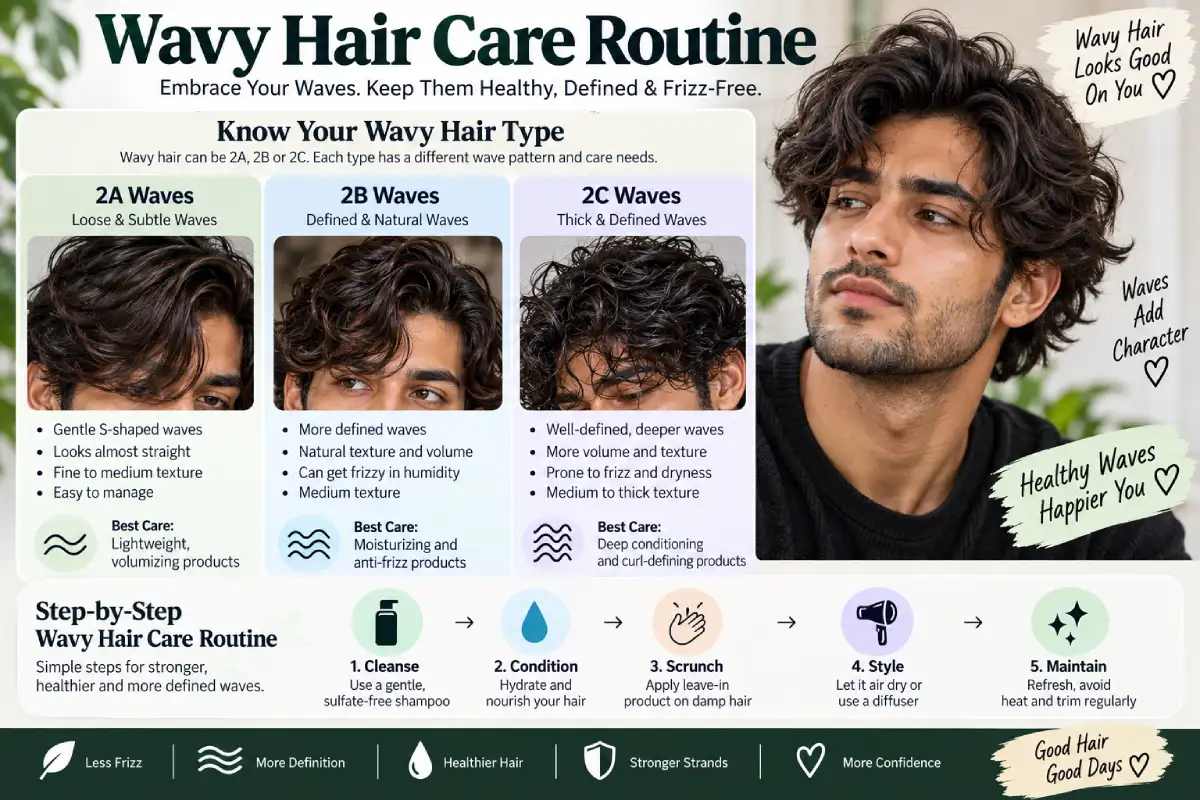
If your natural pattern sits somewhere between wavy and curly, technique still matters but product weight often needs to be lighter; the wavy hair care routine guide covers that distinction in more detail.
How to Protect Curly Hair While Sleeping
Rubbing your curly hair against a cotton pillowcase all night leads to much of the dreaded morning frizz and breakage, since a cotton pillow case dries the moisture out of your hair and roughens up the cuticle.
Two simple habits address this:
- Sleep on silk or satin either a pillow case, or in the hair (bonnet, scarf). Both of which reduce the overall terminal friction significantly in corn compared to cotton.
- Loosely gather curls into a “pineapple” on top of your head to sleep–a loosely secured high ponytail that keeps the curls off your pillow and maintains their shape–or, if pineapple is not an option, try loose braids or twists overnight.
This part is important even if it‘s not wash-day, because it‘s one of the few times when there‘s nothing in the hair.
Conclusion
A curly hair care routine works when the order stays consistent: cleanse gently, condition well, moisturize deliberately, define without disturbing the curl clump, and protect it overnight. None of these steps need to be complicated or expensive — what actually changes results is doing them in the right sequence, on damp rather than dry hair, and sticking with it for several weeks before judging whether it’s working. For the wider system this routine fits into — including how to figure out your hair’s porosity and scalp type before you start — head back to the complete hair care routine guide.
FAQs
How often should I wash curly hair?
For most curl patterns, two to three times a week is a good rule of thumb. Tighter coils or the locks and rope locks of the protective styling aficionados generally survive being washed once a week to once every ten days.
Should I use conditioner if my curly hair feels oily?
Should do unless you are using a very heavy conditioner. Greasy roots and dry ends are very common with curly hair and this is usually a shampoo or scalp problem rather than a reason not to apply conditioner. Use conditioner on the mid-lengths to ends rather than the scalp.
What’s the difference between LOC and LCO methods?
LOC (liquid, oil, cream) locks moisture in, and works well for lower-porosity hair. LCO (liquid, cream, oil) is designed for higher-porosity hair that loses moisture. Test runs are the best way to see what works for your curls.
Can I use regular oils on curly hair every day?
It isn‘t recommended to oil every day unless using a very light oil on minimal areas. This can have the opposite effect of its purpose, and cause a saturated and weighed down appearance in the hair over time. I would suggest one or two applications of a lighter oil per week, avoiding the roots and concentrating on the ends.
Why does my curl pattern look different depending on the season?
Air rich with moisture and humidity will cause your hair to frizz, swell, and produce larger curls. Dry winter air will leach the moisture from your hair and cause it to loosen and expand. Using a less rich product for winter use will help keep the result closer to unchanged.
Do I need different products for wash day versus daily maintenance?
Not a different set of products just different amounts. Because you generally do the full cleanse-condition-moisturize-and-define routine on wash day and only need a refreshing spritz of water or leave-in and a little oil on your ends during the days in between, you can get away with different quantities of the same products.