Hair Care Routine for Dry Hair: Restore Moisture & Softness
Published: September 14, 2026 Last Updated: September 14, 2026 When your hair is rough when touched, it snags, or
When your hair is rough when touched, it snags, or simply looks dull regardless of how much conditioner you apply, then you probably have dry hair. It is considered to be one among the most common hair problems faced in both US and India, but for the very different climate reasons. A hair care routine for dry hair involves not the application of more products, but the re-establishment of moisture, and the elimination of habits that rob moisture.
The good news: dry hair usually responds well to a consistent routine. This guide breaks down how to tell dry hair apart from damaged hair, the exact order of steps to follow, how often to wash and condition, which ingredients actually help, and how to prevent the dryness from coming back.
How Can You Tell If Your Hair Is Dry or Damaged?
Dry hair and damaged hair are often lumped together, but in truth they are different and their care falls into different routines.
Dry hair is generally the result of the hair shaft lacking sufficient moisture. It appears dull, lacking in shine, appears coarse or straw-like in consistency and tangles more than usual. Individual strands of hair are generally still structurally sound.
Damaged hair Is even more extreme – the outer cuticle layer is raised or broken, usually from heat styling, bleaching or chemical processing. Common symptoms include split ends, snapping (rather than stretching), and a gummy feel when the hair is wet.
A quick way to check: gently stretch a single strand of damp hair between your fingers. Healthy, simply-dry hair will stretch slightly and spring back. Hair that’s significantly damaged tends to stretch further before breaking, or snaps with little resistance. This isn’t a clinical test, just a useful home check. For general dermatologist-backed hair care habits, the American Academy of Dermatology’s hair care tips are a good reference point — and if you’re seeing heavy shedding, scalp irritation, or breakage that doesn’t improve after a few weeks of care, that’s worth discussing with a dermatologist rather than troubleshooting with more products.
Step-by-Step Hair Care Routine for Dry Hair
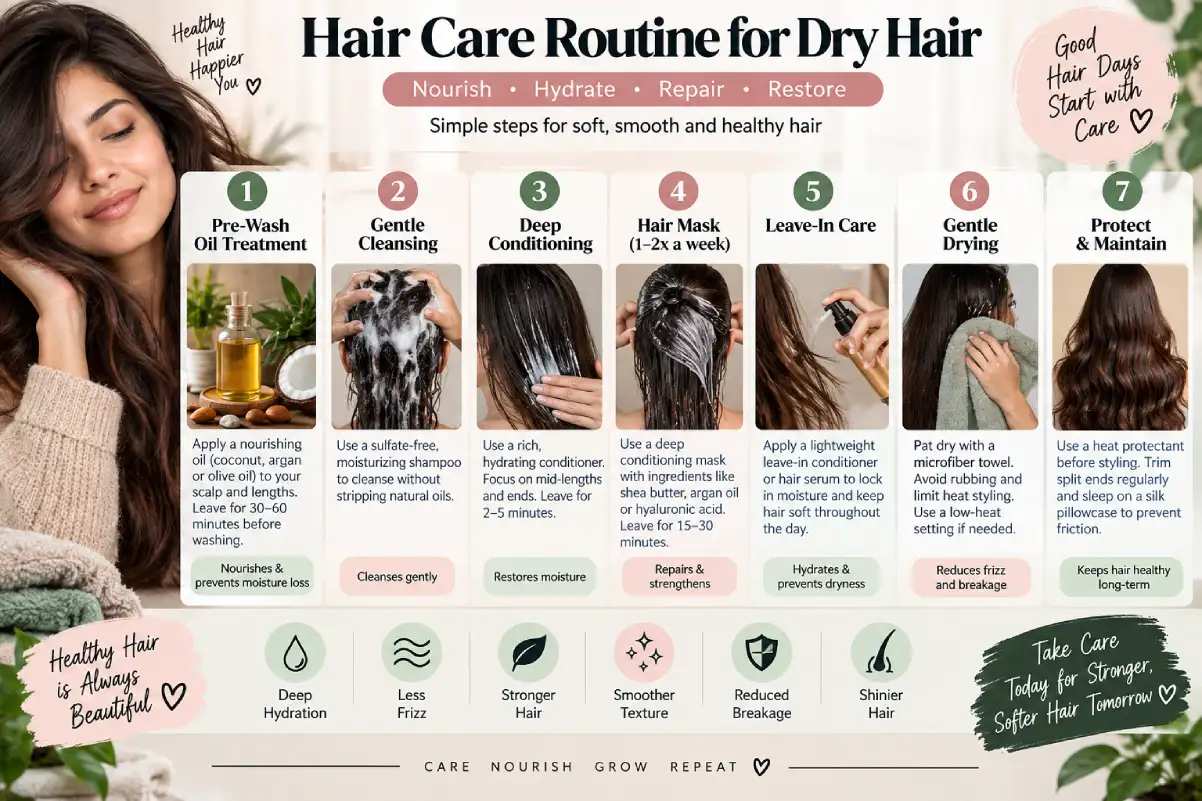
It‘s the routine that seems to work for me, whether you‘re doing it on a daily basis, just the wash days, or a little of both.
- Cleanse with a sulfate-free, hydrating shampoo. Sulfates clean effectively but can strip the natural oils dry hair needs to hold on to. A moisture-focused, sulfate-free formula cleans the scalp without undoing the rest of the routine.
- Deep condition once a week. Use a slightly richer mask in place of your conditioner on one wash day; this is the step that most contributes to restoring moisture in the long run.
- Apply a leave-in or sealing oil to moist hair. Apply a light leave-in conditioner or some oil on the ends of the hair to hold in the moisture you just added in the shower by preventing it from escaping as it dries.
- Detangle when wet. Comb hair that has been pre-washed and conditioned while it is still damp instead of brushing once it has dried because this actually causes more breakage in dry hairs.
- Air-dry when you can, and always use a heat protectant when you can’t. Heat is one of the fastest ways to undo a hydrating routine, so protecting the hair before styling matters as much as the styling itself.
- Clarify once a month if you’re in a hard-water area. Mineral buildup from hard water can coat the hair shaft and block moisture from getting in, which often looks and feels exactly like dryness.
You don’t need to add all seven steps on day one. Starting with steps 1–3 and building from there is usually more sustainable than overhauling everything at once.
How Often Should You Wash and Condition Dry Hair?
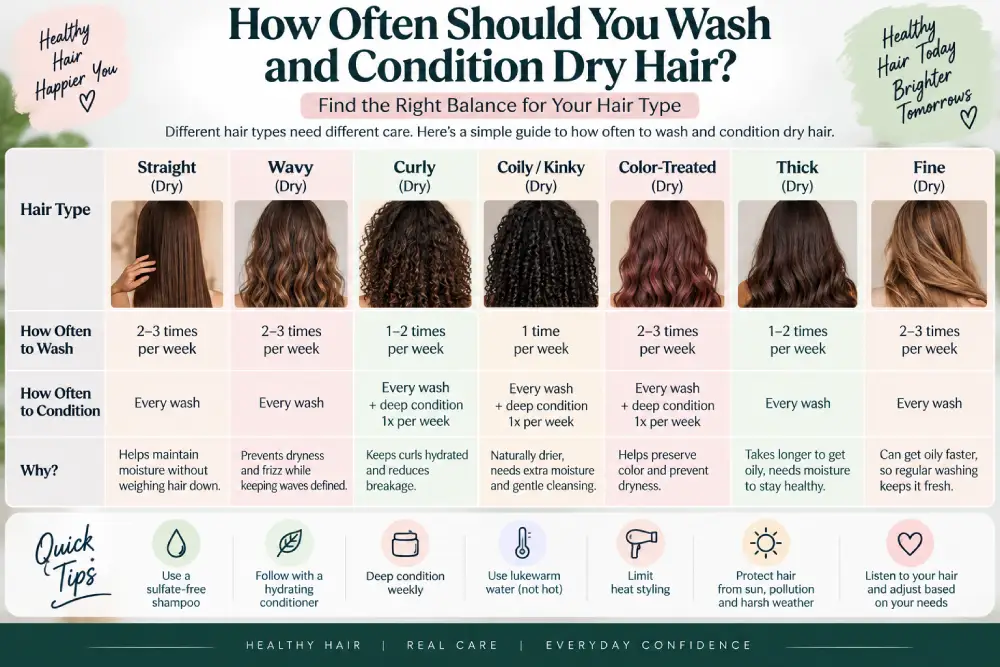
One of the most common reasons a dry-hair regimen fails is washing too frequently every time you do, you‘re stripping your scalp of some of its natural oils in addition to the dirt and styling residue.
| Hair Type | Suggested Wash Frequency | Notes |
|---|---|---|
| Thin, dry hair | Once in 2–3 weeks. | Daily washing causes dryness to increase lessage too many days between washes will cause kind to build up. |
|
Curly or coily, dry hair |
1–2 times each week | It takes longer for natural oils to travel down thicker hairs. |
| Afro Hair Coils or curly dry hair | On 1–2 times a week, with sometimes co-washing in between. | Curl Patterns will naturally retard the flow of your oil making this texture inherently drier. |
| Color processed, dry hair. |
2 times a week |
They also ensure that the color lasts longer when you have fewer washes. |
Conditioner is the one step that no one should ever skip…use it each time you wash your hair. Even if you have oily roots and dry ends, you need conditioner…this is a myth. If your scalp feels oily, but your ends are dry this is a more severe reaction to an incompatible shampoo, and you need less of it.
Best Ingredients to Look for in Products for Dry Hair
There are two types of ingredient which are important when it comes to a hair routine for dry hair: humectants (water attract the water into the strand) and emollients or oils which help to trap the moisture in.
- Glycerin and hyaluronic acid humectants drawing water into the hair shaft
- Shea butter and cocoa butter emollients that lubricate and condition rough cuticles
- Argan oil and coconut oil have moisture-retaining properties and impart shine
- Ceramides protect the hair‘s natural barrier, excellent for heat styled/chemically treated hair [modernlabsdirect.com/products/bb3]
- Panthenol (a vitamin B5 compound) gained a lot of popularity several years ago for helping the hair to retain moisture as well as improving the softness of the hair.
Good to keep in mind: If you are using light water-based products (leave-in spray etc.) use the heavier oil-based products first. The other way round and the lighter product may not absorb.
How to Prevent Dryness, Frizz and Hair Breakage
Brush to fix dry hair; Half the battle is won, only.
- Reduce your shower temperature. Very hot water depletes natural oils more quickly than warm water.
- Sleep in a satin or silk pillow case. Cotton pulls the moisture from the hair and causes more friction overnight.
- Separate chemical treatments. Apply coloring, bleaching, or straightening treatments with intervals of at least a few weeks in between to allow hair time to recover.
- Trim every 6–8 weeks. Although trimming your hair won‘t speed up hair growth, it does prevent split ends from progressing further up the hair shaft.
- Protection for hair from sun and wind. Longer UV followed by wind, drys moisture from the shaft, which can be damaging or concerning in those working outside for long periods.
- Water check. In hard-water zones like portions of the US and India, minerals can be mistaken for dryness; the monthly clarifying can make more of a difference than flipping to a new conditioner.
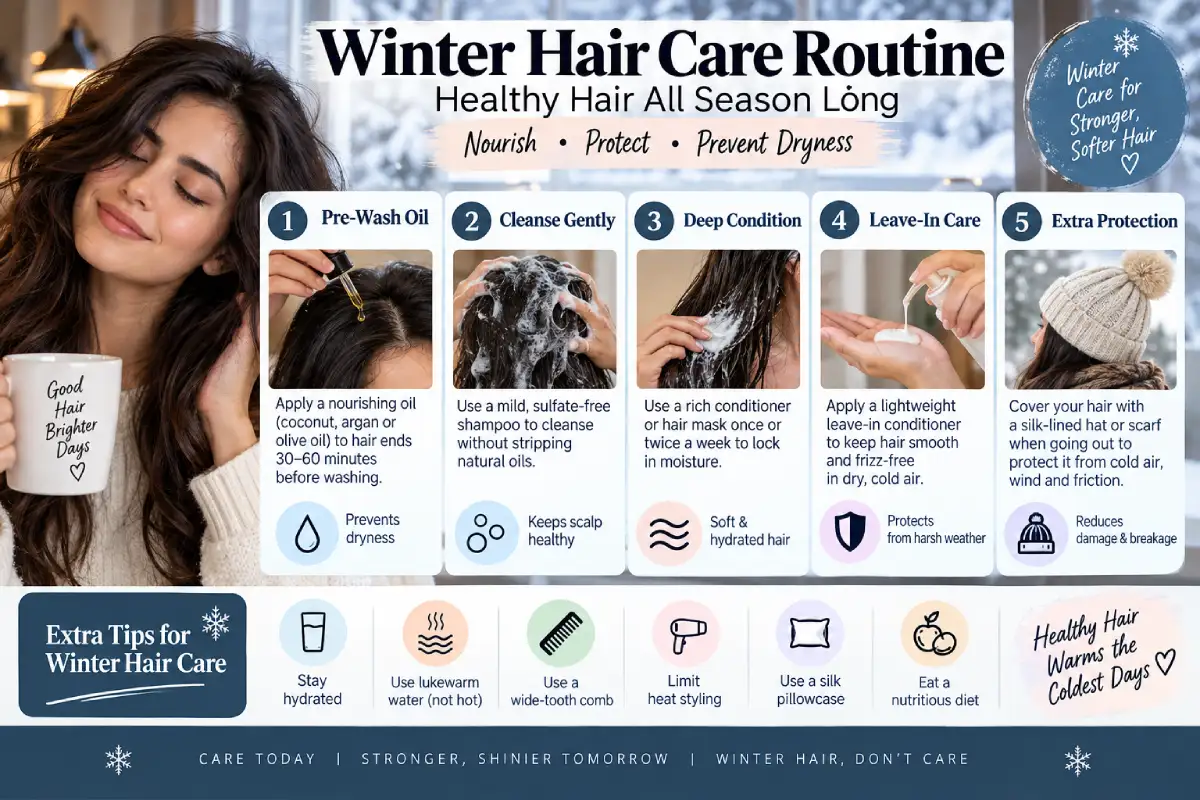
If you’re moving through a cold, dry season, pair this routine with a few seasonal tweaks — see the winter hair care guide for how to adjust wash frequency and product weight when indoor heating and cold air are part of the problem.
Conclusion
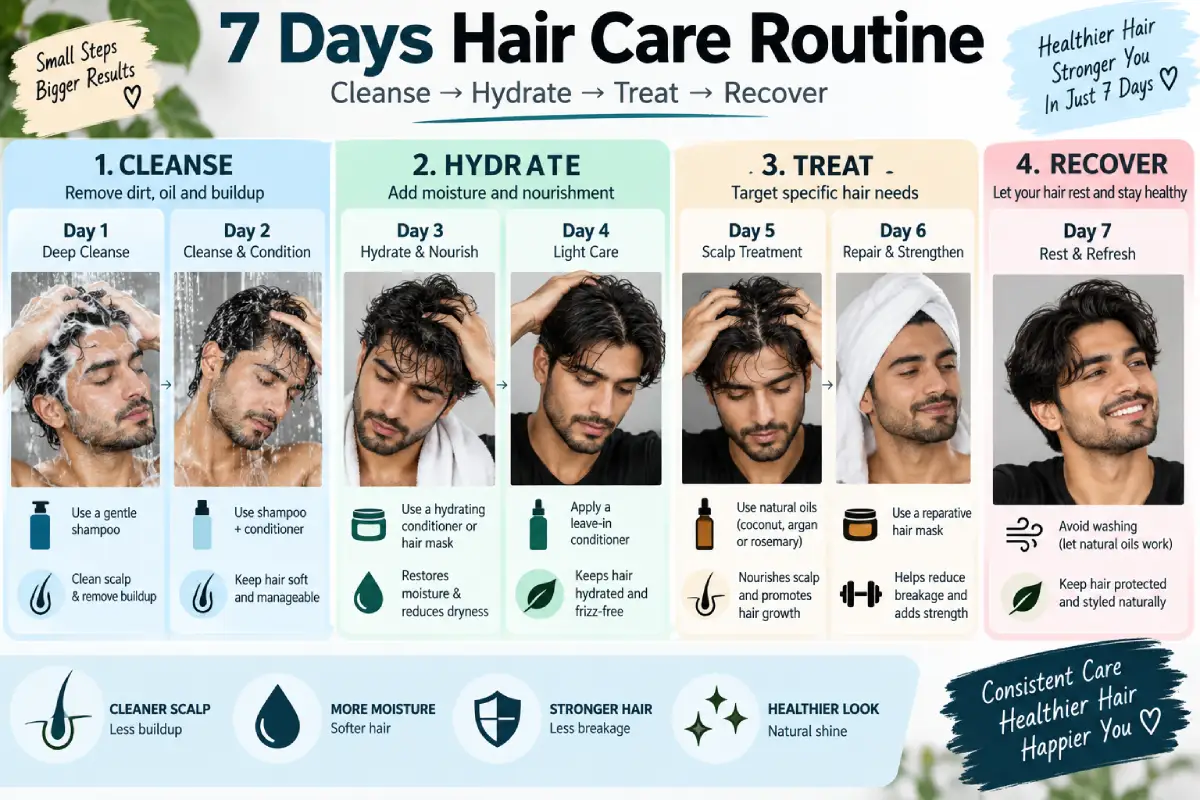
A hair care routine for dry hair works best when it’s treated as a system, not a single fix: a gentle, sulfate-free cleanse, conditioner every wash, a weekly moisture mask, less heat, and a monthly clarifying wash if hard water is part of the picture. Most people start noticing softer, more manageable hair within three to four weeks of sticking with it consistently. If dryness persists despite a solid routine, or comes with noticeable shedding or scalp irritation, it’s worth getting a dermatologist’s opinion rather than adding more products. For the broader framework this routine fits into — including how it changes by hair type, gender, and season — head back to the complete hair care routine guide.
FAQs
Can dry hair be fixed permanently, or does the routine need to continue?
There is no permanent solution just like there is no instant solution for dry hair – dry hair needs a routine of treatment just the same as your skin needs to be hydrated rather than being treated once. When your hair becomes much better usually it is possible to go on to a maintenance routine (e.g. only putting a mask on every 2 weeks instead of every week.
Is oiling hair overnight good for dry hair?
It certainly can be, if you put an oil such as coconut or argon on the lengths and ends, but it isn‘t necessary. ‘a little oil left on overnight every now and again can lead to a build up on the scalp for some people..’; once or twice a week would be necessary, though.
Does drinking more water fix dry hair?
Proper hydration and health are absolutely vital for every aspect of health within the whole body, but dry hair is a cosmetic issue that cannot be excreted by drinking water with meals. Proper eating is more crucial to proper hair growth in the long term than the hydration status.
Why does my hair feel dry even though I condition every time I wash?
This is often a sign that either the conditioner isn’t rich enough for your hair type, or that hard water or product buildup is blocking moisture from being absorbed. A clarifying wash followed by a deeper mask is a good first thing to try.
Is dry hair genetic, or is it always caused by habits and environment?
Some people are naturally more prone to dryness — curly and coily hair textures, for instance, tend to run drier because oil travels more slowly down the strand. But habits like over-washing, heat styling, and hard water are still the most common day-to-day causes, and they’re the ones a routine can actually address.