7 Days Hair Care Routine: A Simple Weekly Plan for Healthy Hair
Published: September 14, 2026 Last Updated: September 14, 2026 If you‘ve followed a hair washing routine that looks easy
If you‘ve followed a hair washing routine that looks easy and then ignored it by Wednesday, you‘re not the only one. Many 7 day routines presume you wash your hair 7 days a week when very few people do, and any 7 days hair care routine is only workable if it adapts to your wash day – not an unrealistic one.
This timetable divides the week into four sections rather than 7 identical boxes to put your actual wash days in where they land.
How Does a 7-Day Hair Care Routine Work?
7 days hair care routine do so by distributing over the week several activities your hair requires cleansing, moisturizing, oiling and styling as opposed to putting your hair through all of those on one wash day and leaving it without any for the rest of the week.
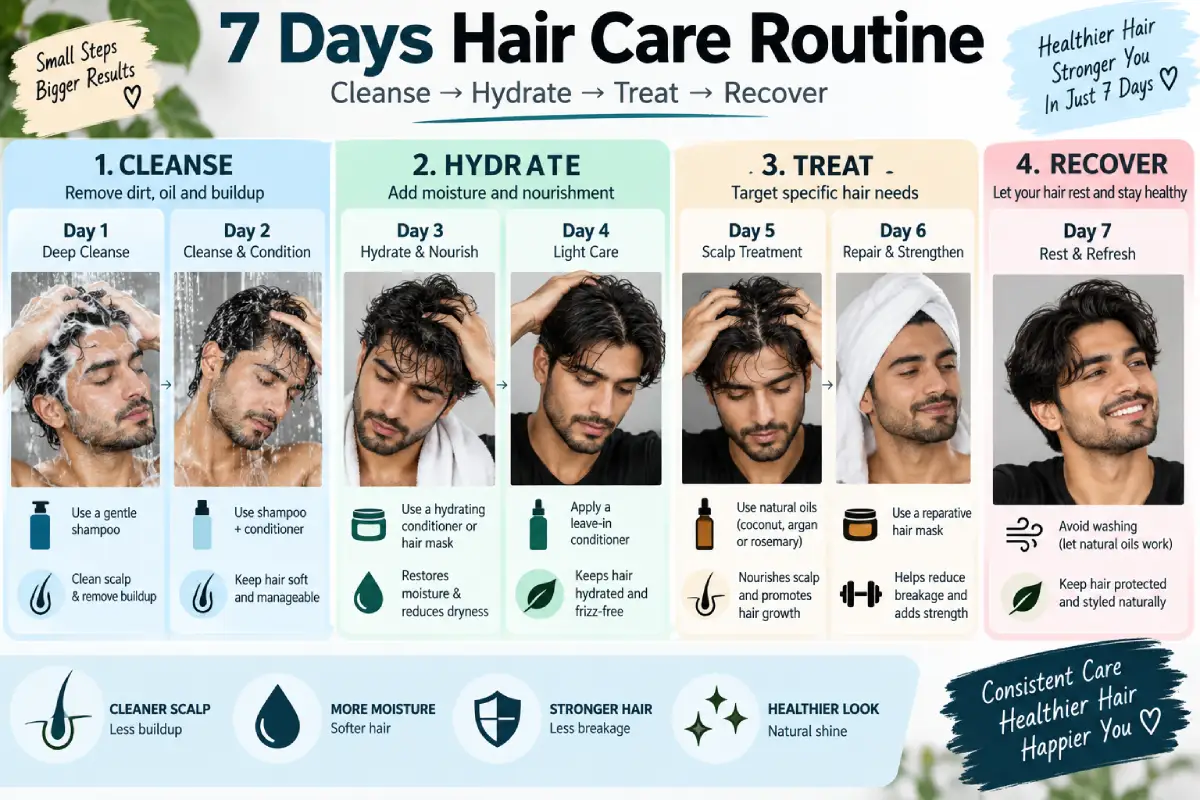
Most wash 2 to 3 times weekly, so 7 days plan sort of isn‘t “1 task daily”, it‘s more like four phases:
- Initial cleanse-a fresh start after the weekend to clear the scalp and hair
- Mid-week hydration and protection keep skin from sensitive to dry up until your regular cleanser.
- Oiling and treatment nour balance skalp and strengthen hair.
- Deep conditioning by the end of the week recharge your batteries before starting the cycle all over again
Imagine that the days listed below are just a shape to follow and not a governing secretarial rulebook. If you are one of the many who have their wash days on a Monday and a Thursday, and not a Tuesday and a Friday then change the blocks to follow.
Day 1–2: Washing, Conditioning and Scalp Care
Starting off the week with a good cleanse. After a weekend, the scalp has a combination of natural oil, sweat, and excess product, a shampoo is an important way to clear the scalp for the rest of the week, so whatever is used can be actually work and penetrate the hair shaft.
- Wash using a shampoo that is suitable for your scalp (oily scalps often respond best to a lighter, more regular wash and dry scalps often need a more gentle, less regular wash;)
- Use a conditioner every time you wash, concentrating on the mid-lengths to the ends (avoiding the scalp).
- A light scalp massage when shampooing (a minute or two) loosens buildup and feels good, but may not be enough alone now.
If you don‘t wash your hair on day 2, take this as a restyling day – a little heat with a leave-in if your ends are dry.
Day 3–4: Hydration, Hair Protection and Maintenance
By the middle of the week, your hair can normally starts feeling just a bit flatter or a bit drier, especially if you‘re not yet washing it again. This block is really about bringing the moisture back and shielding the hair against the week‘s general treatment, not doing anything too intensive.
- A leave in conditioner or a light weight masque on the ends if they need it not necessary to do a wash to achieve this.
- Loose braids, low bun or other low tension styles to avoid too much friction and breakage; excessively tight ponytails and buns worn frequently can lead to a form of hair loss along the hairline known as traction alopecia hence breaking the habits of wearing looser styles may be worth building into
- FTP no heat style frequently during these days, with as little heat styling as possible, allowing the hair a break.
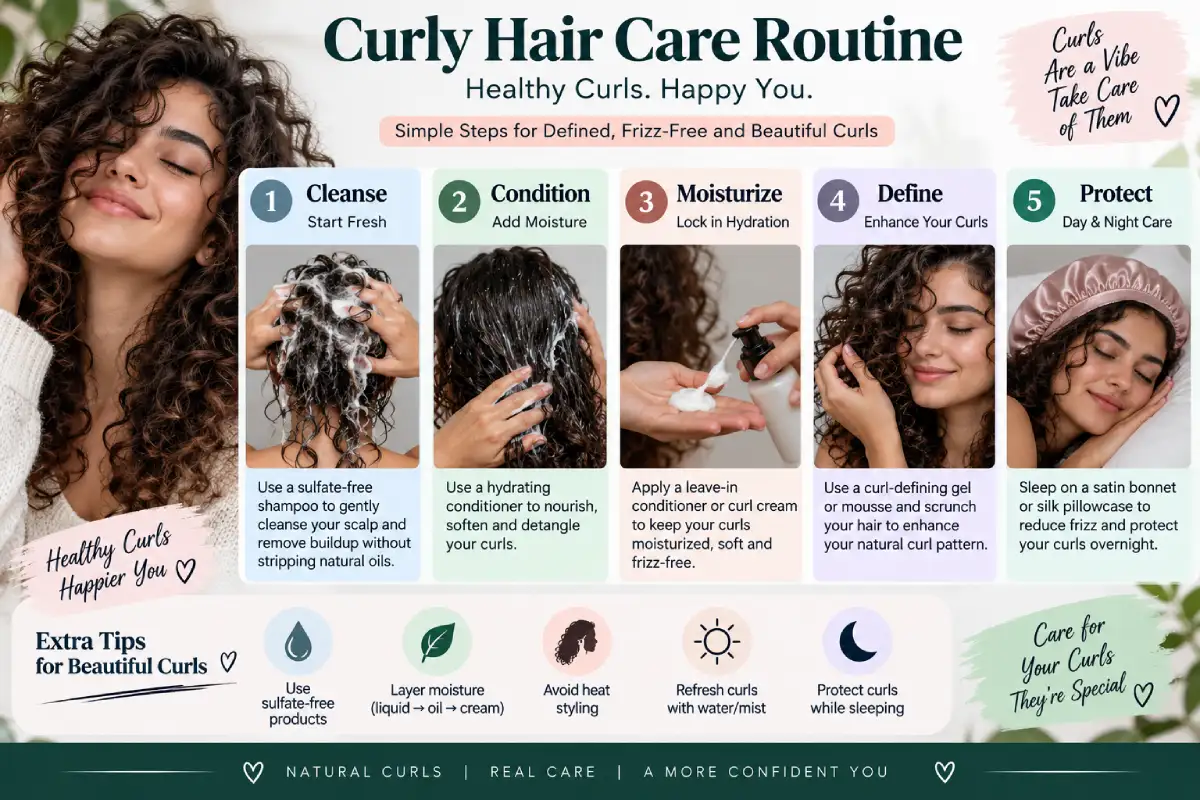
Curl patterns hold moisture differently than straight hair, so if you have curly or coily hair, this hydration step usually needs to happen more often than twice a week — the curly hair care routine guide covers that adjustment in more detail.
Day 5–6: Hair Oil, Treatments and Damage Prevention
The next step is onto the more specific treatments oiling, protein treatments, or whatever else is aimed more at strengthening the hair, rather than just hydrating it.
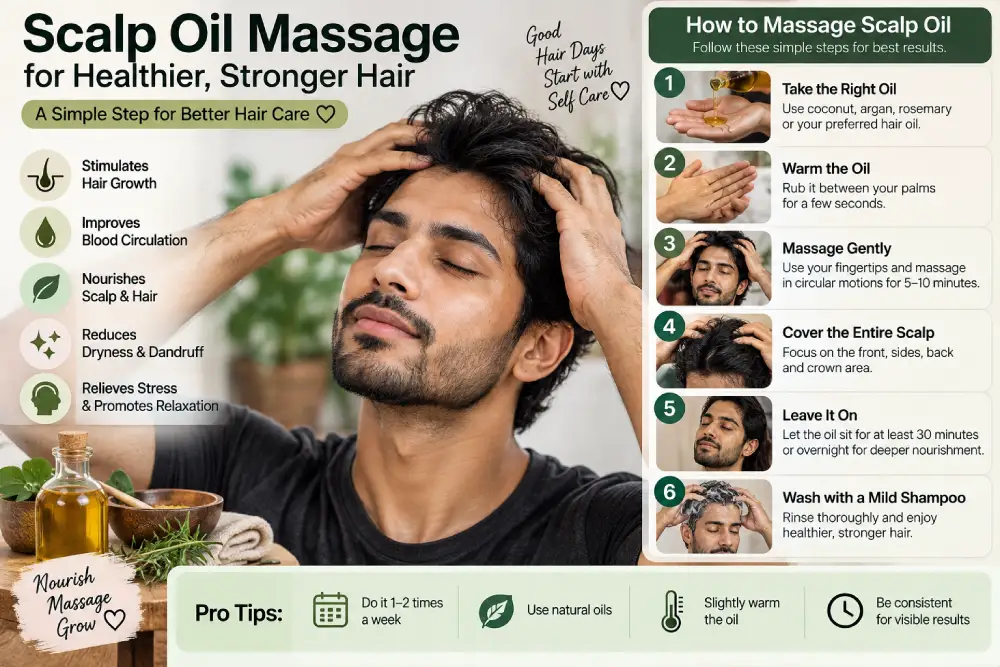
- Vigorous scalp oil massage with (coconut, almond or jojoba oils best) for approximately three minutes and then left on cover head and leave on for 20 minutes to 30 minutes or ideally overnight then wash off.
- A protein treatment (but only 2-4 weekly, as too much protein can make the hair texture hard and brittle.
- However, if you do the color-treating or heat styling regularly it‘s also a good time midway through the week to reassess the dryness/ damage level of your ends and tailor the conditioning of your following wash to this.
If your hair runs dry generally rather than just at the ends, the hair care routine for dry hair guide goes deeper into building this stage around an actual dryness issue rather than routine maintenance.
Day 7: Deep Conditioning and Preparing for the Next Week
The week ends with recovery not more styling treatments. If Day 7 falls on a wash day, that‘s the best time to use a deep conditioning mask, instead of a usual conditioner something heavy that sits on your hair for 10–15 minutes before rinsing.
- Deep condition once in the week (can be Day 7 or just wherever your second wash naturally falls)
- A quick scalp examination, looking for peeling, redness, or abnormal hair loss and while you‘re in there.
- Less detail, no heat, so hair come into new week looking not to bad rather then already worn out.
And then it all begins again although not identically each week, but in the same shape: cleanse, hydrate, treat, recover.
A Few Things to Keep in Mind
A 7-day routine is a guideline, not an exact route. Here are the essentials, with a few tweaks to suit you:
- Do not just layer treatments. Using daily oil treatments, protein treatments and deep conditioning masks all at once is the major cheat that will do nothing but overload your hair spread it out.
- Match the frequency of washings to your scalp, not the schedule. An oily scalp may require a wash or two in the week, while an overly dry one might be better suited to one or possibly even no washings per week.
- Chronic scalp problems require more than a weekly schedule. Chronic flaking, persistent inflamed or tender areas, or hair loss can be reasons to consult a dermatologist and not just hope to work your way out of.
FAQs
Do I have to follow this 7-day routine exactly as written?
No, this is a flexible pattern to follow, not a timetable. You should place the blocks however you wash each day what is important is the order: cleanse, hydrate, treat, recover, rather than exactly when.
How many times should I wash my hair during the 7 days?
Most people can manage 2-3 washes a week according to how oily your scalp is and your hair type. The routine here manages 2 wash days, but will work with three so long as you move the blocks 5-10mins closer together.
Can I do oiling and a deep conditioning mask on the same day?
It’s better to space them out. Doing both in one day can leave hair overloaded with product rather than actually more nourished — stick to one focused treatment per session.
Is a 7-day hair routine the same for everyone?
The form it takes is similar, but the selections evolve slightly depending on the hair type and scalp condition – someone with curly hair would generally require more hydration steps than someone with an oily scalp, who would accumulate sessions in cleansing.
What if I miss a day in the routine?
Nothing resets. Pick the sequence back up where you left off — a 7-day routine is meant to repeat weekly, so missing one day doesn’t undo the rest of the week.
Final Conclusion
A 7 day hair care routine isn’t about hitting seven identical checkboxes — it’s about spacing cleansing, hydration, oiling, and recovery across the week in an order that matches how your hair actually behaves. Start with the block structure above, adjust the days to your real wash schedule, and avoid stacking every treatment into one session. For the full logic behind wash frequency, hair type, and product choice this weekly plan is built on, the complete hair care routine guide is the place to go next.