Intermittent Fasting Explained: What Works in 2026
Published: September 7, 2026 Last Updated: September 8, 2026 Intermittent fasting (IF) remains popular for one fundamental reason it
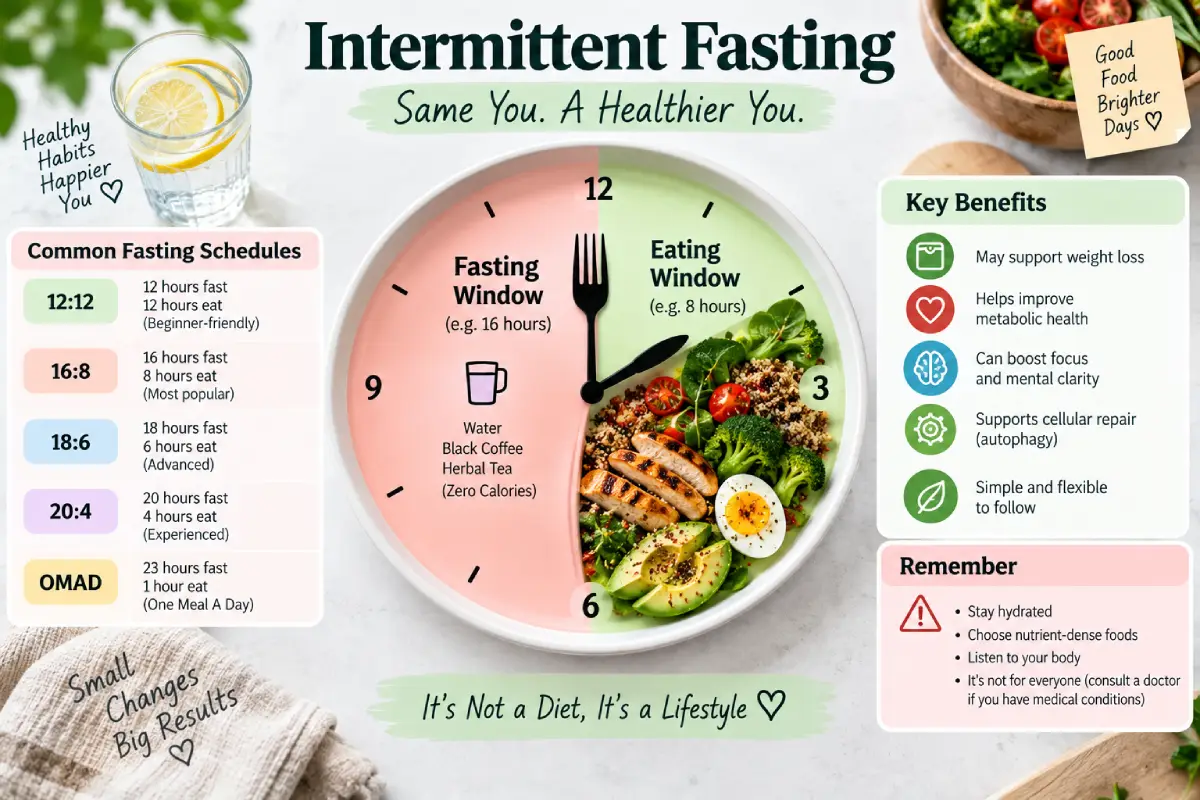
Intermittent fasting (IF) remains popular for one fundamental reason it emphasizes structure over restriction. Intermittent Fasting isn‘t about what food, but when you eat. Altering the schedule of the diet, opting to condense meals into a smaller daily window. This approach can make healthy habits easier to live with, depending on the individual.
Here’s a simple guide to how intermittent fasting really functions, the typical fasting protocols, the most proven to be effective benefits, and the populations best advised to be cautious or not participate at all.
What Is Intermittent Fasting, Really?
Intermittent fasting (IF) or time restricted feeding (TRF) is an eating pattern in which one alternates between periods of fasting and a regular diet. Since no particular food is suggested, IF is more about the ;the when of eating. The basic premise is that a longer daily fast may lead to a decrease in calorie consumption, better appetite regulation and ease of meal planning.
Key distinction: IF is a timing device, not a metabolic shortcut! The weight loss and health benefits associated with prolonged fasting are largely the result of the same mechanism as any other method — an overall deficit in calories — accomplished through a different format.
Common Intermittent Fasting Schedules
| Schedule | Fasting Window | Eating Window | Best For |
|---|---|---|---|
| 12:12 | 12 hours | 12 hours | Absolute beginners, gentle entry point |
| 14:10 | 14 hours | 10 hours | Early transition, mild appetite adjustment |
| 16:8 | 16 hours | 8 hours | Most popular; balances structure and flexibility |
| 18:6 | 18 hours | 6 hours | More experienced fasters wanting stronger effect |
| OMAD (One Meal a Day) | ~23 hours | ~1 hour | Advanced, high discipline required |
Practical example: A 16:8 schedule might look like eating between 12 p.m. and 8 p.m., then fasting overnight until the next day’s lunch — no early breakfast required.
Real Benefits of Intermittent Fasting
- Less complicated decision making– run out of reasoned choices. No time do dwell on what to prepare. No mental weighing up what to buy at the supermarket; less deliberating and planning.
- Natural decrease in calories for many, the emphasis on saving up for a ‘high-energy’ meal means there are less opportunities to snack
- Enhanced self-monitoring of hunger and fullness some indicate that they now better differentiate true hunger signals from reflexive eating habits.
- Flexibility no specific “banned” foods, which some find more manageable than strict diets
What Intermittent Fasting Does NOT Do
- It does not “detox” your body anything both your liver and kidneys do this every day
- Is not necessarily better than other means for reducing fat, as studies typically show comparable results to standard calorie restriction when calories are equated.
- Does not guarantee that muscle will be preserved protein consumption and training with weights still play the most important roles in this respect
- Does one have to fast to get good nourishments – no many people never fast and get good nourishments.
Who Should Be Careful With or Avoid Intermittent Fasting
- Those with a history of disordered eating and/or who frequently engage in binge restrict cycles
- Women who are pregnantly or breast feeding.
- Individuals living with diabetes or bloodsugar regulation issues, but not under medical supervision
- Individuals taking medications that have to be taken with food at set intervals
- Anybody who has been fasting and has had continuous tiredness, dizziness or feel irritable.
This should always be a personal, responsible decision– preferably.éconsult a doctor before starting if you have an underlying health condition, for instance.
How to Start Intermittent Fasting (Beginner-Friendly)
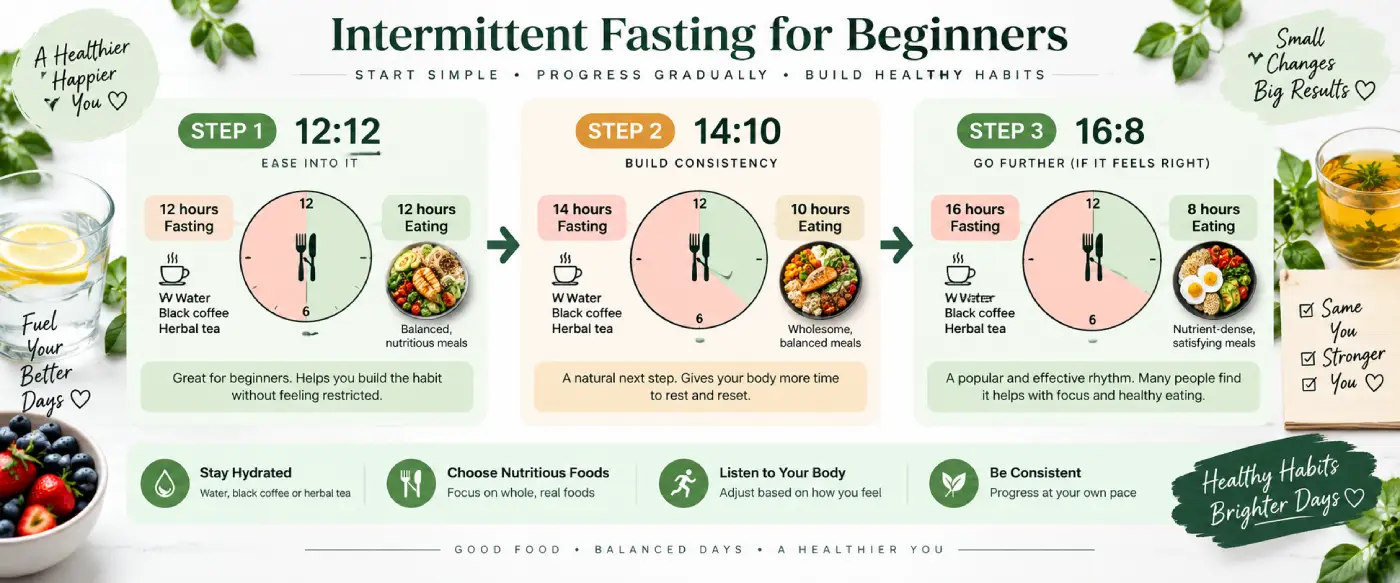
- Begin by going 12 hours without eating. That is, eat dinner and then pick your breakfast time to be just a little later. Widen it over time.
- Shifting to 14:10, then 16:8 in 2 3 weeks without going to long window.
- Ensure your eating window has balanced meals protein, fiber, and vegetables still count in IF, fasting can’t make bad food choices healthy.
- It is advisable to keep well-hydrated during your fasting period water, black coffee and plain tea can all be consumed without any problem.
- Use your common sense if you feel tired all the time, have trouble sleeping, or are irritable, then do not prolong your fast.
Read More:- nutrition for busy professionals
OMAD: Is One Meal a Day Worth It?
The master plan: eat for one hour. OMAD seems to be feasible in just one hour daily. It has been a way to go for the most disciplined, having the comfort of eating once a day but having to make several compromises:Protein and micronutrients imbalance in just one meal and that long fast not necessary for common goals. OMAD is an advanced idea, not for beginners.
Common Mistakes People Make With Intermittent Fasting
- Jumping immediately to 16:8 or OMAD without easing into it
- Doing this during the eating window. Of course, completely negating the calorie deficit fast had been designed to bring about.
- Supposedly ignoring intake because rushing to eat within such a narrow time period (the time it takes to get from class to class)
- Fasted along with intense training without electrolyte or fluid modifications
- Using IF as an excuse to consume low quality processed foods in the eating window.
Myth vs. Fact
| Myth | Fact |
|---|---|
| Fasting “resets” your metabolism | There’s no evidence fasting provides a unique metabolic reset beyond normal calorie deficit effects |
| You’ll lose muscle if you fast | Muscle loss during fasting is primarily linked to inadequate protein and lack of resistance training, not fasting timing itself |
| Everyone should try intermittent fasting | IF isn’t necessary or appropriate for everyone — it’s one tool among several equally valid approaches |
| Fasting means you can eat anything during your window | Food quality and total calories during the eating window still determine your results |
For a closer look at how fasting research compares to other calorie-deficit strategies, the Harvard Nutrition Source review of intermittent fasting offers a balanced, evidence-based breakdown.
Conclusion
Intermittent fasting can be a genuinely useful tool for people who find it simplifies their eating — but it’s a scheduling strategy, not a requirement for good nutrition. If you’re curious, start gently with a 12-hour overnight fast and build up gradually, always paying attention to how your body responds. For how fasting fits into your broader nutrition strategy, head back to the complete nutrition guide.
FAQs
Q1. Which is the most beginner friendly intermittent fasting schedule? 12hr ultradian fast is the most beginner friendly starting point; slowly but surely most beginners transition to 14:10 or 16:8 within a few weeks after their body adapts.
Q2. Is intermittent fasting helpful for weight loss? Intermittent fasting may be beneficial for weight loss, because it may lead to a natural reduction in calorie consumption, due to the shortened window of ‘feeding’. However, it still operates on a calorie deficit basis.
Q3. Is OMAD (One Meal a Day) safe? OMAD is an advanced proceedure and while you may get away with it, it‘s not recommended as your first approach and certainly will make one hitting protein and micronutrient recommendations more difficult.
Q4. Are there any groups of people for which intermittent fasting is not recommended? If you have a history of eating disorder, are pregnant or breastfeeding, have a blood sugar condition or take medication on a set schedule, you should not use IF without consulting your doctor.