Nutrition Guide 2026: How to Eat for Energy, Weight Loss & Longevity
Published: September 7, 2026 Last Updated: September 8, 2026 Let‘s face it: “eat healthy” is the most regurgitated advice
Let‘s face it: “eat healthy” is the most regurgitated advice on the internet and the vaguest when it comes to how to do it. I‘ve heard it from your doctor, through your Instagram, from your aunt, for every wellness brand on the planet. But never in a way that makes sense when you have to work a nine-to-six job, cook for a family, watch your dollars, deal with your feelings.
This guide is your starting point. Whether you‘re in New York or New Delhi, going to school or working in business, this nutrition guide lays out exactly what the perfect balanced diet looks like, how those macro and calories estimates actually work, what diets are actually worth your time, and how to implement lasting habits–not for a 30 day challenge, but permanently. Use this as your map. Each of the major topics below links to a full, detailed guide so you can go as deep as you want, on the exact subject you are interested in.
What Is Good Nutrition, Really?
A good diet is just feeding your body the right balance of energy (calories) and nutrients (protein, carbs, fats, vitamins, minerals) as it needs to to work, repair, grow, thrive all the time, not just some of the time.
My favorite definition: Nutrition is the science and practice of providing your body with the nourishment it needs to function optimally not as a form of penance, nor as a fly-by-night fashion, and definitely not one formula fits all.
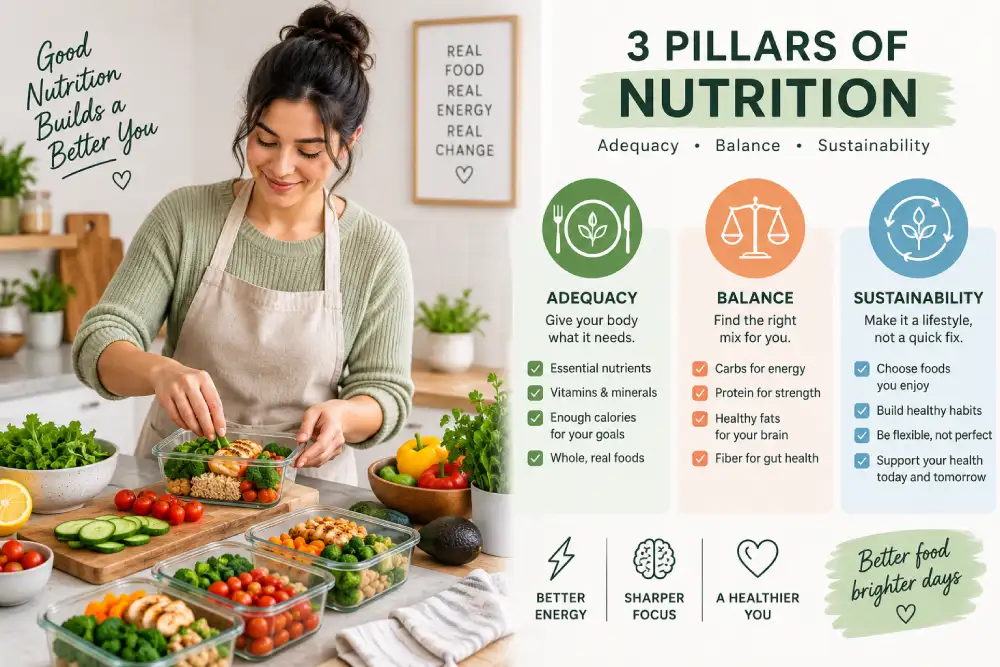
The Three Pillars of Nutrition
- Adequacy getting enough of each nutrient your body requires, such as protein, fiber, vitamins, minerals and good fats.
- Balance– no one food group on your plate dominates; your energy in roughly matches the energy out.
- A sustainable an eating style you can stick with long term, not just for a few weeks.
Key takeaways:
- Nutrition isn‘t about banning, it‘s about providing your body with the good stuff it requires.
- The “perfect diet” that you can‘t stick to is worse than the “good enough” diet that you do adhere to.
- All eating patterns are healthful. No matter what culture Indian thalis or American plates can be made iron-fortified nutritious meals.
Practical tip: Before you eat your next meal. Simply ask “does this have protein, fiber and color (means has vegetables/fruit in it). If the answer is yes, you are way past most people.
Mini summary: having good nutrition is being sufficient, balanced and durable, not being perfect.
Why Nutrition Matters More Than Ever in 2026
Too much sitting in front of screens, working at a desk job, and the every-growing ease of food delivery makes eating badly the default for most of us day-to-day.Which is why caring about what I eat has never been more important.
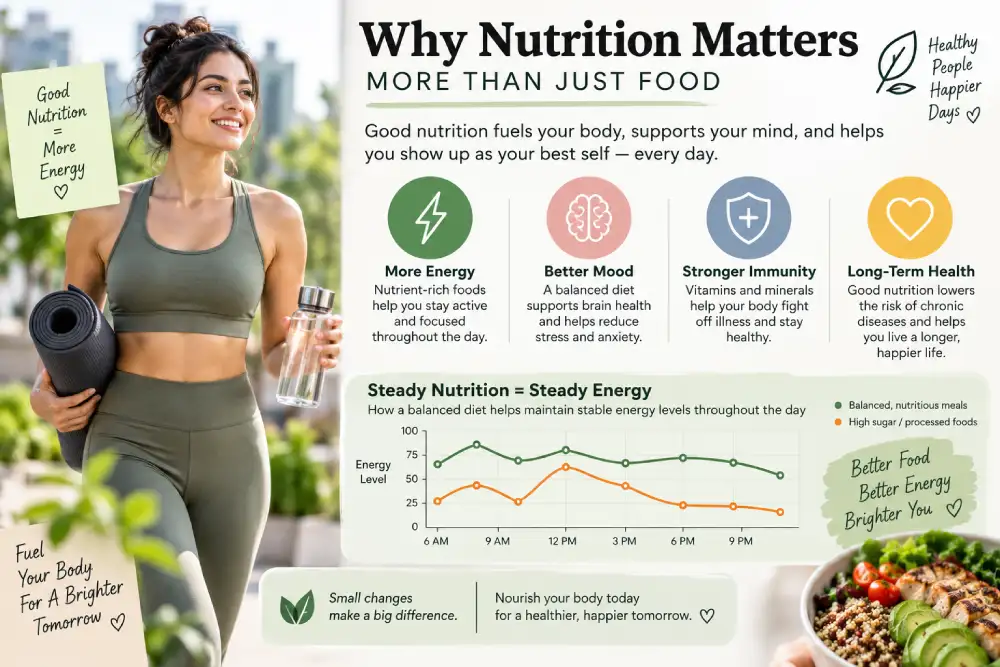
Energy and Focus
What you eat is directly related to blood sugar balance; this in turn affects concentration, mood and the afternoon crashes. A breakfast with a good protein and fibre content will sustain your energy more than one high in sugar.
Weight Management
It‘s a lot more than ”‘eat less, move more” it‘s about what we eat, when we eat it, sleep, stress, and hormones. But really, deep down, there are no secrets, no tricks, no shortcuts. Just eat well consistently over the long haul.
Longevity and Disease Prevention
A diet abundant in vegetables, fiber and healthy fats while reducing ultra-processed foods is reliably associated with decreased risk of cardiovascular disease, type 2 diabetes and various other chronic diseases. This is one of the most well documented findings in contemporary nutrition.
Key takeaways:
- Food is functional – eating has an immediate impact on your present day energy level, and an effect on your future health.
- Small, steady choices add up to much more than large, shiny days.
- Both extremes eating too much or too little of the ultra-processed convenience foods will ultimately have negative consequences.
Mini summary here: In 2026, Nutrition is not independent self-self-care. It becomes everyday infrastructure for bottom line performance and wellbeing longevity.
How to Start a Healthy Eating Guide From Scratch
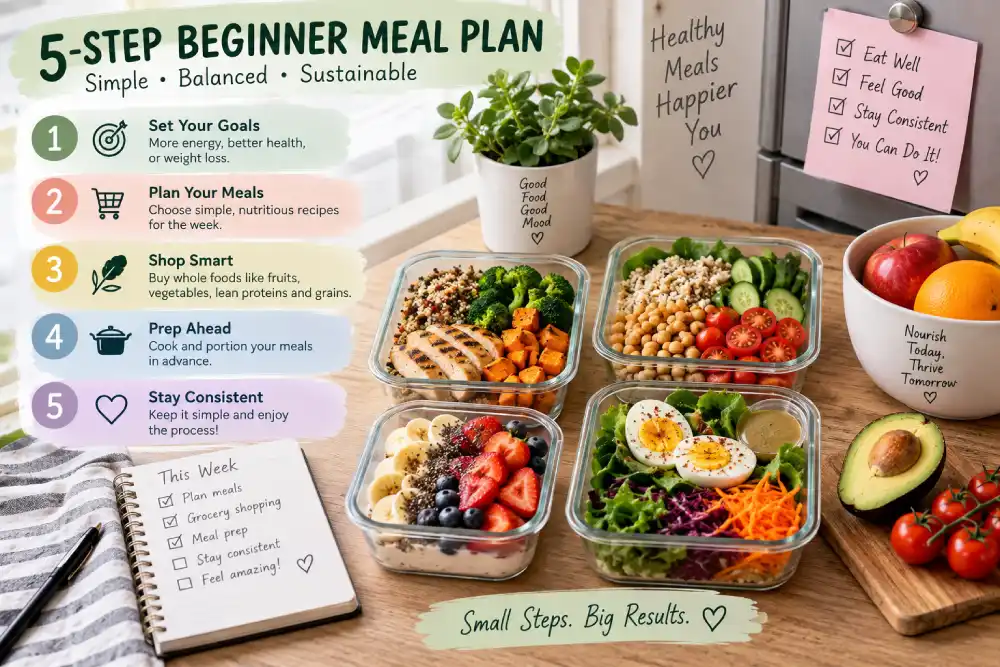
If you are 0 to begin with, don‘t attempt to do everything at once. Use this very simple beginner‘s framework instead.
The 5-Step Beginner Framework
- Audit you current pattern 3 days out track what and when you eat no judgement just data.
- Decide on a meal to ‘fix’ first best to start with either breakfast or lunch as they are easiest to manage.
- Add before you subtract add a vegetable, a protein, or water in before you cut anything out.
- Create a weekly routine that you can be consistent with that is, 4-5 meals you frequently prepare instead of constantly trying something new.
- Focus on progress, not perfection your energy, sleep, and how your clothes fit will show you more than just your scale.
Practical example: A person who already doesn‘t eat breakfast and eats fried stuff at 11 o‘clock in the morning can break it all down to: a boiled egg or some natural yogurt and fresh fruit before going out of the house. The change usually makes such a difference to a person‘s mid-morning energy dip.
Key takeaways:
- It‘s better to begin small than to start “right.”
- A repeatable weekly structure removes all the daily decision fatigue.
- Meal planning is a skill, not a personality characteristic. If you want to learn it, you can.
If you are looking for the entire step-by-step system weekly templates, grocery lists, prep day routines this beginner edition is just the beginning.
Read More: Healthy Meal Planning for Beginners
Understanding Macros & Calories (Simplified)
You don‘t need any nutrition degree you need a macro model.
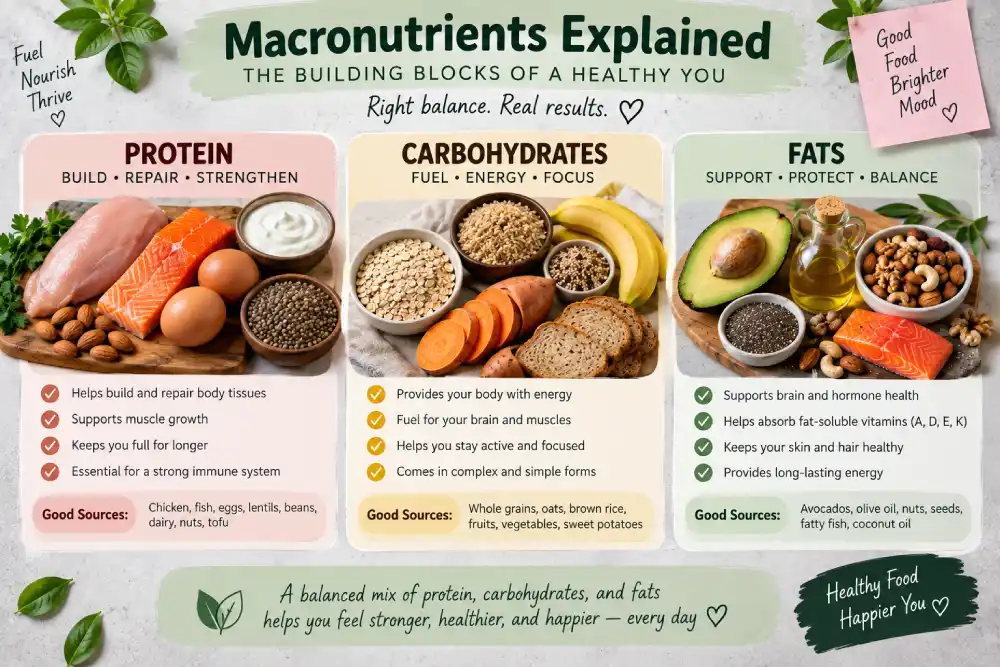
What Are Macros?
Macronutrients are the three nutrients that provide energy:
| Macronutrient | Role | Common Sources |
|---|---|---|
| Protein | Builds/repairs muscle. Makes you feel full. | The foods (condiments) (in no order): Eggs, dal, paneer, chicken, tofu, fish, Greek yogurt. |
| Carbohydrates | Beginning of primary energy source, fuels brain and workouts. |
Rice, roti, oats, fruit, potatoes, whole grains |
| Fats | Endocrine, Nutrient absorption, Satiety. | Nuts, ghee, Olive-oil, Avocado, Seeds |
Calories vs. Macros — What Actually Matters
Your calorie intake is what will result in weight gain, weight loss, or weight maintenance. Your macros are what influence that weight change in terms of the muscle-to-fat ratio and how happy, satiated, and energized you are during the process.
Easy starting ratio (not medical advice, just a broad starting point): about 30/40/30 (protein/carb/fat) but depending on how much activity you do, your goals, and how your body reacts to the balance you choose.
Practical example: two people eating the same 1,800 calories each can have quite different outcomes if they get 100g of protein each day v. 40g the higher-protein one will generally keep more muscle, and may feel more satisfied.
Key takeaways:
- Calories run the scale, the macros run the quality of the outcome.
- Protein is the most under-consumed macro for weight-loss success.
- You don‘t have to keep up tracking forever that‘s often good enough in the long run (by rough portions).
Mini summary: Calories first for the “how much,” macros second for the “what kind of results.”
Read More: Understanding Macros & Calories
Balanced Diet 101: What Your Plate Should Look Like
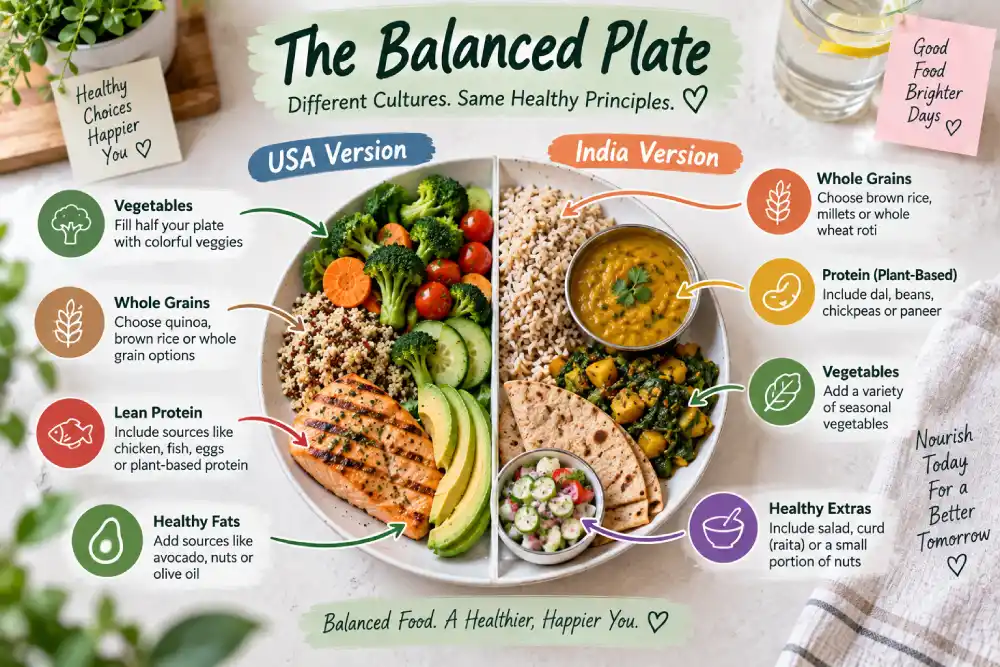
Drop the complex diet laws for just a moment and imagine a plate divided in to different sections.
The Plate Method (USA + India Examples)
| Plate Section | Portion | USA Example | India Example |
|---|---|---|---|
| Vegetables | ~40% | …broccoli, salad, roasted peppers. |
Sabzi, salad, sautéed greens |
| Protein | ~25% | Grilled chicken, eggs, beans | Dal, paneer, chicken, and there is gravy on the chicken and the Dal. |
| Whole grains/starch | ~25% | Brown rice, quinoa, sweet potato 3.4 Other: | Roti, brown rice, millet |
| Healthy fat | ~10% | Olive oil, avocado, nuts | Ghee, nuts, mustard oil (medium) |
Key takeaways:
- “Balanced diet” doesn‘t mean one plate of Western salad only thalis in India and bowls in America both will contain this percentage ratio.
- The single most underutilized lever is getting half your plate to be vegetables.
- You don‘t have to cut back on carbs or fats you just need balance.
Pro tip: When dining at restaurants, visualize dividing your plate in the same manner order an extra bit of vegetables if your default meal is heavy on the carbohydrates.
Mini summary: diet is a proportion problem and not an elimination problem.
Best Diets for Weight Loss: A Quick Comparison
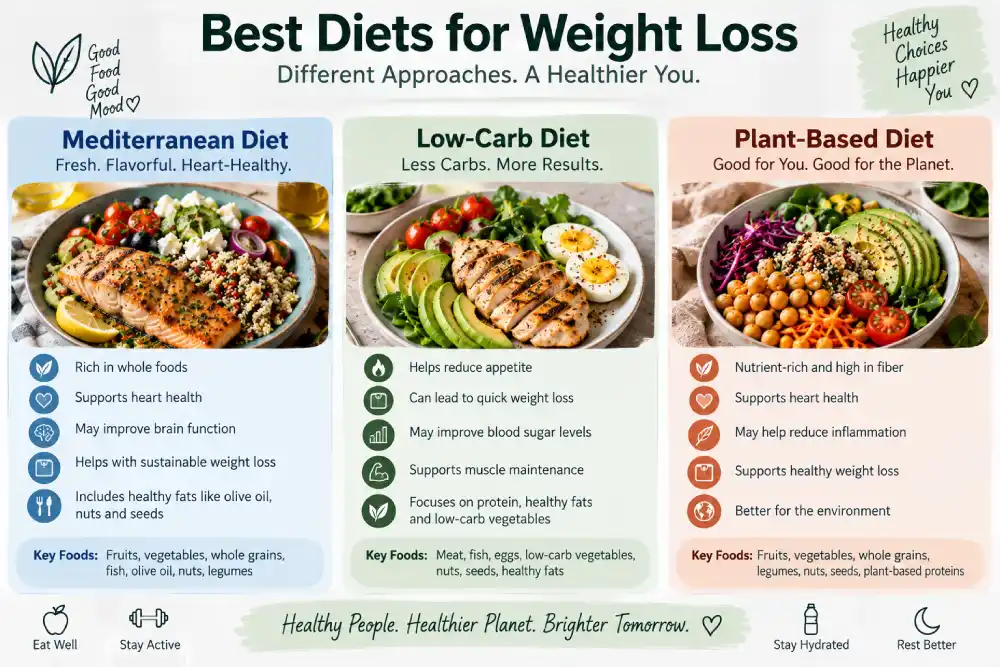
There‘s no one “best” diet there‘s the diet that fits within your food culture, your schedule, and your food preferences long enough to make a difference.
Comparison Table
| Diet Style | Best For | Watch-Outs |
|---|---|---|
| Mediterranean | Long-term maintainable, sustainable, heart health | More gradual weight reduction during the beginning. |
| Low-Carb | Fast early results, appetite control | Can be difficult in social settings (2). |
| High-Protein | Preservation of muscle during fat loss. | Requires planning of the meals/food items. |
| Plant-Based | Fiber and cardiovascular/gastrointestinal health | Needs planning for protein and B.12. |
| Intermittent Fasting |
Simplicity, fewer decisions |
Not inclusive for all, (see below) |
Key takeaways:
- The “best” diet is the one you can stick to day after day, month after month.
- Among quick weight-loss diets are those with the greatest percentage of rebound.
- Cultural fit is essential a diet that does not include your usual staples will quickly fail.
Practical tip: Rather than choosing a diet based on its name just give it a trial try one week of the actual eating regime and see how it works for you.
Read More: Best Diets for Weight Loss
Clean Eating: Separating Myth From Fact
“Clean eating” is an loaded term – typically understood to mean “restrictive” rather than “healthy”.
How it should be: Eating predominantly a wide variety of fresh, natural, minimally processed foods and possessing the flexibility to adapt.
What it shouldn‘t mean: calling foods “clean” or “dirty,” or feeling guilty if you eat some packaged food or baked good every now and then.
Key takeaways:
- Clean eating is a pathway (more whole foods) rather than set of rigid rules.
- It is also common for rigid “clean eating” to be associated with disordered eating in the thoughts and ideas.
- 80/20 is a more sustainable policy framework than 100% “clean” all the time.
Mini summary: clean eating is a way of living rather than an identity to adopt.
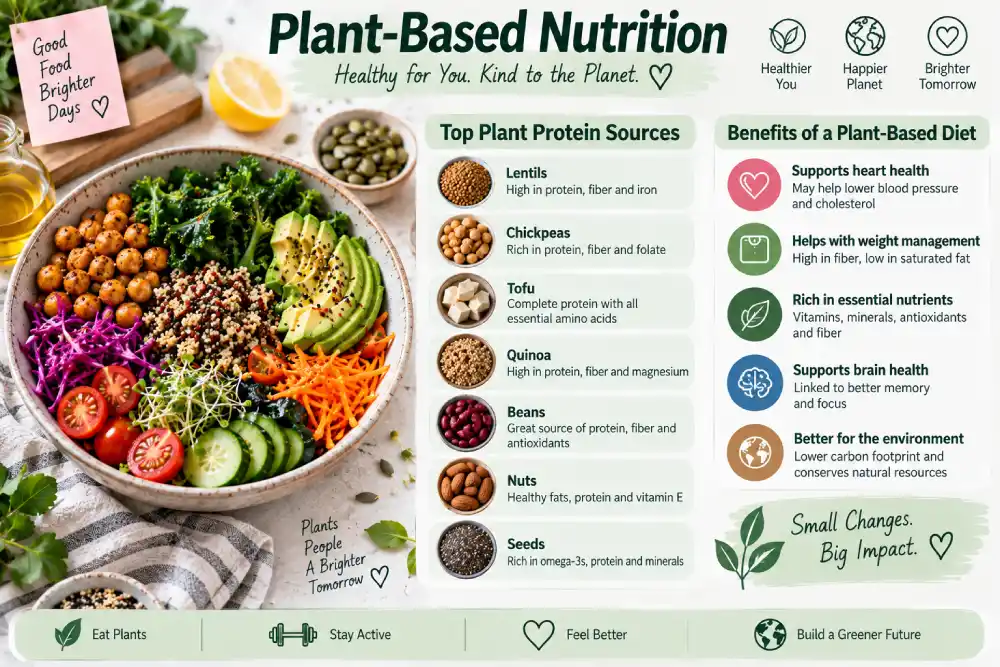
Plant-Based Nutrition: Is It Right for You?
If planned properly, a plant-based eating style can be one of the most nutrient-dense ways to eat, whether that option is totally vegan, vegetarian, or just “more plants, less meat.”
Key takeaways:
- Plant based diets are higher in fiber, antioxidants as they are naturally so, and lower in saturated fats as they are so.
- The biggest planning problem is protein variety and vitamin B (especially to fully vegan eaters).
- India already has highly developed plant-based food traditions- dal, legumes, paneer and starches are anything but unnatural and the transition here is not as difficult as many make it out to be.
Practical example: Since replacing one week day meal with at least a lentil or chickpea meal is a relatively low friction step you can take to change your eating habits is to ease into it.
Mini summary: Eating plant-based doesn‘t have to be all-or-nothing focus on those steps at your own speed.
Read More: Plant-Based Nutrition Guide
Intermittent Fasting: Trend or Real Tool?
Intermittent fasting (IF) changes when you eat, not what you eat. Usually, this means eating within a limited time each day (like 8 hours) and fasting for the rest.
Key takeaways:
- IF naturally and easily makes the decision making process easier and causes reduction in calorie intake of some people.
- Is not “better” than any other way, it‘s a scheduling tool, not a magical metabolic toggle switch.
- Cannot be undergone by everyone; those with a previous diagnosis of a disordered eating pattern or other medical issues, or when pregnant. This decision should always be an educated personal decision and best be done following a doctors advice.
Practical example: For a beginner a simple start is a 12 hour overnight fast (e.g. 8 p.m. when you have finished dinner then 8 a.m.) followed by an extension to longer and longer fasting periods.
Mini summary: Intermittent fasting is a timing strategy that may suit a stage of life or type of diet but certainly not necessary nor ideal for everyone‘s good health.
Read More: Intermittent Fasting Explained
Nutrition for Busy Professionals & Students
This is the problem with just about all nutrition advice or diet plans – they assume endless time to cook and shop, which doesn‘t match real life.
Key takeaways:
- Preparing 2–3 base items per batch (e.g., a grain, a protein, a vegetable) is one better strategy than trying to cook a fresh entire meal.
- 3–4 “emergency” healthy options (such as nuts, fruit, protein bars, roasted chana) in your desk/ bag will help you avoid vending-machine desperation.
- The time of day and schedule is just as important as what you eat when there‘s chaos in your life.
Practical example: Preparing, on a Sunday, 15 minutes to boil some eggs, chop vegetables and cook rice or quinoa can provide healthy mix-and-match lunches for the majority of the working week.
Mini summary: For a hectic schedule, it is not about preparing a perfect meal it is about using a repeatable method with a lower effort.
Read More: Nutrition for Busy Professionals
Common Nutrition Mistakes People Make
- Omitting whole food groups in the absence of an actual medical diagnosis, creating nutrient deficiencies and inducing rebound binge eating.
- Undereating protein by consuming an insufficient amount of protein, which hampers the ability to sustain weight loss and leads to more muscle loss.
- Banking on “diet” packaged foods that are highly processed in spite of their low calorie-indication.
- Missed/ skipped meals to “save calories,” which tends to result in overeating later on in the day.
- Searching for a diet type rather than a food environment. Binge on the same guilty pleasure foods over and over again, hoping “another” diet will be the one.
- Unaccounted is neglecting hydration, which influences messages of satiety, energy, and digestion.
Practical tip: Find one of the mistakes above that really sounds familiar to you and just correct that one mistake for a week.
Myth vs. Fact: Nutrition Edition
| Myth | Fact |
|---|---|
| But it‘s the carbs that make you fat | You can gain weight by eating too many calories not just carbs. |
|
Skipping meals helps weight loss |
Stimulates & often increases hunger and overeating later. |
|
All fats are bad |
Healthy fats (nuts, olive oil, ghee, but sparing) promote hormone health |
| You‘re going to have to detox after “bad” eating. | All you need to know about your liver and kidneys. They are already taking care of your body on a daily basis. |
| Bing eating late‘at nights will always increase.your weight. | Consuming the same amount of food, regardless of the specific time of day it is ingested, is more important. |
| Supplements can be used instead of real food | Supplements are there to supplement; they are not intended to replace the nutrition found in the whole-food |
Troubleshooting: When Your Diet Isn’t Working
If progress has stalled, work through this checklist before assuming your entire approach is wrong:
- Use smaller portions to reassess even the “healthful” foods can be overconsumed.
- Check for consistency, not intensity five average days beats two perfect days and five chaos filled days.
- Consider sleep and stress both of which have a direct effect on hunger hormones and cravings.
- Cut down on hidden liquid calories sugary sodas, juices and coffee drinks pile up rapidly.
- Provide a generator, allow it to.4–8 weeks for visible outcomes to occur.
Mini summary: When we hit a plateau, it shouldn‘t be an excuse to abandon the entire game. It should be a sign of we need to change one aspect of it.
Nutrition Trends to Watch in 2026 and Beyond
- Personalized nutrition – online applications and at home testing targeted to modulate recommendations based on content specific patterns of individual response.
- Protein convey Steady increase of protein-oriented products and meals in the both US and Indian markets.
- Gut health first choices fiber and fermented foods trump calorie counting.
- More relaxed, less-restrictive diet culturea continued movement away from extreme elimination plans to a sustained, flexible style.
- Regional whole-food revival renewed enthusiasm for traditional, less-processed regional foods (millets, pulses, seasonal fruits and vegetables) over ultra-processed “diet” foods.
Building Your Personal Nutrition Roadmap
- Week 1: Take a good look at the way you eat, and start fixing at least one meal.
- Week 2: To find your rough macro balance, use the plate method.
- Week 3: Select 1 diet style to test-drive for 2 weeks and see how you fit it into your lifestyle.
- Wk4 Build a consistent weekly meal pattern and prep routine.
- Ongoing: If progress stops for any reason, comeback to the troubleshooting checklist and change only one variable at a time.
This roadmap is meant to be straightforward the aim isn‘t perfection. It‘s a reproducible system that, a year down the road, still works for you.
Conclusion
Nutrition doesn’t have to be complicated or severe. It is really all about the little things – adequate protein, adequate fiber, reasonable servings and an approach that is truly workable with a hectic life. This primer has provided the framework: the plate method, the macro figures, the diet style contrasts and the common pitfalls to target. Now it’s time to delve deeper into the area that probably interests you the most – begin with meal planning if you are just beginning to get to grips with it, or skip to the diet style that aligns with your goals. Regardless of which path you take, the optimum nutritional approach will be the one you are still doing in six months’ time.
FAQs
Q1. What is the “healthiest” diet to lose weight? There is no single “healthiest” to lose weight in general Mediterranean, high-protein, and plant-based are all well-supported, so adhere to whichever one is closest to your food preferences and lifestyle so you can stick with it over the long term.
Q2. How many calories should I be eating? Your calorie needs can depend on your age, weight and physical activity levels. Your calorie needs will also be affected by your goal weight (if you wish to lose or gain weight): a rough guideline for most people to maintain weight is 1,800–2,400 calories a day.
Q3. How do you defineMacronutrients?Simply define: MacroNUTRIENTS Protein, Carbohydrates & Fat: The three nutrients which give your body its calories and play different roles in energy use, repairing muscles & hormone health.
Q4. Is intermittent fasting safe for beginners? On the whole yes, insofar as beginners can do short easy 12 hour windows along with some more intense protocols, but not everybody and practicing caution for those with past disordered eating or health problems in the past is strongly advisable.
Q5. How do I begin eating healthily with no time to cook? Get a ha erbend (batch-prep) s going by preparing a single grain, a single protein, and a single vegetable singly or twice a week and then put-together eating from those ingredients during the week.
Q6. Will I get enough protein from a plant-based diet? Yes, if you eat enough variety of foods each day such as lentils, beans, tofu, paneer and rice and eat a good amount of both. B12 supplement is often required for vegan diets.
Q7. So what does a balanced diet look like on a plate? It should be about 40% vegetables, 25% protein, 25% whole grains or starch and 10% healthy fats, which is fairly typical of both American and Indian cuisines.