Healthy Meal Planning for Beginners: 2026 Step-by-Step Guide
Published: September 7, 2026 Last Updated: September 17, 2026 Ever found yourself in front of your fridge at 7
Ever found yourself in front of your fridge at 7 p.m. and saying “I don‘t know what I want to eat,”? If yes, then you understand why healthy meal planning is important. It isn‘t a matter of discipline it‘s about eliminating the choice of what to eat before you‘re hungry, exhausted, and grabbing the nearest package.
This is a beginner-proof system we provide: a successful and easy way to build a weekly meal plan, intelligent meal prepping ideas, and a shopping list that works without the need for any complicated equipment or spending an entire Sunday cooking.
Why Meal Planning Actually Works
It makes sense that meal planning works, because it replaces “in the moment, hungry” decisions with “ahead of time, (more) relaxed” ones. That one change is why planners consistently eat more regularly, AVOID throwing away food, and pay less for last-minute delivery.
Benefits beginners notice fastest:
- Less “what‘s for dinner” decision making on weeknights
- Less food wastage (buy only what you will use)
- Notice how much easier it is to hit the target consistently with Protein and vegetables.
- 1. Lower food expenditure during the week: Lower expenditure on food during the week may be due to the reduced number of people residing in London during the weekdays.
The Beginner Meal Planning Framework (4 Steps)
Step 1: Select 4–5 tested and approved meals as opposed to seven new ones. Select the smallest rotation you can stand two types of breakfast, two lunches, three dinners figured out for yourself. Different will come in time, consistent should come first.
Step 2: Create your grocery list based on these meals. Write each one out with ingredients grouped by section (fresh foods, dairy, grains, dried goods) so grocery shopping is quick and you don‘t forget anything. This is the best way to keep the processed snack foods out of your cart.
Step 3– Batch- preparing 2–3 components not dishes. Prepare a handful of cooked raw ingredients (kaji bang, brown rice, oats, grilled chicken, boiled eggs, boiled mash dal, chopped veg) and combine them in different ways each day.
4. Pick “loose” “themes” for your days rather than too strict menu plans. For instance: Monday stir-fry or taco night and Wednesday bowl night and Friday “what‘s in the fridge” leftovers night are “themes” that can help reduce decision overload without a total commitment to a specific recipe.
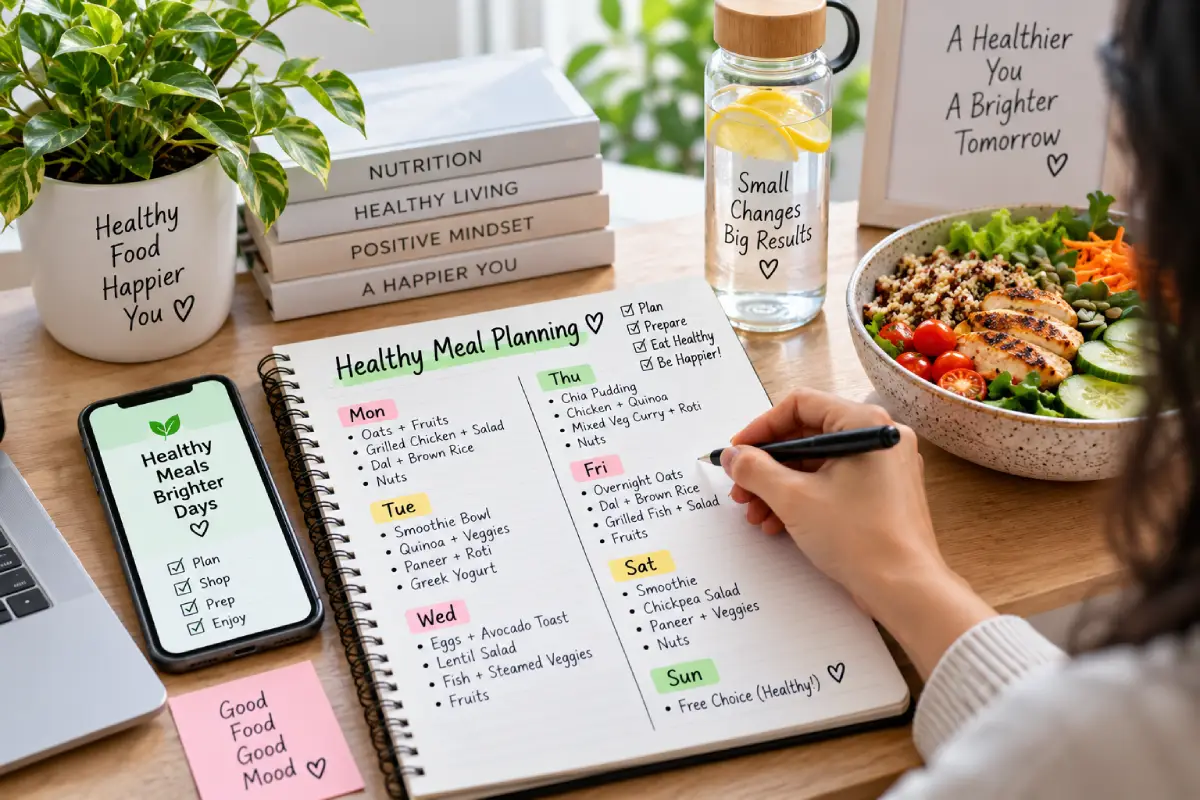
Sample Weekly Meal Plan (USA + India Friendly)
| Day | Base Protein | Base Grain | Vegetables |
|---|---|---|---|
| Mon–Tue | Grilled chicken / Paneer | Brown rice | Broccoli, bell peppers |
| Wed–Thu | Boiled eggs / Dal | Quinoa or roti | Spinach, carrots |
| Fri | Tofu / Chickpeas | Leftover grains | Whatever’s left in the fridge |
This structure works whether your kitchen staples are rice and dal or rice and beans — the system stays the same, only the ingredients change.
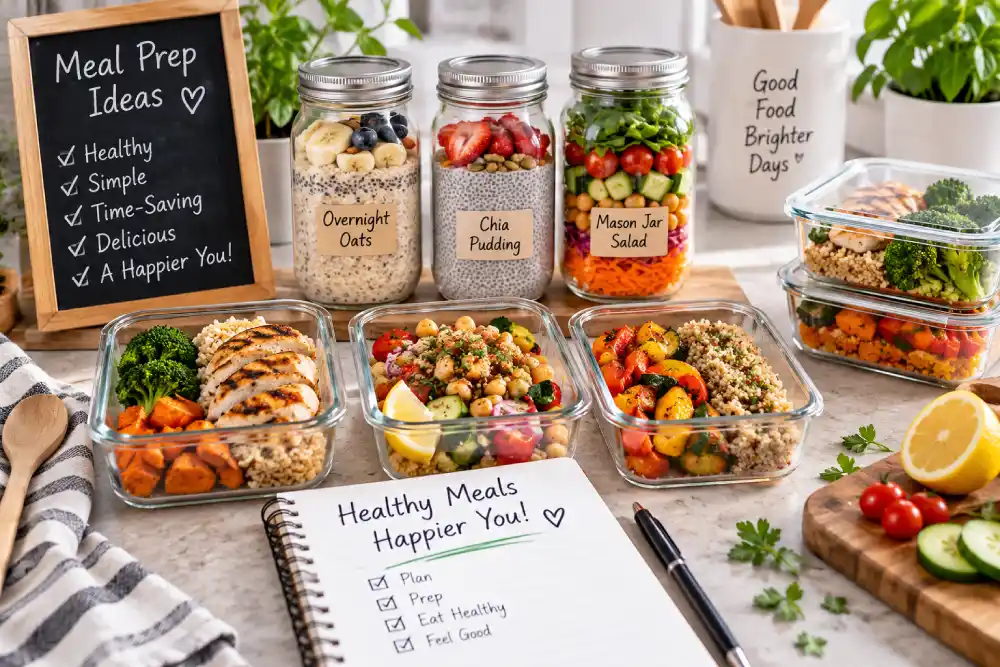
Easy Meal Prep Ideas for Beginners
- Overnight oats or poha 5-minute breakfasts prepared in the evening and consumed in the morning
- Mason jar or dabba salads – layer dressing at the bottom, by the time you get to the greens they are still fresh in the dabba and stay fresh for days.
- “One-pan bowls grain + protein + roasted vegetables + sauce, customizable to the hilt.
- Freezer-friendly portions — double the recipe and freeze the rest for an easy meal sometime down the track
Grocery List Tips That Prevent Waste
- Shop with your 4-5 planned meals in mind, not a nebulous “healthy” mood.
- Buy fresh vegetables with short shelf lives that can be used in various dishes (e.g. sweet potato for lunch bake and potato skins).
- Maintain a modest “backup” supply of frozen vegetables and canned beans for days when you have low motivation.
- Take a mealplanning application or a notes-app checklist for example it‘s the habit itself that counts so much less.
Common Meal Planning Mistakes Beginners Make
- Trying to come up with 7 totally different dinners for the week here‘s the #1 reason I see people throw in the towel by week 2.
- Forgetting about leftovers in the plan and wasting them.
- Over purchasing fresh food. This results in excess food which will go off unless used immediately and the leftovers are then disposed of.
- Saves planning my protein, so the meals feel empty and not filling
- Exactly copying someone else‘s plan rather than adapting the plan with one‘s own taste and whatever is available in one‘s pantry.
Myth vs. Fact
| Myth | Fact |
|---|---|
| Meal planning involves eating the same dull foods all week. | Four or five meal rotation and mix-and-match items still seem to offer much variety |
| You need a whole Sunday to get all of the meal prep done. | 30–45 minutes of smart batch-prep will take care of most of the week |
|
Meal planning apps are required |
A simple list on paper, or your phone, works just as well when you‘re beginning. |
Once you settle into your weekly plan, the logical next step is knowing food amounts — this is the area of portion and nutrition planning; resources that you can use to help you fine-tune amounts over time.
Conclusion
Healthy meal planning isn‘t about a picture perfect prep day it‘s a straightforward, simple system: a small meal rotation, a smart grocery list, and components you can prepare in big batch and use all week long. For now, take the one week plan above and tweak it when you learn what actually works for your time/schedule. For the over all goal where meal planning fits into the big scheme of your overall nutrition strategy return to the nutrition guide.
FAQs
Q1. How do I start meal planning as a complete beginner? Start with just 4–5 repeatable meals for the week, build a grocery list around them, and batch-prep 2–3 base components like a grain, a protein, and chopped vegetables.
Q2. How much time does healthy meal prep actually take? Most beginner meal prep takes 30–45 minutes once or twice a week when you’re prepping components rather than fully cooked dishes for every single meal.
Q3. Do I need a meal planning app to be successful? No — a simple checklist on paper or your phone’s notes app works just as well when you’re starting out; apps only help once you want more automation or tracking.
Q4. How do I stop wasting food when meal planning? Buy vegetables that overlap across multiple planned meals, avoid overbuying fresh produce, and build one “leftover clean-out” meal into your weekly plan.