Meditation for Mental Wellness: A Beginner’s Guide for 2026
Published: September 3, 2026 Last Updated: September 3, 2026 If mindfulness is bringing your attention to the present moment
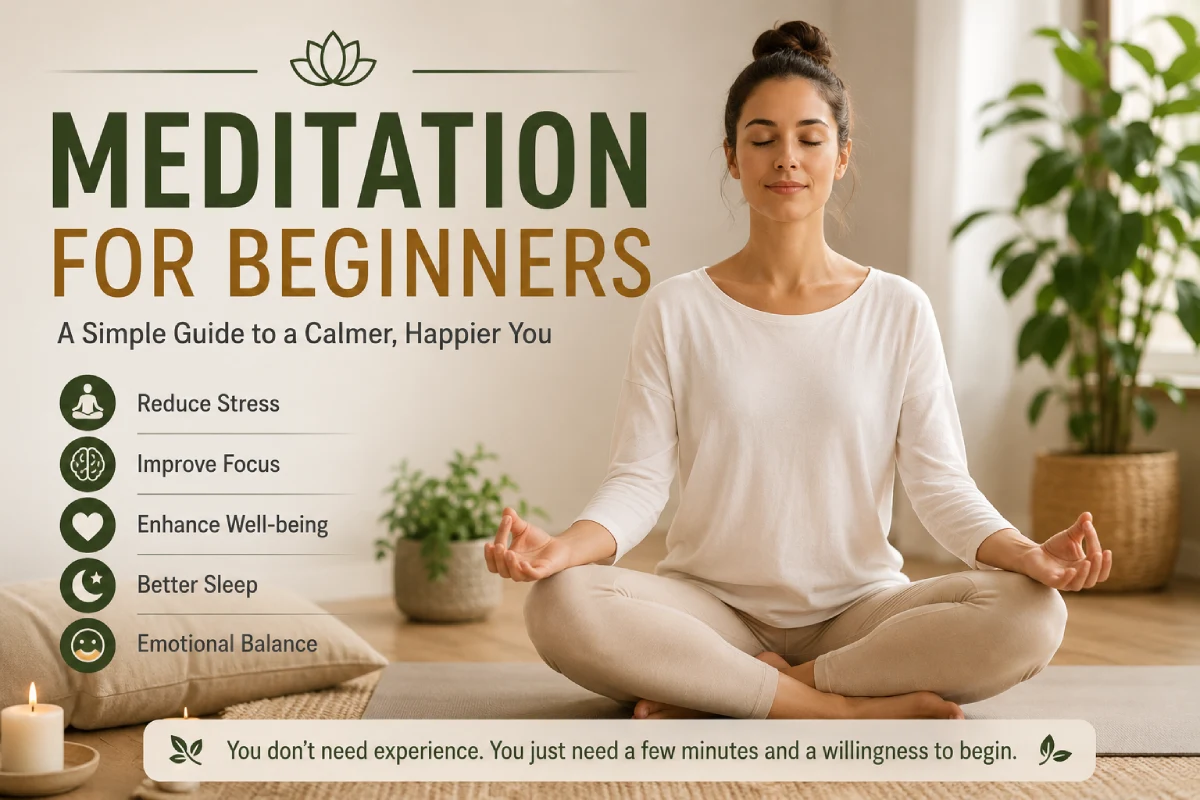
If mindfulness is bringing your attention to the present moment while you‘re going about your day, meditation is the practice session you do for the same skill a specific chunk of time during which you‘re intentionally sitting down and practicing. Meditation for beginners doesn’t need to be intimidating: no incense, no perfectly silent mind, no thirty-minute sessions on day one.
Meditation vs. Mindfulness: What’s the Difference?
They‘re connected but not the same thing. Mindfulness is a quality of attention you can apply to anything you can be mindful while drinking coffee, or at work, as well as (or instead of) during meditation. Meditation is a specific practice, in general a sitting meditation with your eyes closed, used to train the skill of mindfulness. Meditation is like the gym workout; mindfulness without meditation is like living a fit lifestyle without ever setting foot in the gym. If you‘re new to either, we‘d recommend beginning there. Our beginners’ guide to mindfulness is a softer introduction to the concepts before introducing the formal meditation.
Real Meditation Benefits (Beyond “It’s Relaxing”)
- Alleviates rumination. By pacing yourself, you learn to spot a thought spiral early on, and to do a U-turn at that point without following through.
- You get better at it as you do it. Meditation is in fine essence, attention training reps for your concentration muscle.
- Reduces baseline stress reactivity. Regular practice has been associated with a less reactive physiological response to stress, not just a calmer mood during practice:.
- Establishes emotional regulation. The experience of sitting with present-moment distress without acting upon it, for a few minutes, develops the same skill necessary for managing difficult emotions in general.
How Long to Meditate as a Beginner
Skip the 20-minute recommendation you‘ve probably seen elsewhere. Start smaller:
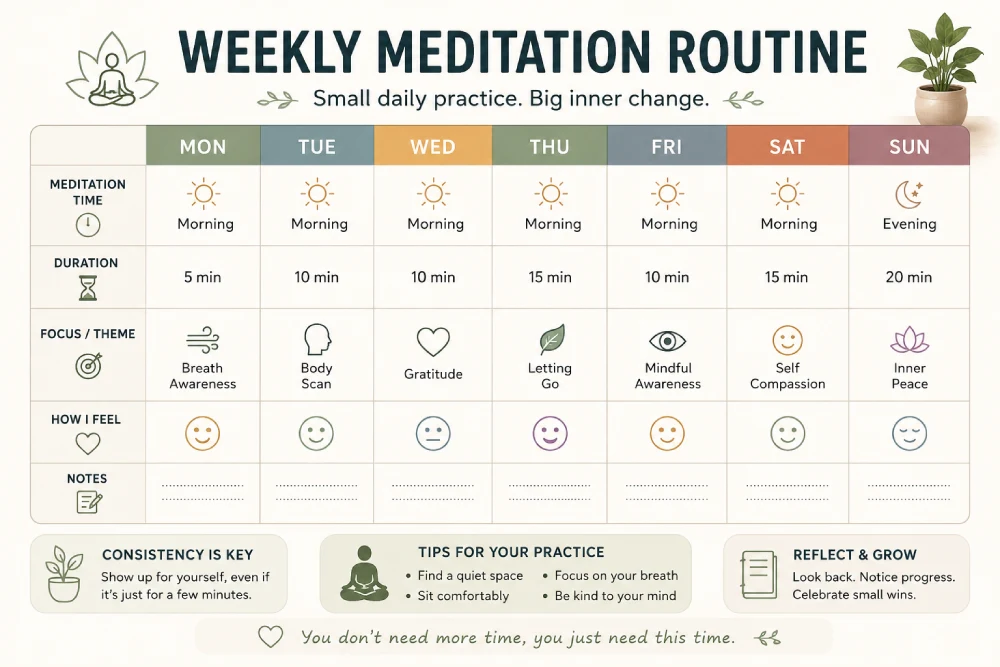
- Weeks 1–2: 3–5 minutes practicing skill each day. The objective is regularity rather than perfection.
- Week 3–4: 5–10 minutes and stooping. (Once sitting for about five minutes or more no longer seem restless.)
- From month 2: ten to fifteen minutes provided it is not still too hard and it is not being imposed upon.
Daily practice for even five to ten minutes easily surpasses practicing once a week for an hour or two it‘s just that the skill gets established through repetition, not through expanding the time.
Types of Meditation to Try
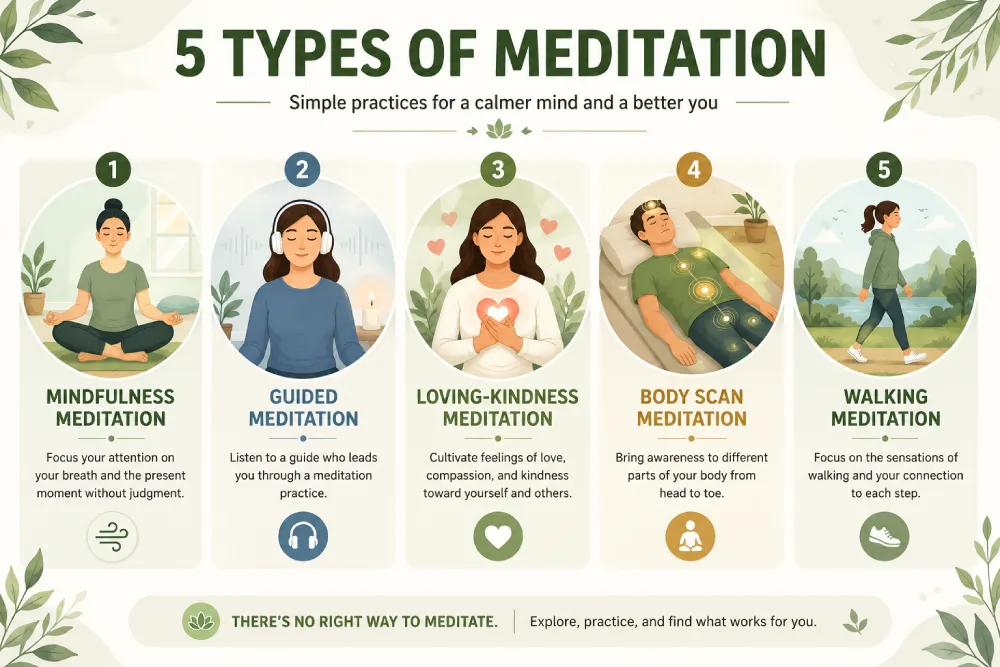
1. Guided meditation. Recorded voice leads you through the exercises. Ideal for absolute novices; alleviates those “am I doing it correctly?” doubts.
2. Breath-directed meditation. Just simply guided through the feeling of your breath, bringing back to it each time your mind begins to ramble. The most basic foray.
3. Body scan meditation. Gradually bring your entire attention to each individual part of your body, observing sensations rather than evaluating. Particularly helpful before bed or after a strenuous day.
4. Loving kindness meditation. Mentally wishing wellbeing to yourself and others (“may I be well, may you be well”). Can be effective in combating self-criticism or stress in a relationship.
5. Walking meditation. Focusing explicitly on the sensation of walking. For some people the concept of sitting quietly can be very challenging from the outset.
Most beginners do best to start with guided or breath meditation before attempting the rest.
Guided Meditation: Why It Helps Beginners
Guided meditation eliminates the largest initial hurdle to be unsure ifyou‘re doing it right. With a voice telling you when to register your inhalation,when your thoughts have probably strayed, and when a session is winding down, you‘re not also juggling a timer and a voice in your head questioning your meditation skills. Most people make the leap to unguided, silent hours as soon as the path becomes clear.
Meditation Apps Worth Trying in 2026
Apps aren‘t required, but they help many beginners stay consistent:
- For absolute beginners: Apps that have short, timed, guided practices (5–10 minutes) and beginner categories rather than open-ended libraries can be less intimidating.
- For habit creation: Find some apps with clear streak tracking and reminders you get to choose whether it is the habit that matters, or the app.
- For variety: An app with multiple choices (such as a combination of breath focus, body scan, and sleep focus) allows you to choose which type suits your mood, just like the above types.
Whether you use any of these apps, regard it as training wheels and not an added requirement aim for a session that ultimately works both with or without it.
Common Mistakes Beginners Make
- Beginning with a time frame that is too long. Twenty minutes on day one will often cause someone to drop out by day three.
- Estimating a “bad” session. A drifting mind isn‘t a bad session — get used to recognizing it and pulsing back.
- Meditating only when stressed. Like any skill, it works best when practiced on calm days too, so it’s already strong when you need it most — this is the same “practice before you need it” principle covered in our emotional resilience guide.
- Practicing while comparing yourself with others. I‘ve already practiced as a warm-up, even though in fact it doesn‘t look like the relaxed, steady representation you hold in your mind.
Myth vs. Fact
| Myth | Fact |
|---|---|
| The practice of meditation is a truly mind-emptying experience | It involves being aware of thoughts arising and softly bringing your awareness back, over and over. |
| Length of time it is active at least 20 minutes for it to register. | An average of 3–5 minutes daily, consistently, develops the skill at a pace faster than sporadic multi-hour sessions |
| Meditation and mindfulness are synonym. | Meditation is a formal practice session, whereas mindfulness is the everyday skill that it trains. |
Building a Beginner Meditation Routine
- Choose one focused breathing or guided breathing. Breath focused is easier to start out with.
- Set a timer for 3–5 minutes. Not more.
- Add it to a pre-existing habit (say- getting up in the morning, going to bed etc.)
- Focus on weeks rather than days three to four sessions a week is a good place to begin.
If you are looking for something less daily and more integrative, pairing meditation with sleep, movement and writing/journaling, check out our guide to self-care practices and the complete mental wellness guide.
Simply put, meditation for beginners is less about having a completely clear mind and more about sticking around for a while, paying attention when it wanders and bringing our attention back over and over until returning becomes a little easier.
FAQs
How can I begin meditating as a fresher? Begin by doing 3–5 minutes at a time of a guided meditation or completely Focussed meditation, embedded in an existing habit of waking up or before sleep rather than the pure meditation.
What duration is appropriate for a new practitioner? Begin with 3–5 minutes per day for the first couple of weeks; then build up to 10–15 minutes a day only when shorter sessions are enjoyable not difficult.
How do they differ? Meditation is the formal session of practice usually with closed eyes and sitting down. Mindfulness is the ongoing practice of being present, learning to be mindful in all of your activities.
Which meditation is suitable for a beginner? Guided meditation and Breath meditation are the easiest for beginners, as there is no worry about the “Am I doing it correctly?”
So, should you use apps to meditate? Sure. For establishing the habit, it‘s worth the investment. Short guided sessions and reminders can make a lot of difference for novices however, the app is a tool, not a necessity.
What are the true advantages of meditation? The long-term effects of consistent meditation include decreased rumination, increased focus, a less reactive stress response, and better emotional regulation, not simply relaxation in the present.
Final Conclusion
Meditation for beginners isn’t about achieving a silent, perfectly calm mind — it’s about sitting for a few consistent minutes, noticing when attention drifts, and gently returning. Start with 3–5 minutes today, choose one type that fits your mood, and let it become part of a broader mental wellness routine over time.