Sustainable Food & Diet: Eat Green in 2026
Published: August 13, 2026 Last Updated: September 3, 2026 A sustainable diet isn’t about going fully vegan overnight —
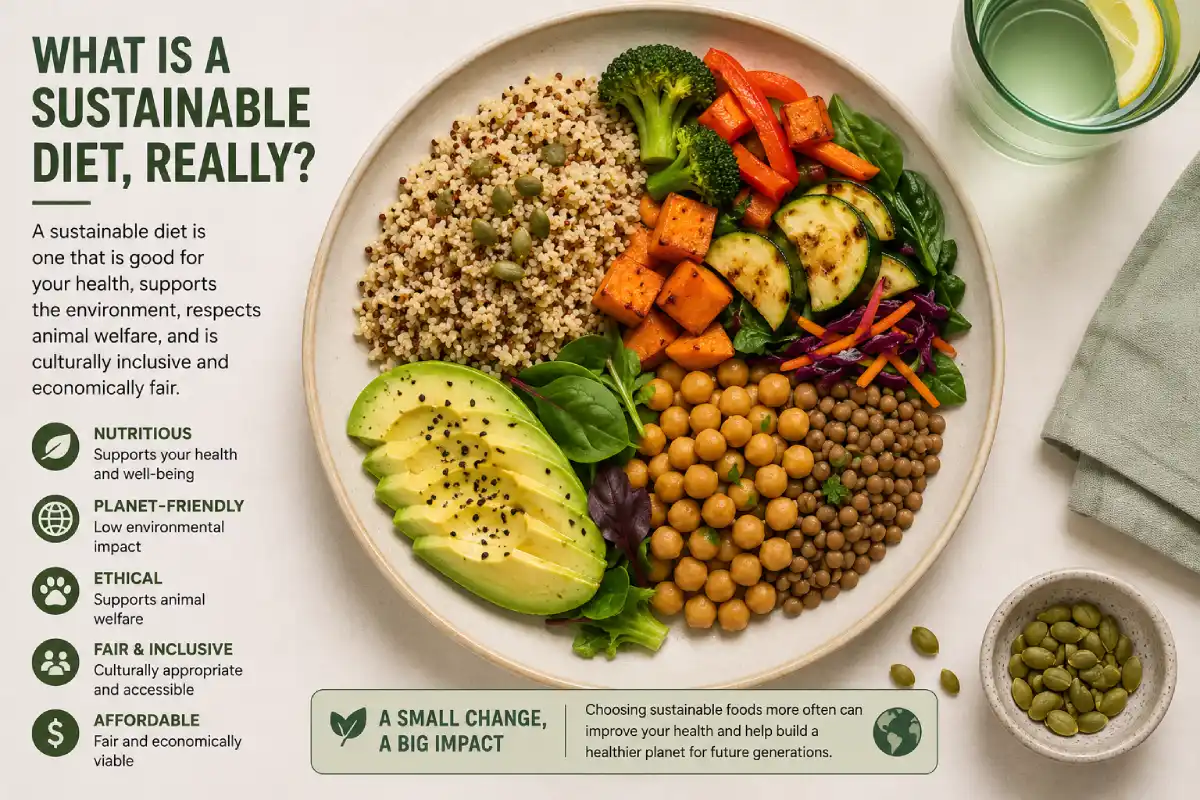
A sustainable diet isn’t about going fully vegan overnight — it’s about eating more plants, buying local and seasonal produce, planning meals to cut waste, and making small swaps that stick. This guide breaks down what actually works in both the US and India, without the guilt.
What Is a Sustainable Diet, Really?
To sum up, a sustainable diet . This is a more environmentally friendly, affordable, and practical way of eating. It focuses on a plant-based diet, local and seasonal food consumption, without requiring doing everything perfectly.
It‘s not about denying yourself all the good stuff. That‘s not sustainable. What you need to do isto take the balance back to where it should be simple, more plant-based, no mess, more local, less flown in from nowhere.
The three pillars of a sustainable diet:
- What you eat– eat more plants, less resource intensive meat and dairy
- The origin of the food whether it is purchased locally or transported over long distances
- How much you waste. Planning so that no food goes in the trash.
Why It Matters (And Why It’s Not All-or-Nothing)
Producing food is one of the most significant impacts a household has (often larger than transport or home energy use). But here‘s the twist most guides don‘t tell you: you don‘t have to go vegan.
Moving just 2–3 meals per week to plant-based, and buying as much local as possible, is a greater change than most people believe.
Key takeaways:
- Direction is more important than perfection
- Minor, prespecified swaps outperform large and unpredictable overnight fluctuations
- A sustainable diet will differ from one kitchen to the next and not everyone wants the same thing from their diet:.
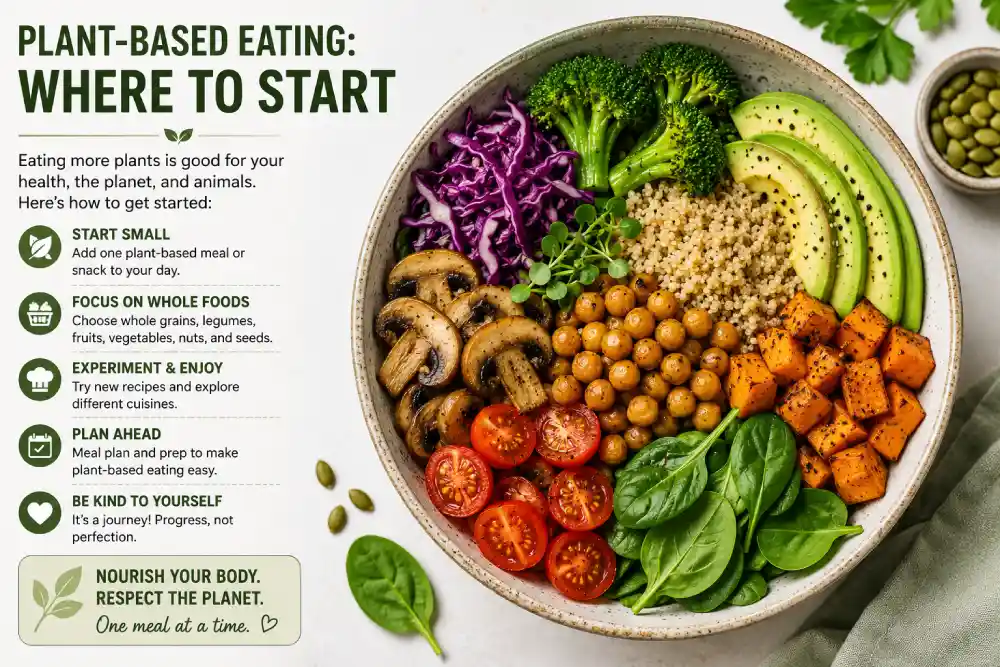
Plant-Based Eating: Where to Start
Plant based doesn‘t mean vegan. It means more Plants are sharing the space on your plate than they did previously.
- Try a “Meatless Monday” or one plant-forward dinner a week before increasing to two or three.
- Replace one protein per week have lentils or chickpeas, for example, in place of what would otherwise be a chicken dish.
- Have a few reliable, whole-food staples in your kitchen: grains and beans, tofu and other non-meat sources of protein, whatever vegetables happen to be in season.
In India, going plant-based is usually not an added on concept. It is often already incorporated in the traditional Indian kitchen dals, sabzis and lentils are not a deviation but the norm. The change we need to make is less in adding vegetables to our food and more in eating less processed and packaged foods.
In the US, the real change is more in the reduction of portions of meat and dairy than in their removal, and getting used to cooking with proteins derived from plants that are not yet part of our everyday diet.
Local Food Sourcing and Seasonal Eating
Purchasing local foods and eating seasonally reduces emissions from transport, storage and refrigeration. Seasonal foods are generally less expensive and fresher.
Practical starting points:
- You should shop at farmers’ markets or buy a local produce box/CSA if such things are available in your area.
- Discover what‘s in season in your part of the world a straightforward seasonal produce calendar can do the trick.
- Whatever you can, choose local-produced grains, pulses and dairy products in preference to imported goods.
- In India, most local sourcing is often already in place through neighborhood sabzi mandis and local vendors that the opportunity lies in keeping them and not import via supermarkets
Eating the best in season naturally makes your meals better too – fruit and veg from the UK in season is “cheaper and tastes nicer” than imported fruit and vegetables.
Reduce Food Waste: The Overlooked Lever
Food waste remains the one aspect of sustainable eating that is least discussed, despite the fact that it consumes all the water, land and working hours involved in producing food that is not consumed.
Common mistakes:
- Shopping without a plan, which results in newly purchased produce being left in the fridge for days.
- The interpretation of “best by” date as (in effect) a hard and fast expiration date
- Cooks large quantities of food without any plan to store leftovers 4courses 4m3% Results of test also show what has been expected from the cooking test and that is: Cooks large batches without any intention to store leftovers
What actually works:
- Create a weekly meal plan; keep it simple.
- Having a “left everything” meal once a week. Every week, have a meal where you use up whatever is remaining in the fridge.
- Ensure that store produce is stored correctly most spoilage is due to storage rather than shelf-life issues.
- Compost what you truly cannot utilize.
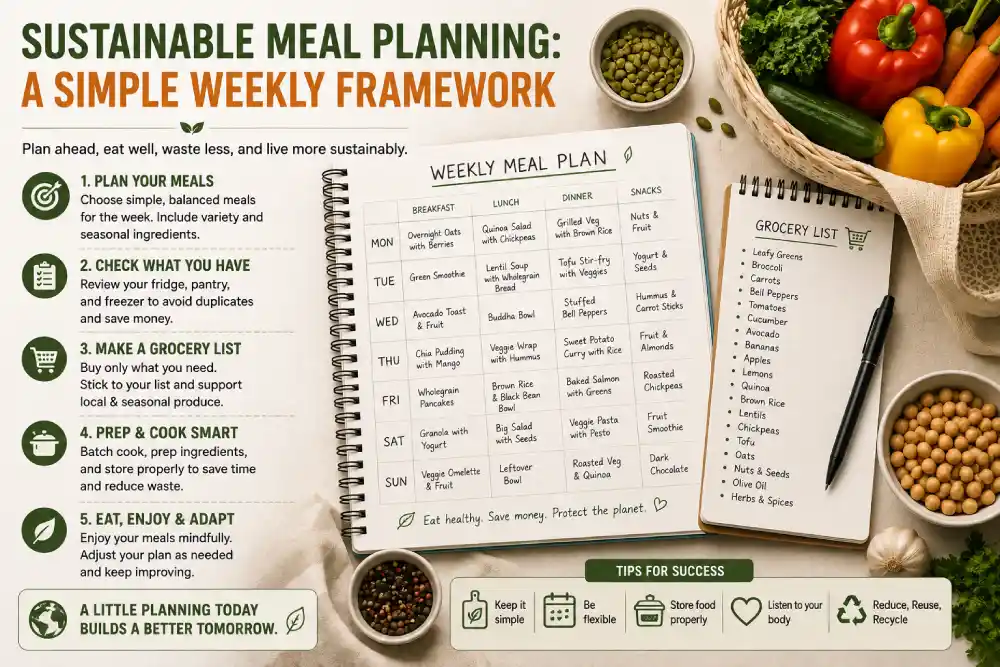
Sustainable Meal Planning: A Simple Weekly Framework
You don‘t need complicated. A simple weekly rhythm is easier to sustain in long term than a more sophisticated one you‘re sure to drop after two weeks.
- Plan your meals around what‘s in season and on sale locally.
- Select 4–5 main meals, rotate 2–3 plant based dinner ideas in between.
- Shop with a list based on that plan minimizes impulse purchases and waste.
- Batch-cook one core ingredient (grains, beans, roasted vegetables).
- Build in one leftovers/use-it-up night
Myth vs. Fact
| Myth | Fact |
|---|---|
| “An ecologically sustainable diet is a vegan diet” | Flexitarian, plant-forward eating doesn‘t need to be all-or-nothing |
| “Local and seasonal food is more costly” | It‘s usually cheaper less expensive to buy produce that isn‘t in season and isn‘t grown locally. |
| “Meal planning takes too much time” | A very simple weekly plan saves time and money in many ways by reducing decision fatigue and waste. |
| (1) The diet of an individual doesn‘t matter. | Demand shifts in general affect the stocking decisions of local markets and stores |
Common Mistakes to Avoid
- Your editors have just taken the plunge to radically change your entire eating habits in one week (this certainly will not last) ;43
- Purchasing “sustainable” pre-packaged products instead of just cooking more at home from scratch.
- Food waste is omitted and the attention is only given to what is served on the plate.
- What if the idea of living sustainably in this manner means having to suffer by eating boring or few options in your diet.
FAQs
What constitutes a sustainable diet? Sustainable diets centre upon increasing consumption of plant foods, encouraging local and seasonal eating, reducing food waste and do not necessitate a world transforming change to your whole lifestyle.
Is a sustainable diet applicable to a vegan diet? No, dairy and meat products can be included in moderation in a sustainable diet. While vegetarian and vegan diets are sustainable, this is clearly not the only possibility.
Is sustainable eating more costly? Its not that easy. It is generally less expensive to eat in season and locally produced than imported or out of season produce and by minimising food waste, you‘re actually saving money.
What is the best way to begin meal planning sustainably? Begin with a basic weekly plan that features 4–5 main meals, 2–3 of which are more plant-based, and make a shopping list to avoid excess packaging and unnecessary purchases.
Eats seasonally does it really matter? Yes. When food is seasonal, there is less needs for transportation, refrigeration and storage. As a result, on the whole, it is a more environmentally friendly option than buying in-season food from around the world.
Final Conclusion
You don‘t have to be perfect just purposeful when it comes to creating a sustainable diet. Get started with introducing one plant-heavy dinner in your weekly rotation and shopping seasonally and locally. Prepare enough to prevent food spoilage. No matter if you‘re in Mumbai or Minneapolis or elsewhere, this rule remains the same: taking small, consistent actions is better than an extreme change. For more guidance on adopting more sustainable habits in all areas of life beyond eating please see our guide to Sustainable Living.