Natural Remedies for Acne That Actually Work in 2026
Published: July 22, 2026 Last Updated: July 22, 2026 If you google ‘natural remedies for acne’ while you are
If you google ‘natural remedies for acne’ while you are half asleep at 1am, staring at a new flare up, you‘ll already be aware of the problem: everyone‘s online has a ‘cure’ and every other cure is complete opposite. Some of these cures actually work. Some are just internet legend and will make your skin worse. Here‘s what actually is worth a shot in 2026, according to how every ingredient works on skin:
Do Natural Acne Remedies Actually Work?
Some do but not all. Diluted tea tree oil, for example, has some real research confirming its ability to kill the bacteria that cause acne. But others (undiluted lemon juice, for example) are more myth than medicine, and can be irritating to your skin‘s barrier function. The important thing is knowing which is which!
Quick reality check:
- Natural doesn‘t always mean gentle. but actual concentration and dilution are more important than the “Natural” font.
- Most naturopathic remedies work with mild to moderate acne, not the deep cystic type.
- A continuous dose of 4-8 weeks worth of these ‘miracles’ is a far more powerful than any single one of them.
Tea Tree Oil for Acne: The Most Evidence-Backed Pick
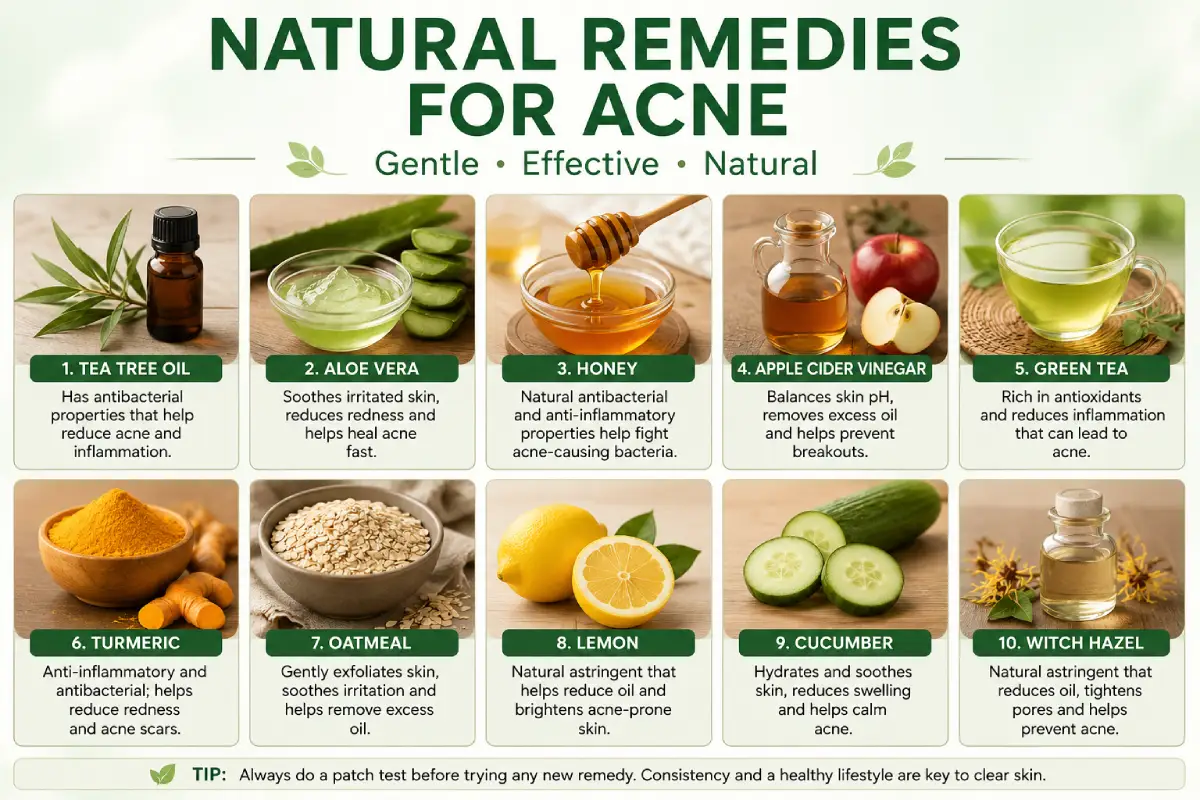
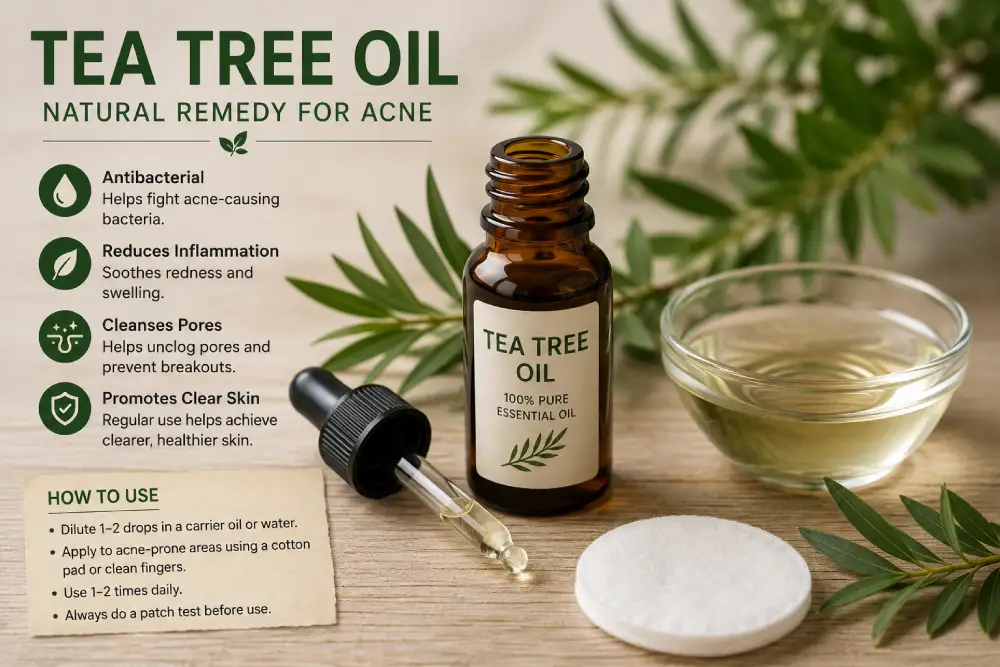
Tea tree oil is one of the few natural acne remedies to have actual clinical research behind it, due to it‘s antimicrobial activity on bacteria that cause acne. Though it is not going to replace the use of benzoyl peroxide, it is a very fair substitute for natural breakouts.
How to use it safely:
- Dilute 1– 2 drops of tea tree oil in 1 tablespoon of a carrier oil (that is jojoba or coconut oil) – do NOT use it neat on its own.
- Spot-treat with a cotton swab on blemished areas only. (not all over the face!).
- Patch test on your inner arm for 24 hours first; one of the common reason for irritation of sensitive skin.
Apple Cider Vinegar for Acne: Popular, But Handle With Care
Apple cider vinegar (ACV) is currently one of the most discussed acne “cures” online, and it can be thanks to social media. The acetic acid has antimicrobial effects; however, ACV is very alkaline compared to your skins (more so than just an erosive product); if over-used it can cause burns on your skin and damage your skins barrier.
If you want to try it:
- 1 part ACV to 3-4 parts water. Never straight!
- You can use this as an occasional toner but not a daily step and stop immediately if it stings or starts to go red.
- Just skip it if you have sensitive or dry skin, or if your skin is already irritated.
Diet Changes to Clear Acne: The Underrated Fix
Diet isn‘t given as much love as it probably should be in most “natural” remedy charts, but much of the time so-called hormonal and inflammatory acne do respond to diet. A low-GI diet of less refined carbs and sugary “easy” foods correlates with less break out in various research studies. Dairy is another common offender for certain individuals, especially skim milk.
Practical shifts to try:
- Trade white bread, sugared cereal, and pop for whole grains and water.
- Use a food diary to track your dairy consumption for 4-6 weeks if you believe it may be a trigger.
- Add zinc containing foods e.g. pumpkin seeds, lentils some trials have found a connection between low zinc and acne.
Natural Face Wash for Acne: Get the Basics Right First
There‘s no point using a treatment if that face wash you‘ve been using to wash it off from is the problem. Cleansers loaded with strong sulfates can damage the skin barrier, leading to even more breakouts.
Look for a natural face wash that:
- Does not contain sulfate or perfume (which are the common causes of irritation).
- Has mild actives such as salicylic acid from willow bark, or a mild clay for most areas of the face if skin is oily and prone to acne.
- The amount applied, max 2/day. . Frequently used to excess 99% of the acne mistakes!
Aloe Vera for Acne Scars: Soothing, Not a Scar-Eraser
Aloe vera does contain some true anti-inflammatory and soothing benefits so it is something that will frequently feature on acne routines. It is very good at calming redness and encouraging quick healing of active spots, however it won‘t get rid of deep acne scars over the course of a quick routine so you need to look to retinoids or in-clinic treatments over a much longer period of time.
How to use it:
- Apply fresh gel directly from the leaf or fragrance free, store bought gel; straight onto healing blemishes.
- Keep it on through the night to soothe.
- Combine it with sunscreen in the daytime, as UV rays through sunlight will make scars more prominent.
Natural Remedies for Acne: Myth vs. Fact
| Myth | Fact |
|---|---|
| Lemonjuice diminishes the appearance of a acne scar quickly | Undiluted citric acid can burn the skin and can increase the skin‘s reactions to sun |
| Toothpaste is drying up pimples overnight. | It tends to be too harsh on the skin and may irritate the skin barrier. |
| How quickly does natural treatment work? equally as fast as prescription treatment | It can take anywhere from 4–8 weeks of continuous use for most people to notice benefits. |
| ACV “cleanses” your body. | Thereis no detoxification it is however just a mild acid. |
| D. When it is all superficial, diet has nothing to do with acne. | Sugar and dairy have consistently been associated to have always been linked to breakouts. |
Common Mistakes People Make With Natural Acne Remedies
- Applying tea tree oil or ACV in an undiluted form directly onto the active breakouts.
- Too many actives at once (turmeric/lemon/tea tree in one go= recipe for irritation).
- Poisoning oneself by giving up over a few days instead of the 4–8 weeks most solutions take.
- Bailing out on diet and stress, and just focusing on spot remedies.
- Skipping SPF as it can darken and prolong the presence of post-acne erythema.
When to See a Dermatologist Instead
Herbal remedy are helpful for mild, occasional episodes of acne. For severe or persistent breakouts such as cystic acne and nodules, or if scarring persists after 6-8 weeks of treatment, it is wise to consult a dermatologist and seek more aggressive intervention instead of applying more herbal remedies. This is especially true for hormonal acne.
Final Take
The most effective natural remedies in 2026 remain those that have proven evidence mixed in tea tree oil, mindful eating habits, and a truly mild cleansing method not what is best on the most recent ‘specialty’ magazine. Maintain their use and do test patch any new natural ingredient and don‘t ignore the one you turn to when skin needs intervention. This is the formula that works.
FAQs
Q1: What is the strongest natural acne treatment? The natural treatment with the most evidence for mild to moderate pimples (apart from candella ointment) is likely to be diluted tea tree oil because of its antibacterial effect.
Q2: Does apple cider vinegar improve acne? Yes, as a diluted, sporadic toner however, its acidity may inflame or dry the skin if used undiluted or too regularly, particularly on delicate skin.
Q3: Is diet actually capable of causing acne? For a lot of individuals, definitely. A diet comprising of high dairy and high sugar foods has been associated with increased breakouts in a number of studies, but different foods will affect different people.
Q4: Can aloe vera fade acne scars? Although aloe vera is a good remedy for inflamed spots and redness, it will not effectively reach into any deep set scars, this would generally require a retinoid or course of clinical treatments.
Q5: How long does it take for treatments for natural acne to work? All the remedies listed above will take at least 4–8 weeks of continuous treatment before there is any significant improvements on your skin. Don‘t expect overnight results!
Q6: Is anything natural enough to fight cystic acne? Usually not. Cystic and hormonal acne generally require a dermatologist-approved plan, in addition to any supportive natural aids.