20 Best Natural Skin Care Ingredients & Their Benefits
Published: July 20, 2026 Last Updated: August 20, 2026 If you‘ve been shopping on the shelves and sipping in
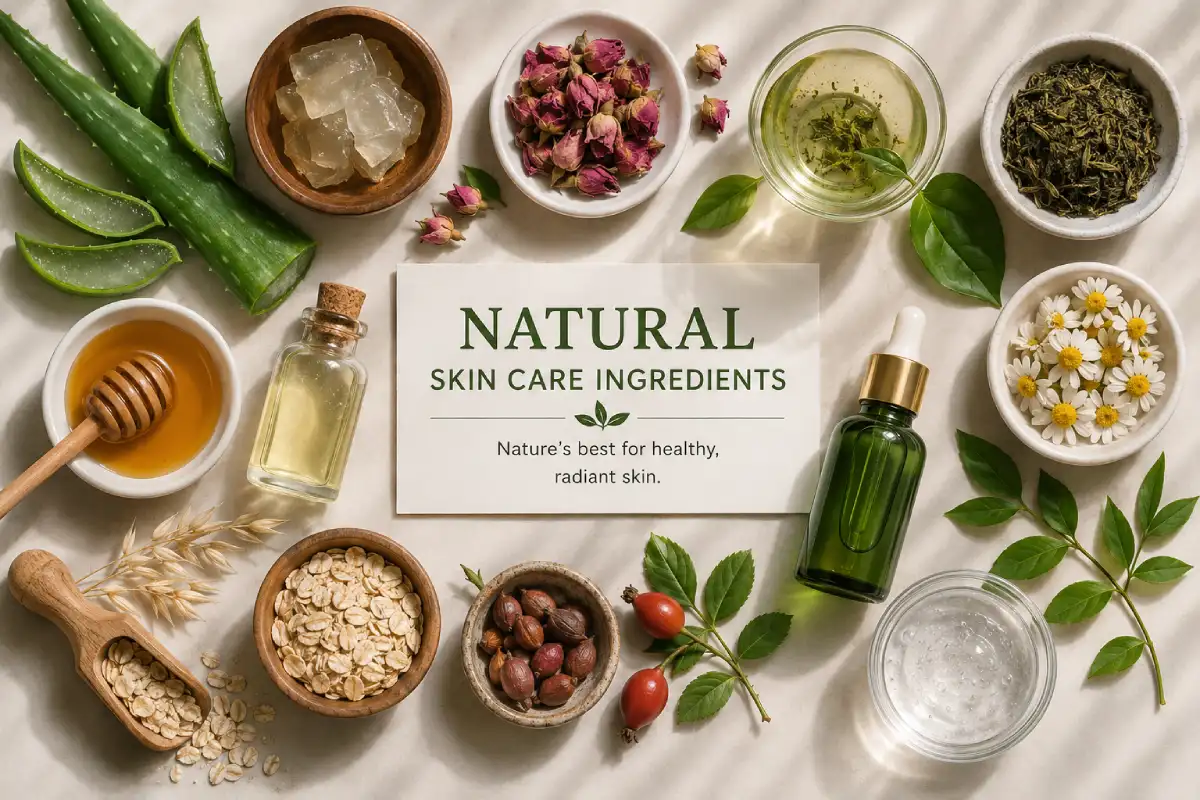
If you‘ve been shopping on the shelves and sipping in the aisles and comparing labels to see which “natural” skin care ingredients are actually worth what you spend, you‘re not crazy. The titles retail stores and Instagram advertisers throw on products- “botanical”, “plant derived”, “clean”- give no idea as to what the ingredients actually do.
This guide is divided into 20 natural ingredients that actually work, as proven by research, and a closer look at 5 of the more frequently searched ingredients aloe vera, hyaluronic acid, vitamin C, rosehip oil & green tea.
What Makes an Ingredient “Natural” in Skincare
Natural ingredients come from plants, minerals or other unmodified sources with no more processing than that needed to extract them. Natural doesn‘t mean better than synthetics and some synthetics are actually more stable. But there is considerable evidence that many natural ingredients have equal or better records than synthetics as hydrating, soothing and providing antioxidant protection without the potential for irritation.
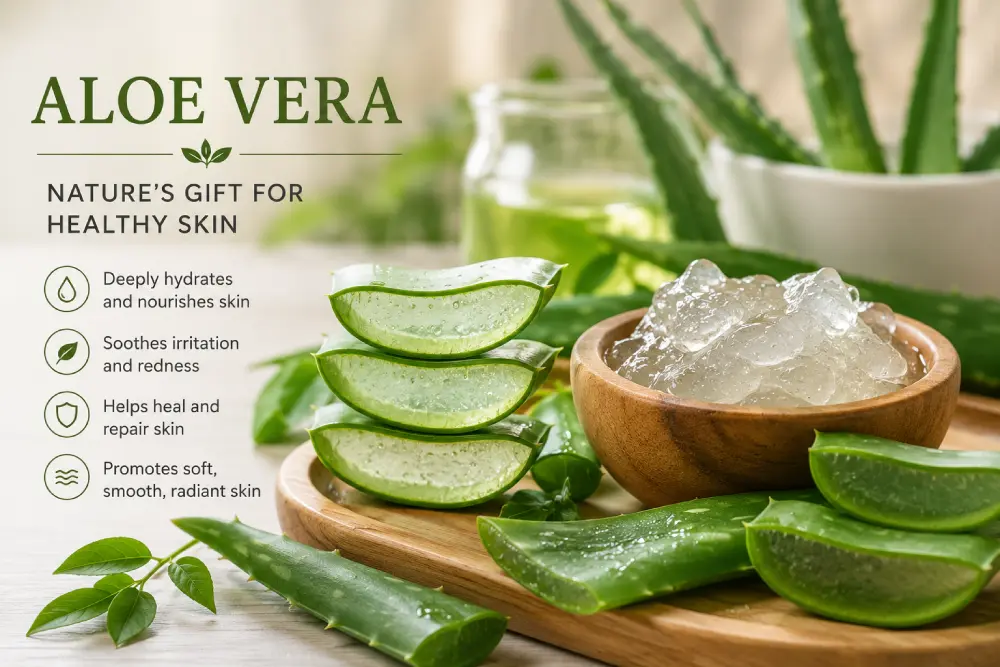
Aloe Vera Benefits for Skin
Another popular natural skincare ingredient is aloe vera, which has anti-inflammatory and moisturizing effects. It provides the skin with polysaccharides that help it retain moisture in its outermost layer and other ingredients that help reduce redness and inflammation.
Aloe is very effective for sunburn recovery, post shave irritation, and as a light weight daily moisturizer for oily or combination skin types. In hot and humid climates like most Indian states, aloe based gels are preferred over heavy creams as they give hydration without any greasiness.
Hyaluronic Acid Natural Sources
Hyaluronic acid is a naturally occurring substance in the human body, but in fact most of what is used in skincare formulations is a plant or fermentation derived one. It‘s not in fact a harsh acid like its name suggests, as it is a humectant that pulls moisture from the air into your skin.
Most hyaluronic acids that are natural or naturally-derived, are combined with another hydrating item such as glycerin or aloe in the serums for added benefit. Apply to slightly damp skin and follow with moisturizer to hold in moisture Since it pulls h20 out of dry skin in a dry enviorment it should be used on damp or even moist skin in these areas instead.
Vitamin C Serum Benefits
It is perhaps the most researched of all nature based antioxidant in skincare today, and it Neutralizes free radical damage caused by sun exposure and pollution, Supports Collagen production, Decreases dark spots and pigment problems over time.
Vitamin C serums should be used in the morning, prior to an application of sunscreen as some of the antioxidant benefits merge in combination with SPF for a more powerful protection from environmental damage. Once opened it is vulnerable to oxidation (turning a darker tone) and declines in effectiveness so an opaque, air tight bottle is best.
Rosehip Oil for Skin
Rosehip oil is derived from the fruit of the rose bush, and contains high levels of fatty acids and natural forms of vitamin A to assist cell regeneration and repair. Many use it to help restore the skin‘s tone, and minimize the appearance of scars and wrinkles over time.
Another reason why this oil is suitable for a variety of skin types is because it is rapidly absorbed without being greasy. Although it is an oil, it is still perfect for oily or spot prone skin. You will not notice a difference for about eight weeks of continuous use so patience is more important than frequency.
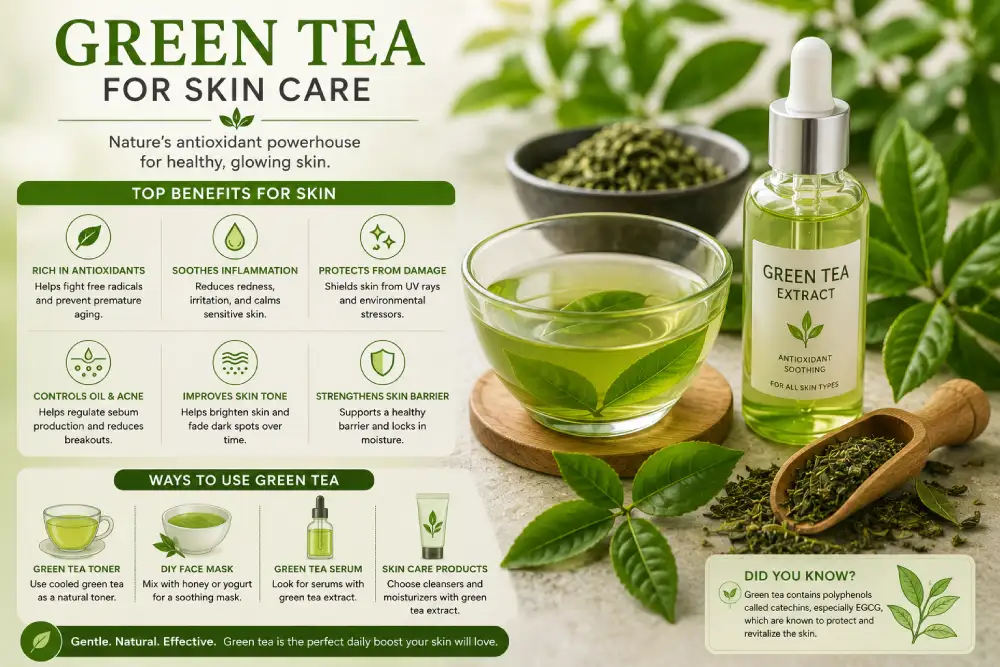
Green Tea for Skin Care
Green tea Polyphenols in general and EGCG in particular has profound antioxidative and anti-inflammatory properties. It reduces the redness and gives a smoothness to large pore areas and also mild protection to the problem.
Because of the anti-inflammatory nature of green tea it is excellent for calming soothers on the skin that is prone to breakouts. Allowing control of active, angry blemishes without the punishing effects of stronger actives.+
15 More Natural Ingredients Worth Knowing
- Niacinamide ー Tones down the production of sebum and improves the barrier function of the epidermis/epidermal permeability barrier.
- Turmeric Anti-inflammatory traditionally used for calming redness from known causes great anecdotal for rosacea.
- Jojoba oil very similar to natural sebum and will suit all skin types.
- Shea butter moisturizer that is very rich and occlusive so great for very dry skin
- Witch hazel natural astringent which will be most beneficial to oily and acne prone skin.
- Complementary ingredients: Centella asiatica (Cica) can help healing scars, promotes cell renewal, and soothes irritated skin.
- Squalane hydrating, light, vegetable-based moisturizer that resembles the body‘s natural sebum
- Extract of licorice root – can lighten areas that are darker than the rest of the complexion and improve skin tone.
- Chamomile soothing agent that is often used in products for sensitive and reactive skin
- Argan oil rich in vitamin E (,. Aromatic, excellent for dry skin and hair
- Oat extract calms irritation and strengthens the skin barrier
- Ginseng – improves the circulation and gives a natural healthy color.
- Bakuchiol a natural alternative to retinol, suitable for use on sensitive skins, so reduced irritation.
- Honey (raw) key natural moisturizing agent with slight anti-inflammatory affect, also naturally moderately antibacterial
- Clay infused with turmeric blends oil-absorption with anti-inflammatory properties
Common Mistakes with Natural Ingredients
- Remember although “natural” is often assumed to be gentle, it isn‘t: essential oils and citrus extracts can be just as irritating.
- Overloading the skin with multiple actives (such as vitamin C, retinoid substitutes and acids) and therefore greater potential for irritancy
- For example, keeping vitamin c serum in a transparent bottle, close to a window with sunlight that accelerates oxidation and its counteraction, thus decreasing the potency
- No overnight miracle, most natural actives take 6–8 weeks of daily use to experience any visible change
- Neglecting to do a patch test prior to experimenting with a new botanical ingredient, particularly if you have sensitive skin
Myth vs. Fact
Myth:Myth: Youcan‘treact to natural ingredients. Fact:Even ingredients used in natural skin care, like essential oils, citrus extracts and even aloe vera, can irritate sensitive or reactive skin. As always, patch testing is important.
Myth: The more the better the more ingredients in a routine, the sooner you get results. Fact: Less is more a concise routine of three to four carefully selected natural ingredients, used daily, is typically more effective than a cluttered routine.
Action Steps to Start Today
- Choose a hydrating which is either aloe vera or hyaluronic acid and choose an antioxidant which is either vitamin C or green tea.
- Always add new ingredients one at a time, and allow at least 1–2 weeks before adding another.
- Use vitamin C in the morning, heavier rosehip oil or actives at night
- Keep antioxidant serums in dark, airtight bottles away from direct sunlight
- Add any new ingredient at least six weeks before evaluating it.
Good natural skin care ingredients are most effective when you have a really good idea of why you need them, not just when they have a “natural” label. Choose a small number of effective ingredients, like aloe vera, vitamin C, rosehip oil, use them correctly and be patient then that‘s when you really see your results.
FAQs
Q: Which natural ingredients help hydrate the skin the most?
A: Every time a natural ingredient actually hydrates the skin, it will either draw water into the skin or trap water within the skin, and aloe vera and hyaluronic acid do both.
Q: For comedogenic purposes, the vitamin C serum and rosehip oil getting contact, is there any interaction?
A: Applying water-based products first would be best for the use, so put the vitamin c serum first to maximize the use of it, then the rosehip oil, to add moisture and repair benefits.
Q: Is hyaluronic acid natural?
A: The hyaluronic acid in most serums is naturally produced (by fermentation) and not man-made, however its generally not harvested directly from either plants or animals.
Q: What is the time frame for visible results from natural skin care ingredients?
A: Due to the slower speed of action, most natural actives need six to eight weeks of regular use to see results.
Q: Is this suitable for sensitive skins?
A: You can read your ingredients on the packaging, and for most they are perfectly safe. However certain extracts, such as those based on citrus oils or essenial oils, can trigger an allergic reaction, so do be sure to test before using the product.