Plastic-Free Living: 25 Practical Tips for 2026
Published: August 12, 2026 Last Updated: August 12, 2026 Going plastic free is about removing single and unnecessary plastics
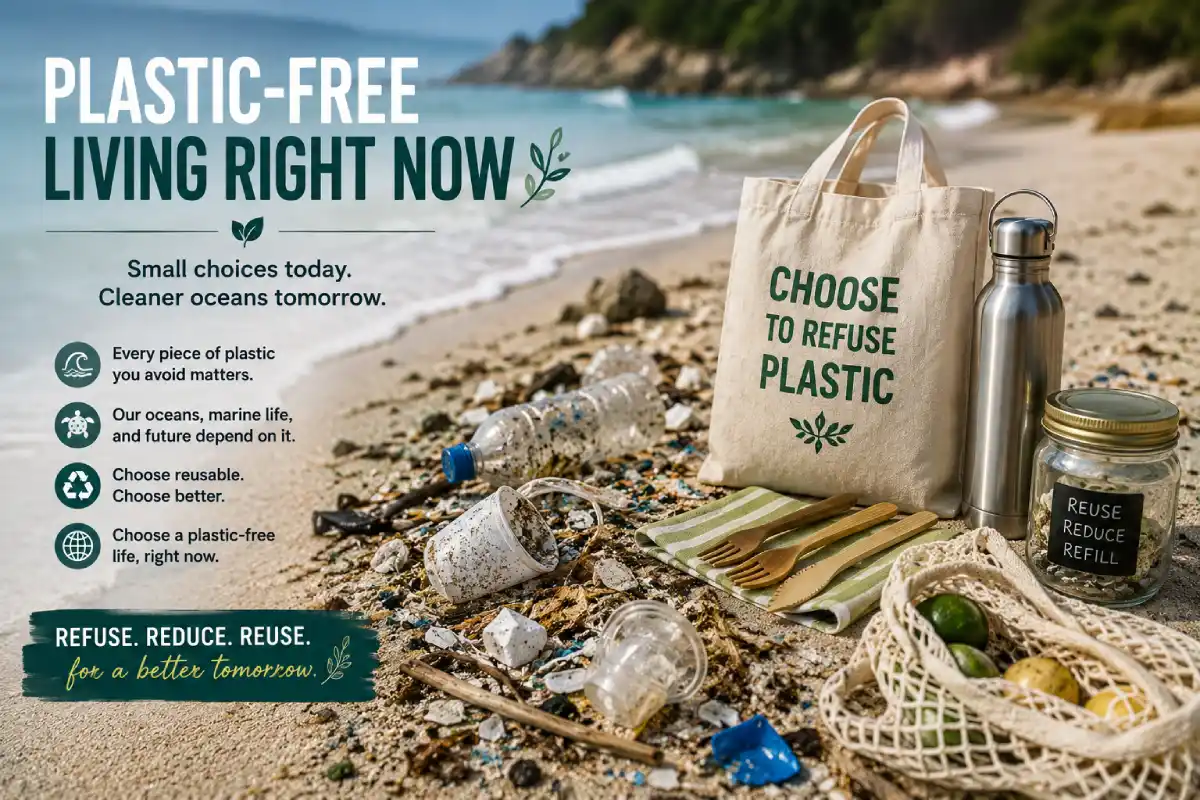
Going plastic free is about removing single and unnecessary plastics from your everyday life. For most people, this begins with the kitchen, bathroom and shopping bag. Think simple; using a reusable bottle, beeswax wraps and buying in bulk for things you use daily will tackle the vast majority of your plastics usage. Don‘t try to change everything at once; start with one thing, great it until you are comfortable then move onto another.
If your kitchen drawer is full of takeout containers or your bathroom shelf is dominated by 90% plastic bottles, you are not the only one. A plastic free lifestyle is not about quickly purging oneself of all plastic, it is about replacing your current every day plastic usage with More durable, cheaper in the long run, and does not spill microplastics in your food, skin, or water. Be it in the US, looking for top of the line reusable options or in India, where you are already 50% there courtesy needs to stock up in bulk, these 25 ideas will support you:
What Does Plastic-Free Living Actually Mean?
Being plastic free sounds like a big lost cause say no to any and all plastic? Impossible! It‘s not: plastic free living is about making a conscious choice to cut down on single-use and excess packaging, not about throwing out all the plastic one owns and ever can own. Plastic free living is to zero waste living as vegetarianism is to veganism.
Why It Matters Right Now
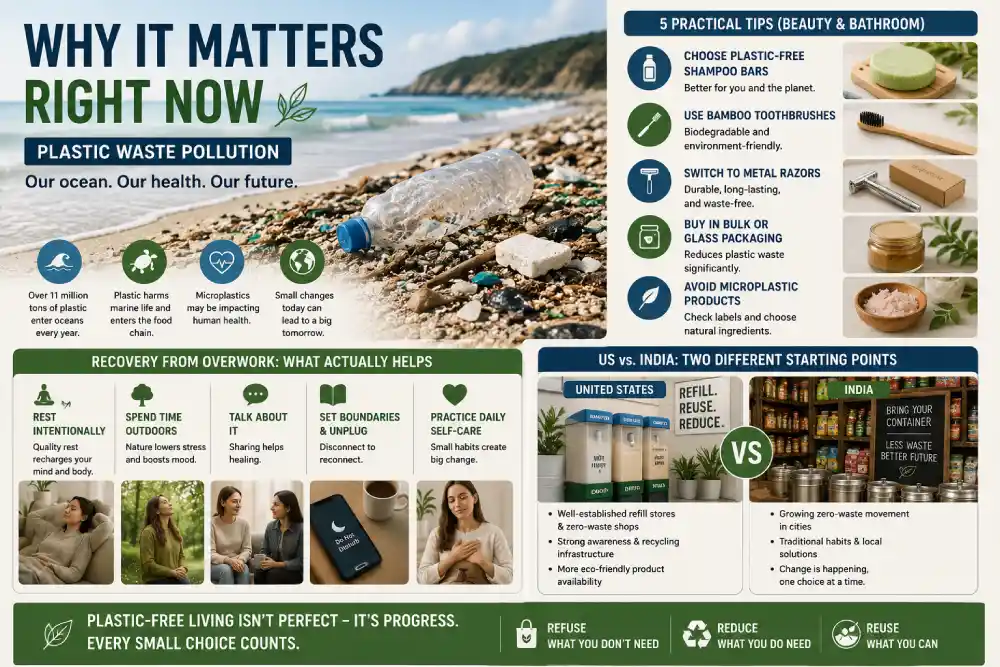
Plastic output is growing even more rapidly and the majority of it becomes waste within a year. Besides landfill guilt, there is a personal health aspect that beauty-conscious readers are concerned about: microplastics have been found in our food, drinking water and blood, and much of this exposure can be linked to the packaging and individual-care products that we consume. Cutting down on plastic is not only an environmental choice but a health one as well.
Myth vs. Fact
Myth “Living without plastic is costly.” Fact: A box of reusable bottle or a bar of soap usually costs less than buying water in bottles or liquid soap refills after a few months.
Myth: ‘You have to be 100% plastic free.’ Fact: Even replacing 20-30% of your usual plastic Consumption by something else can make a real difference (it‘s more about the destination than the journey).
25 Practical Tips to Reduce Plastic Use
Kitchen & Bulk Shopping
- Encourage the use of reusable water bottles rather than disposable plastic bottles.
- Take cloth bags and jars with you when the bulk shopping tips insist on weighing your own containers.
- Ass tables in replace cling film to store leftovers and sandwiches
- Opt for loose (not pre-packed) fruit and veg.
- Do store food in glass or steel even if possible! For example, paper bags are not an option to store dry goods, like pasta or cereal (even though they look more attractive). Store these in glass or steel.
- Buy grains, spices and pulses from bulk bins or local kirana/refill store.
- Substitute plastic sponges with compostable loofahs or wooden brushes.
- Use a French press or use a steel filter rather than plastic-lined coffee pods.
Beauty & Bathroom (Cult Ones All time Favorite)9. Replace your liquid shampoo bottles with shampoo bars.10. Bar soap is the best body wash you can get so pick up a bar soap instead of a bottle of body wash it will last you twice as long 11. Favor a metal safety razor over plastic disposable razors. 12. Choose refillable perfume or deodorant over their single use plastic counterparts 13. Opt for beauty brands that use recycled or refillable packaging; avoid “all natural” products13. Use bamboo or metal toothbrush instead of plastic 15. try tooth powder or tooth tablets sold in a glass jar16. Don‘t buy plastic cotton swabs, buy those with bamboo stems.
On-the-Go & Shopping 17. Pack reusable utensils and a straw. 18. Ditch the plastic bags and keep a foldable shopping bag handy. 19. Use your own cup when ordering coffee at a coffee shop. 20. Prefer plastic substitutes such as paper, glass or metal packaging when selecting among products. 21. Prefer not to have your food delivered using an app when it comes with disposable utensils.
Home & Habits 22. Repair or re-use plastic items rather than replacing them. 23. Buy second-hand furniture and electronics instead of new plastic-laden products. 24. Establish a simple plastic sorting station so unavoidable plastic doesn‘t get dumped with waste. 25. Record all plastic you buy for a week just thinking about it can reduce usage rapidly.
Common Mistakes to Avoid
- Buying “eco” replacements that means tossing away perfectly good plastic articles that means more than the eco benefits that buying “eco” replaces.
- Loading all 25 swaps in one week and then getting burnt out in week 2.
- For the bathroom or beauty plastics it is just about ignoring these and blanking out all the other plastics, and then only looking at the plastics between the one used in the office and the one in the kitchen.
- Falling prey to ambiguous “sustainable” tags without inspecting packaging or labels.
US vs. India: Two Different Starting Points
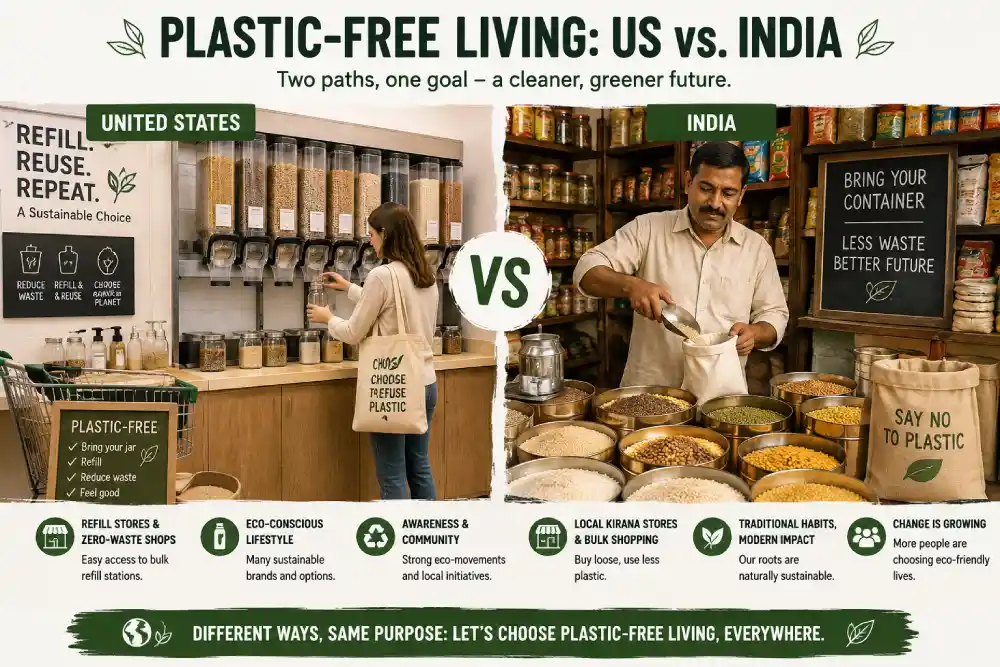
In the US, going plastic-free usually involves finding or buying some kind of new high-end reusables steel water bottles, glass storage tubs, refill plans. In India, many families are at least halfway there already, with a lifetime of local kirana stores, steel dabbas and cloth bags. What’s changing is more about taking existing good habits into beauty and snack foods, rather than recreating them from scratch. The same principles hold.
Conclusion
You don‘t need to be living in a plug-free, plastic-bashing utopia just a few every day swaps that work with your life. Begin with one area (bathroom, kitchen, shopping bag), select 2 or 3 tips from this list and see if it takes off. Small, everyday decisions (a water bottle, soap, wooden hairbrush) can really make a difference in a year.
FAQs
What is the difference between living without plastic and going zero waste? Zero waste means not producing all types of waste, while plastic-free targets only single-use and excess plastics.
What‘s the most obvious first swap to make from a beginner‘s perspective? Reused water bottles, they are so cheap, immediately cut down on plastic usage, and they actually save you money!
And are they actually better than cling film? Yes. You can wash and reuse them, on average, for a year. So you can save hundreds of disposable plastic wraps from landfill.
Is bulk shopping actually an effective way to cut back on plastics? Yes. Bulk purchases of grains, spices and other staples can eliminate a lot of packaging waste compared to their prepacked counterparts.
Is going plastic-free always more costly? In most cases, no – with most exchanges (bottles, bar soap, wrap) you will spend less over time than continuously purchasing its disposable alternative.