Long-Distance Relationship Tips That Actually Work in 2026
Published: August 11, 2026 Last Updated: August 12, 2026 Not so much due to luck, but due to the
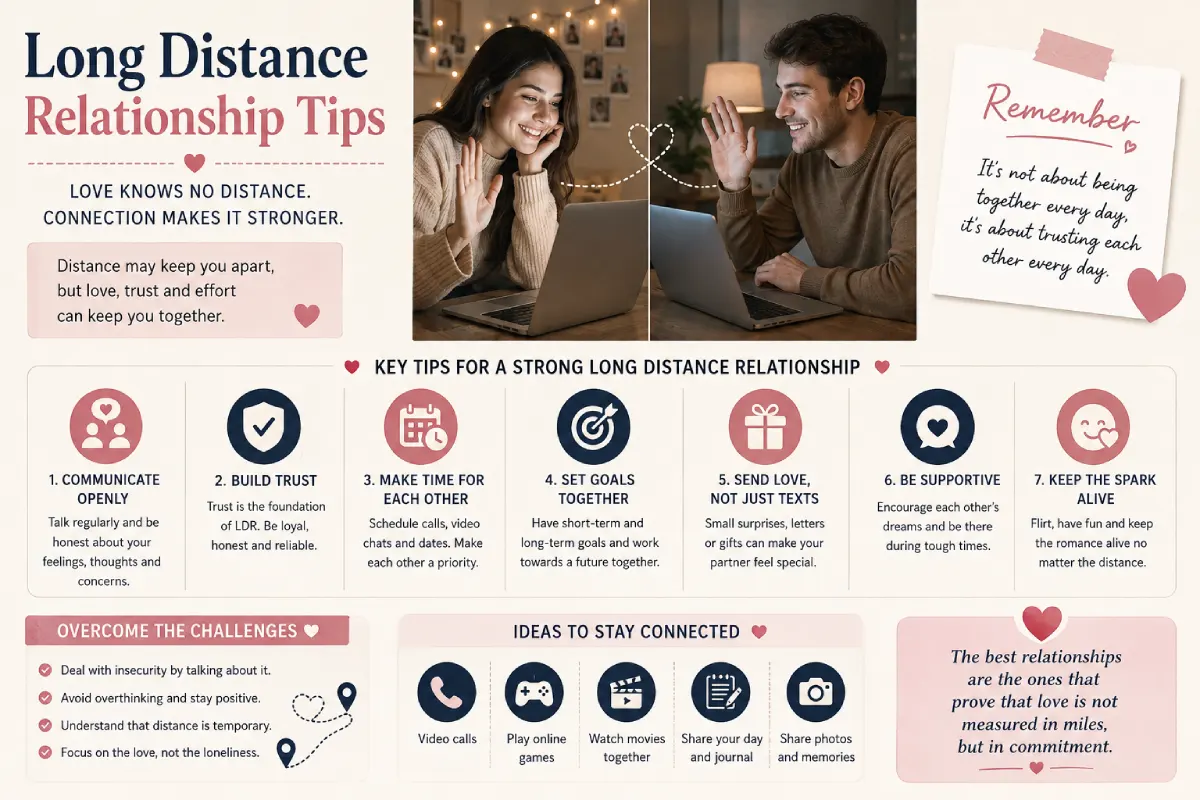
Not so much due to luck, but due to the frequency of habits regular updates, open, honest trust-bonding exercises, and a definite plan to conquer the distance (whatwe calltheTighteningtheDistancetechnique). To the tune of 58–60% successful LDRs, when the couples held on to these basics. Here are some of our tips on LDR communication and dates that we can bet will work, minute-to-minute, in US–India LDRs.
If you‘re looking for long distance relationship tips in the middle of the night at the end of a difficult week apart, this is the place. Nearly 14 million couples in the US alone are involved in a long distance relationship right now. And studies show that, when implemented, long distance relationships can be same level of trusting, fulfilling and happy as geographically co-located relationships:
What Makes a Long-Distance Relationship Actually Work
Distance is not actually the main issue. Research has shown that there was no difference in satisfaction, trust, or commitment between geographically distant or nearby couples. It is much more important that couples actively develop routines of communication, trust, and a common future plan, regardless of how many miles the couple are apart.
The core ingredients:
- Open and honestlyExplain the risks and benefitsClear and honest conversationsClarity in messageKeep an open channel
- Trust without incessant monitoring
- A practical schedule for bridging the gap which is manageable.
- The attempt to pursue the emotional and physical intimacy even though there is a gap.
LDR Communication: What Actually Helps
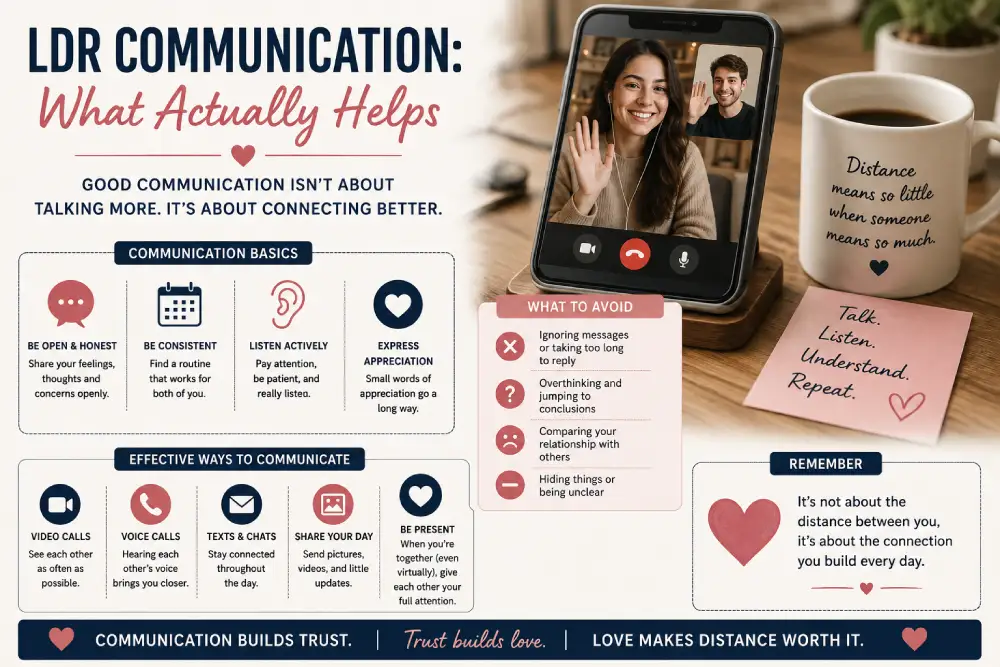
Long-distance couples are said to have more frequent contact than geographically close couples most of the researches ranks daily contact well over 70%, and weekly webcam contact is now close to a requirement for many LDRs. But, quantity is not the key.
Try this instead of constant texting:
- Set 2–3 designated call windows throughout the week rather than ad hoc check-ins
- Use voice notes for long thoughts that you don‘t want to say in text (example; I tend to use voice notes a lot just because I think I communicate that lot better).
- Schedule one “deep conversation” call per month, which you set the agenda for, to discuss the relationship (rather than just daily events, etc.)
- Be honest about a person‘s mood or stress with a call early, so tone doesn‘t get misinterpreted
Myth vs Fact: Trust in LDR
Myth: Trust exists only in a long distance relationship. Fact: Trust involves no such thing as insecurity; no more than insecurity in a local relationship only discussion of it.
Myth: Sending more messages increases trust. Fact: Transparency and reliability foster trust, not email quantity. An accurate call is more effective than fifty hurried emails.
Myth Jealousy indicates something is wrong in the relationship. Fact Some jealousy is. It‘s how you communicate about it that will make it a liability or a tool for building trusting relationships.
Common Mistakes Couples Make in LDR
- “Don‘t avoid the ‘hard’ talks these conversations only get bigger if you don‘t address them.
- In couples who have no shared plan for closing the distance, do not estimate a rough timelines for when they will do so, they report much lower satisfaction a decade later.
- Replacing authentic connection with texting for example, interactions stay low-effort and seem intimate, even though they‘re not.
- Ignoring time zone fatigue 11pm calls and exhaustion lead to frustration.
Virtual Date Ideas That Maintain Intimacy
Keeping the spark alive when you’re apart can be difficult; it can even seem like a hassle, but it doesn‘t have to be.
- Shared streaming nights watch the same program together while on a call
- Cook on a video and eat ‘together’
- Have used sent an actual care package sent with hand- written notes and not just something digitally gifted.
- Play a variety of two-player online games including: game designed for 2 players, from quizzes to joint co-op games
- Plan a done virtually“date night” with a stylish dress code, playlist, and no phones other than for the call.
Trust and Emotional Security: A Closer Look
Lack of trust in LDR isn‘t the result of watching each other, but of knowing what, or who, to expect from each other,and of implementation of consistency in doing things, small as they may be. Those who can count on each other to do what they say compare to those who need to have their locations tracked, or check in all the time, as feeling stronger emotionally. When insecurity arises again and again this is a sign to talk instead of looking more.
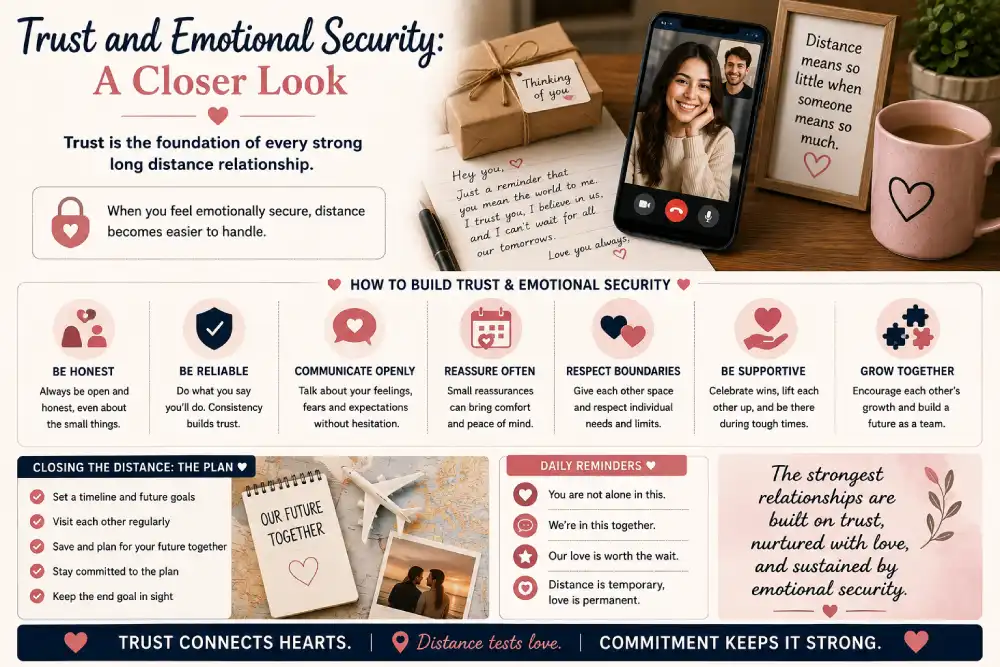
Closing the Distance: The Action Plan
A common end goal can be one of the most reliable predictors of long term success (Couples who do not have one tend to become more uncertain and less satisfied over time).
- Set a rough time limit a loose one, if you like for how long you intend to stay in one residence.
- Early discussion of talk logistics: career, education, family expectations.
- Plan visits in advance, as this means you‘ll always have a tangible goal to look to.
- In occasions, when conditions are changing, the plan should be reviewed every 3 to 4 months
- Celebrate achievement it is the building blocks along the way that are so integral to journeys and must be marked. Cell fields and areas where most work is accomplished by the group. It is the achievements along that journey that need enabling and celebrating, not simply the final reunion.
Long distance relationships can be built on honest communication, real trust and a plan and still survive the time apart.
FAQs
Q: How successful are long-distance relationships? A: Current findings suggests that about 58–60% of long-distance relationships are successful, and the more consistent in communication and trusting each other, the more likely for the couples to stay together.
How frequently should couples in a long-distance relationship communicate? A: Although there is no “one size fits all,” effective long-distance couples tend to blend “light everyday connection,” such as text messaging and brief phone calls, with several scheduled, longer videoconferences each week.
Q: How do you stay intimate when there is a long-distance relationship? A: Be intentional about it. It could be taking each other on a virtual date, sending care packages, having a real talk about your feelings or just planning to meet up.
Q:What is the top reason for how long-distance relationships break down? A: It appears to be psychological stress, rather than the separateness itself, that is responsible. Stress, caused by ill communication, lingering jealousies and a lack of the futuresharing plan, is a major factor.
Q:What makes your long distance relationship sustainable? A: Building trust is achieved not by nagging, but by being reliable and truthful. Fulfilling minor commitments and spending time being candid about ones fears is more helpful than regular otherwise communication.
Final Conclusion
Maintaining a long distance relationship is difficult, but the couples who stay together during the tough times are not those who don‘t face any obstacles, but rather those who nurture a healthy relationship with active and meaningful communication, develop trust through stable efforts, and have a shared vision. With some long distance relationship advice and patience, the long distance period may just be a temporary phase before closing the distance.