How to Build Self-Confidence in 2026 (Real Techniques)
Published: August 25, 2026 Last Updated: September 3, 2026 Confidence isn’t a personality trait some people are born with
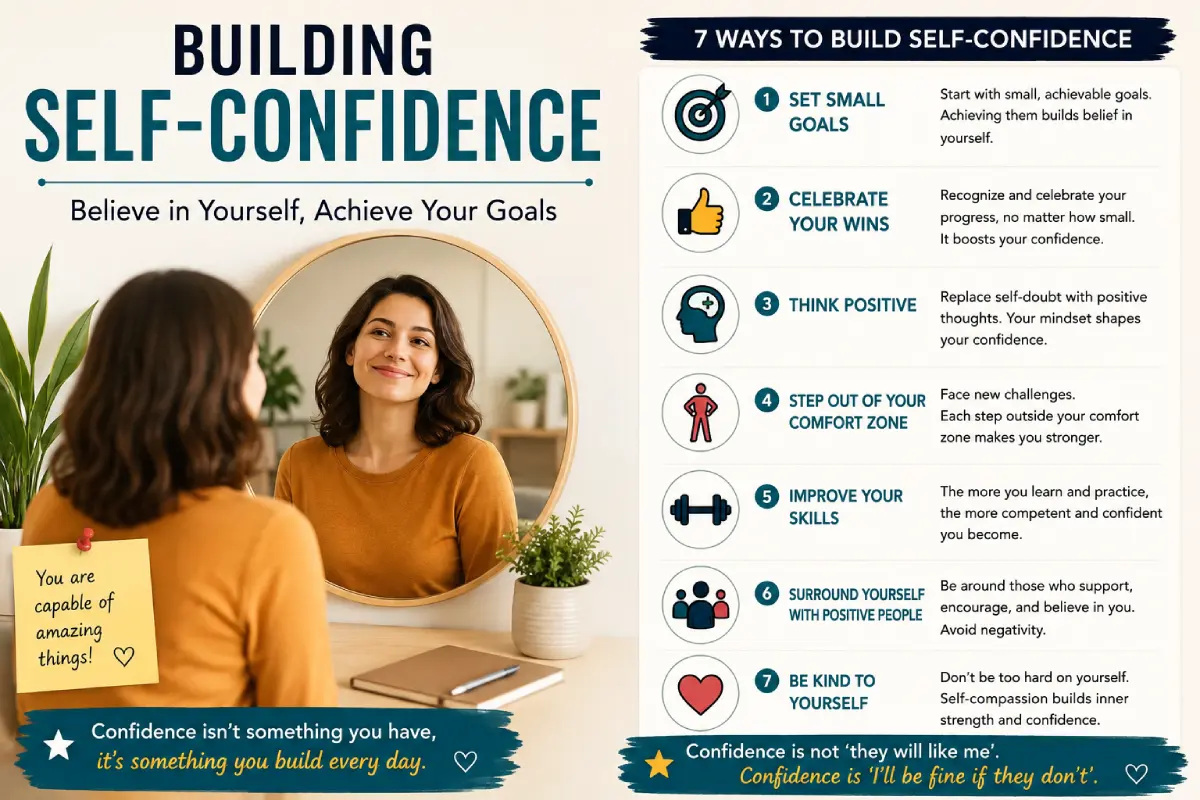
Confidence isn’t a personality trait some people are born with — it’s a skill built through repeated evidence that you can handle things. This guide on building self-confidence skips the vague “just believe in yourself” advice and focuses on what actually works: confidence exercises, ways to overcome self-doubt, body language shifts, assertiveness basics, and positive self-talk that doesn’t feel forced.
Why “Just Believe in Yourself” Doesn’t Work
Confidence almost always follows competence, not the other way around. Telling yourself you’re capable before you’ve done anything to prove it rarely sticks — the gap between the affirmation and the evidence is too obvious to your own brain. What actually builds confidence is small, tangible wins: a hard conversation that went fine, a task you finished despite dreading it, a moment you spoke up. Confidence is less a feeling you conjure and more a record you build.
Confidence Exercises That Actually Build Evidence
These exercises work because they create real proof, not just positive thoughts.
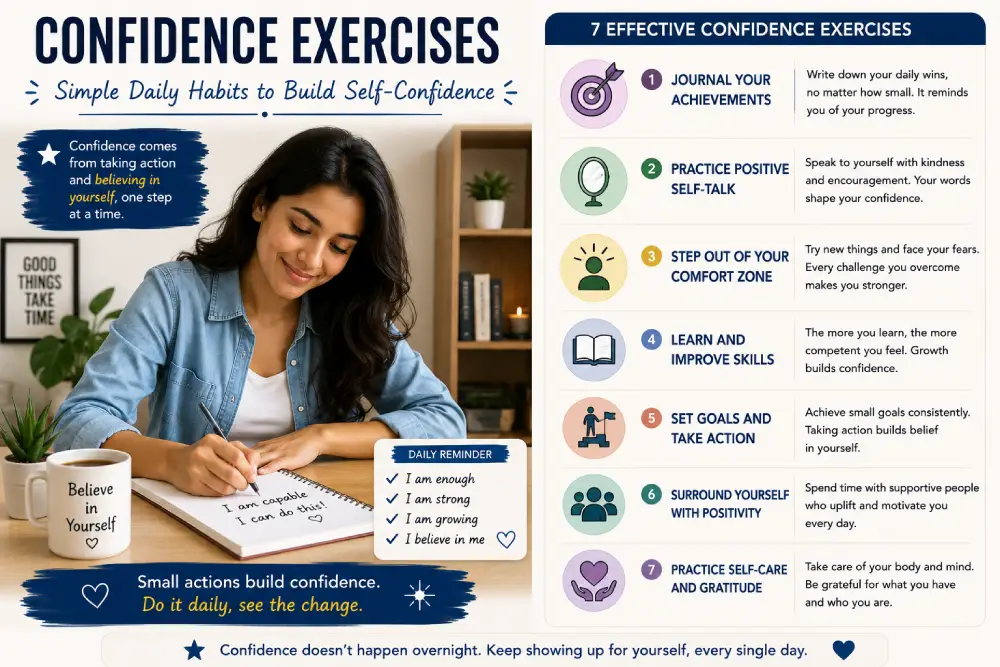
- The evidence file. Before something stressful — an interview, a presentation, a first day — write down three past moments you handled something difficult. You’re not boosting self-esteem; you’re building a factual case your brain can reference.
- The two-minute version. If a task feels too big to start (sending a hard email, raising your hand in a meeting), do the smallest possible version of it first. Momentum builds from action, not motivation.
- Weekly confidence practice. Pick one small, slightly uncomfortable thing to do each week — asking a question out loud, saying no to something, trying a new skill in public. Track what actually happened afterward, not what you feared would happen.
- Posture reset before high-stakes moments. Two minutes of upright, open posture before a stressful event has been shown to shift how capable people report feeling going in.
Overcoming Self-Doubt: Where It Comes From and How to Interrupt It
Self-doubt rarely appears out of nowhere — it usually traces back to early criticism, a pattern of setbacks internalized as personal flaws, or simply not getting enough practice at the thing you’re doubting yourself on.
To interrupt a self-doubt spiral in the moment:
- Name it specifically. “I’m afraid this presentation will go badly” is more useful than a vague sense of dread — naming it makes it addressable.
- Separate the thought from the fact. Self-doubt says “I’ll fail.” The evidence file says “I’ve handled hard things before.” Let the evidence outvote the feeling.
- Ask what the smallest next step is. Self-doubt thrives on the size of the whole task. Shrinking it to one action reduces its power.
- Reframe comparison. Social media comparison is one of the quietest confidence drains. Treat someone else’s visible success as information, not a verdict on your own progress.
Body Language and Confidence: What Actually Shifts How You Feel
Posture and body language don’t just broadcast confidence outward — they influence how confident you feel internally.
- Open, upright posture (shoulders back, chest open) is linked to feeling more capable, compared to slumped or closed positions.
- Steady eye contact during conversations signals — and reinforces — presence and self-assurance.
- Slower, deliberate movement reads as calm control; rushed, fidgety movement often reinforces internal anxiety.
- A firm, even pace of speech — not rushing through what you’re saying — makes you sound more sure of your point, which in turn makes you feel more sure of it.
Small tweak, real effect: before a nerve-wracking moment, spend two minutes in an open, tall stance rather than checking your phone hunched over. It’s a small physical cue, but it changes your starting point.
Assertiveness Training Basics
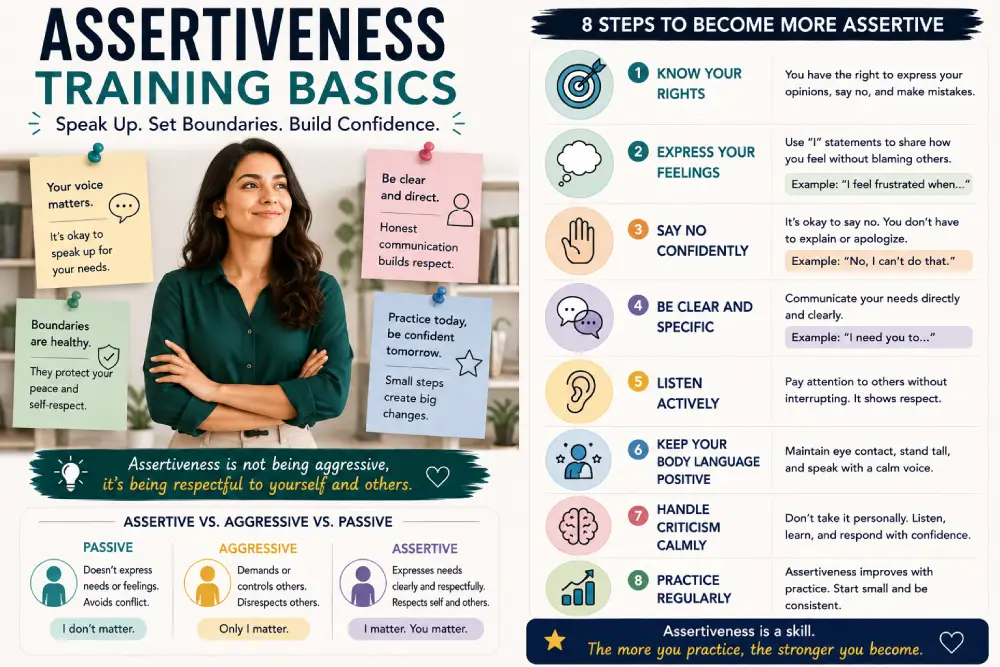
Assertiveness is a distinct skill from confidence, but the two reinforce each other — being able to state your needs clearly builds more confidence evidence, and confidence makes assertiveness easier to practice.
- Use direct, simple language. “I can’t take this on right now” beats a long, apologetic explanation that dilutes the point.
- State the fact, then the ask. “I wasn’t looped in on this change, so I need a quick update before I proceed” — clear, not confrontational.
- Practice saying no without over-justifying. A short, respectful no is more assertive than a long, defensive one.
- Separate the person from the request. You can decline a request while still being warm — assertiveness isn’t the same as aggression.
Positive Self-Talk That Doesn’t Feel Fake
Generic affirmations (“I am amazing”) often fail because they’re too far from believable. More effective self-talk is specific and evidence-based:
- Replace “I’m bad at this” with “I haven’t practiced this enough yet.” It’s honest, and it points toward action instead of judgment.
- Replace “I always mess this up” with “Last time this happened, I recovered by doing X.” Specific memory beats vague self-criticism.
- End the day with one honest question: “What did I handle well today?” — not to inflate the answer, but to notice real evidence you’d otherwise skip past.
Common Mistakes When Building Self-Confidence
- Waiting to feel ready before acting. Confidence usually shows up after the action, not before it.
- Relying only on affirmations with no real-world evidence behind them.
- Comparing your current self to someone else’s highlight reel, rather than to your own past progress.
- Treating one setback as proof of a permanent flaw, instead of a single data point.
A Simple Weekly Confidence-Building Practice
- Monday: Write down one thing that makes you nervous this week.
- Midweek: Do the smallest version of that thing — send the message, ask the question, speak up once.
- Friday: Record what actually happened, not what you feared would happen.
- Ongoing: Repeat weekly. Over a few months, this becomes a personal evidence file you can draw on whenever self-doubt shows up.
FAQs
How do I start building self-confidence from scratch? Start with one small, uncomfortable action each week and track what actually happens afterward. Confidence builds through repeated evidence, not through waiting to feel ready.
What are good confidence exercises for beginners? The evidence file (listing past moments you handled something hard), the two-minute version of a hard task, and a weekly confidence practice are simple, low-effort starting points.
How do I stop self-doubt before something important? Name the specific fear, separate the thought from the facts, and shrink the task down to its smallest next step. This interrupts the spiral faster than trying to “think positive.”
Does body language actually affect confidence? Yes — open, upright posture and steady eye contact are linked to feeling more capable, not just appearing more capable to others.
Is assertiveness the same as confidence? No, but they reinforce each other. Assertiveness is the skill of stating your needs clearly; practicing it builds the kind of evidence that strengthens confidence over time.
Featured snippet opportunity: The “Weekly Confidence-Building Practice” numbered list and the “Positive Self-Talk” replacement pairs are formatted for Google’s list and Q&A snippet formats.
Final Conclusion
Building self-confidence isn’t about waiting until you feel ready — it’s about collecting small, real proof that you can handle things, one uncomfortable action at a time. Use the confidence exercises here, watch for self-doubt spirals early, adjust your body language before high-stakes moments, practice saying what you mean, and let your self-talk stay honest instead of inflated. Confidence built this way doesn’t fade under pressure, because it’s backed by evidence — not just words.