25 Best Personal Development Books to Read in 2026
Published: August 27, 2026 Last Updated: September 3, 2026 Dive into the self-help aisle of almost any book store
Dive into the self-help aisle of almost any book store and you‘ll see hundreds of potential life-changers. Almost none of them will be. A few will. But only if you find just the right one for where you‘re at right now not the hottest one this month.
This list of 25 personal development books is separated into 5 use-by categories in a simple easy-to-read format. So you can pick which book is best for your real goal, rather than winging it.
How to Use This List
Before we begin a quick honest admission: simply reading ten books in a month and not practicing any of them is not going to do you any good. Reading a book and applying the ideas for a matter of weeks will… Choose one book from the relevant category that you‘re dealing with right now, read it, implement it, then the next one.
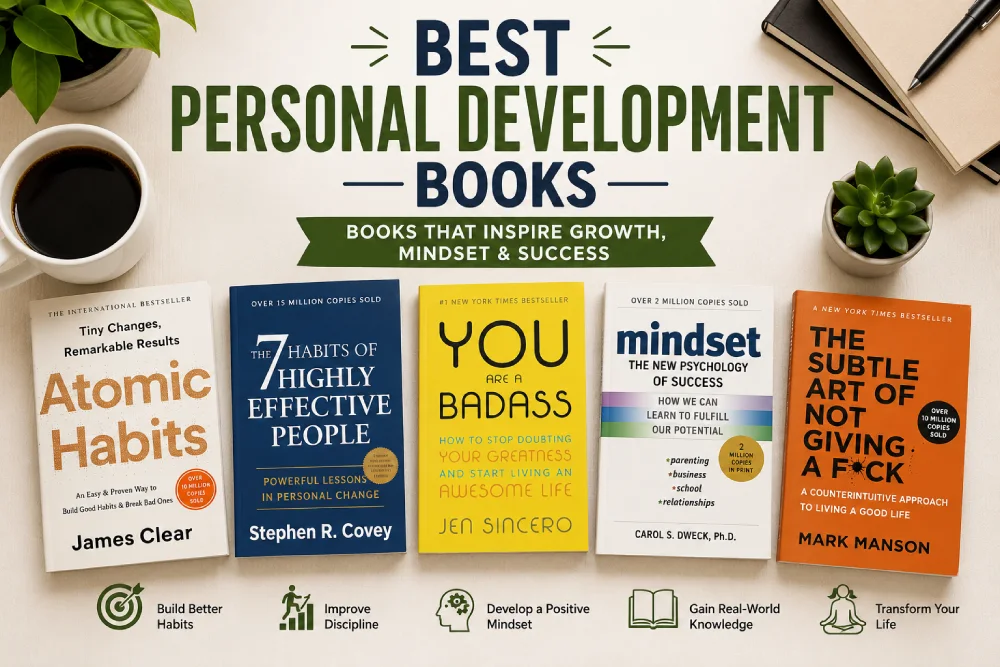
Must-Read Self-Improvement Classics
They are the six basic books that most contemporary self development advice is derived from.
- “Atomic Habits” by James Clear A very practical way to build small habits that add up to huge transformations.
- Stephen Covey “The 7 Habits of Highly Effective People” A systems based approach based on character effectiveness and not pressure-coints solutions.
- Dale Carnegie How to Win Friends and Influence People, a classic book full of commonsense and down-to-earth advice about how to communicate and form authentic relationships.
- How to Think and Grow Rich by Napoleon Hill One of the earliest popular books on mindset and goal-setting, and one of the most important that ever was.
- “Man‘s Search for Meaning” by Viktor Frankl an incredible insight into finding a purpose even when faced with the most extreme circumstances.
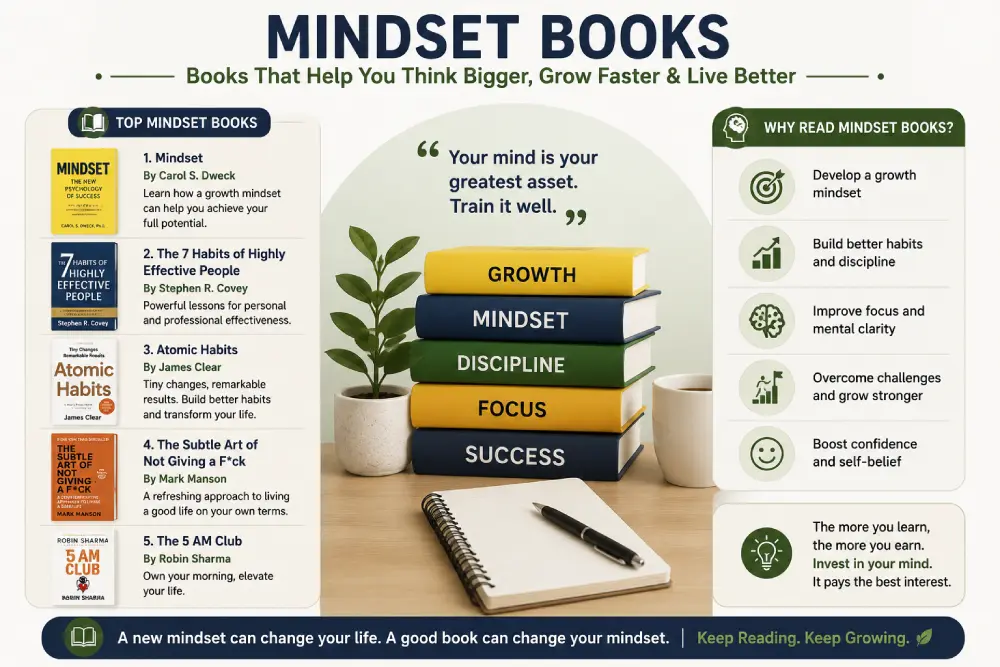
Mindset Books to Reframe How You Think
If the biggest obstacle you face is your own thinking then begin there.
- “Mindset” by Carol Dweck (a book that explains the difference between a fixed and growth mindset, and how that belief affects everything you try to do)
- David Goggins — “can‘t hurt me” hard-core one person‘s story about exceeding the limits of his mind.
- The obstacle is the way, by Ryan Holiday A contemporary, straightforward guide to using Stoic philosophy in dealing with common obstacles.
- “Clear Thinking” by Shane Parrish Covers the seemingly insignificant decisions that are often responsible for many of the long-term results.
- Michael Singer in his book The Untethered Soul has done an excellent job of guiding a reader to watch his/her mind rather than being controlled by it.
Productivity Books That Actually Change How You Work
For those readers whose real problem is attention, timing, and perseverance.
- “Deep Work” by Cal Newport Advocates for long periods of intense, interruptions free concentration as a true differentiating factor.
- Getting things done by David Allen A thorough framework for recording items to do and clearing mental queues.
- “Essentialism” by Greg McKeown How to discover what is essential so you can set aside what isn‘t and make the highest contribution.
- The One Thing by Gary Keller and Jay Papasan Focuses on finding the one action that has the most leverage as a priority at any point in time.
- ‘Four Thousand Weeks’ by Oliver Burkeman – An inspiring, truthful approach to time management that challenges the culture of being obsessed with being productive.
Self-Help Books for Emotional and Personal Growth
These place less emphasis on your output and more on how you relate to yourself and others.
- Brené Brown, The Gifts of Imperfection – Offers insight into feelings of low self-esteem, the importance of vulnerability and self-acceptance.
- Brené Brown Daring Greatly An exploration of vulnerability, worthiness, courage, shame, and the power of showing up.
- The Body Keeps the Score by Bessel van der Kolk An often-quoted book on trauma and its impacts on the body. It is informative for those working through some ‘stuff’ from the past.
- 101 Essays That Will Change the Way You Think” by Brianna Wiest A series of brief easy-to-read essays about emotions and consciousness.
- Set Boundaries, Find Peace” by Nedra Glover Tawwab Writings on how to establish and enforce boundaries.
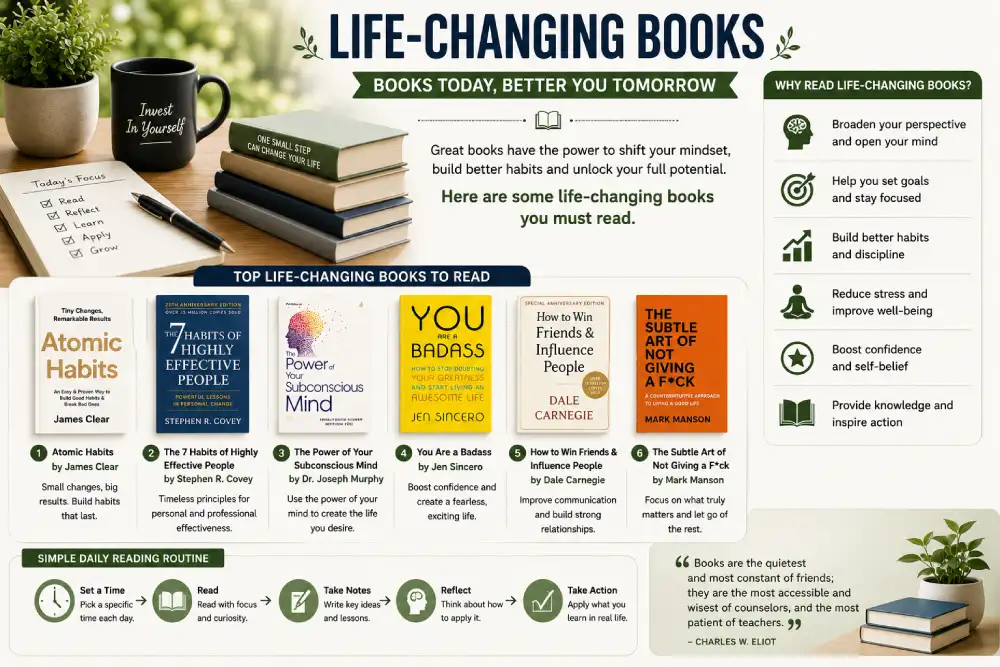
Life-Changing Books That Shift Perspective
They are what readers would say truly altered the way they viewed their life.
- The Alchemist Paulo Coelho A delightful allegory of the search for meaning, applicable to almost any civilisation or generation.
- A primer on presence and diminishing the grip of anxious, future-oriented emotions: “The Power of Now” by Eckhart Tolle.
- Big Magic by Elizabeth Gilbert– a new way of looking at creativity, fear, and finding the work that matters without waiting for an invitation.
- “How Big Things Get Done” by Bent Flyvbjerg and Dan Gardner Practical not just for huge projects, but teaches you about realistic planning and following through too.
- “The Ruthless Elimination of Hurry” by John Mark Comer Will make a case for having a purposeful pause to living in a world full of constantly rushing.
Common Mistakes People Make When Choosing Self-Help Books
- Ensuring that the book covers the subject you are facing, and not just buying on the merit of hype.
- It‘s about collecting books instead of reading them: a half-open stack will not affect.
- Reading nothing but motivation, without ever working on the systems (productivity, habits) to implement it.
- Not paying attention to the old classics, and just focusing on new books- a lot of the “hot” ideas are just remixes of books that came out two or three decades ago.
- Thinking one book will solve all. True developpement is about applying a few stuff all the times, not about taking in everything.
Myth vs. Fact: Personal Development Reading
Myth: In order to find true transformation, you have to read the latest books. Fact: Some of the greatest personal growth literature was published over 30 years ago concepts around discipline, attitude, and focus never grow outdated.
Myth: The greater the number of books we read, the greater our personal enhancement. Truth: The level of application is of so much greater significance than the quantity. Slowly practicing the concepts from three books is single-handedly better than spending a week prioritizing and deepening the concepts from thirty.
Myth: Self-help books are for those in crisis. Fact: A great personal development book will help you make the good life you already have even better, just as it will help you cope with a difficult one.
Action Steps: Build a Reading Routine That Sticks
- Choose one of the categories above that fits your particular challenge at the moment (or for your team, or your organization).
- Open any one of the three books to the title page and place it in the right corner of your workspace. (Avoid choosing more than one, as it can be difficult to select between them).
- Choose a realistic, achievable, and regular reading goal. For example, attempt to finish 15–20 minutes a day. Set a modest goal rather than something vague, such as “read more.”
- Write down on each chapter at least one point/actionabl to per week you can take away from it.
- From where you are now, go back and review your notes a month from now to refresh your memory on what you actually learned.
The Bigger Picture
The greatest personal development books won‘t have the coolest cover or the most hype on social media – they‘ll be the ones you actually get through and put into practice. Whatever you choose from this list, start with the one that resonates with where you currently are – be it Improving your outlook, Improving your habits or Improving Your meaning in life; focus on that one until you‘ve cracked it before moving on.
FAQs
Q: What‘s the best personal development book to begin with? A: “Atomic Habits” by James Clear is an excellent choice for most people. It‘s down to earth, practical, quick to implement and effective whichever particular goal you have.
Q: Do self-help books work? A: They can, but you have to do the work not just read the book. Books that can be broken down into small steps, then followed consistently are most likely to make a real difference.
Q: Which mindset books are good for starting out? A: “Mindset” by Carol Dweck and “The Obstacle Is the Way” by Ryan Holiday are both fairly easy reads to get you started.
Q.How many personal development books should I read per year? A.It depends. The skill is not in reading more but really applying what you do read (one great book at a time). I have found that even reading 4 to 6 good books and truly practicing them makes more difference than reading and not practicing 20 books.
Q: Any suggestions for a first book on productivity? A: For beginners, McKeown‘s “Essentialism” is a non-overwhelming, straightforward place to begin, then sets the stage for more comprehensive systems such as “Getting Things Done.”
Final Conclusion
The top personal development books for 2026 are not the ones to fill your bookshelf they are the ones to help you find the 2 or 3 ideas that work in your life and do them. Pick one from this list that applies to your present challenge, read it cover to cover, implement what works for you and then use that information to choose the next book.